
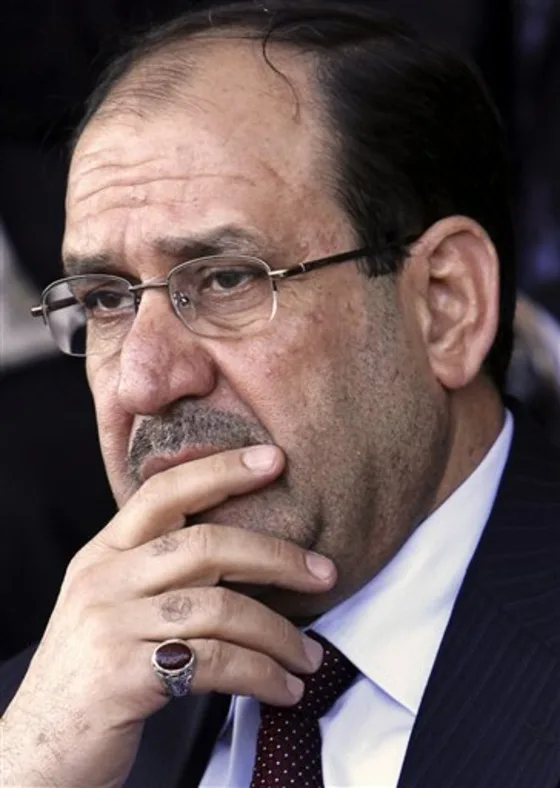
Mero: Recent developments in Iraq’s political arena, particularly the impasse within the Coordination Framework regarding the possible renomination of Nouri al-Maliki as prime minister, have once again brought to the fore fundamental questions concerning the future direction of Iraq’s political system. These developments underscore the tension between elite political calculations, the lessons of historical experience, and the structural requirements for sustainable stability. At a moment when Iraq is navigating one of its most critical post-ISIS phases, the reemergence of a highly polarizing political figure such as al-Maliki has not only exacerbated intra-Shiite divisions but has also generated concern among domestic, regional, and international stakeholders.
Intra-Elite Decision-Making and the Crisis of Consensus
The Coordination Framework, currently the largest parliamentary bloc in Iraq and predominantly composed of Shiite political parties, has in recent months encountered a significant internal crisis over consensus-building. Al-Maliki’s determination to seek a return to the premiership—despite both explicit and implicit opposition from a range of Iraqi political actors—reflects a deeper structural contradiction between power-sharing imperatives and the broader demands of state consolidation in Iraq’s current context.
Importantly, opposition to al-Maliki’s candidacy is not confined to rival political forces or external pressures. Within the Coordination Framework itself, reservations have emerged that are grounded in broader considerations of Iraq’s national interest. These objections suggest that criticism of al-Maliki does not necessarily stem from ideological divergence or foreign alignment, but rather from a realist assessment of Iraq’s recent political experience and the perceived costs of reviving highly contentious leadership patterns.
A Politically Costly Governance Record
Any rigorous evaluation of Nouri al-Maliki’s renewed candidacy necessitates a critical reassessment of his tenure between 2006 and 2014, a period that coincided with one of the most complex and fragile phases of Iraq’s post-2003 political transition. While al-Maliki initially assumed office with a discourse centered on strengthening central state authority and curbing armed violence, his governance increasingly manifested characteristics of excessive centralization, the weakening of participatory political institutions, and the intensification of sectarian polarization.
His time in office was marked by persistent tensions with Sunni political actors as well as structural disputes with the Kurdistan Regional Government. The adoption of coercive security policies, systematic marginalization of political competitors, and neglect of inclusive mechanisms of national consensus progressively eroded trust between the central government and significant segments of Iraqi society. This trajectory reached its critical point in 2014 with the rapid collapse of Iraq’s security forces in the face of ISIS’s advance—an episode that revealed not merely a military failure, but a broader crisis of governance and national cohesion.
From this analytical perspective, the prospect of al-Maliki’s return evokes a period in which the state, rather than functioning as a mediator among competing social and political forces, became a catalyst for deepening systemic crises. This historical legacy helps explain why skepticism toward a repetition of that experience persists across different segments of Iraq’s political class.
Iraq’s Structural Fragility and the Centrality of Political Stability
Contemporary Iraq, despite its military victory over ISIS, continues to confront profound structural challenges. Weak state institutions, entrenched patterns of corruption, deficiencies in public service delivery, widespread unemployment, and unresolved identity-based cleavages collectively render the political system highly vulnerable to instability.
Within such a fragile environment, the selection of a prime minister whose political record remains deeply contested risks reproducing destabilizing patterns of polarization. Iraq’s post-2003 experience demonstrates that deficits in political legitimacy can rapidly translate into mass protests, institutional paralysis, and, in extreme cases, violent confrontation. Consequently, the current debate transcends the question of a single political figure and instead centers on competing governance paradigms—one oriented toward gradual stabilization and inclusive state-building, and another that risks reactivating cycles of crisis.
U.S. Intervention: Sovereignty, Realism, and Political Constraints
The confrontational rhetoric and implicit threats articulated by Donald Trump in relation to al-Maliki’s candidacy constitute a clear instance of external interference in Iraq’s domestic political process and are inconsistent with the principles of international law and national sovereignty. The appointment of Iraq’s prime minister must remain the exclusive outcome of constitutional procedures, domestic political negotiations, and inter-elite consensus. No external actor, including the United States, possesses the legal or normative authority to impose political outcomes on Iraq.
Nevertheless, rejecting foreign interference should not entail an analytical neglect of international political realities. Iraq remains embedded within a complex regional and global environment while simultaneously rebuilding its economic and security institutions. The principal challenge facing Iraqi political elites lies not in acquiescence to external pressure, but in managing such pressures in a manner consistent with national interests—an objective more readily achievable through the selection of broadly acceptable and politically less polarizing leadership.
Iran, Political Narratives, and the Instrumentalization of Blame
Within regional political and media discourses, efforts have been made to frame al-Maliki’s candidacy as an initiative driven by Iran. This narrative, however, appears less rooted in empirical evidence than in broader strategies of political signaling and psychological warfare aimed at undermining Iraqi-Iranian relations.
Empirically, Iran has repeatedly emphasized respect for Iraq’s constitutional processes and the political choices of its people since 2003, while largely refraining from overt intervention in intra-Iraqi elite competition. The visible disagreements within the Coordination Framework itself serve as strong evidence that deliberations over al-Maliki’s candidacy are the product of internal Iraqi political dynamics rather than external directives. Reducing this multifaceted process to a simplistic narrative of Iranian sponsorship constitutes an analytically reductionist and politically instrumentalized interpretation.
Kurdish Political Actors and the Balance of Power
Political parties in the Kurdistan Region of Iraq, as key components of the broader power-sharing arrangement in Baghdad, have generally adopted a cautious and, in many cases, unfavorable stance toward al-Maliki’s potential return. The legacy of severe tensions between al-Maliki’s previous governments and the Kurdistan Regional Government—particularly over budget allocations, hydrocarbon policy, and the scope of federal authority—remains deeply embedded in Kurdish political memory. Ongoing intra-Kurdish disputes over the presidency further suggest that any premiership formed without due consideration of Kurdish concerns risks exacerbating institutional deadlock.
From this perspective, Iraq’s next prime minister must possess the capacity to rebuild trust with Erbil and other ethno-sectarian actors. Many observers argue that this capacity is largely absent from al-Maliki’s political record and governing style.
Conclusion
Nouri al-Maliki’s renewed bid for the Iraqi premiership represents more than a routine political maneuver; it symbolizes a broader contestation between Iraq’s past governance patterns and its prospective political future. Historical experience, the structural fragility of the current context, and the imperative of national consensus collectively suggest that a return to contentious leadership models carries substantial costs for Iraq’s stability.
Critiques of al-Maliki’s candidacy, therefore, should be understood not as expressions of partisan hostility, but as reflections of national responsibility and concern for long-term political order. A durable solution lies neither in external pressure from the United States nor in attributing domestic political outcomes to Iran, but rather in an Iraqi-led consensus around a competent, inclusive, and politically sustainable leadership—one capable of steering the country beyond recurrent crises toward meaningful stability, reconstruction, and development.