
Tehran’s attacks are reshaping the security situation in the Middle East—and forcing the region’s clock to tick backward once again.
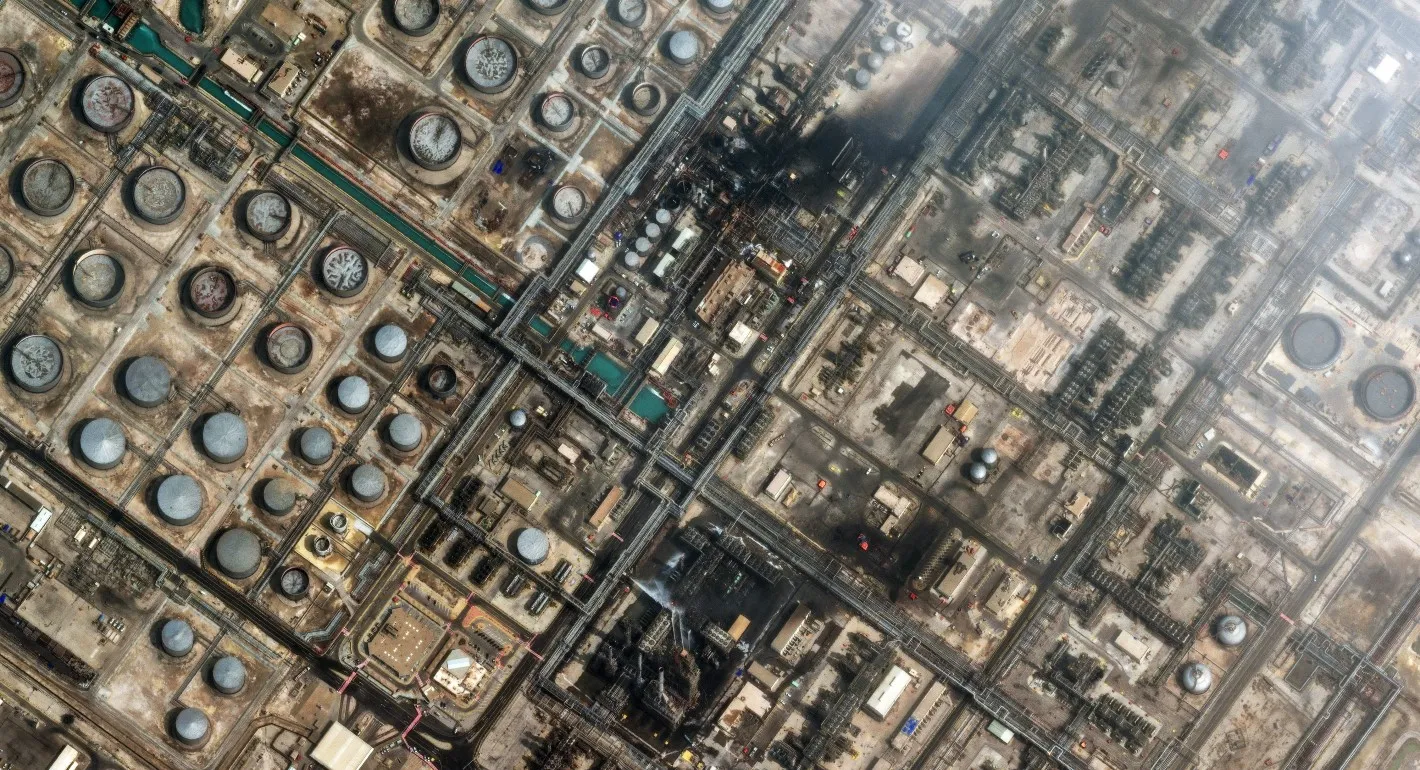
With the outbreak of the U.S.-Israeli war on Iran, the Middle East is witnessing an unprecedented escalation by Iran. No longer limiting military retaliation to strikes against Tel Aviv and Washington, Tehran is directly targeting vital infrastructure in the Arab Gulf states.
The UAE’s Ministry of Defense said on Tuesday that it had detected 186 ballistic missiles and 812 drones launched toward its territory, with air defense systems destroying most but some resulting in civilian casualties and damage to infrastructure. In Saudi Arabia, Iranian drones and missiles have targeted oil facilities and important economic sites in areas such as Ras Tanura, although Riyadh said it successfully intercepted many of them. In Oman, ports and coastal cities were targeted by drone attacks, some of which struck oil tankers and injured their workers. Similar attacks happened in Qatar, Bahrain, and Kuwait.
Tehran’s move to expand its military reach to include these political and economic targets in the Gulf is creating a geopolitical situation unseen in the Middle East for decades. These pivotal attacks will reshape security relations in the region—likely resulting in several transformative strategic shifts.
First, any prospect of strategic coexistence with Iran has collapsed. For years, some Gulf Arab countries attempted to contain tensions with Tehran through diplomatic and economic channels, reopening embassies and even cooperating on certain issues, particularly after the move toward de-escalation in early 2022–2023. Now, Iran’s regime is viewed as a direct military threat to its Arab neighbors’ national security, rather than a regional player to work with via institutional frameworks. This shift diminishes confidence in any future dialogue and reinforces a hardline security stance toward Tehran.
Second, this escalation will most likely compel the Gulf Arab countries to restructure their national security doctrines in a way that makes alignment with the United States an unavoidable strategic choice. Faced with daily missile and drone threats from Iran, the Gulf states alone cannot provide a sufficiently effective military deterrent against Tehran. Reliance on advanced U.S. air defense systems, intelligence support, and military presence in the region will become the new security imperative, not a political choice. This shift reaffirms the United States’ position in the Gulf as the primary protector and precludes any scenario in which some parties attempt to diversify their partnerships away from Washington and toward Beijing and Moscow.
Third, the cost of security in the region is rising sharply. Iranian attacks are not merely missile strikes; they pose a direct threat to the global energy market, ports, and vital maritime chokepoints such as the Strait of Hormuz. Any long-term disruption to energy or trade infrastructure caused by this escalation will lead to unprecedented increases in oil and gas prices and upheavals in global export chains. This, in turn, will place economic pressure on the Gulf states themselves, as they depend on energy exports to finance their budgets, and it may force them to redirect substantial funds toward defense at the expense of development and social stability.
Fourth, the war has placed collective security in the Middle East in a very precarious position. Collective security requires cooperation among states based on shared interests and mutual trust, but direct Iranian attacks on the Gulf states’ sovereignty erode trust and reinforce the logic of alliances with the United States over regional frameworks. States are now primarily focused on protecting their borders rather than investing in multilateral diplomacy or building a collective security project based on broad understanding and coordination. This retreat weakens the region’s ability to jointly confront future threats and increases the likelihood of violence and conflict.Fifth, Iran’s escalating attacks are not limited to the military or military bases but extend to civilian infrastructure and energy production facilities. Tehran seems to be implementing a strategy tailored to exhaust its neighbors and create political and economic pressure (as well as a state of confusion) to ultimately push them to demand the United States end the war. However, this is a shortsighted strategy: Iran’s actions will only lead to its regional isolation and push the Gulf countries toward total dependence on U.S. security guarantees at the expense of regional interdependence.
What we are witnessing today in the Gulf is not merely a passing escalation but a profound strategic shift—one that returns the region to a logic of conflict and competition, with diminishing prospects for coexistence with Iran. Once again, the clock in the Middle East is ticking backward toward an era of acute tensions and open military confrontations, with the prospects for multilateral diplomacy, collective security, and regional cooperation becoming increasingly far away.