
Donald Trump’s transaction-style foreign policy falters as Tehran leverages structural flaws in the brief maritime MOU. Lacking viable escalatory options at the Strait of Hormuz, the US faces a geopolitical stalemate that highlights the limits of economic blockades.
As Washington confronts a tense maritime standoff in the Middle East, the growing Iran War Dilemma underscores the limits of Donald Trump’s transactional diplomacy. The confrontation reveals how even overwhelming economic and military power can lose its strategic edge when an adversary successfully leverages critical maritime choke points.
Iran War Dilemma: Challenging Diplomatic Limits
Iran seems to be playing Donald Trump at his own game. The president complained Monday that the Islamic Republic can’t be trusted to honor an agreement, rebuking its rulers for one of his own signature moves. “It was a done deal, and then they broke it. They always break it,” he told Fox News of the memorandum of understanding that briefly paused the war.
Trump did not seem to appreciate the irony of his critique, given his habit of walking out on multiple international agreements, including the Paris Climate Accord (twice). Some critics would trace America’s current predicament to Trump’s first-term decision to scrap the Obama-era deal capping Iran’s nuclear program. Later in the day, a frustrated Trump vowed to impose his own toll on ships transiting the Strait of Hormuz. Iran — in an offer laced with sarcasm — jumped in with a better price than the author of “Art of the Deal.
” “POTUS is absolutely right,” Foreign Minister Abbas Araghchi wrote on X, arguing that Trump had legitimized Tehran’s position on charging for passage through the vital waterway. Araghchi added archly: “20% is of course too much.
We will be fair.” Trump is finding out that Iran drives a hard bargain and has its own interpretation of what was in the memo. And he’s yet to clearly explain to Americans why he reignited a war that he repeatedly said he’d already won.
Weeks after declaring that an MOU he signed with a flourish meant he’d forever ended Iran’s nuclear program and brought peace to the Middle East for the first time in 3,000 years, he’s changed his tune. Trump said on Hugh Hewitt’s radio show Monday the deal was a “test” Iran had failed and “didn’t mean much.” Once, admirers might have argued Trump’s sharp contradictions are evidence he’s playing four-dimensional diplomatic chess. Now he’s at best locked in a stalemate.
Stalemate Exposes Iran War Dilemma in Strait
Trump can’t change the reality of the war
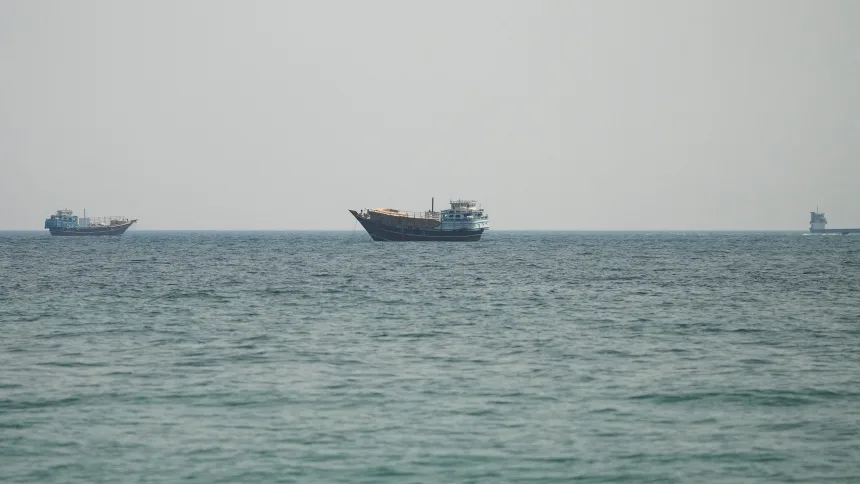
The MOU crumbled because Iran acted to defend its top victory in the war — effective control over the strait. This reinforced a harsh reality for the US: For all Trump’s threats and military power, Tehran is still dictating the dynamics of the showdown.
And the equation that defined the war remains unchanged: The Islamic Republic is using geography and a shrewd understanding of its own limited power to outmaneuver a superpower adversary. The new test of wills sprang partly from the administration’s rush to negotiate an MOU that contained imprecise language. Trump’s team of real estate negotiators under the leadership of Vice President JD Vance appeared to miss what critics more steeped in history and diplomacy immediately realized: that Iran would use it to grab new leverage.
For example, the agreement called on Tehran to “make arrangements” for the free and safe passage of commercial vessels through the strait for 60 days and required it to work with Oman to “define the future administration and maritime services” in the strait. Superficially, this gives the US what it wants — the normal operation of the strait.
But Iran seems to view it as confirmation it will control the waterway after a permanent agreement. It’s hardly surprising, therefore, it’s fighting to shape the new status quo. The misstep compounded an earlier mistake — the failure to understand that Iran would close the strait in the first place. That this is still an issue a month after the MOU was agreed upon suggests its 60-day timeline for a full deal, including on Iran’s nuclear program, was absurdly unrealistic. The administration’s struggles to compel Iranian behavior raise the bar for questions about Trump’s return to war.
Blockades and Calculations Shape Iran War Dilemma
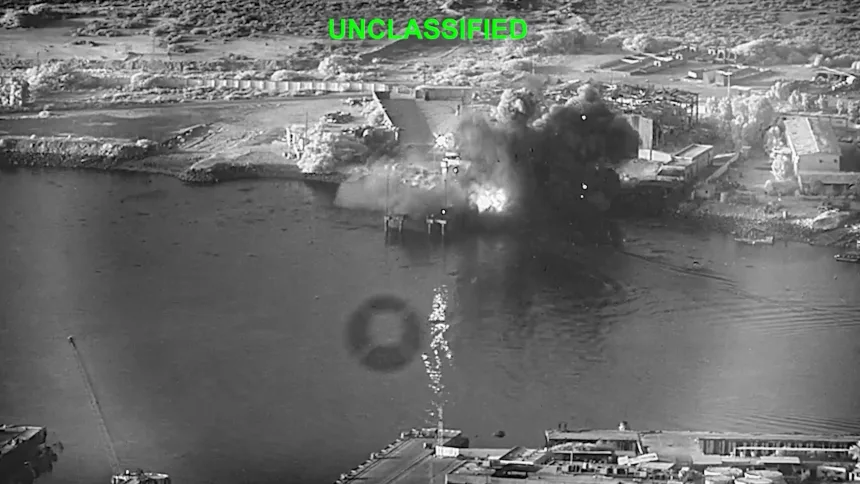
Is there, for instance, reason to believe that attacks on Iranian targets and Trump’s restoration of a naval blockade will be any more successful in changing the calculations of the new Iranian leaders than they were before?
After all, Iran needed only a few missiles and drones to close down the strait again. And will swiftly mounting economic costs — oil and diesel futures shot up on Monday — again convince the president to blink to avoid the political and economic price that he candidly said last month he wasn’t willing to pay?
Why all-out war could still be averted
One reason for hope is that the renewed clashes could imply the US and Iran are seeking to cement their own interpretation of the MOU to set the table for future diplomacy.
Iran War Dilemma Restrains Ground Escalation
Trump, for example, has shown no sign that he’s willing to pay a possibly heavy price in US casualties from invading the Iranian oil-producing hub at Kharg Island — one possible way to impose American superiority. Some other modern presidents, including Lyndon Johnson and George W. Bush, by contrast, intensified wars that already seemed inconclusive.
And unlike his friend Russian President Vladimir Putin, the US president hasn’t responded to his strategic humiliation in a war that underestimated an opponent by launching all-out war on civilians. Tragedy did strike early in the war when an errant US attack struck an Iranian school, killing 168 children and 14 teachers, according to Iranian officials.
And the full civilian toll of attacks is unknown. But Trump has not followed through on earlier threats to target infrastructure like bridges and power plants, which would severely impact civilian life. And Iran has maintained its own ceiling on escalation with its reprisals against US regional bases or its Gulf neighbors. The battlefield choreography, meanwhile, currently reflects a conflict that is simmering rather than raging out of control.
Finding Exit Paths Amid Iran War Dilemma
“There is room for diplomacy, I think, despite the expanded attacks of the US against Iran (and) Iranian retaliation,” Danny Citrinowicz, senior researcher in the Iran and the Shiite Axis Program at Israel’s Institute for National Security Studies, told CNN’s Becky Anderson on “Connect the World.” But, he, added: “Things can get out of control and escalate because when you have back-and-forth attacks every day, every night, definitely it’s hard to preserve the rule of the game.” And even if the fresh conflagration stays just below the boil, Trump must still answer a question with which he’s been unsuccessfully wrestling for nearly five months. How does he get out of the war?