
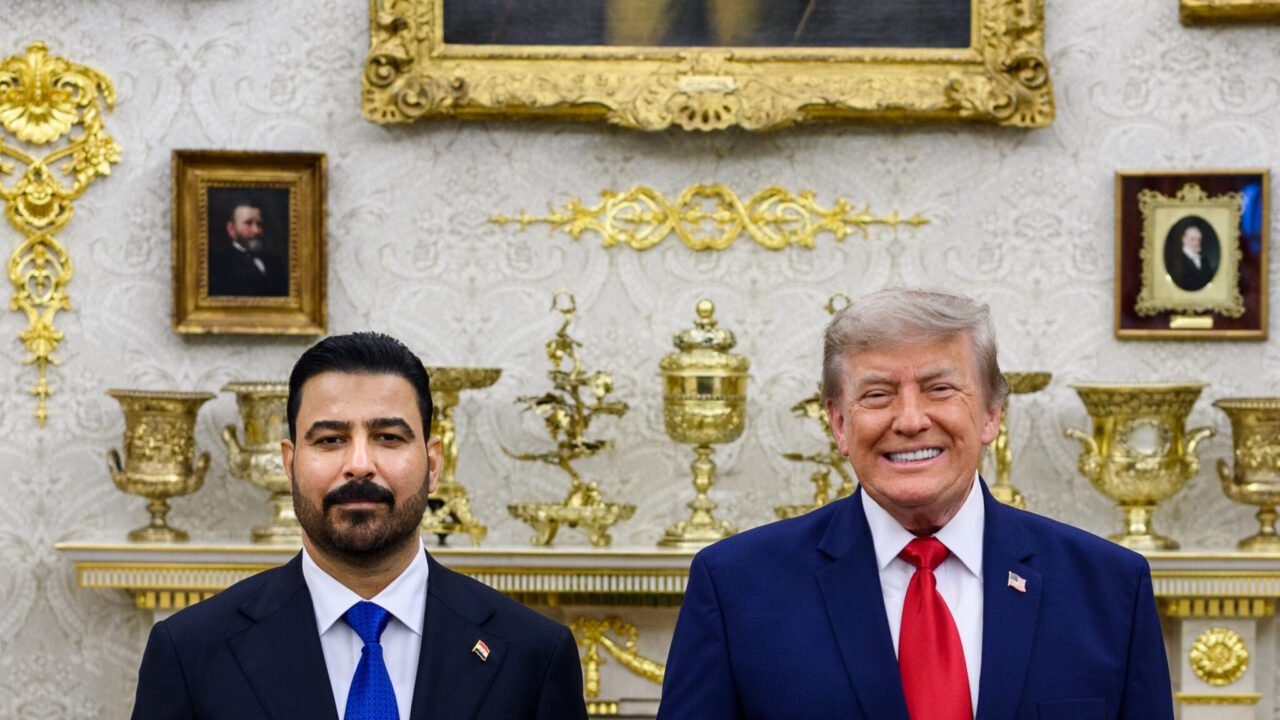
Iraq’s latest anti-graft raids targeting mid-level officials fail to address systemic patronage networks. Despite Prime Minister al-Zaidi’s promises, powerful political and militia figures remain untouched, signaling that reforms remain purely performative.
Iraq faces a critical test of governance as Prime Minister Ali al-Zaidi attempts to project authority through high-profile arrests. The government’s campaign against Iraq Corruption is designed to signal a tougher stance to international observers, yet the lack of senior-level prosecutions suggests that meaningful Iraq Corruption reform remains difficult to achieve.
Iraq corruption demands real action
“O honorable people, your government will be a government of institutions—a government of law and justice. It will be open to everyone, attentive to the voice of its citizens, and firmly believes that the strength of the state comes from the trust of its people.” That is what the Iraqi people woke up to on the morning of Sunday, June 28, 2026. These were the words of newly-elected Prime Minister Ali al-Zaidi, broadcast alongside dramatic footage that seemed designed to signal a historic turning point.
Politicians, parliamentarians, and officials were led away in handcuffs. Armored vehicles and M1 Abrams tanks rolled into the heart of Baghdad’s Green Zone, conjuring memories of March 2003, when Iraqis were told that the fall of Saddam Hussein would usher in a new era of accountability and governance.
For a brief moment, the imagery suggested rupture. It hinted at a state finally confronting itself. But Iraq has seen this script before, and the deeper one looks at the events of that morning, the more familiar and hollow it becomes.
Targeted arrests hide Iraq corruption
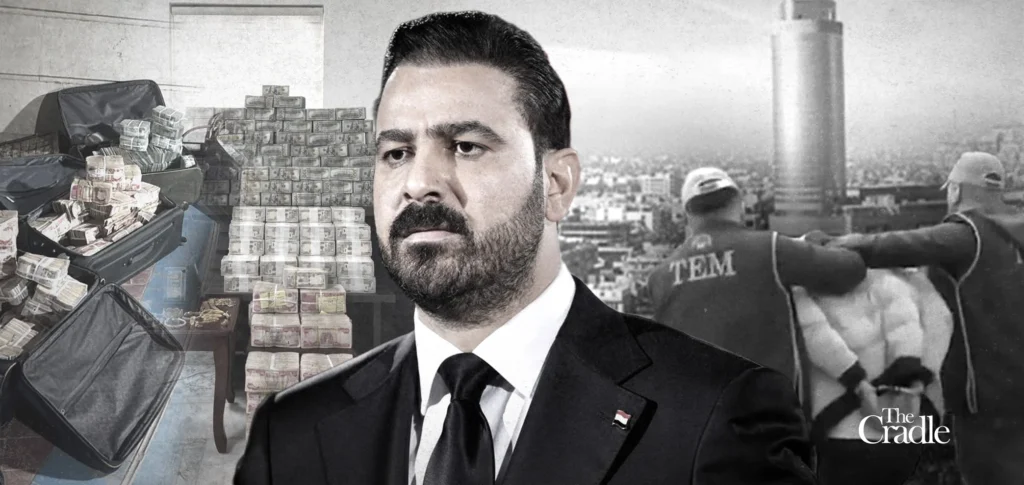
Across social media, headlines surged with talk of a “crackdown,” “shock raids,” and a “new Iraq.” The choreography was unmistakable: pre-dawn operations, carefully captured footage, high-visibility arrests. Prime Minister al-Zaidi wants this moment to be understood as the dawn of reform, the long-delayed reckoning in a country that has consistently ranked among the world’s most corrupt. Al-Zaidi’s message is clear; decisive leadership has arrived, and the system is finally being cleaned. But this is where the spectacle collapses under scrutiny.
Who, exactly, was arrested? While Iraqi authorities arrested 47 people, they publicly released the names of only 15, and even those whose identities were disclosed were not the architects of Iraq’s entrenched corruption networks, but a familiar category of expendable figures: mid-level procurement officials, bureaucratic intermediaries, and politically convenient relatives. These are not the men and women who designed the system; they are the ones it can afford to sacrifice. They are carefully chosen scapegoats, presented to a population exhausted by decades of impunity while those who built and sustained the system remain untouched. The real centers of power remain untouched.
Elite remain beyond Iraq corruption
Figures like Nuri al-Maliki, a former prime minister whose tenure coincided with the institutionalization of patronage politics, remain firmly embedded in Iraq’s political landscape. Under his watch, ministries were transformed into party strongholds, state funds evaporated into opaque networks, and the phenomenon of “ghost soldiers” hollowed out the country’s security forces, contributing directly to the collapse that allowed ISIS to seize vast territory in 2014. Yet al-Maliki remains a kingmaker, not a defendant.
He is not alone. Hadi al-Amiri, Qais al-Khazali, Faleh al-Fayyadh, Khamis al-Khanjar, Ahmed al-Jubouri, Nofal Hammadi al-Sultan and many other powerful figures continue to operate at the intersection of politics, security, and economic influence on a much larger scale. Many have faced international sanctions or credible allegations of corruption, repression, or militia-linked profiteering. None were paraded in handcuffs on June 28. None were dragged from their homes at dawn.
This selective enforcement is not accidental; it is the system functioning as intended. Iraq’s post-2003 order rests on power-sharing, factional balance, and mutual protection, where corruption sustains loyalty. Dismantling corruption would mean dismantling the state’s foundations.
That is why every Iraqi prime minister has promised reform—and failed. Haider al-Abadi pledged to combat corruption and strengthen state institutions. Adil Abdul-Mahdi likewise vowed to restore public trust and improve governance. Mustafa al-Kadhimi promised to confront the PMF militias and root out corruption. Mohammed Shia al-Sudani spoke of accountability and institutional renewal. Each encountered the same reality: the very apparatus they were meant to reform was the one that sustained their authority. Ali al-Zaidi is no exception.
Iraq corruption reveals political timing
If anything, the timing of these raids reveals far more than the arrests themselves. Iran has emerged significantly weakened following sustained US and Israeli military strikes, while Washington has signaled it has no intention of disengaging from the Middle East. At the same time, these arrests coincided with the arrival of Iranian Foreign Minister Abbas Araghchi in Baghdad. Officially, the visit was linked to coordinating ceremonies following Ali Khamenei’s death. But if that were the sole purpose, why did Araghchi arrive only now? The timing suggests his visit may have carried broader political significance as Baghdad’s Tehran-aligned elite confront an increasingly uncertain regional landscape.
At the same time, Washington’s posture matters more than ever. President Donald Trump has become unusually vocal about Iraq’s political future. On January 27, in a post on Truth Social, he publicly warned against the return of Nuri al-Maliki, declaring that continued US support depended on Iraq rejecting his comeback. After Ali al-Zaidi secured the premiership, Trump shifted from warning to endorsement. In an April 30 Truth Social post, he congratulated al-Zaidi and praised the prospect of a government free from terrorism. The following day, Trump went further, telling reporters that Washington strongly backed al-Zaidi and would stand with him “all the way.”
This context is critical. Al-Zaidi is not operating in a vacuum. His government faces significant exposure to US financial pressure, particularly given his past involvement in illicit dollar flows and banking practices tied to Iraqi institutions. Washington has repeatedly demonstrated its willingness to use the Iraqi financial system as a pressure point. The US Treasury, for example, barred Al Janoob Islamic Bank from accessing US dollar transactions after intelligence linked the institution to Shibl al-Zaidi, an Iran-backed militia leader and cousin of the current premier sanctioned for ties to the IRGC and Hezbollah. The message from Washington is implicit but unmistakable: cooperation and reform will be rewarded; defiance will carry consequences.
Seen through this lens, the June 28 raids look less like a domestic anti-corruption campaign and more like a calibrated performance aimed at external audiences. The optics are designed to reassure Washington, to signal alignment, and to demonstrate that Baghdad is willing, or at least able, to act. But optics cannot substitute for substance.
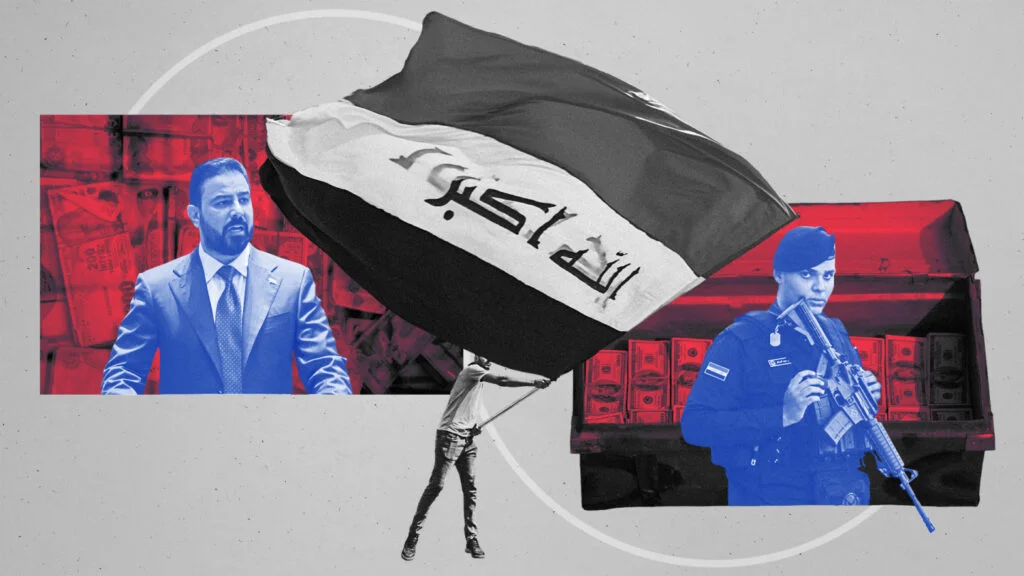
The raids were reportedly triggered by confessions from Deputy Oil Minister Adnan al-Jumaili, whose case involved over $12 million in cash hidden in private residences and underground caches. Authorities point to links with dollar smuggling, illicit oil networks, and financing channels connected to armed groups. These are serious allegations, and they underscore the scale of corruption embedded within the state.
Yet even here, the pattern holds. The investigation appears to stop short of the highest levels of political authority. It exposes fragments of the network without confronting its core. This is the fundamental problem. You cannot use a compromised system to cleanse itself. You cannot rely on institutions shaped by patronage, infiltration, and political bargaining to suddenly enforce impartial justice. And you cannot convince a deeply skeptical public that meaningful change is underway when the most powerful figures remain beyond reach.
For ordinary Iraqis, the images of tanks and arrests evoke not hope, but déjà vu. They recall 2003, when promises of transformation gave way to years of instability, corruption, and unfulfilled expectations. They have heard the language of reform before. They have seen the announcements, the committees, the investigations. They have watched as each wave of supposed accountability dissipated without altering the underlying reality.
As Ali al-Zaidi visits the White House today, President Trump should make it clear that June 28 was only the beginning, not the conclusion. Future US political, financial, and security support should depend on measurable progress: prosecuting senior political figures regardless of affiliation, dismantling militia-linked patronage networks, recovering stolen public assets, reforming the judiciary, protecting investigators from political intimidation, tightening oversight of dollar transactions, and permanently severing state institutions from armed factions. Only sustained structural reforms will convince Iraqis that accountability is real.
If Prime Minister al-Zaidi is serious about change, the standard is clear and unavoidable. It is not enough to detain mid-level officials or peripheral actors. It is not enough to produce televised spectacles of enforcement. Real accountability in Iraq would require confronting the most powerful individuals in the system; those who shaped it, sustained it, and continue to benefit from it.
That would mean pursuing cases against figures like al-Maliki and others with comparable influence. It would mean dismantling the networks that link political parties, militias, and economic interests. It would mean exposing not just isolated acts of corruption, but the architecture that enables them. Anything less is not reform. It is theater. And Iraq has had more than enough of that.