
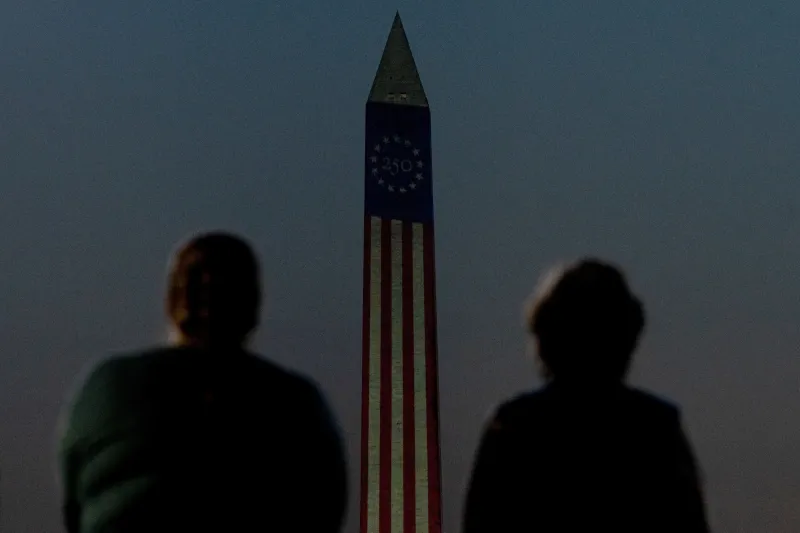
A comprehensive Pew Research Center survey reveals unprecedented drops in international support for the United States. Foreign publics express growing distrust in Washington’s democratic values and sharp disapproval of unilateral military, trade, and immigration policies.
Washington is discovering that soft power, once squandered, cannot be quickly restored. Decades of international goodwill are fading as foreign publics push back against the current administration’s unilateral approach, leaving America’s Global Image deeply tarnished. Among allies and trading partners alike, this decline reflects a broader skepticism about the consistency of U.S. leadership and the durability of American democratic norms.
America’s Global Image Crumbles
Through much of the first quarter of the twenty-first century, as the United States’ popularity around the world has ebbed and flowed, the country has been able to fall back on a baseline of international support established in the previous century. There have been moments when the United States’ global image declined substantially, such as during the unpopular military interventions of President George W. Bush and the dramatic retrenchment from international engagement of President Donald Trump’s first term. But each time, the country’s reserves of soft power and its long-standing international reputation sustained it, and its foreign approval ratings eventually bounced back.
Since Trump’s return to office in January 2025, however, cracks are beginning to emerge in those foundations. His trade and immigration policies and his use of U.S. military power have yielded a wave of international disapproval that in its nature and depth has few recent historical parallels. A new Pew Research Center survey of public opinion has found that in many of the 36 countries surveyed, attitudes toward the United States are the most negative they have been since Pew began tracking them in 2002.
Ordinary citizens are now critical of Trump in ways they were not during his first administration. As was the case during his first term, they believe Trump is breaking with the United States’ history of international engagement and leadership.
But much of the world now also believes that Trump’s use of the United States’ substantial hard power is threatening global stability in ways that were not apparent during the first administration. Moreover, during previous ebbs, people in other countries have not tended to question the basic values promoted by the United States, even if they strongly disagreed with specific policies. By contrast, today, the world has grown increasingly pessimistic about the state of American democracy itself. In less than two years of Trump’s second presidency, a growing number of non-Americans have come to believe that the U.S. government does not respect the individual liberties of its own people.
As a result, much of the world is losing faith in the United States’ ability to serve as the leader of a liberal international order. And these new reservations, deeper than those of the past, may prove hard to reverse.
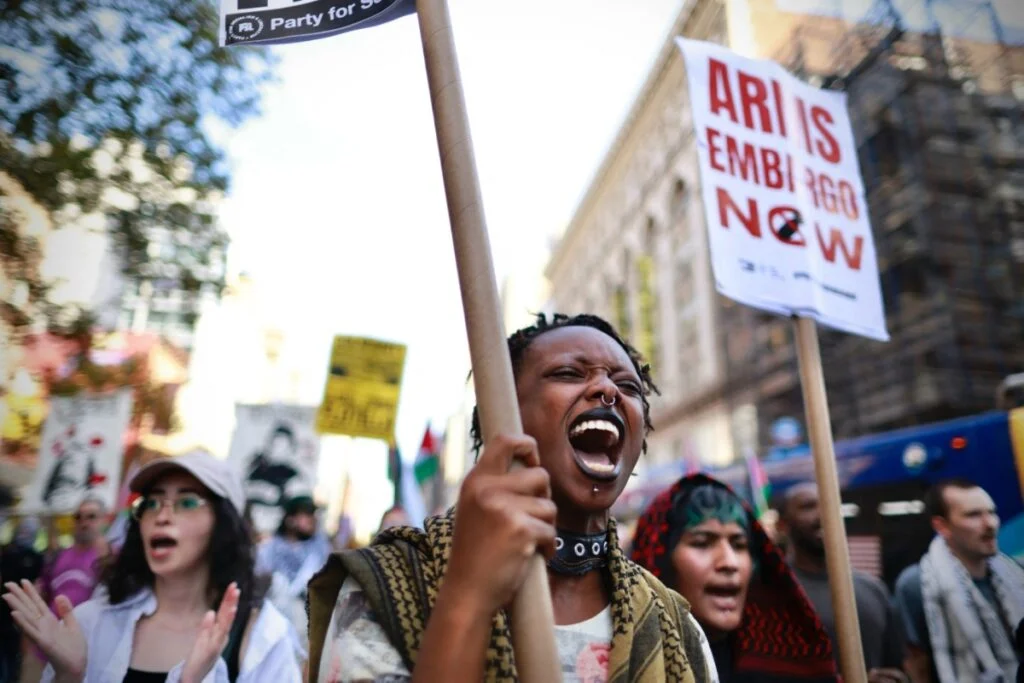
Why America’s Global Image Matters
The worsening health of democracy has become a problem in countries around the world. According to Freedom House’s annual assessment, the average level of global freedom across more than 200 countries and territories has decreased for 20 consecutive years. The decline has been especially steep in the United States. Earlier this year, the research institute V-Dem downgraded the country from a “liberal democracy” to an “electoral democracy,” stating that “democracy in the USA has fallen back to the same level as in 1965,” the year of the Voting Rights Act’s passage.
Across the 36 nations surveyed by Pew this year, a minority of respondents said they believed the U.S. government respects the personal freedoms of its people, while a clear majority said it does not. The share of respondents who say the United States respects personal freedoms has dropped by double digits in 12 of 13 countries where Pew also asked this question in 2021, at the start of President Joe Biden’s term. The decline has been particularly sharp in Europe. For instance, five years ago, 61 percent of Swedes said the United States respects individual liberty; today just 27 percent do.
This is a striking contrast with the findings of previous surveys. During past moments when anti-American sentiment ran high, people in many foreign countries still thought well of the United States’ commitment to protecting the freedoms of its citizens. In 2008, the last year of Bush’s second term, the United States received mostly positive marks: in 20 of the 23 countries polled, majorities or pluralities said the country respected personal freedoms. Today, by contrast, the share of the public who hold this view has plummeted to all-time lows in 15 countries that Pew has surveyed regularly over the years, including countries that enjoy close relationships with Washington such as Australia, Italy, the Netherlands, Poland, and South Korea.
The dramatic decline in international opinion of America’s democratic commitment would seem to echo international disapproval of specific U.S. policies of the past—declines that were largely temporary and eventually rebounded. After all, during Trump’s first term, foreign publics largely disapproved of what they saw as the United States’ retreat from its previous role as leader of the global order. They were critical of Trump’s decision to withdraw the United States from multilateral treaties and trade agreements. And they opposed the administration’s policies of putting up barriers, whether in the form of restrictive immigration policies or in the form of a wall on the U.S.-Mexican border.
Salvaging America’s Global Image
Across the 37 nations polled in 2017, a median of just 19 percent approved of Trump’s withdrawing the United States from climate agreements and just 18 percent supported his pulling the country out of major trade agreements. Sixteen percent approved of the border wall or tighter restrictions on people entering the United States from several majority-Muslim countries. And only 34 percent approved of Trump’s decision to withdraw the United States from the Iranian nuclear agreement.
Attitudes toward remained largely negative throughout Trump’s first term and fell even further in 2020 in response to his administration’s response to the COVID-19 pandemic. But they recovered somewhat during the Biden administration. Biden’s ratings never reached the sky-high global ratings of President Barack Obama, but he was viewed more positively than Trump, and approval of the United States’ approach to world affairs and its respect for individual liberties at home, returned or nearly returned to pre-Trump levels in many countries during his presidency. Favorable opinions of the United States declined again when Trump returned to the White House in 2025, but they tended to be slightly higher than they were at the end of his first term.
The outlook since then, however, has been markedly more negative. International audiences once again disagree with specific policies of Trump’s agenda. A median of just 28 percent across the 36 nations surveyed this year approve of Trump’s immigration policy. A median of 18 percent approve of his tariff regime. And last year, when asked whether they had confidence in Trump’s ability to handle climate change, just 21 percent of people across 24 countries said they did.
The disapproval of Trump’s approach to immigration, trade, and climate policies are hardly surprising given the global reactions to his first-term policies. But international audiences also clearly view Trump’s second-term foreign policy differently from that of his first.
He has used hard power much more liberally, carrying out an operation to capture Venezuelan President Nicolás Maduro in Caracas and launching a war in Iran. In our survey, Trump gets mostly poor ratings for both actions: a median of just 22 percent approve of the Venezuela operation and only 20 percent approve of the way he has handled the war in Iran. As the war continued, attitudes toward the United States grew more negative across a diverse set of countries, including Greece, India, Italy, Kenya, South Korea, Sri Lanka, Sweden, and Thailand.
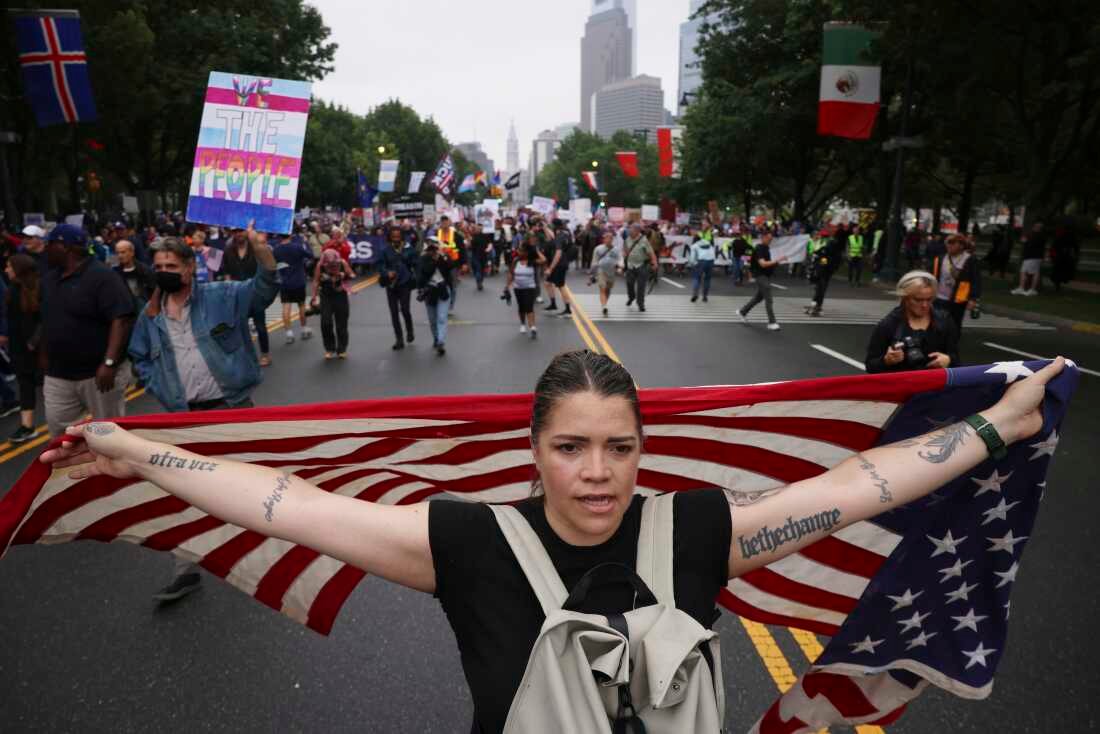
America’s Global Image Slides
Trump did not use military force to acquire Greenland, but Europeans have taken note of his refusal to rule it out. Among the ten European nations polled, approval of Trump’s Greenland threats is no higher than 18 percent, in Hungary. Just three percent of Swedes approve.
The backlash to Trump’s foreign policy might appear similar to the global opposition to the exercise of U.S. hard power by previous presidents. Take the Bush administration’s war in Iraq and its “war on terror.” Then, as now, much of the world believed the United States was going its own way, not listening to or considering the interests of other nations, and unilaterally using military force in defiance of widespread international opposition.
This was especially true among key European allies of the United States. In 2007, 11 percent of French adults believed the United States considers the interests of countries like theirs when making foreign policy; today, ten percent do. The number of German and British adults who believe the same is also essentially unchanged, from 26 percent in 2007 to 23 percent today in Germany and from 23 percent in 2007 to 26 percent today in the United Kingdom. Across the 36 nations surveyed in 2026, a median of 32 percent believe the United States takes into account the interests of countries like theirs a great deal or a fair amount in its foreign policy decisions.
Obama was generally more popular internationally than George W. Bush, but his drone strikes in Africa and the Middle East also faced considerable global opposition. In 2014, a median of 74 percent of respondents across 44 countries opposed U.S. drone strikes in places such as Pakistan, Somalia, and Yemen. Trump’s second-term policies are of a piece with these internationally unpopular interventions.
But they also suggest a different underlying understanding of U.S. power. For many foreign populations, Trump’s second term combines the type of unrestrained use of military force they have disliked in previous administrations with the abandonment of the United States’ historic leadership role that they disliked in his first administration. In their view, America under Trump is unleashed from constraints, norms, and commitments to allies.
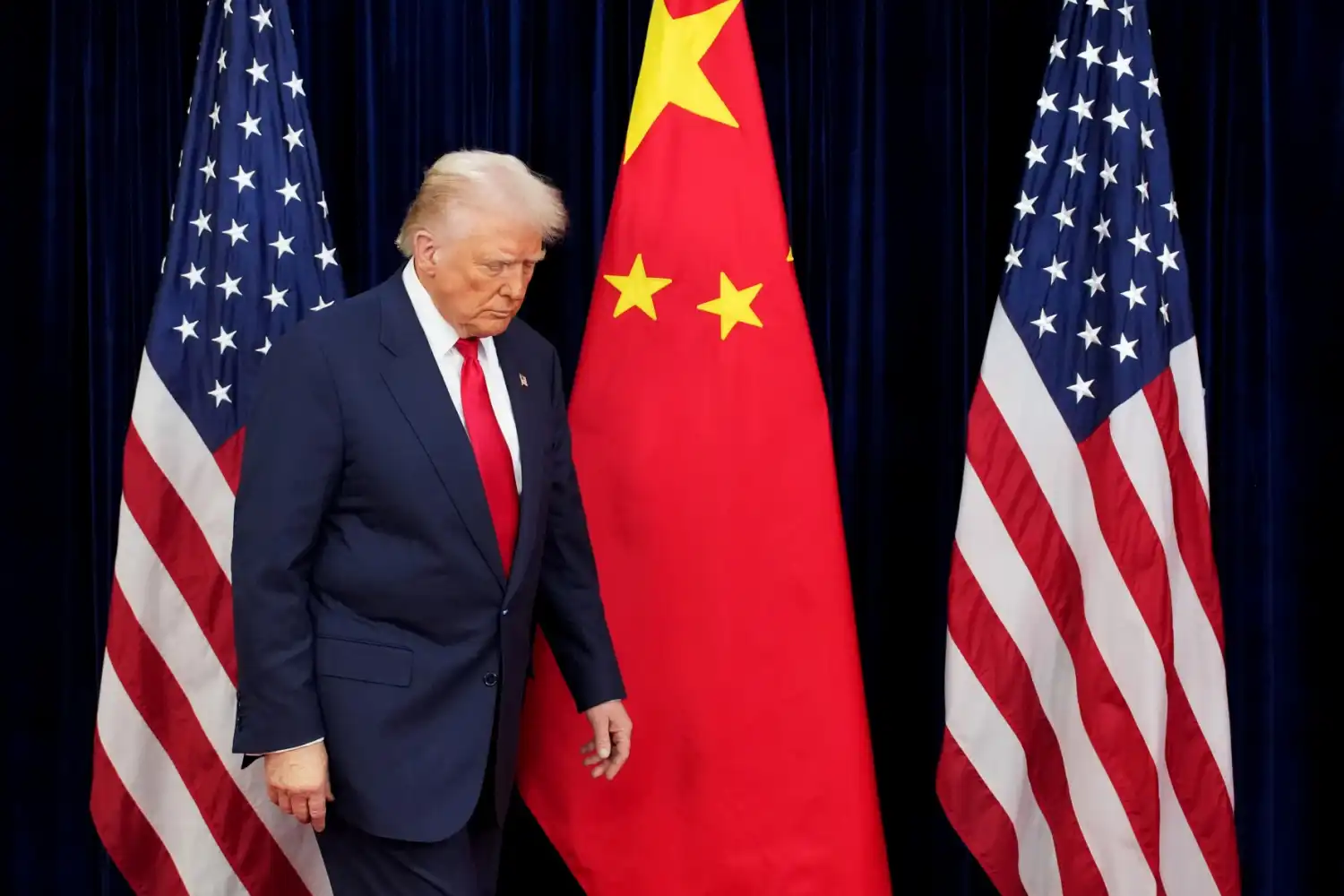
How America’s Global Image Fractures
For eight decades, the United States has been the leader of a liberal international order it helped design. It has not always lived up to the ideals that order was supposed to promote, but as its hegemon, it has felt a certain responsibility for global peace and stability and has generally sought cooperation with other countries to address major international challenges. Today, foreign publics express strong doubts about Washington’s commitment to those public goods.
Since 2023, the share of the global public who believes the United States contributes to peace and stability has shrunk significantly in 19 of 22 countries for which data is available. It has declined by 30 percentage points or more in Australia, Canada, Poland, the Netherlands, and Sweden. The share of the public who consider the United States a reliable partner has dropped significantly in 14 of 17 countries where trends are available since 2022. It has fallen by 30 points or more in Australia, Canada, France, Germany, Italy, the Netherlands, Spain, Sweden, and the United Kingdom.
This loss of faith suggests something more fundamental about the nature of current dissatisfaction with America. The United States is not meeting the expectations many around the world have for the standard-bearer of an enlightened global order.
It may still be possible for the United States’ image to recover as it has during previous crises. During past moments of unpopularity, the United States has been able to draw on a reservoir of goodwill, along with an enduring ability to attract people from around the world to the principles it has promoted. But having swapped soft power for hard power and having abandoned its commitment to the freedoms of its own citizens in the eyes of much of the world, it will have to demonstrate that it still cares about those ideals. If it does not, the reservoir may one day run dry.