
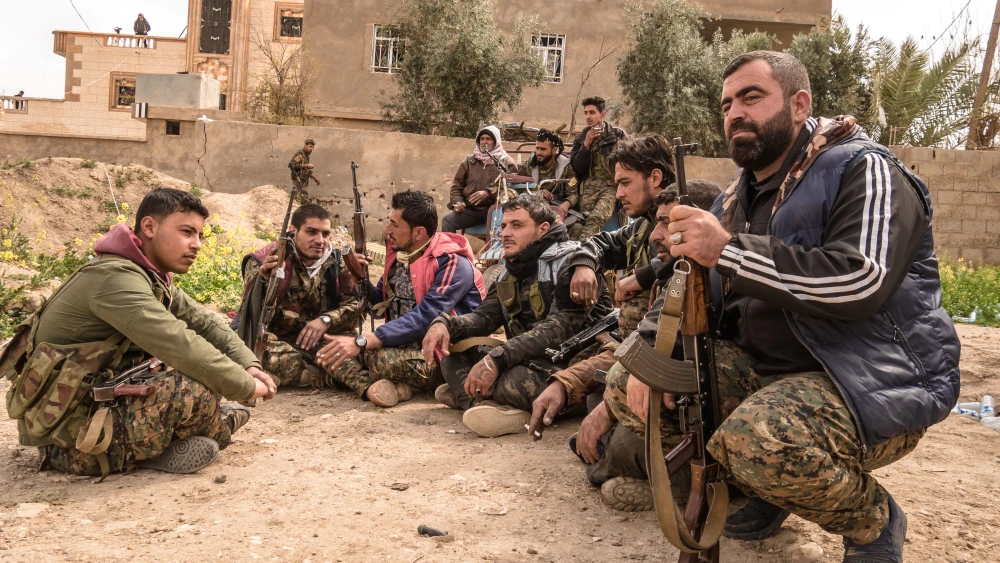
Kurdish reversal accelerates as the SDF disbands and Washington ends Peshmerga assistance. Western support has shifted toward centralized governments in Syria and Iraq, leaving former Kurdish allies abandoned despite their pro-Western orientation.
Kurdish reversal has reached a critical juncture, not through sudden military defeat but through the steady erosion of Western support and the reassertion of central state authority in Syria and Iraq. The disbanding of the Syrian Democratic Forces on August 25 and the dissolution of the Kurdish-led Autonomous Administration of North East Syria represent the latest and most decisive setbacks in a half-decade of retreat.
A decade ago, Kurdish forces controlled a contiguous territory stretching from the Iraq-Iran border to within 65 kilometers of the Mediterranean coast, presiding over oil resources, agricultural lands, and vital water sources. That position derived from state collapse, Kurdish organizational capacity, and a secular, pro-Western orientation that made Kurdish forces indispensable to American-led operations against the Islamic State.
Yet the Kurdish reversal now accelerates precisely because Washington has shifted its backing to centralized governments in Damascus and Baghdad, judging stability more valuable than partnership with stateless allies. The KRG in Iraq faces the end of American security assistance and the loss of independent oil export rights. Syria’s Kurds have traded territorial control for cultural concessions and advisory positions. The reversal stems partly from Kurdish political fragmentation, but primarily from a Western gamble that centralized Islamist and Iran-aligned governments will serve stability better than former allies.
Kurdish Reversal Accelerates With SDF Collapse
The disbanding of the Syrian Democratic Forces (SDF) on August 25 and the dissolution of the Kurdish-led Autonomous Administration of North East Syria mark the latest in a series of setbacks to Kurdish political fortunes in the region over the last half-decade.
A decade ago, Kurdish forces had reached an unprecedented high point. A contiguous area of de facto Kurdish control stretched from the Iraq-Iran border in the east to Afrin in Syria in the west, just 65 km. from the Mediterranean coast. This area of control was divided between three rival and squabbling pan-Kurdish political movements: the Kurdish Workers Party (PKK) via its franchise in Syria; the Kurdish Democratic Party (KDP), led by the Barzani family in the western part of the Kurdish Regional Government (KRG); and the Patriotic Union of Kurdistan (PUK), led by the Talabanis in the eastern part of the KRI.
But while divided politically, the authorities created by these organizations presided in a contiguous space over oil resources, rich agricultural lands, and vital water sources.
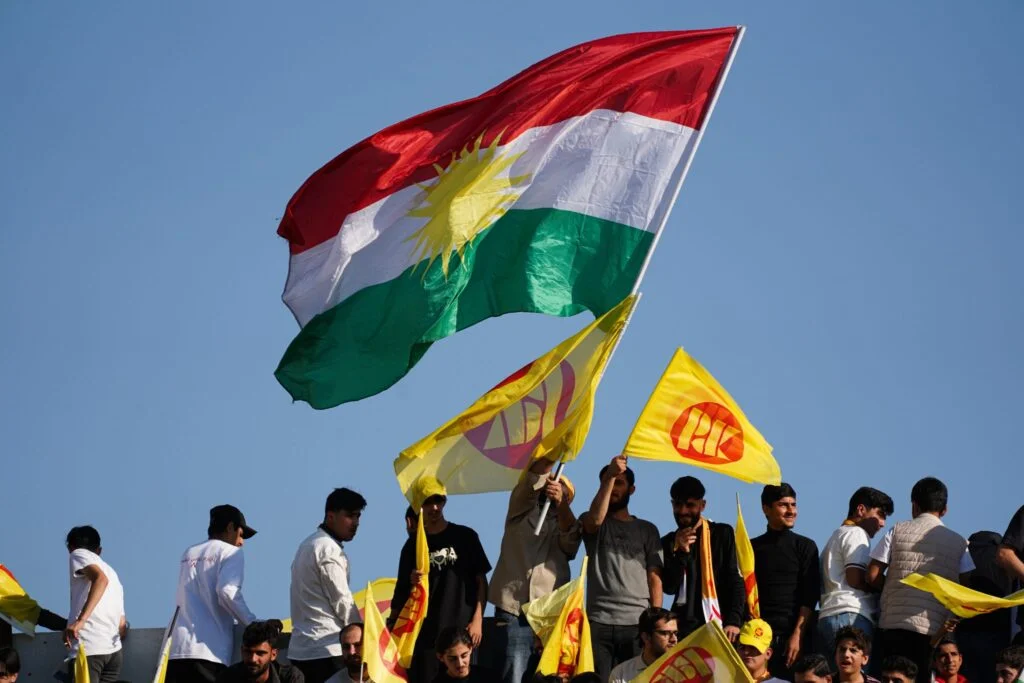
Why Kurdish Fortunes Rose Then Fell
The rise in Kurdish fortunes across this area derived from a number of factors: most importantly, central state authority had contracted or collapsed across large swathes of both Syria and Iraq. In the Hobbesian reality that ensued, militias based on ethnic, religious, or tribal identity were flourishing.
Amid this chaos, Kurdish forces stood out for their secular and pro-Western orientation, their capacity for centralized organization, and their willingness to fight to defend their areas of control. All of these were of direct relevance to Western countries whose interests were threatened by the advance in the collapsed and fragmented spaces both of independent and murderous Sunni jihadi militias and of the Shi’ite militia archipelago controlled by Iran.
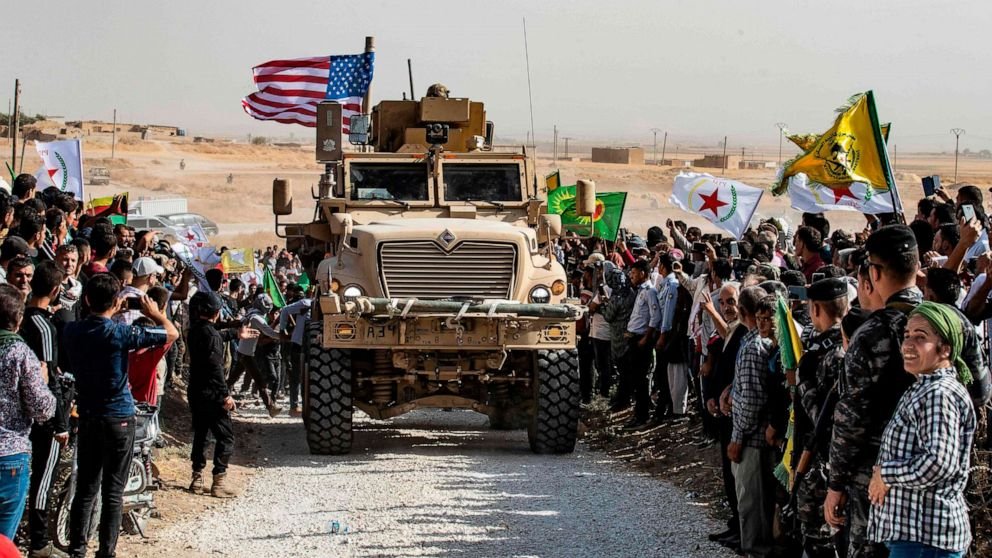
The Kurdish fighters of the Peoples’ Protection Units (YPG) formed the key infantry element in the US-led, successful rollback of the Islamic State “Caliphate’ in Syria. In northern Iraq, the longer established KRG formed a bastion of stability and security.
As a result of these developments, Kurdish fortunes reached their highest point in about 2016. Over the subsequent years, external events with problematic Kurdish governance and management have combined to very substantially reduce the Kurds’s holdings and standing.
The 2017 Referendum Proved Disastrous
As it turns out, the KDP leadership of Iraqi Kurdistan launched a premature and insufficiently prepared independence referendum in September 2017. The referendum resoundingly confirmed Kurdish desires for statehood – 92% of votes cast were in favor of secession.
But the vital diplomatic groundwork and military preparation necessary to sustain a bid for sovereignty had not been carried out. Neither the US nor any regional country offered practical support for the establishment of Kurdish statehood (only Israel offered support in principle, without any practical pledges).
The Iraqi Kurdish forces were also not united, with the PUK deeply divided and skeptical regarding the decision to go for independence at that time.
The result: the Iraqi army and the Iran-supported Shi’ite militias, who are the de facto wielders of power in Iraq, launched a military campaign against the Kurdish area to snuff out Kurdish independence in its cradle. The Kurds fought back and avoided destruction, but lost 40% of their lands, including the vital, oil-rich Kirkuk area.
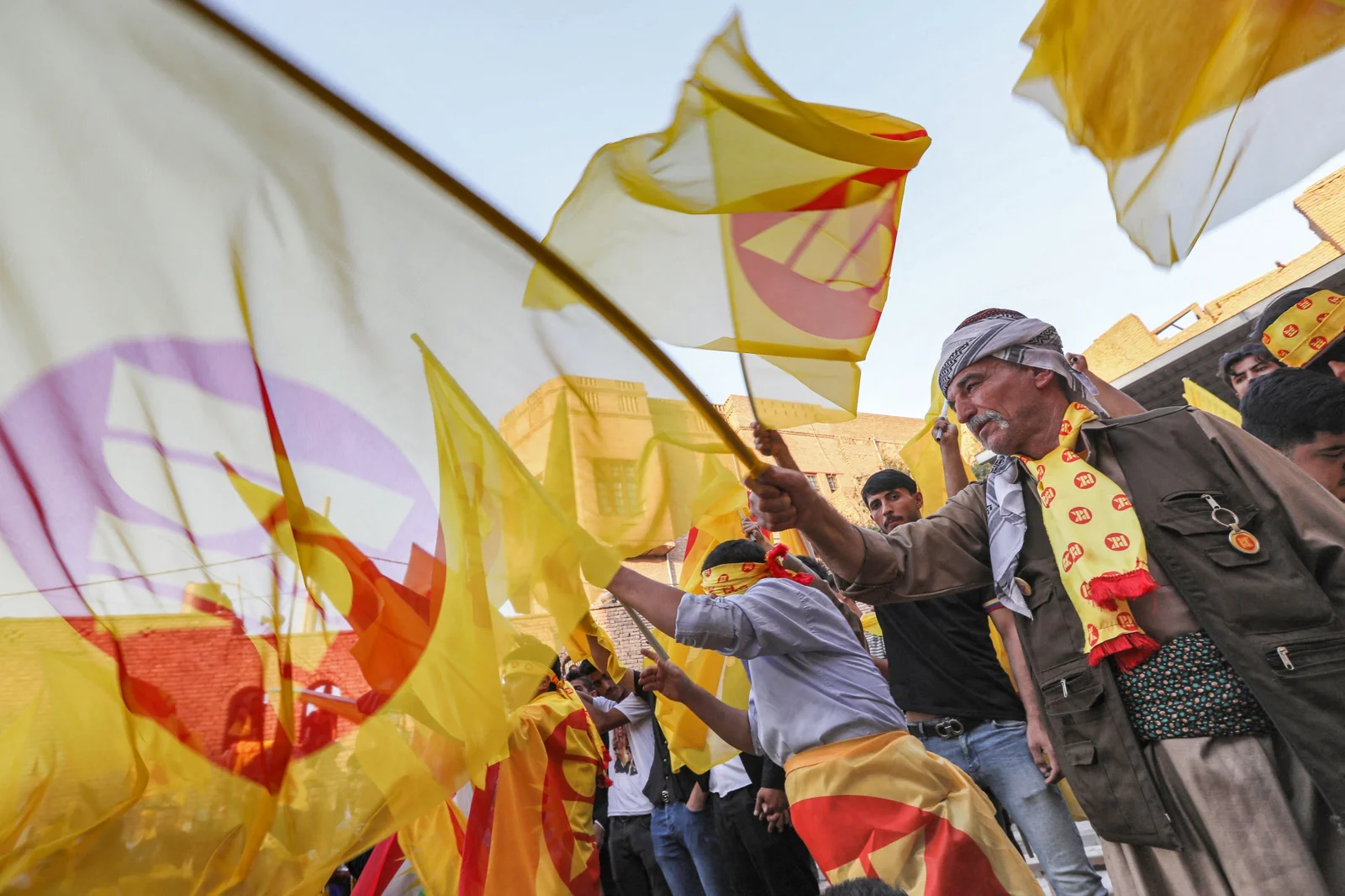
The KRG Loses Its Oil Independence
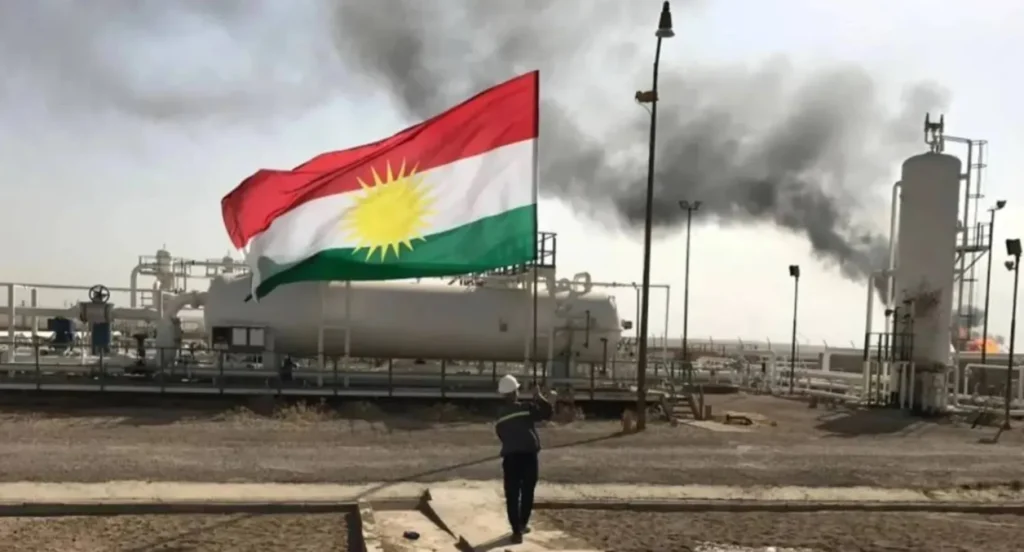
In the subsequent years, the truncated KRG has faced further setbacks on the political and particularly economic fronts. In February 2022, Iraq’s Federal Court ended the KRG’s ability to independently export oil, ruling that only the central government in Baghdad has the right to enter agreements with oil companies for export. A 30-month freeze on oil exports resulted, bringing massive losses in revenues for both the KRG and Iraq.
The issue was resolved by agreement in September 2025. But the agreement, while avoiding financial catastrophe for the KRG, has resulted in a significant additional loss of autonomy. According to its provisions, the KRG has formally relinquished any claims to independent sale of oil. All crude oil produced in the Kurdistan region’s fields is now delivered directly to Iraq’s federal State Organization for Marketing of Oil (SOMO).
Washington Plans to Desert the Peshmerga
In a further setback, the US is now planning to end security assistance to the KRG’s armed forces, the Peshmerga. The KRG has been subjected to a series of Iranian attacks since the recommencement of war in February of this year. But with the fight against ISIS formally concluded, Washington evidently sees no reason to continue supplying its erstwhile ally.
Depleted, stripped of economic independence and now facing the possibility of being deserted by its closest ally, the KRG in Iraq is facing an uncertain future.
US Seals the Fate of Syrian Kurds
In Syria, meanwhile, the US decision to back the emergent Sunni Islamist regime in Damascus effectively sealed the fate of the Kurdish autonomous administration. The Syrian Kurds sought to hold their hard-won autonomy for as long as possible. But a swift military push in January – and according to sources, coupled with US advice to Arab parts of the SDF not to fight government forces – led to the swift retreat of the SDF’s remnants to the core Kurdish areas of Syria’s north east. The force was then required to negotiate its own dissolution.
The deal now concluded with Damascus represents the effective eclipse of the de facto Kurdish autonomy, which has ruled Syria east of the Euphrates over the last decade. The agreement does not represent a full-blown surrender of Kurdish rights, or a return to the situation that pertained under the Assad regime. But it is a long way from the 2013-2026 situation.
Kurdish will be permitted to be taught in schools. Stateless Kurds in Syria will be given citizenship. But Mazloum Abdi, the de facto leader of Syria’s Kurds, goes from ruling 30% of Syria to being an “adviser” to President Ahmed Sharaa. Ilham Ahmed, former head of foreign affairs for the Autonomous Administration, is now to be an appointed member of the puppet “parliament” in Damascus.
Kurdish Reversal Stems From Western Gamble
The reasons for the reversal of Kurdish fortunes in recent years are manifold. Partly, Kurdish political divisions and the failure to capitalize on diplomatic possibilities during the years of ascendancy must bear responsibility.
Centrally, though, the Kurdish position has diminished because Western countries that had allied with the Kurds during the period of civil war and state collapse have now elected to support centralized state governments in Syria and Iraq, in the interests of stability. As a result, the Kurds now find themselves expendable.
This is something of a gamble on the part of the West. It appears to derive mainly from the close links of the current US administration to Turkey and Qatar, combined with the counsel of the Islamist-appeasing British government. The result is that the US is now backing anti-Western movements in power in Syria and in Iraq.
These include the Coordination Framework (a coalition of pro-Iran Shia militias and parties) in Iraq, and Sharaa’s Sunni Islamist Hayat Tahrir al Sham (HTS) regime in Damascus. The advisability of backing forces of this kind is deeply questionable, of course. But for now at least, Washington seems set on it.
As a result, former (solidly pro-Western) Kurdish allies are being abandoned. If, and when, the current strategy fails, the Kurds may need to be reached again. Hopefully, by the time this occurs, they will have developed the unity and institutions needed to take advantage of the moment to the full.