
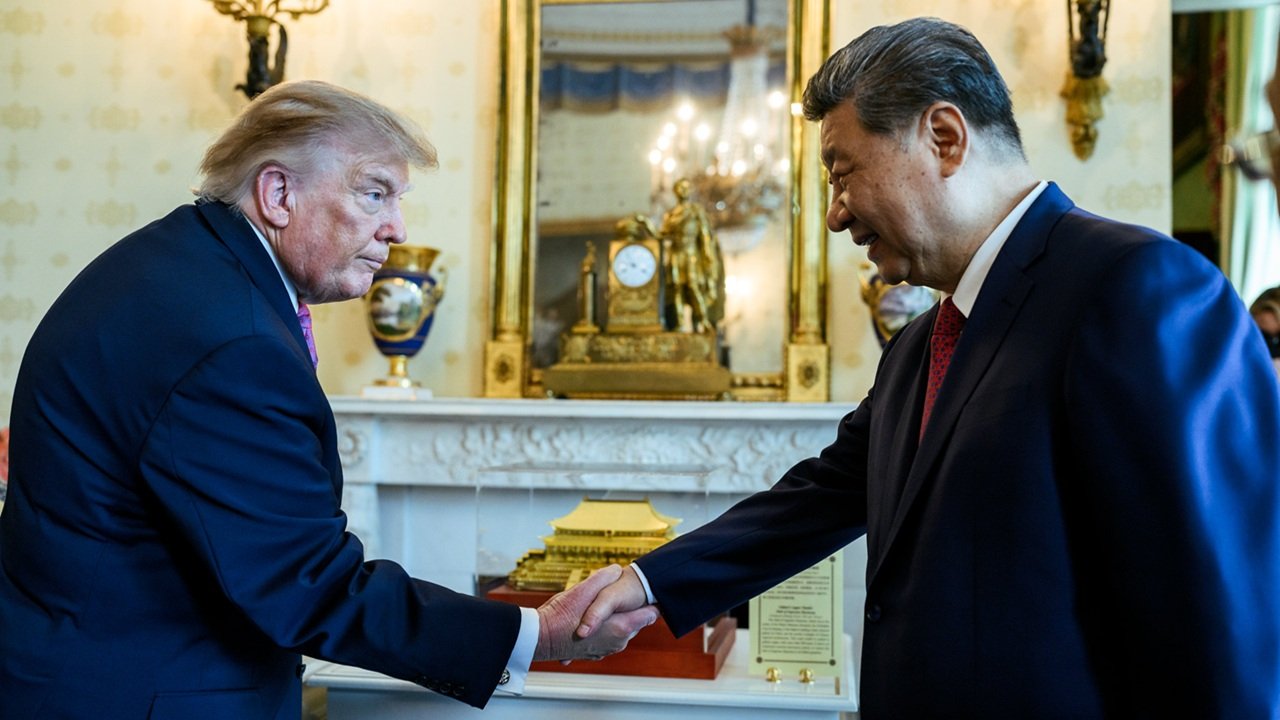
Recent diplomatic engagement between Washington and Beijing has eased tensions temporarily, but unresolved disputes over security, technology, regional influence, and strategic interests suggest that long-term rapprochement remains difficult to sustain.
Rubio’s Unusual India Visit
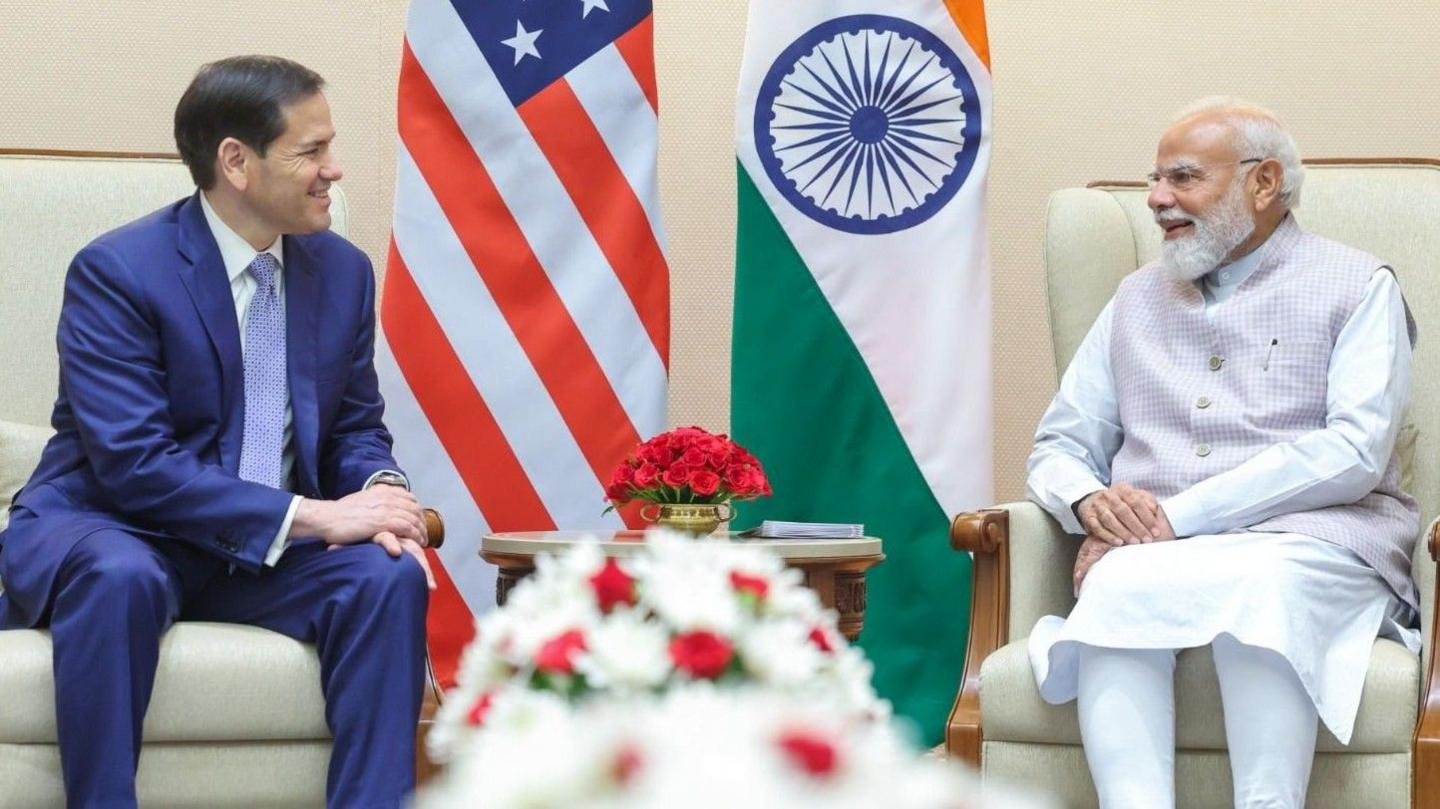
Amid strained US-India ties and rising volatility in global oil prices and supply chains, US Secretary of State Marco Rubio arrived in India on October 20 for a two-day visit. This time, he bypassed New Delhi and went straight to India’s financial capital, Mumbai, and its oil-refining hub, Jamnagar. The unusual optics raise the question of whether India’s geopolitical utility to the United States as a counterbalance to China has eroded. The answer is both yes and no.
US-China Rapprochement in Focus
However, a deeper analysis is needed, especially against the backdrop of last month’s meeting between President Xi Jinping and US President Donald Trump, which appeared to signal a thawing in the strategic rivalry. The US-China strategic rivalry spans multiple arenas of competition, whether technological, military, economic, financial, or geopolitical, leaving the majority of foreign policy experts with the impression that both powers are inevitably doomed to fall into the “Thucydides trap,” in which the rivalry between an emerging power and the established hegemon is bound to end in a war. However, during Trump’s May 2026 visit to China, Xi Jinping asked whether the two countries could overcome international relations’ most famous dilemma.
President Trump seemed to think so when he broke with protocol and personally welcomed the Chinese president at Joint Base Andrews Airport on September 23, marking the first time since 1962 that a sitting US president had received a foreign leader that way, other than the pope. More mutual gestures of goodwill followed; President Trump called the bilateral relationship a “truly great friendship,” and Xi compared Trump’s “Make America Great Again” slogan to his own project for the “Rejuvenation of the Chinese Nation.” In a strange comparison of the two countries, Trump showed uncharacteristic humility, remarking that US history “goes [back] 250 years, which is great. We are proud of it, but [China’s] goes [back] 6,000 years.”
Over the last 11 months, Trump and Xi have met three times and are likely to meet again at the APEC summit in China in November 2026, followed by Xi’s US visit for the G20 summit in Miami. Beneath these visits and pleasantries lies an implicit understanding between Beijing and Washington: to manage the strategic rivalry and avoid confrontation. Xi summarized his vision for the bilateral ties as “constructive strategic stability.”
Managing Competition Carefully
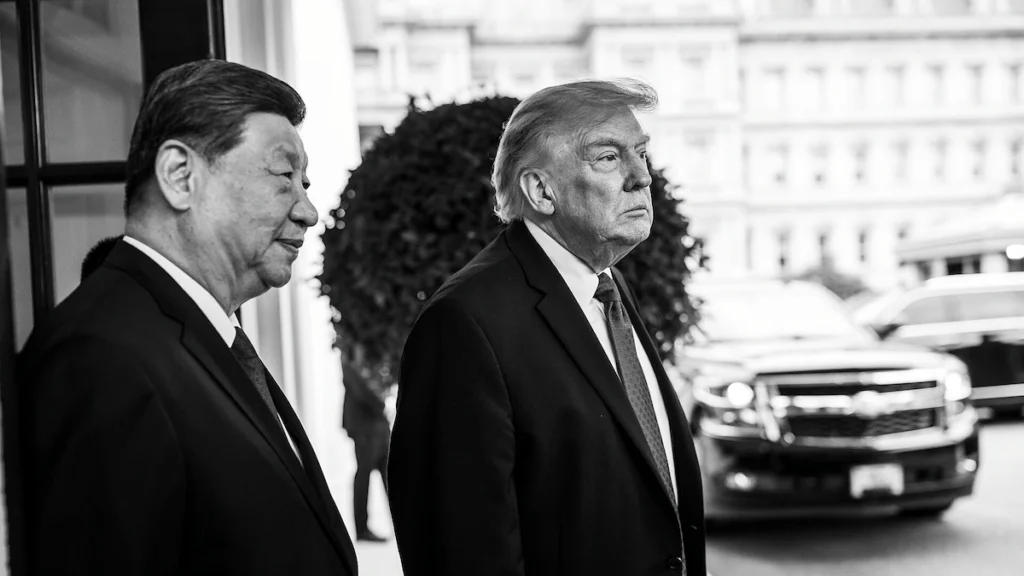
To achieve this objective, Xi suggested strengthening communication through regular dialogues between the military, diplomatic, and political leaders of the two countries. He also recommended peaceful coexistence and cooperation to address shared challenges, such as the risks of artificial intelligence. Furthermore, Xi emphasized the need for people-to-people contact and extensive educational exchanges between Beijing and Washington.
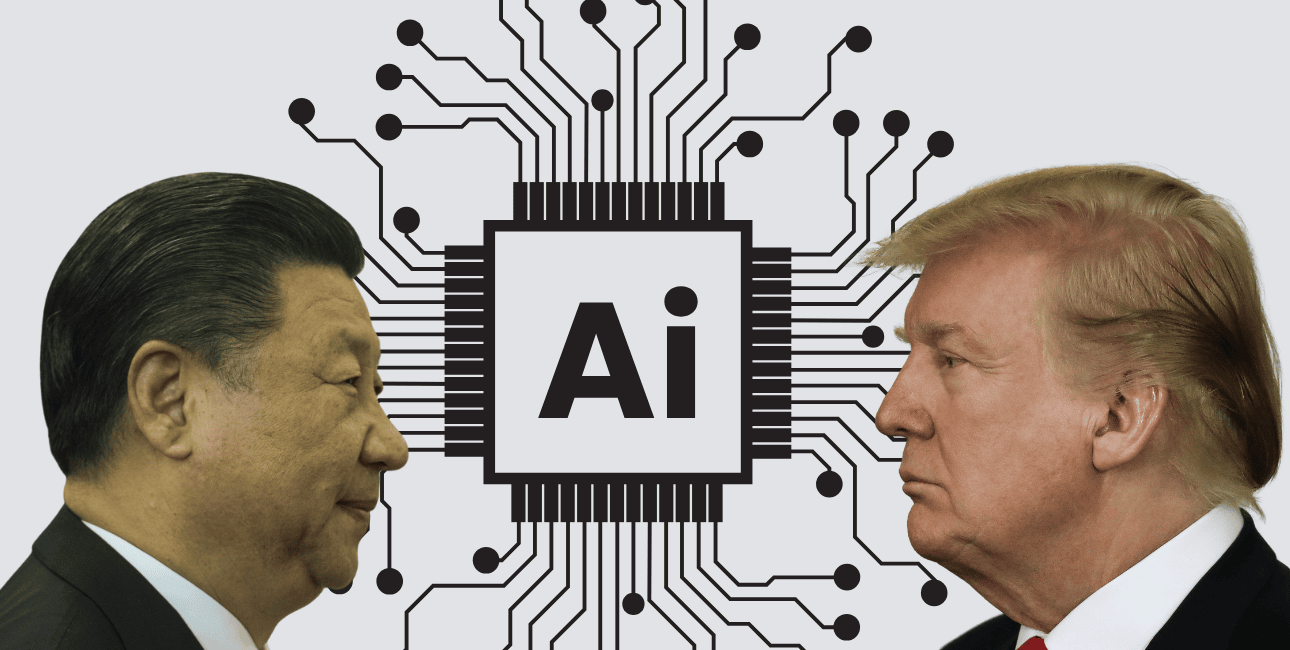
However, the high-profile Xi visit ended without a joint statement or even a communiqué, let alone concrete agreements between the two countries. The two sides deliberately avoided sensitive issues such as Taiwan and Iran. The talks also failed to resolve disputes over semiconductor export controls, computing infrastructure, and model distillation. Additionally, structural differences persist on AI: Trump, fearing China will outpace the United States in the AI race, rejects regulatory oversight to maintain the United States’ lead, unlike Xi, who prefers strict human control and collaborative risk governance to prevent misuse and unintended threats from frontier AI models.
Limited Outcomes From Diplomacy
The only concrete outcome was that the United States extended the tariff truce until January 10, 2027, implying that China will not face major tariff impositions under the Lindsey Graham Act for buying Russian and Iranian oil in the immediate future. On AI, both parties agreed to a US-China Super Intelligence Dialogue, scheduled for November 2026, and a communication channel to address AI-related threats.
Several Indian commentators, including academics and veteran diplomats, argue that US-China strategic rivalry is a zero-sum game, with no scope for rapprochement, let alone long-term peaceful coexistence. They further argue that because the September conference produced no concrete concessions from China and left core ruptures on issues like Taiwan, Iran, and the Indo-Pacific untouched, any goodwill is, at best, short-term. In the final analysis, both superpowers are inevitably heading toward a decisive and comprehensive conflict across multiple geographic theaters and domains.
India’s Strategic Anxiety
However, these assessments warrant skepticism. Partly, they stem from India’s fear that if the United States decides to engage China bilaterally to avoid confrontation, it may no longer need India to counterbalance China in the Indo-Pacific, which would be bad news for New Delhi. India’s fears are not completely unfounded. US Deputy Assistant Secretary of State Christopher Landau said in his speech at the Raisina Dialogue that the United States will not repeat its mistakes with China with India (ie, allow India to outcompete the US through unequal trade relations and facilitate the rise of a new geostrategic rival).
Such statements suggest deep-rooted, hidden motives. India, already skeptical of the West and its colonial and Cold War mindsets, bristles at such rhetoric.
China is India’s strategic adversary. Indo-China ties plummeted after the 2020 Galwan crisis, and US military and technological cooperation is critical for India to counter Chinese ambitions in the Himalayas and the Indian Ocean. In 2024, India and China agreed to de-escalate and disengage from their armed forces buildup along the Line of Actual Control (LAC), the de facto, militarized boundary between India and China. However, India remains highly cautious and guarded about Chinese designs, as China supported Pakistan with intelligence, equipment, and logistics in the four-day Indo-Pakistan war in May 2025. In any future India-Pakistan escalation, China will likely support Pakistan and could open a new front on the India-China border to put pressure on India.
US-China Rapprochement Faces Limits
Furthermore, China continues to build and sustain pressure on India by strengthening its intelligence, economic, and defense footprint in India’s immediate neighborhood. India also understands that in a future escalation with Pakistan and China, it cannot rely on Russia, as Moscow has a robust strategic partnership with Beijing.
Ongoing friction between India and the United States also heightens New Delhi’s fears. The current bilateral situation between the two countries is far from cordial for several reasons. India rejected Trump’s claims to have arranged an India-Pakistan ceasefire during May 2025. The US has stalled engine supplies for India’s indigenous Tejas fighter-plane models because of the Iran War. India is uneasy about US diplomatic outreach to pro-Pakistani Islamist entities in Bangladesh such as Jamaat-e-Islami. Then, there are the cryptocurrency and defense deals involving the Trump family and associates with Pakistan.
Hence, despite signing four foundational agreements on defense, intelligence, and logistics, the bilateral equation between New Delhi and Washington, DC, remains tinged with distrust.
A Tactical Pause, Not Change
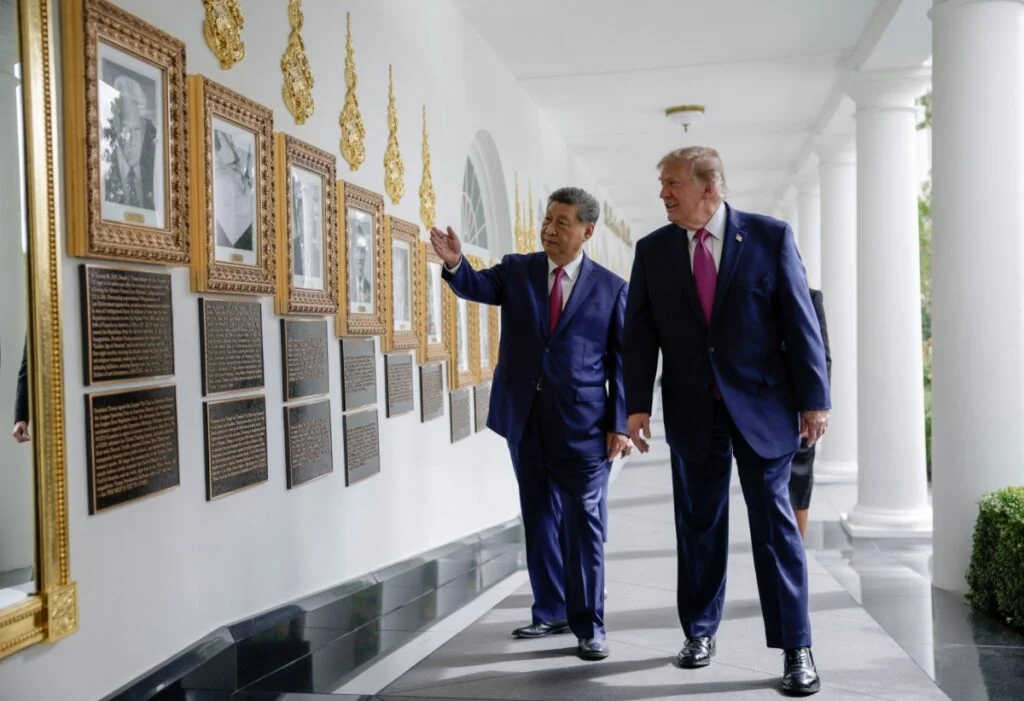
However, India’s skepticism about the United States aside, there are more compelling reasons to doubt the future of US-China rapprochement. The fundamental disagreements and disputes between the two superpowers will likely turn the warming bilateral climate cold again. At best, the September summit should be seen as a tactical pause driven by both powers’ limitations rather than a strategic breakthrough. This does not mean war is inevitable, but it does mean that, in the long run, the US-India partnership will remain indispensable to balancing China.