
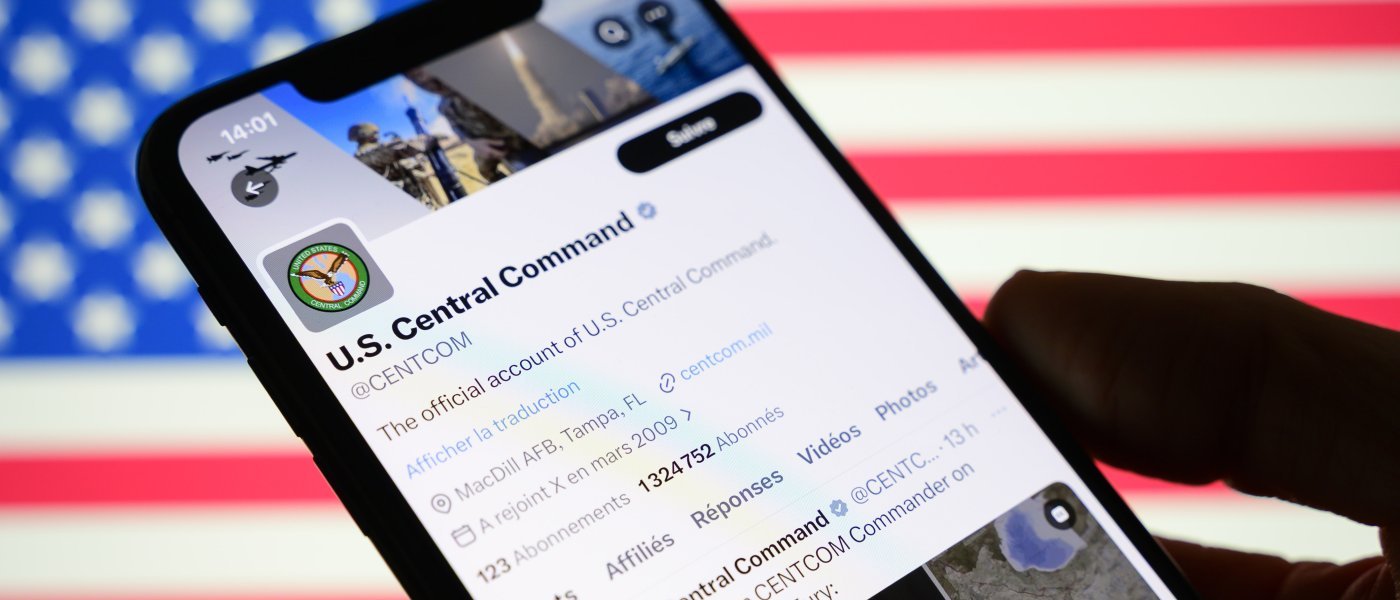
The Iran war reveals a surreal gap: US-Israeli battlefield success fails to translate into information advantage. Iran weaponizes AI deepfakes and elite-corruption narratives online. Free societies must restore credibility, standing task forces, and speed—not mimic authoritarian lies.
Iran Information War defines modern conflict as missiles, memes, markets, and manipulated perception collide. Iran Information War reshapes strategy, Iran Information War pressures democracies, and battlefield credibility survives only when truth moves faster than fiction. Iran Information War
Iran Information War and the Collapse of Battlefield Narrative Dominance
We live in a surreal world in which battlefield success does not necessarily translate into an information advantage. Belief is suspended from reality largely because most of us spend hours of our waking lives bombarded by images, memes, and ephemeral social media content that is both tailored and increasingly augmented by AI. For every official press conference, no matter how masterful or awkward, viral pop culture pastiches blitz the senses. Homo economicus succumbs to giggles, fear, dopamine, and Attention-Deficit/Hyperactivity Disorder (ADHD).
Look no further than the war with Iran. The United States and Israel achieved unparalleled success on the battlefield, sinking large portions of Iranian naval capability and setting back its ballistic missile and nuclear program by years, if not decades.
Yet, Iran counterattacked as much online as it did with salvos of ballistic missiles and drones. While U.S. leaders struggled to make a compelling case for the war, Iranian-linked accounts flooded social media with deepfakes, false claims of battlefield success, and narratives painting the conflict as a costly war driven by corrupt elite interests at the expense of ordinary Americans. The war shows that it is increasingly difficult to separate information warfare from conventional military campaigns. Killing your way to victory is only half the battle.
Iran Information War Through the Lens of Classical Strategy
This is a notion that old thinkers would understand. From Sun Tzu to Kautilya, there is a long history of seeing coercion as more than brute force. What has changed is the terrain of perception. Adversaries now can counterattack with ideas online, not just through rumors and battlefield feints, creating a compounding effect that elevates fiction over fact. The result is a new form of cyber-enabled political warfare.
As a result, the United States—along with other free societies—must adapt and align the resources and authorities required to wage a modern war for hearts and minds with the same level of technical acumen with which it conducts joint all-domain operations.
Iran Information War and Tehran’s Digital Counteroffensive
Iran’s information war starts at the top with Iranian state media. Iranian embassies and state-media figures have amplified content from coordinated pro-Iran networks, while the regime has treated internet access as a political tool during the war, reserving it for users who “carry its voice further.” This is consistent with Iran’s use of internet shutdowns and tightly controlled media at times of domestic unrest, such as the recent protests in early 2026.
Within hours of the first strikes, coordinated networks saturated social media platforms with AI-generated footage of Iranian missiles destroying U.S. and Israeli assets abroad, including embassies, military bases, aircraft carriers, and cities.
Iran Information War and the Power of Deepfake Narratives
In the coming days, fabricated claims appeared across pro-Iran networks, including that a U.S. B-2 bomber had been downed and its crew captured, and Iranian state-linked outlets amplified other falsehoods: the shootdown of an F-15, American casualties surpassing over 650 U.S. soldiers killed or wounded, and the death of Benjamin Netanyahu. The fabrications do not need to be believed outright to be effective. Their purpose is to amplify a contested information environment by making U.S. and Israeli battlefield dominance feel disputed and exploiting audiences skeptical of the war. Manufactured Iranian success sets the stage for a more potent line of attack: exploiting Western publics’ distrust of leadership to portray the war as corrupt, costly, and against the public interest.
Iran Information War and the Exploitation of Western Distrust
Iran’s information war has also targeted pre-existing grievances in the American public. Framing the war as a costly conflict with no end in sight is not a hard sell. Americans are skeptical of sustained conflicts abroad, and unforeseen and unpredictable economic consequences are likely to make such conflicts unpopular. For example, an estimated 69 percent of Americans are concerned about higher gas prices from the war.
Iran has exploited this vulnerability by casting the conflict as the project of a detached ruling class. In one instance, Iranian accounts paired fabricated claims of President Trump’s family purchasing oil futures before the initial strikes with messages that ordinary Americans would pay more for energy, bear the human costs of escalation, and sacrifice domestic programs (e.g., healthcare, SNAP food assistance) for another Middle East war. A separate thread framed the war as a distraction from the Epstein files, while deepfakes depicted U.S. soldiers expressing regret and suffering the consequences of a conflict they did not choose.
In a recent CSIS Futures Lab white paper, narratives in this category generated the strongest engagement, outperforming both posts touting Iranian battlefield success and posts driving anti-Israel content.
Iran Information War and Platform-Based Amplification Networks
The campaign’s reach is the product of deliberate infrastructure. Accounts operate in tightly coordinated networks, concentrating amplification within closed communities. Research has shown this taking place on X and Bluesky. On X, accounts purchased Premium verification badges to gain algorithmic and audience credibility, posted at high volume, and relied on accounts within their community to amplify their posts to a larger community.
Some X posts were reposted by verified Iranian and Russian diplomatic accounts, extending the reach to broader audiences. Two such networks identified on X had posts generate over 1 billion views in the war’s first month. Similarly, on Bluesky, CSIS research identified 19 user accounts that were embedded across 15 communities to spread Iranian disinformation. Russia and China further amplified compatible narratives pushing U.S. weakness and elite corruption.
Iran Information War and America’s Path to Strategic Recovery
The United States cannot answer an authoritarian information campaign by trying to imitate an authoritarian state. It has to compete where free societies are strongest, capitalizing on speed, credibility, transparency, and coordination. In the next crisis, the goal should not be to rebut every lie after it spreads. It should be to establish the dominant account early, expose hostile networks quickly, and sustain public trust long enough for battlefield reality to matter.
Before the next crisis, Washington needs to rebuild the institutions that make rapid, credible communication possible. That means restoring public diplomacy and international broadcasting capacity, modernizing platforms such as Voice of America for the social media age, empowering embassy digital teams, and establishing standing information coordination cells across the interagency and every combatant command. The point is to have the people, authorities, and relationships in place before the shooting starts, not to improvise them after the first wave of disinformation has already gone viral.
There is a need to formalize standing information warfare task forces across each combatant command. Often, information operations, psychological operations, and public affairs are separated in U.S. and NATO military headquarters. This is a mistake. Commanders need to combine information effects to include both messaging as well as ways of amplifying and measuring effectiveness in cyberspace.
This new operational approach—whether called cognitive warfare, reflexive control, or morale operations—becomes a key aspect of modern campaigning. In the ideal case, these standing information warfare task forces become joint interagency task forces, complete with representatives from the Department of State and other agencies to help create unity of effort based on pooling key authorities.
These interagency task forces need to have sufficient depth and resources to counterattack in real time. Just like the United States maintains a global response force and regional crisis response forces, it needs to adopt the same posture in the information domain. Perception changes fast on social media, and waiting for authorities and consistent messaging can lead to outright defeat online.
In the first 24 hours of a conflict, speed matters more than polish. The United States and its allies should be prepared to release verified imagery, selectively declassify intelligence, expose coordinated foreign influence networks, and explain the political purpose of military action in plain language to domestic and foreign audiences alike. A press conference is necessary, but it is not enough. The message has to move in platform-native formats through credible voices at the same speed as the falsehoods it is trying to beat.
In the first week, the task shifts from rebuttal to sustained competition. Commanders and civilian leaders need one common operating picture of the information environment, one team measuring which narratives are gaining traction, and one process for adjusting in real time. That team should synchronize public affairs, cyber, intelligence, and military information support functions while respecting their distinct legal authorities. The goal is not to mirror the lie. It is to make the truth travel farther, faster, and with enough consistency that battlefield success, political purpose, and public understanding reinforce one another.
Free societies will never control information as tightly as Iran, and they should not try to do so. Their advantage lies elsewhere—in credibility, alliances, and the ability to expose coercion rather than conceal it. In modern war, credibility is combat power.