
Fertilizer Shock events are currently destabilizing the global agricultural landscape, particularly as disruptions in the Strait of Hormuz ripple through fragile supply chains. In the Sahel, this Fertilizer Shock threatens to push over 50 million people into acute food insecurity by the 2026 lean season. Without immediate intervention to counter the Fertilizer Shock, localized populations face catastrophic hunger. Ultimately, the Fertilizer Shock demands a coordinated regional response.
Regional Impacts of the Fertilizer Shock
The war-time disruptions of international shipping transiting the Strait of Hormuz are spreading through the fertilizer market and affecting supply chains encompassing regions that have no margins to absorb the impact. The Sahel is one such region and now faces a severe threat of widespread hunger, with more than 40 million people already experiencing acute food insecurity and projections rising to above 50 million during the June-August 2026 lean season.
In parts of northeastern Nigeria, localized populations are already at risk of catastrophic hunger — a potential precursor to famine if conditions worsen. The stress predates the current conflict. As of February 2026, in the Lake Chad Basin and across the Liptako-Gourma region spanning Mali, Burkina Faso, and Niger, local conflicts had constrained access to farmland and disrupted market activity.
In Niger and Chad, high dependence on imported food and agricultural inputs had left households exposed to higher food prices prior to the disruption. Across the region, millions of people remain displaced, increasing reliance on markets and assistance at a time when both were already under pressure. Even before February 2026, farmers were selling their livestock early, often at unfavorable terms. Humanitarian agencies, facing funding constraints, had been cutting rations or narrowing coverage.
In other words, people in the Sahel were already getting less food before the onset of the war in the Gulf. In this context, any further increases in input costs or delays in delivery — whether modest or more serious — were bound to have disproportionate effects.
Market Volatility and the Fertilizer Shock
The timing of the Strait of Hormuz’s closure has, indeed, made the regional problem in northern and western Africa far more acute.
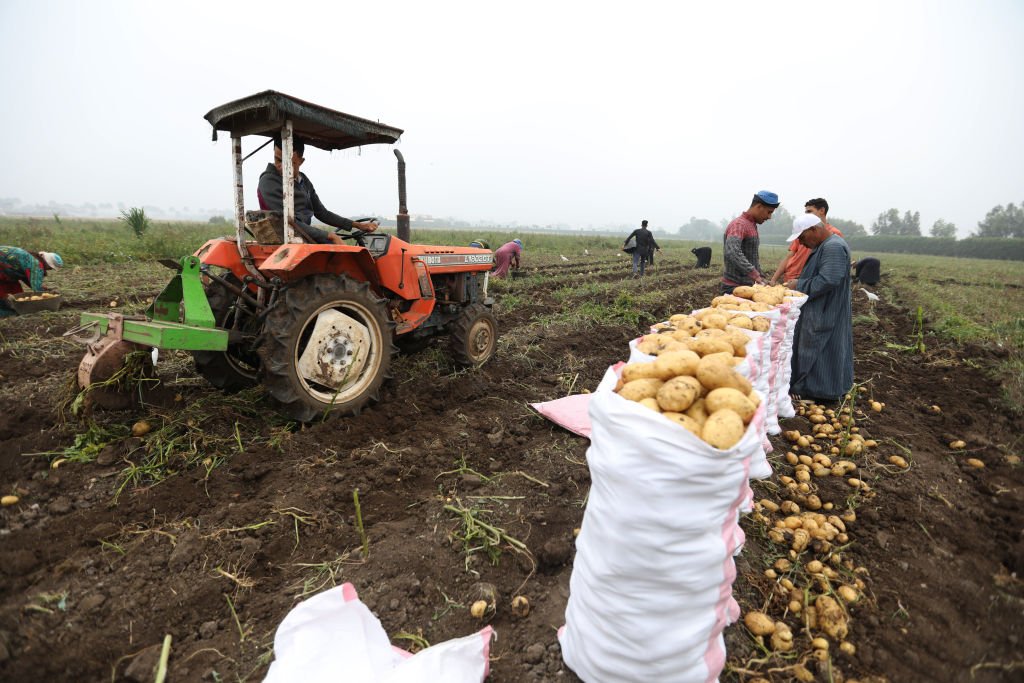
The Sahel’s agricultural cycle, in particular, is compressed into a narrow window tied to the onset of seasonal rains, typically beginning in May in southern zones and moving northward through June and July. Because production is overwhelmingly rain-fed, planting decisions are closely tied to rainfall onset, and crops are grown over short seasonal cycles.
Inputs such as fertilizer must, therefore, be available at the start of the season, and delays in access or financing directly affect application and yields. In many areas, farmers depend on seasonal credit or state-supported input programs. When input prices rise or access to credit tightens, fertilizer use declines, especially in cash-constrained farming systems.
The pressure is already visible in market indicators. Between February and March 2026, benchmark urea prices rose by roughly 46% month-on-month, according to the World Bank, reflecting the tightening of fertilizer flows linked to the conflict.
Several Sahelian importers, already facing currency weakness and tighter access to trade finance, are encountering higher financing costs and delayed procurement at precisely the point in the agricultural calendar when fertilizer purchases are normally finalized. Governments across the region, already under fiscal strain, face increasing difficulty sustaining subsidy programs or extending seasonal credit to smallholders. Some global factors may moderate the shock.
World Bank assessments tracking commodity prices show that as of March, grain inventories remained stronger than during the 2022 food crisis, and fertilizer production outside the Gulf — including in North America and parts of North Africa — provides alternative sources of supply.
But these mitigating factors do not eliminate the immediate problem in the Sahel. Redirecting fertilizer cargoes, securing trade finance, and moving inputs inland through fragile logistics networks takes time the region does not have.
In rain-fed farming systems where planting decisions are fixed within weeks, delays of even a few weeks can translate directly into lower fertilizer application and weaker harvests Reduced application and delayed planting lead to lower yields in rain-fed systems, as crop performance is highly sensitive to the time of rainfall and sowing. In the Sahel, missing the optimal planting window shortens the growing season, reducing yields.
That leaves a narrow margin for action — measured not in months but in weeks. In much of the Sahel, the difference between mitigation and crisis will be determined over the next four to eight weeks, as planting decisions are made and input use is fixed.
The Maghreb Response to the Fertilizer Shock
The neighboring Maghreb is exposed to the same shock but occupies a different position in the chain of energy, fertilizer, and food flows that connect the Gulf to the Sahel. While the region as a whole is vulnerable to the disruption of commerce through the strait, it also has capabilities that could potentially offset it — particularly in Morocco and Algeria, and, in other respects, Egypt.
These capacities, however, are not readily deployable at scale or on short notice to meet Sahelian needs. Morocco holds roughly 50 billion metric tons of phosphate reserves, or about 70% of known global reserves, according to the United States Geological Survey.
Its state-backed fertilizer company, OCP Group, has built distribution networks and agricultural partnerships across Africa, including soil-mapping, agronomy, and fertilizer-access programs in West Africa, giving Morocco an existing platform for targeted support.
But its production is not unconstrained. Moroccan fertilizer output depends in part on imported sulfur, some of which is linked to Gulf supply chains, meaning that disruption feeds back into its own cost structure.
More fundamentally, Moroccan fertilizer exports are globally integrated and increasingly tied to long-term commercial relationships and forward supply agreements, limiting the ability to redirect supply quickly to higher-risk markets without coordinated intervention.
Algeria has substantial natural gas reserves and is well positioned to produce nitrogen-based fertilizers, including ammonia and urea, both of which it already exports.
However, because natural gas is both a feedstock and energy source for nitrogen fertilizers, Algerian production is closely tied to competing domestic and export demands for gas. Moreover, its fertilizer exports are structured around existing commercial contracts, constraining the scope for rapid reallocation.
Egypt is both a significant fertilizer producer (a source of 8% of global urea manufacture) and one of the world’s largest wheat importers (12.5 million tons per year), with major port infrastructure linking Mediterranean and Red Sea routes and handling a large share of its external trade.
At the same time, Egypt faces significant domestic economic constraints, including foreign exchange pressures, high import dependence, and elevated financing needs, which limit its ability to act as a stabilizing force beyond its borders, particularly in periods of volatility.
The Maghreb countries serve as key conduits to the Sahel. Informal and semi-formal trade routes have long moved goods across borders, particularly through southern Libya into Niger and Chad, and in recent years have supported both licit and illicit trade.
In periods of disruption, these networks can respond quickly to price differences and supply gaps. They are not sufficient to stabilize overall supply, but they can influence availability at the margins. None of these countries are themselves insulated from the crisis. Morocco remains exposed to imported sulfur and global fertilizer pricing; Algeria faces competing domestic and export demands for natural gas; and Egypt continues to operate under foreign exchange pressure and high food-import dependence.
None can absorb a prolonged regional shock without cost. Yet all retain greater industrial, financial, and logistical capacity than the Sahelian states most exposed to the current disruption. The relevant question is not whether the Maghreb is unaffected, but whether it remains relatively more capable of absorbing and redirecting risk. On current evidence, it does.
There are also compelling strategic incentives for each of these countries to act. Food insecurity in the Sahel has historically translated into cross-border migration, higher subsidy pressures, informal market expansion, and greater space for armed and criminal networks operating across North African and Sahelian corridors, particularly through Libya and the central Sahara. For the Maghreb, helping stabilize fertilizer and food flows southward is therefore not simply humanitarian policy.
It is a form of economic and border-risk management. Taken together, the Maghreb and Egyptian capacities will not eliminate the shock. They do, however, have the potential to mitigate its effects if supply can be redirected, financing mobilized, and logistics aligned in time. Absent that alignment, production, infrastructure, and trade networks will continue to serve established contracts and domestic needs rather than the areas of greatest vulnerability.
Strategic Mitigation of the Fertilizer Shock
The first requirement is financial. Importers face tighter credit conditions as currencies come under pressure and governments struggle to sustain subsidy regimes.
In Egypt and Libya, foreign exchange constraints and rising import costs are already limiting purchasing capacity, with the International Monetary Fund terming Libya’s current situation “unsustainable.” More broadly, funding shortfalls and disrupted financial flows are constraining access to food and agricultural inputs across the region. Without access to trade finance, guarantees, or balance-of-payments support, even available fertilizer and food may not move efficiently through formal channels. The second requirement is supply alignment. Production capacity in Morocco and Algeria can mitigate the shock, but only if it is directed toward the markets most at risk.
Moroccan exports are globally diversified, and Algerian production is tied to existing commitments. Redirecting flows toward vulnerable markets may require government-backed arrangements or targeted agreements that alter normal commercial patterns.
The third requirement is logistics. Even where supply and financing are available, delivery depends on whether goods can move in time. Port capacity, shipping routes, storage, and inland transport all become binding constraints under stress.
Egypt’s port and canal infrastructure makes it a critical coordination node for Mediterranean-Red Sea trade, grain flows, and regional food-security logistics, even if Morocco and Algeria remain the more direct anchors for fertilizer supply into the Sahel. Morocco’s Atlantic Initiative provides an additional political and logistical framework for thinking about Sahelian access to external markets, though its value in the current crisis would depend on whether corridor planning can be translated quickly into financing, transport prioritization, and actual input delivery.
Informal corridors, including routes through southern Libya into Niger and Chad, will continue to redistribute goods at the margins, but militia control, insecurity, and informal taxation make them a market reality rather than a reliable instrument of crisis response.
The fourth requirement is delivery. Once inputs and food reach the region, they must be distributed effectively. Operational agencies play a central role here, determining whether upstream interventions translate into outcomes on the ground. These elements are interdependent.
North Africa can only respond effectively to the strait’s disruption by aligning supply, logistics, and delivery across three levels: national, regional, and multilateral. Nationally, Maghreb states can prioritize essential imports, protect fertilizer and seed access, and sustain subsidy systems where necessary. Morocco and Algeria, in particular, can extend their roles beyond their borders through targeted production, export prioritization, and financing.
Regional Politics and the Fertilizer Shock
Regionally, there is a rare opportunity, given current Maghreb politics, to frame food and fertilizer security as a shared strategic interest.
Morocco has the commercial reach, fertilizer capacity, and Africa-facing diplomacy to play a leading role, including through initiatives linking Atlantic access to Sahelian markets. Generally regional cooperation remains constrained by the depth of Moroccan-Algerian rivalry, which continues to shape strategic calculations on both sides.
Despite this tension, Algeria, while often viewed as institutionally cautious, has both the energy resources and security interests to support practical cooperation where its role is treated as substantive and co-equal. Egypt is more likely to support pragmatically than to lead, particularly where financing and multilateral institutions are involved.
A coordinated approach could include emergency fertilizer supply arrangements, transport prioritization, and financial mechanisms to connect North African supply to Sahelian demand. Multilaterally, international institutions become necessary not because North Africa lacks productive capacity but because regional actors alone cannot reliably mobilize the trade finance, sovereign guarantees, and operational delivery systems needed to move fertilizer and food into the most fragile markets at speed.
The African Union retains political legitimacy and convening authority but lacks the financing and field-delivery mechanisms required for a time-sensitive agricultural shock of this kind.
The World Bank could support financing and coordination; the African Development Bank could finance investment; and operational delivery could be facilitated by the World Food Program, working through established logistics networks and implementing partners, alongside the Food and Agriculture Organization’s support for agricultural inputs and local production.
Global Activation Against the Fertilizer Shock
The central institutional question is how to activate these institutions to produce operational outcomes. The most relevant Euro-Mediterranean platform is the Union for the Mediterranean, the only standing forum that brings together European Union member states, the Maghreb, and Egypt. It is therefore the only viable institutional home for a sustained initiative.
At the same time, its size, inclusiveness, and history of declaratory outcomes make it a difficult vehicle for initiating a regional response. A smaller western Mediterranean configuration, such as the French-sponsored 5+5 Dialogue, is likely better suited to initiating cooperation among key actors, particularly where sensitive political dynamics, starting with Morocco and Algeria, require flexibility. Such a grouping could focus quickly on practical issues such as fertilizer flows, logistics, and financing.
The most plausible pathway is therefore sequential. Initial coordination could emerge from a smaller grouping of European and Maghreb states, likely convened by France, Spain or Italy, with EU backing, followed by rapid transition into a Union for the Mediterranean framework to incorporate Egypt, broaden legitimacy, and sustain coordination.
In this model, the Union for the Mediterranean would provide the regional political umbrella. The World Bank, African Development Bank, and related mechanisms would provide financing, while United Nations agencies would handle operational delivery. European states would contribute logistical and financial capacity as Morocco and Algeria anchor regional production.
Regional supply arrangements and international assistance would combine to deliver the fertilizer to the Sahel. The United States could support such an effort through trade finance, targeted guarantees, and diplomatic coordination with European actors. In practice, however, sustained momentum is more likely to come from regional governments and institutions with direct economic and security exposure to the crisis. The result would be a layered architecture in which different actors perform complementary roles.
Its effectiveness would depend less on formal mandates than on the willingness of key states to use existing platforms pragmatically to redirect supply, mobilize financing, and align logistics. The strategic test posed by the current crisis is immediate. Can the fertilizer shock from the disruption to the strait be prevented from cascading into a food-security crisis, and a food-security crisis into a political one? The Maghreb contains assets that could materially affect that outcome. The near-term trajectory of the Sahel will depend on whether they are brought to bear in time.