

A profound evaluation of Operation Epic Fury, detailing how Chinese intelligence entities analyze Middle Eastern digital infrastructure attacks to refine hybrid warfare, infrastructure disruption, and psychological operations targeting Taiwan.
Beijing’s asymmetric warfare strategy increasingly relies on weaponizing digital infrastructure to destabilize adversaries long before kinetic salvos are fired. By analyzing current Middle Eastern operational theaters, global intelligence monitors can observe how a sophisticated cyber playbook offers a precise roadmap for impending gray-zone operations in the Indo-Pacific.
Cyber Playbook Decoded From Crisis
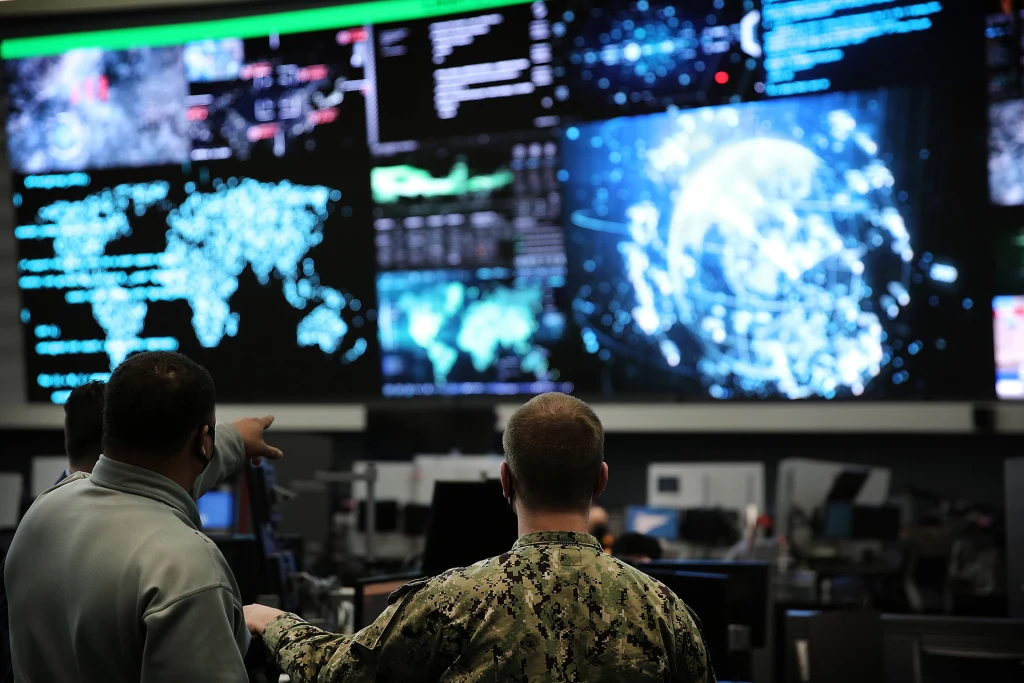
We’re learning a lot from the Iran War, including how advanced cyber capabilities are shaping the modern battlefield. China has one of the world’s most capable and active cyber arsenals, and it uses it to target its adversaries daily. Operation Epic Fury has given a preview of what cyber actions China could take in a conflict in the Indo-Pacific, namely over Taiwan.
Cyberattacks and information warfare have been used throughout Operation Epic Fury to degrade public morale, collect intelligence, and disable enemy sensors and communications networks. For example, 50 Iranian-tied hacker groups have conducted around 5,800 cyberattacks against American and Israeli companies. Additionally, Iranian hackers have targeted internet-facing programmable logic controllers, which automate mechanical processes, by manipulating data, causing operational disruptions. These attacks have led to multiple disruptions across the US critical infrastructure sectors and resulted in financial losses.
China Modernizes Its Cyber Playbook Center
China has emphasized the role of cyber operations as a central component of military strength and has acknowledged it as a “critical domain” for security. In its 2020 Science of Military Strategy report, the People’s Liberation Army (PLA) stated that cyberspace operations have become “the core center for winning wars without exception.” Its use of cyberattacks against Taiwan is now an active policy. In 2025, China launched an average of 2.63 million cyberattacks per day against Taiwanese critical infrastructure.
As with Iran’s cyber operations, China may attempt cyberattacks against Taiwanese companies as part of its broader campaign of coercion. Attacks against Taiwanese companies, namely cyberattacks that disrupt semiconductor manufacturing via programmable logic controllers, could greatly hurt Taiwan’s economy, as the semiconductor industry alone accounts for around 18 percent of Taiwan’s economy.
Additionally, attacking critical infrastructure, such as power plants, could cause thousands of civilians to lose access to electricity. One potential goal of Chinese cyberattacks could be to cause a long-term internet blackout across Taiwan. China has demonstrated the ability to disrupt Taiwan’s connectivity, including by damaging some of the 24 undersea cables Taiwan uses for internet access. Since Operation Epic Fury began, Iran’s internet access has remained at only around 1 percent. This blackout was imposed by the Iranian government, similar to the internet blackout during the January protests, likely to stop the mobilization of resistance by the Iranian people.
This loss of internet access has affected Iran in multiple ways, including causing layoffs as companies incur financial losses and preventing people from locating critical needs such as food, medicine, and information about shelters. A loss of internet in Taiwan could affect the Taiwanese people in a similar manner. It would likely also paralyze critical sectors of the economy, especially as many of Taiwan’s strategic industries are internet-dependent.
Targeted Disinformation Exploits Cyber Playbook
China’s Cyberspace Force also uses cyberspace to conduct psychological warfare and information operations, including by spreading misinformation. China has previously used misinformation in Taiwan, including leaking stolen sensitive information after slightly altering it. More recently, China has pressured Taiwan through misinformation by claiming Taiwan was going to run out of liquefied natural gas and face blackouts within less than two weeks of the Strait of Hormuz closing.

Cyber Playbook Weaponizes Social Channels
China could also target social media and cellphones. For example, hackers penetrated multiple Iranian news websites and even a Muslim prayer app, BadeSaba, displaying messages encouraging people to defect from the Iranian regime. Another example is while Iran attacked Israel, pro-Iranian hackers texted Israelis links claiming to have information about bomb shelters, but instead contained spyware.
China may attempt to use means like these to spread misinformation to sow distrust and confusion in Taiwan during a crisis. This misinformation could include fake reports exaggerating Taiwan’s weaknesses or the strength of the Chinese military, and possibly even go as far as promulgating fake news of a Taiwanese surrender. This would be especially dangerous if paired with cyberattacks aimed at Taiwan’s official lines of communication.
Intelligence Gained Through Cyber Playbook Dynamics
Reports also claim that Israel hacked into Iranian CCTV and traffic cameras in order to track Ayatollah Ali Khamenei’s patterns to gain information for the fatal strike on Iran’s supreme leader and senior leadership. China could be interested in conducting similar cyberattacks to gather intelligence on the locations of senior Taiwanese officials during a conflict.
Cyber operations can also support kinetic operations. Chairman of the Joint Chiefs of Staff General Dan Caine confirmed that “Coordinated space and cyber operations effectively disrupted communications and sensor networks” in Iran and left the country “without the ability to see, coordinate, or respond effectively.” This, alongside airstrikes, allowed the United States to quickly establish air superiority. China could likewise attempt to disrupt Taiwanese sensor and communication networks, which could complicate Taiwan’s ability to coordinate an effective counter-response.
Cyber operations have proven to be an effective component of Operation Epic Fury and an important means of controlling or confusing populations. The conflict in the Middle East serves as a sobering reminder to Taiwan of the possible cyber threats it faces. For Taiwan and its partners, strengthening cyber resilience and information defenses must be treated as an important component of deterrence.