
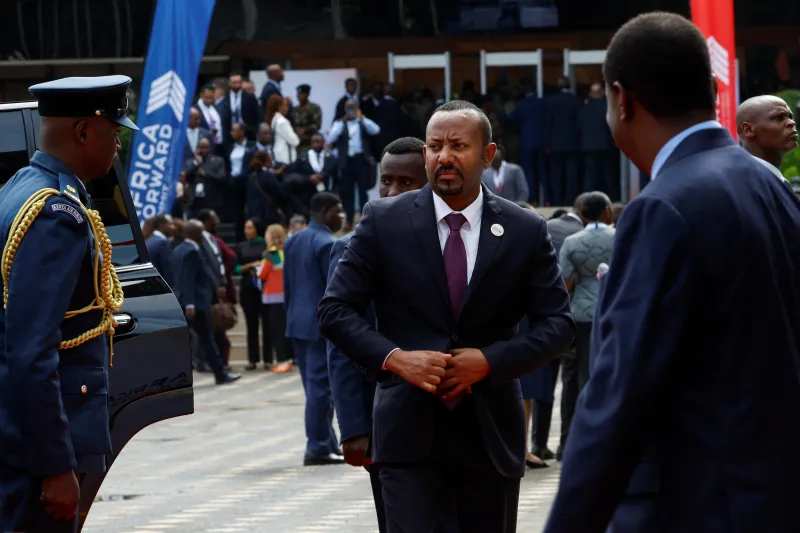
The geopolitical stability of the Horn of Africa hinges on whether Prime Minister Abiy Ahmed addresses the structural failures of recent peace agreements. In its current form, the war in Ethiopia remains a multi-theater security crisis, fueled by half-hearted power-sharing implementation, hasty demobilization plans, and escalating friction with neighboring states. If the federal government continues to rely on heavy-handed militarization and exclusionary elections rather than addressing deep-seated ethno-federalist grievances, the unresolved regional fractures will inevitably trigger a wider regional conflagration. Resolving the war in Ethiopia requires an elite, strategic shift toward genuine democratic inclusion and verifiable transitional justice before domestic insurgencies and foreign proxy interests permanently balkanize the state.
The War in Ethiopia Fails Peace
Afew months after coming to power in April 2018, Ethiopian Prime Minister Abiy Ahmed signed a peace deal to end a decades-long insurgency in the country’s Oromia region. The same summer, he struck a peace agreement with Eritrea, resolving a border dispute that since the late 1990s had produced a two-year war and several smaller-scale clashes.
That effort earned Abiy the Nobel Peace Prize in 2019. But his reputation as a peacemaker did not last. By 2020, the Ethiopian government was fighting a brutal war in the Tigray region; the conflict would go on for two years, killing hundreds of thousands of people and displacing more than a million Tigrayans. The 2022 Pretoria Agreement ended hostilities and aimed to secure a lasting peace through measures related to disarmament, humanitarian access, and transitional justice. Yet today, as Ethiopians prepare to go to the polls on June 1—and all but certainly deliver Abiy’s party another term in office—Tigray remains combustible, and insurgencies continue in several other regions.
Rather than bringing stability, the deals the government has brokered with various armed groups have fomented uncertainty, mistrust, and fresh violence. They have caused new factions to emerge with fresh grievances. Some of these splinter groups have objected to the terms of the peace agreements—including the prospect of having to disarm and demobilize—while others have resented the government’s halfhearted implementation of key provisions, such as power-sharing. And growing friction between Ethiopia and its neighbors has added to the volatile mix as diplomatic disputes threaten to escalate into proxy fights or even open confrontation.
Ethiopia’s security problems are solvable. Openings for regional diplomacy exist, and following through on the terms of current peace agreements could go a long way to address the grievances that are now fueling armed conflict, as well as set the groundwork for future negotiations. Yet the necessary action will require political courage and an earnest commitment by the government to reforms. If Ethiopia’s leaders instead keep the country on its current path, they run the risk of letting the security crisis simmer until tensions eventually boil over and send the country into war.
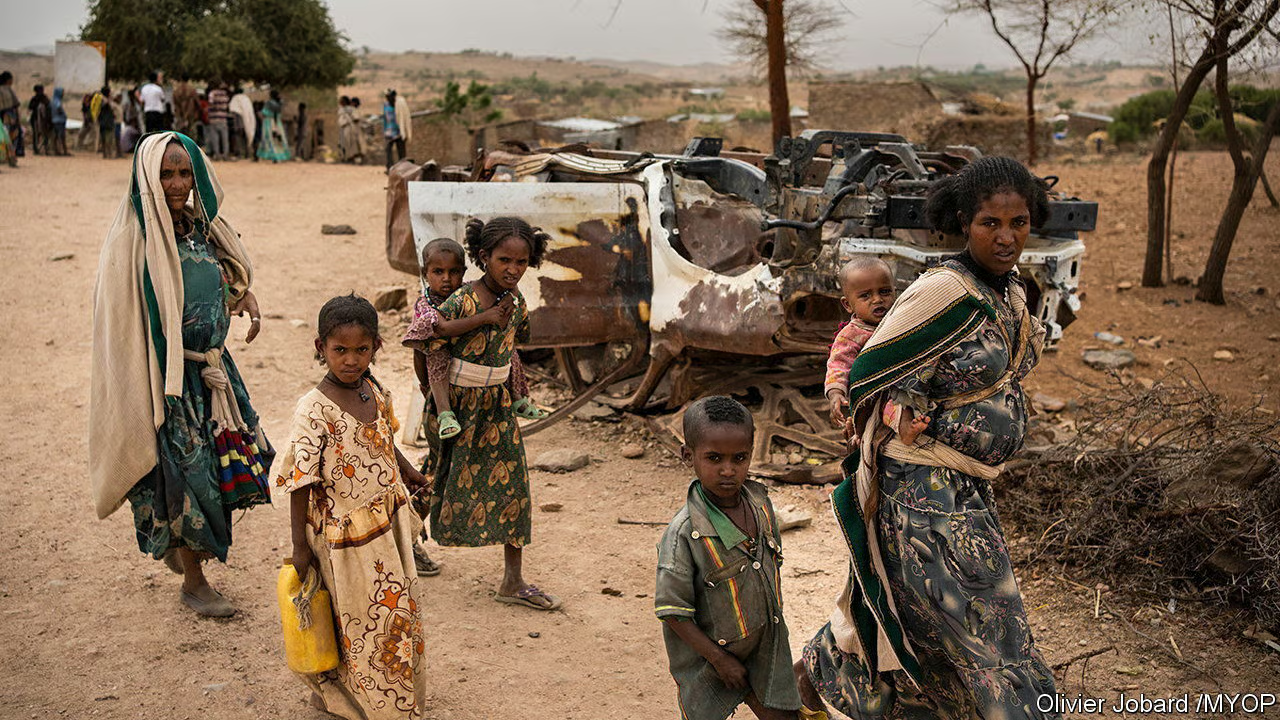
Ethno-Federalist Systems Fuel The War in Ethiopia Deeply
UNFINISHED BUSINESS Much of the instability in Ethiopia stems from disagreements around the country’s ethno-federal system. That system emerged in the early 1990s after the end of a protracted armed struggle that had resulted in the overthrow of a military dictatorship. Today, Ethiopia has 12 ethnically defined territorial states, each of which has the right to draft its own constitution and a degree of autonomy in administering its budget. Each “nation, nationality, and people” also has the right to secession.
However democratic and egalitarian such a system was on paper, in practice a single group dominated political life throughout the country. The Ethiopian People’s Revolutionary Democratic Front (EPRDF), a coalition of four ethnic parties dominated by the Tigray People’s Liberation Front (TPLF), controlled the federal government and used heavy-handed repression to stamp out opposition to its rule.
Mounting frustration with the coalition’s authoritarian tendencies and with Tigrayan domination gave Abiy a wide berth to present himself as a reformer when he took over as prime minister in 2018. Abiy put forward a vision of centralized authority that would replace ethno-federalism.
Part of this plan included replacing the EPRDF’s coalition of ethnic political parties with his unified Prosperity Party. But otherwise, the plan lacked specifics, leaving many Ethiopians unsure of how they and their communities would fare under a new system. It particularly worried those who still supported the principles of federalism. Rather than uniting the country under a pan-Ethiopian identity, Abiy’s policies encouraged some political elites to lean into ethnic difference as a mobilizing tactic to contest his agenda. In some instances, this resistance turned violent, leading to clashes between federal government forces and ethnic armed groups.
In Tigray, resistance to Abiy’s attempt to centralize power and the TPLF’s commitment to the ethno-federalist system spiraled into a devastating 2020–22 war between the federal government and the TPLF. Although the 2022 Pretoria Agreement brought a formal end to the fighting, its implementation has been slow. Many Tigrayans have grown frustrated as the government delays efforts to set up transitional justice and accountability mechanisms and to help internally displaced people and refugees return to the region. Last year, adding insult to injury, the Ethiopian national election board barred the TPLF from participating in the June 2026 elections, putting its finger on the scale for Simret, an Abiy-aligned party contesting in Tigray.
As political grievances mount, fissures within the TPLF are now leading to violence. A few skirmishes erupted last year between the Tigray Defense Forces—the military branch of the TPLF—and the Tigray Peace Forces, a new breakaway faction that is reportedly aligned with the Abiy administration. Even though the Tigrayan population is tired of war, there is little sign of tensions easing. In late January, local officials blamed federal forces for a drone strike that killed a person in Tigray. In February, several journalists reported that the federal government had redeployed troops near the region.
Then the TPLF reconstituted the prewar Tigrayan government in April, sidelining the postwar interim government recognized by Addis Ababa. Persistent friction among the region’s militia groups and the federal government could spiral into direct confrontation as different factions jockey to be seen as the legitimate representative of Tigrayan interests.
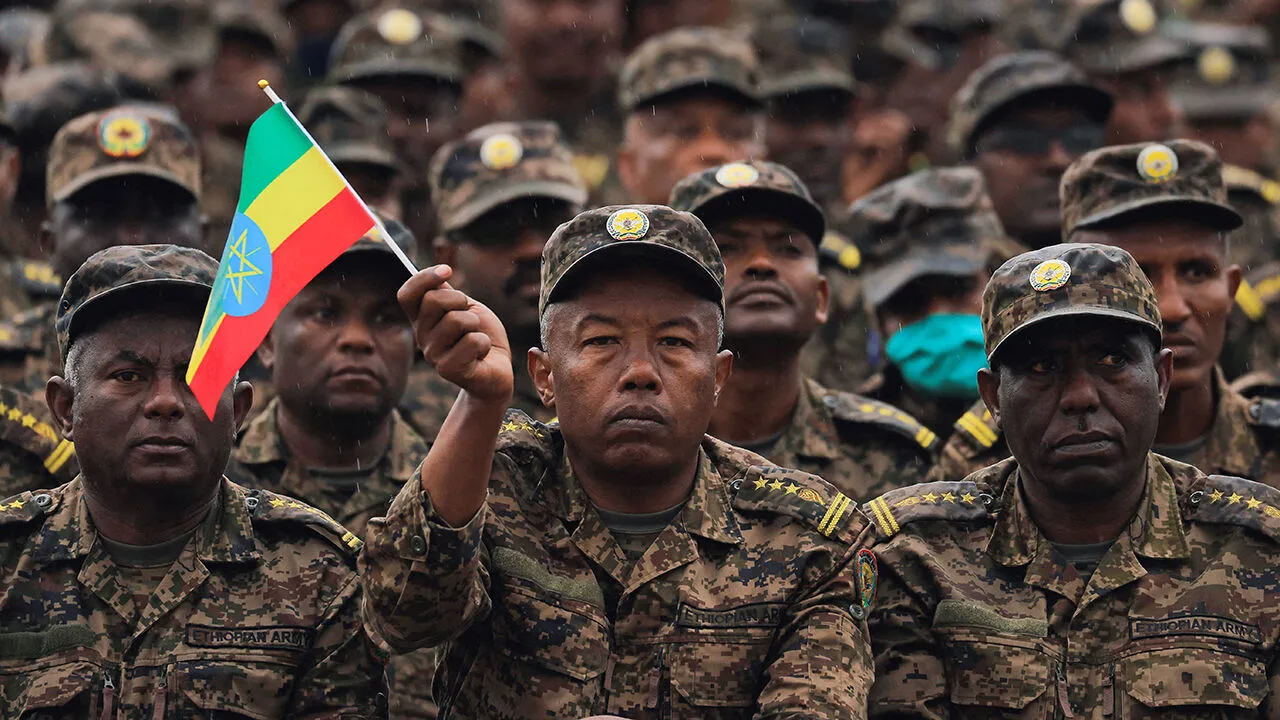
Regional Militias Challenge The War in Ethiopia
The 2022 cease-fire pact in Tigray did not just fail to solve that region’s problems; it also created new ones in neighboring Amhara state. The region’s Fano militias fought alongside federal government forces in the Tigray war but were sidelined in negotiations leading to the Pretoria Agreement, and the final deal left the issue of contested territories along the border between Amhara and Tigray unresolved. Frustration over this outcome, resurgent Amharan nationalism, and a backlash to Abiy’s plan to subsume regional security forces into the central military have all helped Fano militias recruit new members and expand their activities.
More than 600,000 people have been displaced by the fighting between federal forces and Amharan groups, and there are credible reports of federal troops committing human rights violations in their campaign against the militias. The militias claim to control 80 percent of Amhara, and public mistrust of the federal government strengthens their local support. The Fano insurgency is itself atomized, without a centralized leadership or unified objectives, which will complicate any attempt by the Ethiopian government to reach a durable political settlement with the insurgents.
Meanwhile, the conflict in Oromia never really went away.The state—once a stalwart base of support for Abiy, who hails from the region—is now facing a renewed insurrection by the Oromo Liberation Army. For more than 45 years, the OLA’s parent organization, the Oromo Liberation Front, has fought for the self-determination of the Oromo people. Abiy signed a historic peace accord with the OLF in 2018, but the OLA did not want to disarm. By the following April, the OLA had separated from the parent group and established its own command structure, reigniting the fight for greater autonomy for the Oromo. While federal troops were occupied in Tigray, the OLA expanded its operations and filled its ranks.
Abiy has tried several times to engage the OLA in peace talks, but each effort has crumbled. The militia’s decentralized structure means that as with the situation in Amhara, the sheer number of interested parties makes negotiating an end to the insurgency difficult. So, too, does the fear among OLA members that any agreement will only be as good as the paper it’s signed on.
The War in Ethiopia Ignites External Confrontations
TOUGH NEIGHBORHOOD If this internal strife weren’t bad enough, Ethiopia’s feuds with its neighbors have the potential to escalate into proxy or direct conflict. The country has a history of rocky relations with Eritrea, which gained independence from Ethiopia in the early 1990s, and tensions have flared once again. The latest flashpoint is Abiy’s repeated claim that sea access is essential for Ethiopian national security.
Eritrea’s leaders have interpreted these statements as a threat to their country’s sovereignty because Ethiopia’s historical access to the sea was through the port of Assab, which is now in Eritrea. They have responded by cultivating closer ties with anti-Abiy actors within Ethiopia, including, surprisingly, the TPLF, which the Eritreans fought against in the 2020–22 war. Earlier this year, the Ethiopian government demanded that Eritrean forces withdraw from Tigray, in an additional sign of souring relations.
Ethiopia’s relationship with Egypt, meanwhile, has also become strained over the development of the Grand Ethiopian Renaissance Dam on a major tributary of the Nile River. Ethiopian officials claim that the hydropower project is essential to bring electricity to millions of people. But to Egypt, the colossal dam is a potent threat because it could reduce the flow of the river that serves as the country’s primary source of fresh water. Egypt brought its complaints to the UN Security Council last September, describing Ethiopia’s management of the dam as a violation of international law and declaring that Cairo would “defend its existential interests,” using “all measures permitted under the UN Charter.”
Ethiopia responded in December with a statement criticizing Egypt’s position as out of touch with “the realities of the twenty-first century” and accusing Cairo of destabilizing the region. Those tensions may now be spilling over into Sudan’s civil war: Reuters reported in February that Ethiopia was hosting an Emirati-funded training camp for the Rapid Support Forces, the armed paramilitary group that has been fighting the Egyptian-backed Sudanese military since 2023.
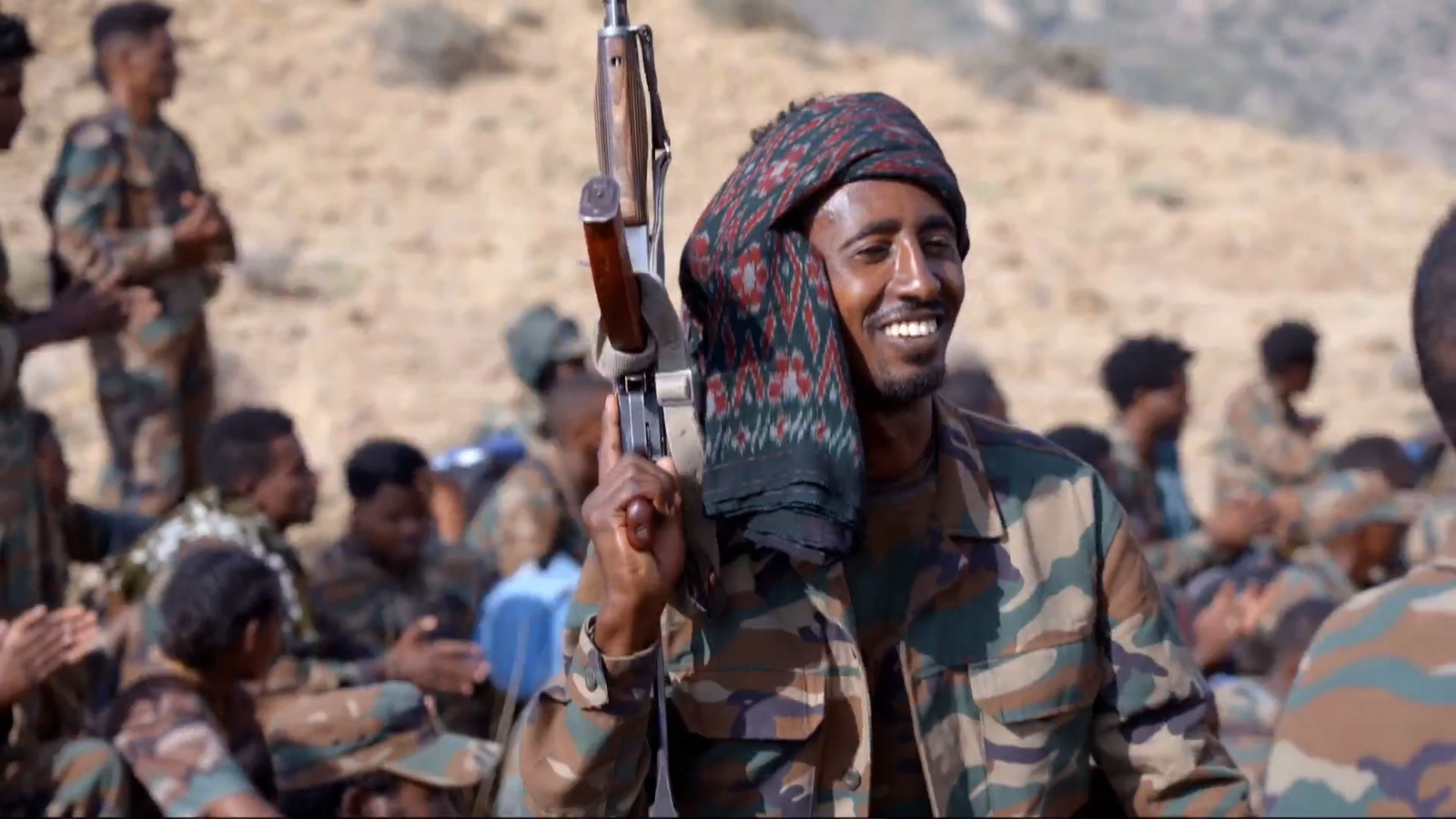
Deepening Fractures Entrench The War in Ethiopia
Ethiopia’s disagreements with Eritrea and Egypt may well escalate to armed confrontations. Rather than engage in direct military conflict, however, Asmara and Cairo could choose to fund militant groups inside Ethiopia in the hope that a well-armed proxy could impose enough costs on Abiy to get him to back down from diplomatic feuds. Ethiopian-Eritrean relations, in particular, have long featured tit-for-tat support for insurgent proxies. The consequence of Ethiopia’s problems with its neighbors could therefore be the entrenchment of the country’s domestic security crisis.
BACK FROM THE BRINK? Continued violence is not inevitable. The Ethiopian government can still pull the country back from the brink and set it on more secure footing. But that will require a sustained commitment to reform.
To start with, the government must visibly demonstrate that it will implement the peace provisions it has already brokered, such as facilitating the return of displaced people and launching transitional justice initiatives in Tigray, to rebuild the trust that the federal government has lost. And as it pursues further negotiations, the government should consider widening the circle of groups it includes in talks. This could make it harder to reach agreements, but once struck, such accords would be more durable than the existing ones have been.
The Ethiopian government should also try to cool tensions with Egypt and Eritrea. In 2015, Ethiopia, Egypt, and Sudan were able to produce an agreement that spelled out ten principles for cooperative and just operation of the Nile dam, and there is substantial regional and international interest in resolving the current standoff. To reach a deal, however, both Ethiopia and Egypt must tone down their aggressive rhetoric and bring in a third party to help manage negotiations. Smoothing over relations with Eritrea could be more complicated, given that Eritrea is tangled up in the Tigray conflict and was responsible for grave human rights violations during the war.
Negotiations could be volatile as a result, and any solutions will need to bridge the significant political disagreements among not just Ethiopia and Eritrea but Amharan and Tigrayan forces, too. One narrow path to a diplomatic reset could be to involve the United States, which has been considering lifting sanctions on Eritrea—but if Washington were to normalize relations with Eritrea without imposing any conditions, Eritrea could be emboldened to continue supporting proxy groups or even intervening directly in Ethiopia.
Ultimately, bringing an end to the multiple armed conflicts across the country will require that the Ethiopian government regain public trust by respecting democratic processes. A free, fair, and competitive election on June 1 would have been a good start, but it seems unlikely that the coming vote will meet those standards.
Disgruntled groups need to see the value of peaceful political contestation, which means that groups the government has barred from participating in elections, most notably the TPLF, must be allowed to compete again. And for now, the Abiy administration can put the country on a more democratic and peaceful track by opening a genuine public debate about the structure of Ethiopia’s governance system. Continued uncertainty about the country’s political future will only deepen Ethiopians’ frustration—and fuel violent resistance.