
A deep strategic assessment of President Trump’s collapsing Gaza peace plan, analyzing how a rigid approach to disarmament stalls progress and why adapting a phased Northern Ireland-style decommissioning framework offers the only viable path to regional stability.
The integrity of President Donald Trump’s 20-point Gaza plan hangs in the balance, threatened by unyielding American and Israeli demands regarding the immediate surrender of militant capabilities. To navigate this impasse, the international community must pivot toward a pragmatic framework focused on the strategic realities of Hamas’s weapons. A rigid stance demanding total, instant disarmament before political or humanitarian milestones are reached risks collapsing the entire negotiation structure, whereas prioritizing a phased, conditional template based on historical peace processes offers the only viable path to long-term stability and security regarding Hamas’s weapons.
Hamas’s weapons Dominate the Ceasefire Negotiations
President Donald Trump’s 20-point Gaza plan is at risk of falling apart because of American and Israeli maximalism over how, and how quickly, Hamas gives up its weapons. Trump’s Board of Peace, created to oversee the plan’s implementation, is conditioning progress on the Gaza Strip’s full demilitarisation—namely, that all armed factions and individuals immediately and unconditionally surrender their weapons and military capabilities. Israel is threatening a new offensive on the Strip unless Hamas accepts. But the Islamist group is refusing to budge before Israel fulfils its own commitments under the deal, including allowing full unimpeded humanitarian access to Gaza.
Europeans should step in, acting promptly and jointly with influential members of the Board of Peace such as Turkey and Saudi Arabia to nudge the White House towards a more realistic, and ultimately more successful, approach, to Hamas’s weapons. This begins with the completion of Israel’s responsibilities under the first phase of the plan and should take the form of a Northern Ireland-like model of phased decommissioning which precedes full disarmament and a final peace agreement.
Unfulfilled Obligations Threaten Hamas’s weapons Decommissioning
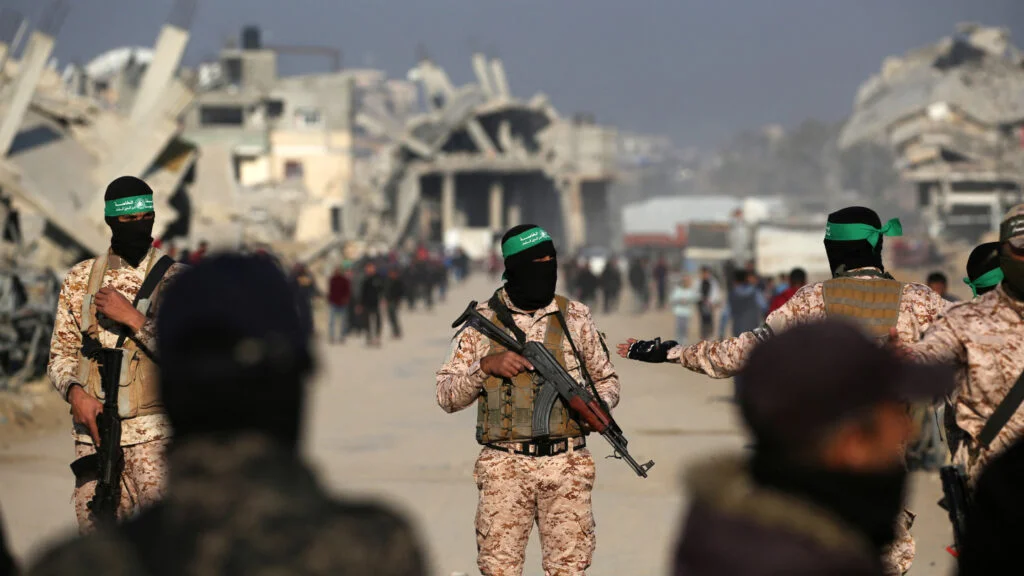
The Gaza ceasefire announced by Trump in September 2025 was intended to end the war in Gaza and end Hamas’s security and governance role in the Strip over three phases. The first phase includes the cessation of hostilities, emergency relief and early recovery, and was conditioned on a prisoner swap between Israel and Hamas. The second phase focuses on reconstruction and long-term arrangements in Gaza and includes gradual Israeli withdrawal.
This phase would also see the decommissioning of Hamas’s weapons, including “placing weapons permanently beyond use” —though the original plan was vague on what exactly this meant in practice. The final phase would see the Palestinian Authority (PA) take over Gaza and involve a “credible pathway to Palestinian self-determination and statehood” once an undefined PA reform programme “is faithfully carried out”.
Six months after the Gaza plan was signed, it is yet to bear fruit for Palestinians. In that time, Israel has killed over 5,500 Palestinians, according to the World Health Organization. It is still restricting the flow of food and medicine and is carrying out nonstop demolitions in the 59% of Gaza under its control. Meanwhile, the International Stabilization Force (ISF) and National Committee for the Administration of Gaza (NCAG), intended to replace Hamas governance and security control in the enclave, exist in name only and are yet to deploy. Additionally, Israeli efforts to block a two-state solution through rapid settlement expansion in the West Bank are accelerating.
When the Trump plan was announced, Hamas indicated support for sequenced decommissioning that proceeds in tandem with reciprocal steps by the Board of Peace and Israel. The group had previously indicated to mediators that it would be willing to suspend military activities and store its heavy weapons in warehouses under third party supervision or even hand them over to the PA.
But Israel’s unwillingness to abide by its own obligations, combined with its continuing assassination of Hamas leaders—most particularly the recent killing of its more pragmatic military head Ezz al-Din al-Hadad—is empowering a younger and more headline generation within the movement opposed to making any concessions on the group’s weapons.
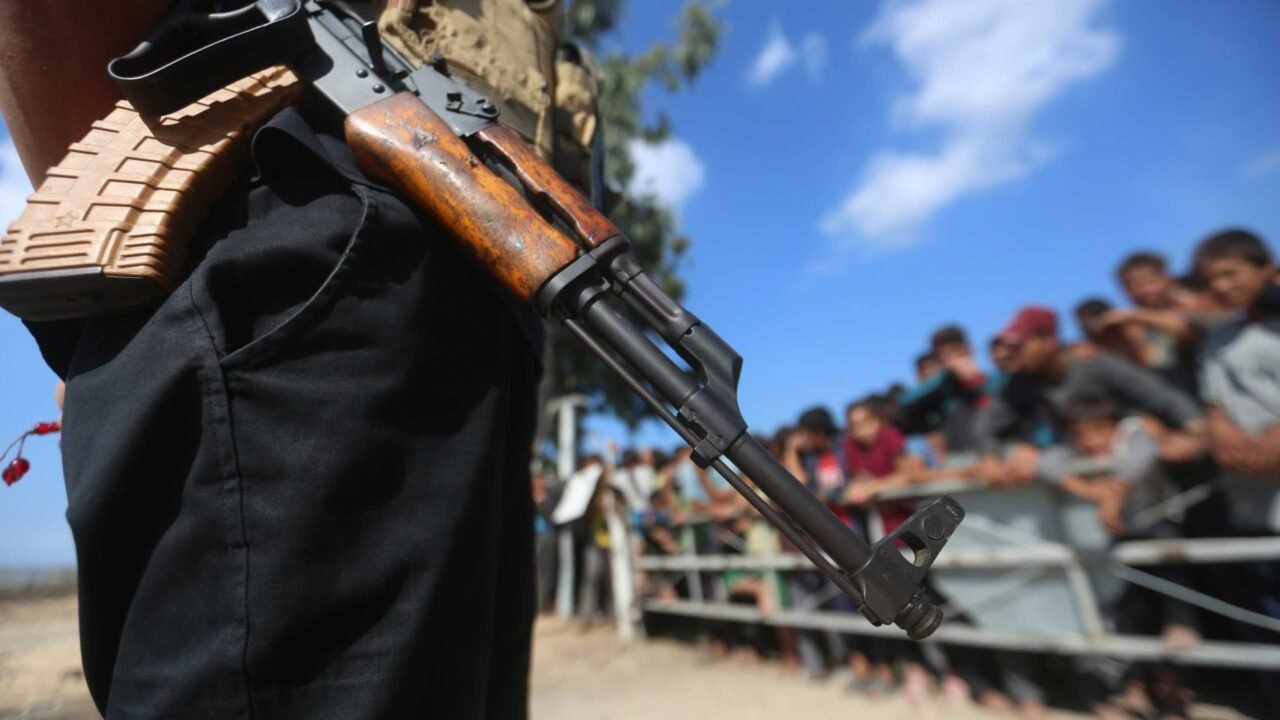
Given its lack of trust in US and Israeli guarantees, Hamas views its weapons as its main source of leverage. It has maintained that it will not disarm or surrender its light weapons (such as AK-47s) until there is a two-state solution—that is, at the very end of a peace process. It has also demanded Israel fulfil its obligations under the first phase of the deal.
Without this, Hamas says it will not start discussions on decommissioning or disarmament. (See table below on Israel’s Phase 1 obligations.) In Gaza’s current dire circumstances, Hamas’s political leadership would also struggle to convince the rank-and-file members of its military wing, and other more hardline factions such as Palestinian Islamic Jihad and the Popular Resistance Committees, to disarm.
Peace Models Inspiring Hamas’s weapons Strategy
Hamas negotiators have been eying the Northern Ireland peace process as a model. As part of the 1998 Good Friday agreement, the nationalist Irish Republican Army (IRA) and unionist Ulster Volunteer Force (UVF) committed to a full cessation of hostilities. Decommissioning, and eventually full disarmament, were framed as the outcome of peace, not as a prerequisite. The IRA only fully disarmed in 2005 and the UVF in 2009.
In 2006, Hamas officials met with IRA and UVF leaders during a tour of Northern Ireland. A senior Hamas leader described this experience as “enlightening”, since most of the group’s leadership has never been exposed to the world outside the occupied territory.The group has now commissioned an internal study to draw lessons and parallels from the Northern Ireland decommissioning process, particularly on the sequencing.
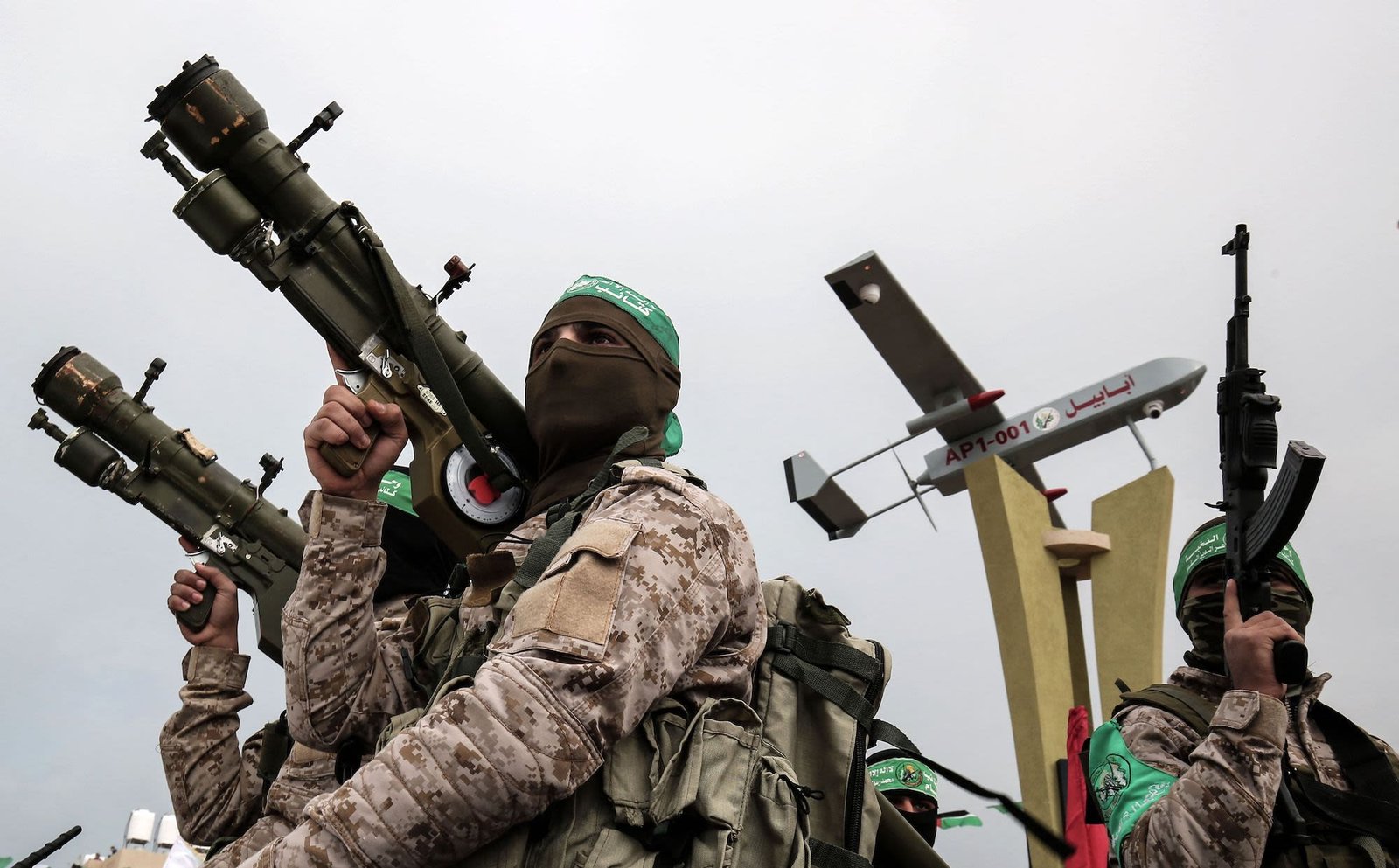
Some Hamas leaders have a similar sequencing in mind: that all weapons would be strictly locked away in depots with a clear policy of no use, no display and no production of those weapons. This policy would be verifiable by international monitors and the NCAG would be authorised to arrest or engage any individual that violates this policy. This phase would also include full mutual cessation of hostilities and suspension of Hamas’s armed activities or parades. In return, Israel would withdraw from Gaza and allow reconstruction. All weapons would remain locked away for 5-10 years or more, to give a chance for a political process to end the overarching Israeli-Palestinian conflict (including the West Bank).
Board Policy Restricts Hamas’s weapons Flexibility
However, Israel has successfully moved the goalposts by interpreting the ambiguous language of the Trump plan to demand Hamas’s immediate and full disarmament. The Board of Peace’s high representative, Nickolay Mladenov, has followed this more hardline interpretation. In his first report to the UN Security Council, Mladenov blamed Hamas for the lack of progress on the Trump plan, depicting it as the single obstacle in the path of unlocking reconstruction.
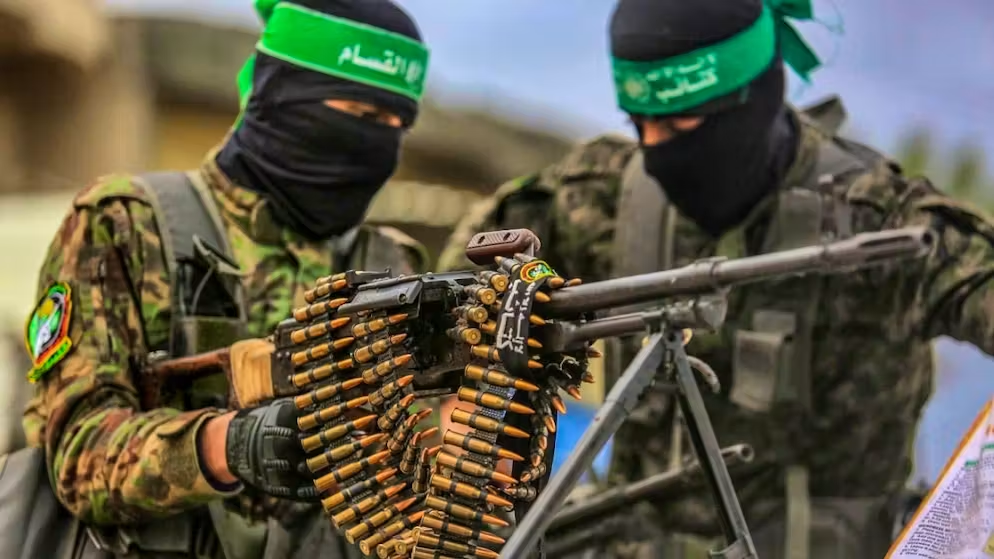
This was reflected in a roadmap drawn up by Mladenov in March 2026 to implement the second phase of the ceasefire plan. This demanded that Hamas and all other Palestinian armed groups give up all of their weapons entirely within 250 days.
This includes surrendering all weapons, including rifles, as well as destroying all tunnels, production sites and military infrastructure within 90 days before any Israeli withdrawal. Without this, Mladenov maintained, there will be no movement on the second phase: no Israeli withdrawal to Gaza’s peripheries, no ISF deployment, no NCAG governance transition and no start to reconstruction. According to Israeli media, Mladenov even offered the Israeli government “official authorization” to resume the war on Gaza if Hamas does not accept his proposal.
Diplomatic Options Regarding Hamas’s weapons Realities
Where to go from here
In an effort to find a compromise, Egyptian and Qatari mediators put forward a bridging proposal in April, which Mladenov ultimately outlined to the UN Security Council on 21 May. The proposal is an improvement in some aspects, offering, for example, to retain Hamas’s civil servant and police face under the NCAG subject to security vetting—something that has not only been another long-standing Hamas demand but is also critical to Gaza’s long-term governance and stability.
However, the revised Board of Peace proposal still frames full Palestinian disarmament and the dismantling of all militant infrastructure as a prerequisite for everything else in phase 2. And while it does identify Israel’s phase 1 requirements, there has so far been no indication that the US is prepared to pressure it to implement these. Finally, unlike the Northern Ireland peace process, the April bridging proposal also continues to detach the disarmament process from Israeli-Palestinian peace talks.
The impasse in the Gaza talks necessitates an urgent European move made together with like-minded Board of Peace members to persuade the White House (which in practice sets the Board of Peace’s agenda) to press Israel to implement its phase 1 obligations to unlock movement on Palestinian decommissioning.
Alongside this, the Board of Peace should adopt a more pragmatic approach to the implementation of the second phase that supports more viable immediate decommissioning steps—but decouples the question of full disarmament from the other urgent action points. Success will also require an accompanying political process that opens a genuine pathway towards statehood. This is required to move Palestinian factions from a decommissioning phase to a disarmament one as the outcome of Palestinian statehood.
Hamas negotiators have signalled to mediators the group’s willingness to decommission its heavy weapons (including rockets) and some of its tunnel network in the second phase. They are also open to negotiating broader demilitarisation within the context of peace talks. This is an opportunity that should not be squandered.
European governments, especially the UK and Ireland which have extensive experience of the Northern Ireland peace process, should now work with Middle Eastern partners to create more amenable conditions to enable decommissioning. These are the tangible steps that should now be taken along the disarmament track:
(1) the NCAG’s immediate and unconditional entry to Gaza to take over governance functions. Hamas has said it would accept such a move. This would support the full resumption of basic services and restore government functions with international support, while building trust and strengthening the NCAG’s domestic legitimacy to collect weapons from armed factions in the future.
(2) the start of reconstruction overseen by the NCAG. Beyond the humanitarian imperative, this will help create the momentum needed to persuade militants to suspend their armed activities and support a phased decommissioning process. Any concerns about Hamas diverting reconstruction material can be assuaged by enacting a model similar to that of the Qatari or Egyptian reconstruction committees that operated in Gaza after the 2014 and 2021 wars. In both cases, local staff overseeing the reconstruction process were supervised by experts, on the ground, from mediator countries. Reconstruction should also be based on a Palestinian-owned vision for Gaza’s redevelopment to garner the necessary local legitimacy and international funding.
(3) ISF deployment to create a necessary buffer between the Israeli army and Palestinians. This can help persuade the local population (and armed groups themselves) that they will not be left unprotected once Palestinians disarm, helping create the conditions for disarmament (to be overseen by the ISF) and facilitating Israel’s withdrawal from Gaza.
(4) Palestinian parliamentary and presidential elections that include Gaza. Gazans (and Gazan armed groups) will be more accepting of tough compromises such as decommissioning when sanctioned by a representative and credible leadership. A recent municipal election in Deir Al-Balah is a strong example of the existing capacity to hold free and fair elections despite the dire conditions on the ground.
(5) PA relevancy by integrating it into the above four points. None of these recommendations can succeed in isolation from the creation of a credible Palestinian national framework. The EU as the biggest donor to the PA (and possibly to Gaza’s reconstruction) has ample leverage here. The PA must be woven into every layer of this process: as the legitimate overseer of the NCAG’s entry into governance, as the convener of the proposed parliamentary and presidential elections, as the coordinator for reconstruction funds channelled through recognised Palestinian institutions, and as the political umbrella under which sequenced decommissioning leads to a unified, democratically accountable security apparatus.
Ultimately, implementing phase 2 and sustaining the Gaza ceasefire will require the Board of Peace to abandon its current maximalist approach that insists on full disarmament before governance, reconstruction or politics. The alternative will be renewed bloodshed and a missed opportunity to leverage the decommissioning process and jumpstart a serious Israeli-Palestinian peace process. For this to happen, disarmament must be the outcome of a functioning peace, not the prerequisite for one.