
Avoiding verification traps of past accords, any enforceable nuclear pact must mandate dismantlement, permanent enrichment bans, and continuous IAEA access. Without these teeth, diplomacy merely funds regional conflict and preserves Tehran’s weaponization pathway.
The emerging U.S.-Iran nuclear diplomacy must avoid the verification traps of past P5+1 accords that left Tehran’s weaponization pathway intact. A good Iran nuclear deal requires enforced dismantlement, permanent enrichment bans, and continuous IAEA access. Without these teeth, any good Iran nuclear deal merely funds the next regional conflict.
Good Iran nuclear deal dismantles uranium stocks
A new U.S.-Iran nuclear deal may soon emerge — or at least an initial memorandum of understanding (MOU) to be fleshed out over 60 days. President Donald Trump pledged on May 27 that the United States will resolve the conflict with Iran peacefully and lift its naval blockade of Iranian ports — but only if Tehran agrees to a truly “great” nuclear agreement. If not, Washington will finish the job militarily.
Escalating pressure, both economically and militarily, is the right approach. The Obama administration’s weak P5+1 nuclear agreements with the regime in 2013 and 2015 left Tehran’s pathway to acquiring nuclear weapons fundamentally intact. Flush with billions of dollars in sanctions relief, the regime built up its terrorist proxies, missile arsenals, and drones — ultimately forcing Trump to confront it with both military action and sustained economic pressure.
U.S. and Israeli strikes in 2025 and 2026 set back Iran’s nuclear program dramatically, extending its estimated breakout time to build a crude nuclear device from roughly six months to as much as two-and-a-half years, absent foreign assistance. Trump’s naval blockade has inflicted serious damage, costing the regime an estimated $435 million per day, while gas shortages loom and the regime is short of funds to pay its military.
However, any agreement with Tehran — predicated on unfreezing assets in return for Iranian concessions — remains a deal with the devil. The Islamic Republic would almost certainly use these funds to rearm for future conflicts against the United States, Israel, and the Persian Gulf nations, while intensifying its oppression of the Iranian people.
For these reasons, any credible agreement and easing of current leverage must rest on the strictest nuclear terms. It must be subject to full and continuous supervision and verification by the International Atomic Energy Agency (IAEA), be implemented while Trump is in office, and include Iran’s binding commitment to these six provisions:
Full recovery of a good Iran nuclear deal
Iran must support full recovery by the United States, the IAEA, or an international team of all 9,000+ kilograms of enriched uranium hexafluoride (UF6), including 440 kilograms of highly enriched uranium (HEU).
These stocks, enriched to levels between 2 and 60 percent purity, were monitored by the IAEA up until the June 2025 strikes, giving the agency a strong understanding of their locations and quantities. Overall, Iran has enough material enriched to 60 percent for 11 nuclear weapons and could produce an additional 11 using its stocks enriched between 5 and 20 percent. The 2 percent to 5 percent enriched stock is also critical to recover, as Iran could use it to produce higher-enriched material should the regime abandon its commitments.
The enriched uranium is currently entombed in metal canisters or inside the enrichment process at the damaged Esfahan, Natanz, and Fordow sites struck by U.S. forces. The stocks must be carefully extracted and removed under international supervision, with heavy equipment (likely flown in) and skilled excavation and hazmat teams.
Trump has long maintained that the United States must recover and take possession of the material, but on May 25 he signaled openness to IAEA-supervised destruction in Iran or at another acceptable location. Yet the IAEA lacks the equipment and manpower to handle the recovery alone. Such details must be settled under a final accord.
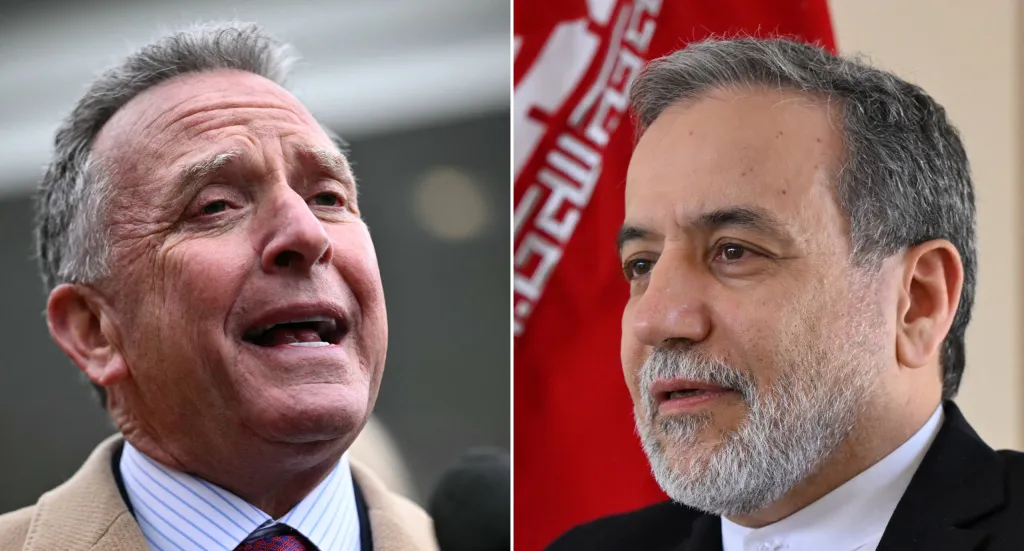
Destruction limits of a good Iran nuclear deal
Iran must accept destruction of its enriched uranium stocks — or that access and use is limited strictly to legitimate civilian technical needs.
What Iran may ultimately do with the enriched uranium remains at issue. While destruction is the preferred option, the United States should only accept Iran receiving nuclear material back in a form suitable for legitimate civilian use — specifically, fabricated fuel rods for Iranian research and power reactors.
The Islamic Republic will likely claim it can downblend the uranium itself and fabricate rods using a surviving facility at Natanz or elsewhere. Yet any enriched material left on Iranian soil carries an unacceptable risk that the regime could relocate it or rapidly enrich it to weapons-grade levels should Tehran opt to renege on its commitments. The safest solution is supervised destruction of the material inside Iran, paired with a U.S. or foreign commitment to supply Tehran with commercially available fuel rods.
A less desirable option would be for the IAEA to take possession of the material, store it at the agency’s low-enriched uranium fuel bank in Kazakhstan, and arrange for small quantities to be fabricated into fuel rods in a third country before return to Iran. Russia is the most likely candidate for fabricating fuel rods, given its existing role supplying Iran’s Bushehr nuclear power reactor with low-enriched uranium rods and previous supplies of 20-percent enriched uranium rods to the Tehran Research Reactor. This approach would also prevent Moscow from returning Iran’s full stock in the event of implementation disputes.
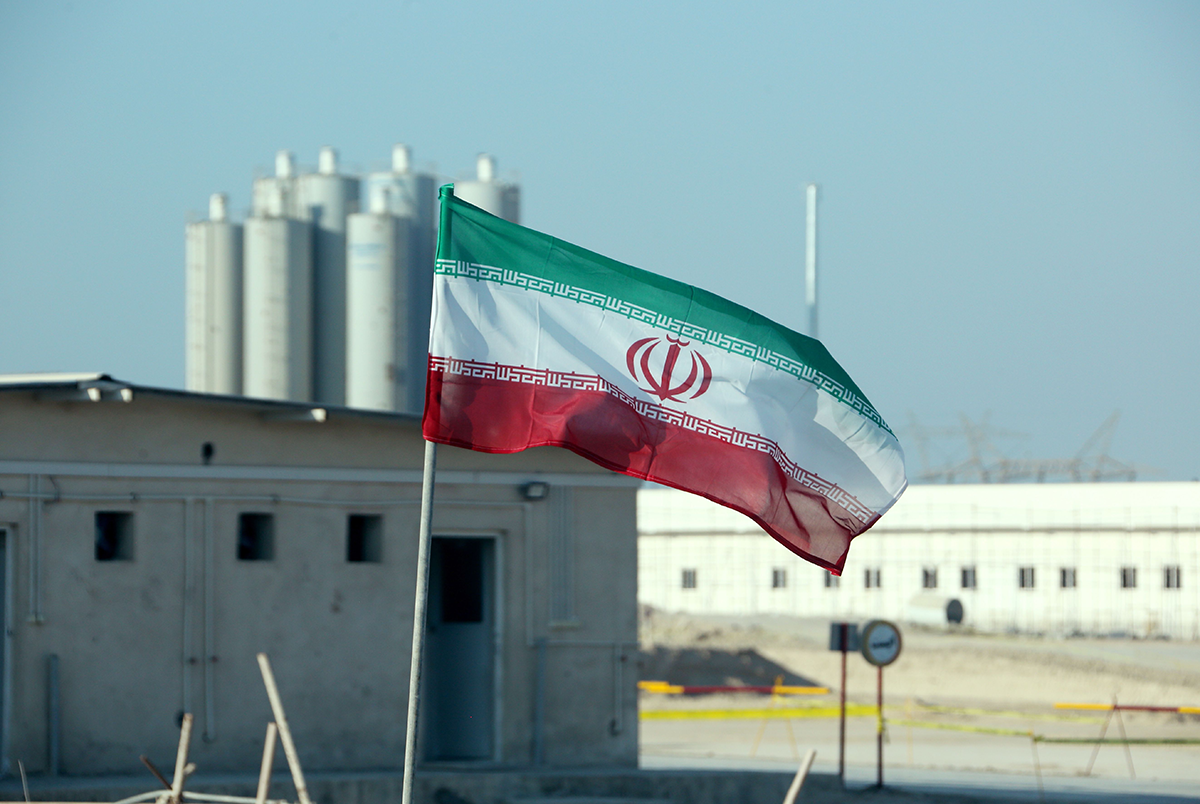
Permanent ban good Iran nuclear deal
Iran must accept a permanent ban on uranium enrichment and plutonium reprocessing.
Iran has no legitimate need for these processes, which it pursued primarily to provide direct pathways to nuclear weapons fuel. Moreover, enriching uranium even to low levels — such as 5 percent purity — represents around 70 percent of the effort to make weapons-grade uranium. A permanent ban is therefore the only reliable way to meaningfully reduce Tehran’s ability to build nuclear weapons.
Iran has argued that it must be allowed to enrich uranium for civilian use after a temporary moratorium. A far less desirable but possible alternative would be a firm 20-year commitment not to enrich, paired with verified destruction of all related capabilities and facilities. Such a lengthy ban would make reconstitution far more difficult as institutional knowledge degrades — but only if the next three conditions (see below) are strictly enforced.
Good Iran nuclear deal forces dismantlement
Iran must accept full and permanent dismantlement, export, or in-place destruction of its uranium production and enrichment infrastructure, including all related facilities, centrifuges, components, and centrifuge manufacturing capabilities, and plutonium production and separation assets.
A strict standard of dismantlement should apply to any remaining Iranian uranium production and enrichment and plutonium production and separation assets. The sole exception would be non-proliferation-sensitive reactors that produce plutonium unsuitable for nuclear weapons.
While U.S. and Israeli strikes damaged or destroyed much of this infrastructure, Iran may have hidden capabilities. Robust IAEA inspections will be essential to locate and fully account for centrifuges, components, manufacturing equipment, and related items. In particular, Iran must not be permitted to retain advanced centrifuges, such as the fast IR-6 model, as even a few hundred could enable a rapid breakout.
There is also a need for verified dismantlement of hardened underground sites, such as the Esfahan tunnel enrichment facility (currently inaccessible due to strikes) and the Pickaxe Mountain complex, which was not targeted but where suspicious construction has continued. Pickaxe Mountain may contain a deeply buried enrichment plant beyond the reach of conventional airstrikes — an activity Trump specifically cited as justification for new U.S. strikes.
Iran must not be allowed to leave such sites idle yet fully intact, with infrastructure ready for rapid reactivation.
Since uranium enrichment has been Iran’s preferred route to nuclear weapons fuel for over two decades, severe dismantlement measures would create major obstacles to any future reconstitution.
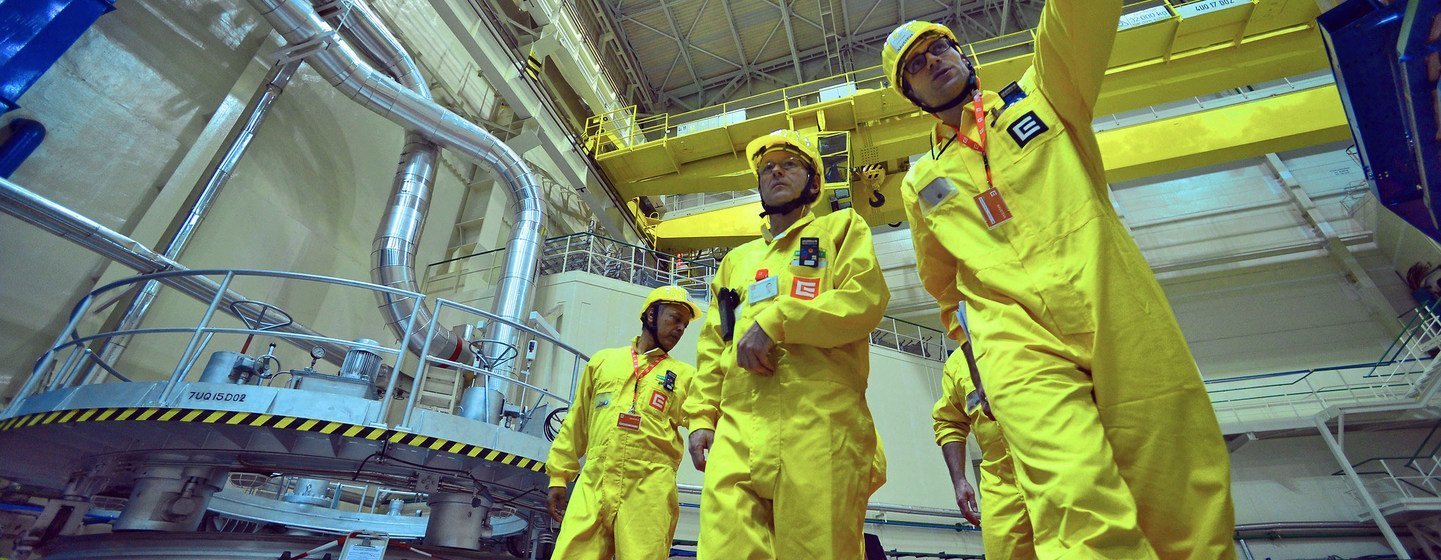
Declaration and a good Iran nuclear deal
Iran must make a complete, accurate, and comprehensive declaration of its entire nuclear program — including all past nuclear weapons-related work, sites, activities, and assets — and agree to a verified termination of any weaponization efforts, and an IAEA mandate to assess the correctness and completeness of the declaration.
Until 2003, Iran pursued a nuclear weapons program known as the Amad Plan, complete with dedicated sites, equipment, personnel, and documentation. Under international pressure, the regime scaled back the program but preserved activities at both military sites and civilian facilities to maintain future weaponization readiness. Iran has never fully disclosed these efforts to the IAEA. A resurgence of weaponization-related work beginning in 2024 contributed to the subsequent military response by the United States and Israel.
Iran must provide the IAEA with a full disclosure of its past and possibly ongoing work on nuclear weapons and permit the agency to verify the complete absence of military nuclear activities. In addition, Tehran has never furnished a comprehensive and accurate declaration of all its nuclear sites, assets, and activities. It must do so to enable the IAEA to fully understand the program, verify implementation of any agreement, and detect potential violations. Any deal must include a clear IAEA mandate to determine the correctness and completeness of Iran’s declarations.
Anywhere access good Iran nuclear deal
Iran must restore IAEA access and permit “anywhere, anytime” IAEA inspections — including at military sites when required — along with full access to equipment, personnel, and documentation.
Iran must fully restore IAEA access to its nuclear sites, which was restricted after the June 2025 strikes. Under any new agreement, the IAEA must be granted prompt, anywhere, anytime access to any site it deems necessary to inspect, including military facilities. The agency must also have unfettered access to interview nuclear scientists and personnel, review documentation, and examine equipment used in nuclear weapons-related work. In addition, Iran must ratify the IAEA Additional Protocol for more intrusive inspections and information provision to the IAEA and fully implement Modified Code 3.1 of its IAEA safeguards agreement — both of which it has long resisted. The latter requires immediate notification to the IAEA of any new nuclear facilities and their technical details.
Conclusion
Many of the above measures are likely to be unacceptable to Iran, as they require termination of key activities and large-scale destruction of sensitive assets. They also raise the practical question of who will verify and execute their elimination. Yet these essential terms — plus other important disarmament provisions not detailed here — represent the foundations of a sound deal. These are terms any state should accept if it has verifiably abandoned the pursuit of nuclear weapons and seeks sanctions relief and a permanent end to military conflict.
Diplomacy is worth pursuing to achieve a peaceful resolution, reopen the Strait of Hormuz, and avoid surging energy prices — but only if it verifiably and permanently constrains the regime’s nuclear weapons capabilities. Otherwise, diplomacy becomes a process that masks the Islamic Republic’s preservation of its pathway to nuclear weapons.
Anything short of the conditions laid out here is not worth unfreezing Iranian assets, lifting the blockade, or ending the conflict. In such circumstances, it would be better for the United States to maintain economic pressure, forcibly open the Strait, and support the Iranian people in bringing down the regime.