
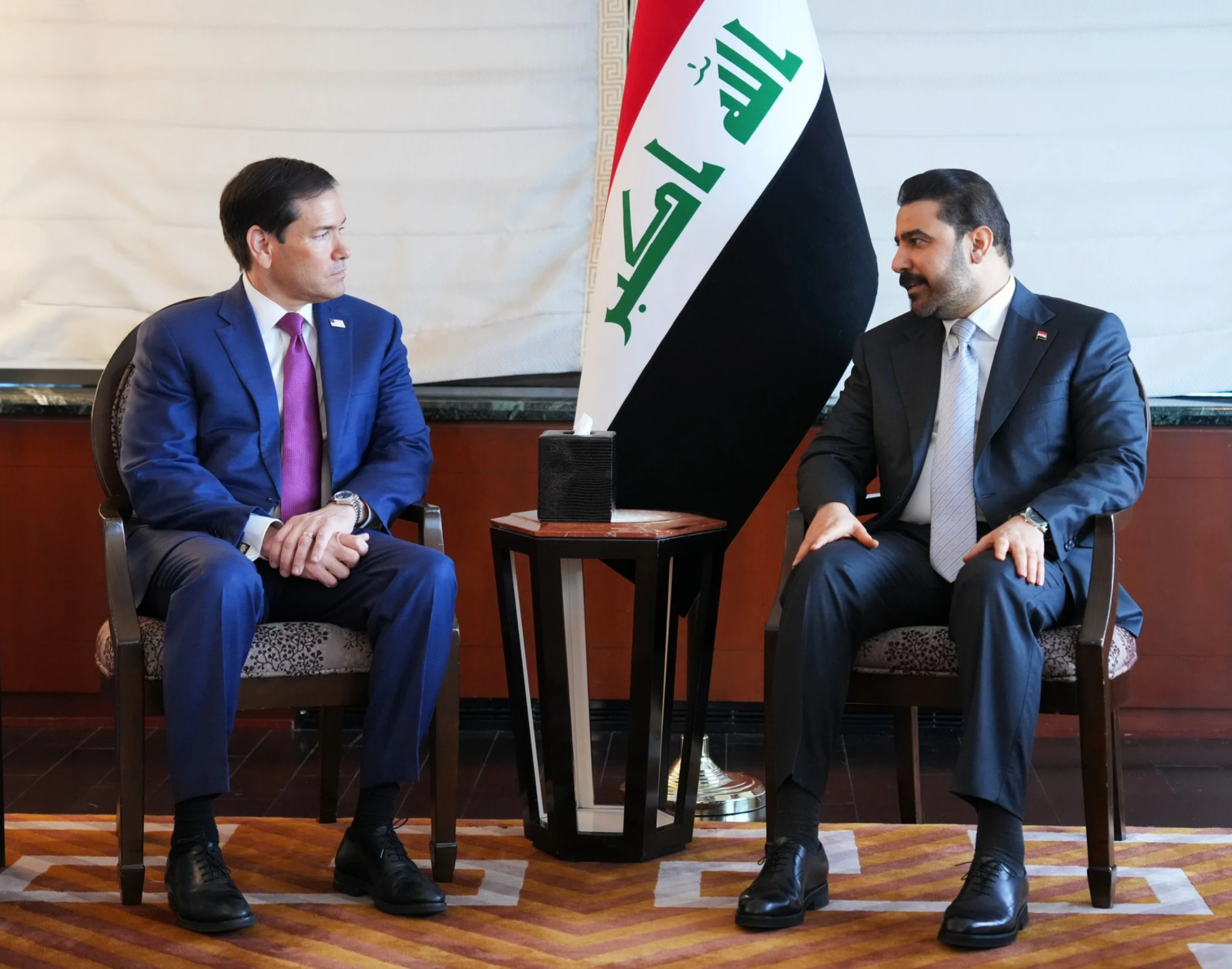
Seven months into the Iran war, Tehran’s selective tanker exemptions and Iraq’s smuggling channels show that Iraq, not Hormuz, is the decisive arena where American pressure and Iranian influence still collide.
Iraq leverage decides the real war
Seven months into the war with Iran, the Strait of Hormuz remains a major point of contention. Goldman Sachs estimates that Gulf oil flows have recovered to roughly two-thirds of pre-war levels, but the oil moves under two distinct arrangements: dark tankers paying Iranian tolls of up to $2 million a ship to use lanes that hug the Iranian coast past Larak Island, and convoys shepherded through by the U.S. Navy. Those arrangements have increasingly brought American and Iranian forces into direct confrontation.
U.S. forces struck rocket launchers on Larak Island on August 30 as the Revolutionary Guard prepared to mine the strait, then hit roughly 100 targets on September 1, two Iranian tankers among them, under a new “tanker for tanker” rule. Tehran answered with missiles and drones at American bases in Jordan, Bahrain, Kuwait, and Erbil, while oil prices fluctuated with renewed attacks and Brent climbed back above $100 a barrel.
Amid that contested traffic, and two days before Washington’s “economic D-Day,” Tehran made a small announcement that most of the world missed: a number of Iraqi oil tankers would be permitted through the strait, openly and by name. The exemption had first been proclaimed in blanket terms for “brotherly Iraq” in April but was now being granted tanker by tanker.
Every other flag faces tolls, inspections, and, in late August, attacks that killed two mariners. Iraqi crude keeps moving: exports averaged about 2.6 million barrels a day in September, and on October 4, Iraq’s state tanker company sent its own supertanker through the strait for the first time in decades. Yet on September 30, the day the last American troops left Iraq, the speaker of Iraq’s parliament told Al Arabiya that Iran had granted Iraqi tankers no exemption at all, and that Baghdad wanted its relationship with Tehran to rest on respect for Iraqi sovereignty.
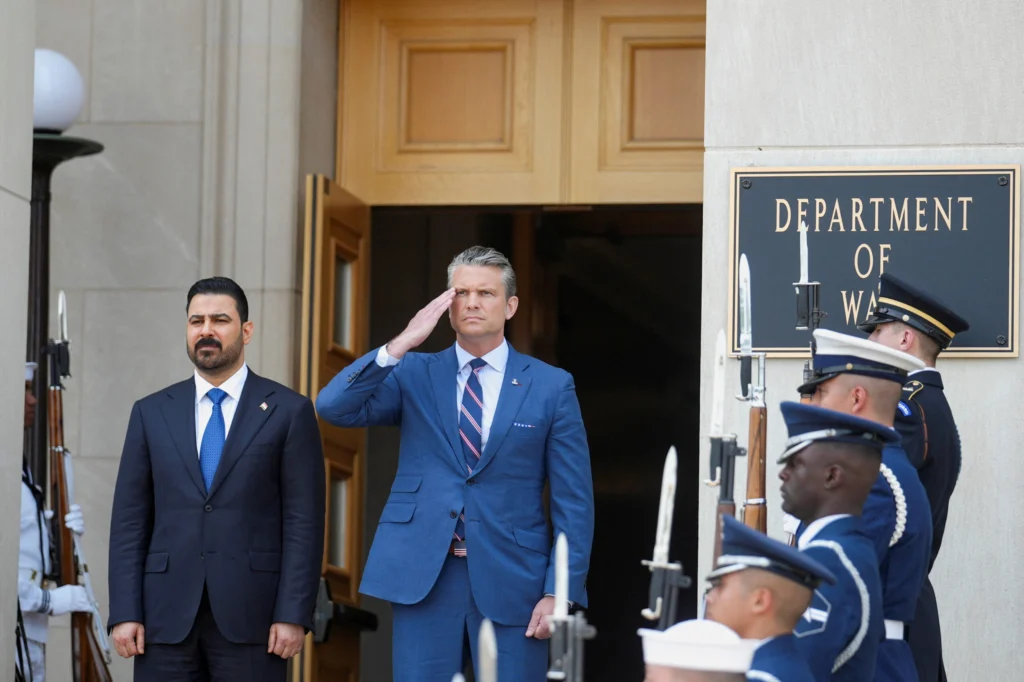
Contested traffic in the strait
To read the exemption as neighbourly generosity would be a mistake, and to read the speaker’s denial as a correction would be another. The exemption is an instrument: declared in blanket terms when Tehran needed Iraqi goodwill, dispensed a few ships at a time when it needed Iraqi dependence, and disowned in Baghdad once that dependence became embarrassing. Tehran was telling Washington that Iraq is the one arena it will not surrender, because Iraq is the arena where it intends to win.
Washington has chosen to contest Iran’s leverage at sea with ordnance and escorts, at the price of Iranian retaliation across the Gulf, and on September 26, it rejected Tehran’s seven-day plan to reopen the strait in exchange for frozen funds, oil-sanctions relief and an end to the naval blockade. Meanwhile, Iran’s leverage in Iraq remains intact, and since September 30, there are no American troops left in Iraq to contest it.
The Corridor that Keeps Iran Breathing
For years, Iraq has been the key financial channel for the Islamic Republic, allowing sanctioned oil to enter international markets and generate hard currency. Iranian crude is blended with Iraqi cargoes and re-papered as Iraqi; subsidized fuel oil is diverted from Iraqi asphalt plants and exported.
A Reuters investigation put the fuel-oil trade alone at at least $1 billion a year. On May 7, the U.S. Treasury designated Iraq’s deputy oil minister for steering oil products to a network that sold Iranian crude falsely declared as Iraqi. The designation also included militia figures, one of whom, Treasury says, negotiated shipping contracts directly with the Quds Force. With U.S. warships again blockading Iran’s ports since mid-July, the corridor matters more than at any other point in the war.
When Treasury Secretary Scott Bessent launched Operation Economic Outcast on August 24, the campaign focused on Iraq’s banks, ports, oil terminals, and ministries. These networks have had two decades to embed themselves and now have a wartime incentive to expand. On August 28, the U.S. Treasury designated the manager of Bank Melli’s Dubai branch and said the Quds Force’s accounts at the bank fund proxies, including in Iraq.
Bessent then promised a bank a week and “financial violence,” and largely delivered: Türkiye’s Golden Global Bank on September 4, Russia’s VTB on September 14, and the Russia-linked A7 shadow-banking network on October 1, followed on October 5 by a formal warning to every foreign bank still doing business with Iran. But Treasury faces a constraint in Iraq that it does not face in Istanbul or Moscow. Iraq’s oil revenues are held at the New York Fed, so cutting off access to them would also cripple the Iraqi government Washington is trying to work with.
The tanker exemption, meanwhile, provides Tehran another source of leverage. By making Iraq the only flag with a declared exemption, then dispensing it a few tankers at a time in response to what Iranian state media pointedly called Baghdad’s “repeated requests,” Tehran has bound Baghdad’s fiscal survival to Iranian goodwill at precisely the moment that Washington is demanding Baghdad’s help in strangling Iran.
Iraq’s exports recovered to about 2.3 million barrels a day in August and 2.6 million in September, still a quarter below pre-war levels and only at discounts of $25 to $30 a barrel on Basra crude. Baghdad is also negotiating with Washington and Tehran at once because different lanes through the strait are controlled by American and Iranian forces, and Iran’s waiver of transit fees still requires American authorization. Iraqi oil therefore depends on permission slips from both countries, which is why Baghdad is now trying to buy its own tankers and route what crude it can around the strait.
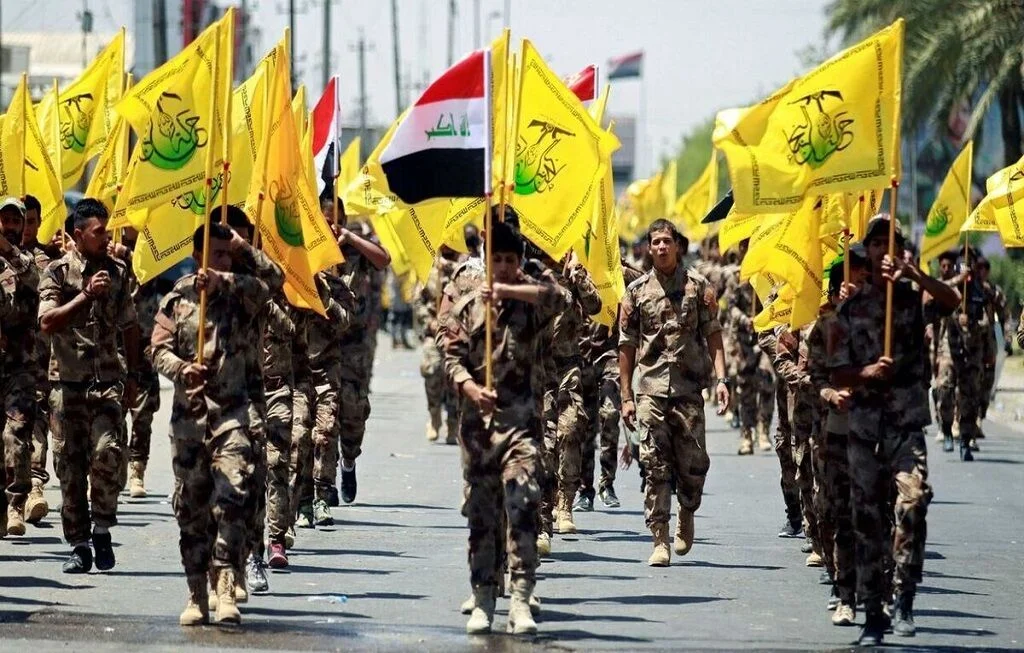
Militias pull Baghdad into the war
Iraq’s role in the war, however, extends beyond oil and finance. While Baghdad sought to stay out of the war, Iranian-backed militias in Iraq quickly pulled the country in. Within two weeks of the initial strikes, the self-styled Islamic Resistance in Iraq had claimed more than 300 drone and rocket attacks on the U.S. embassy, Baghdad airport and the Kurdistan Region, and later on Saudi territory. Quds Force commander Esmail Qaani later moved through Baghdad in April to steer the choice of prime minister, and returned unannounced on August 10, reportedly urging the factions to keep their weapons and discussing passage for Iraqi crude through Hormuz. The tanker permissions followed within a fortnight.
The Sovereignty Test
On September 30, the last American troops left Iraq. The Pentagon announced an “orderly departure” from Erbil, closing a twelve-year campaign against ISIL and recasting the relationship as an ordinary bilateral security partnership. Baghdad declared public holidays for “Days of Sovereignty”; militiamen drove over American flags in the parades; and Qaani declared that the United States had been expelled by the resistance and that Iran must keep its presence in Iraq as part of the “belt of defence” around the Islamic Republic.
Al-Zaidi had pressed for the date himself, pledging to Trump in July that the question of militia weapons would be settled by the time the troops left. For years the factions had said foreign forces must go first. That justification has now left with the Americans. The arsenals have not.
Can Baghdad disarm the militias?
Now comes the test Baghdad set itself, under American pressure. In late June, the government gave every armed group until September 30 to surrender its weapons. On August 29, Kata’ib Sayyid al-Shuhada set ten conditions for taking part, including the departure of American and Turkish forces. When government troops went to seize Nujaba weapons at Jurf al-Naddaf, they were turned back at gunpoint, and no arrests followed. Disarmament by ultimatum has never worked in Iraq. The militias are not a single organism awaiting decapitation; they are a network of factions, patronage systems, and business empires embedded within the state itself.
Baghdad then turned the deadline into the first stage of a longer process. Under the plan al-Zaidi outlined on September 21, the militias would observe a 90-day truce from September 30, halting attacks in return for assurances that U.S. forces would not strike them; fighters would then be absorbed individually into the Popular Mobilization Forces (PMF), weapons would be handed over by June 30, 2027, and any group still operating under its own name would be declared outlawed. Within hours of the last American aircraft leaving Erbil, Kata’ib Hezbollah denied that any understanding existed.
“The resistance has won this round,” its secretary-general, Abu Hussein al-Hamidawi, declared; the victor, he added, is the one who imposes his conditions on the enemy. The Islamic Resistance in Iraq said it had negotiated for more than 40 days through a committee of the Coordination Framework, offering to regulate its weapons in return for full sovereignty, and had received no answer; it said its arms would stay in its fighters’ hands, bound by no political timetable. Al-Hamidawi did order his men to halt operations, with one exception: hostile aircraft in Iraqi airspace, until the government buys air defenses of its own.
The factions are already bargaining for the end of 2027 rather than June, and only Asa’ib Ahl al-Haq, Kata’ib al-Imam Ali and Moqtada al-Sadr’s Saraya al-Salam claim to have placed their weapons under state authority. The day before the withdrawal, al-Zaidi’s cabinet sent parliament a PMF law that Washington says entrenches Iranian influence; the day after it, Foreign Minister Fuad Hussein insisted in Washington that Iraq has “the target, the means, and the timetable” to finish by June 2027.
Whether the process produces meaningful disarmament or a domestic confrontation will depend less on decrees than on intelligence: knowing which commanders can be split from Tehran, which units are motivated by patronage rather than ideology, which arsenals actually matter, and whether weapons have actually been surrendered. That requires cooperation from Iraqi security services, which in August seized hundreds of attack drones and arrested the cells preparing to fly them. With no American troops on the ground, Washington’s view into Iraq now runs almost entirely through those services. Yet the United States has been treating that cooperation as a bargaining chip, conditioning the resumption of financial transfers and security assistance on “concrete steps” against the groups.
Iraq leverage tests Washington’s patience
Washington’s habitual error is to treat Iraq as a theatre to be pressured rather than the arena to be won. Forcing Baghdad to choose sides in public has repeatedly failed, and this is the worst possible moment to try again. Iraq’s monthly oil revenue collapsed from $6.8 billion to $2.3 billion against a wage and pensions bill of $6.5 billion, and many public employees went unpaid in July. By al-Zaidi’s own estimate, the war has cost Iraq about 60 percent of its monthly export revenue and some $60 billion in all.
The recovery since August has come with discounts and permission slips, and because oil revenue arrives about two months after the cargoes sail, the treasury is only now receiving the proceeds of the August barrels. The last time American policy relied on deeply flawed Iraq intelligence, the result was the 2003 invasion. That failure was reciprocal, with Iraqi intelligence misreading Washington as badly as Washington misread Iraq. The experience underscored the importance of understanding Iraq’s political networks and institutions before applying pressure that could have unintended consequences.
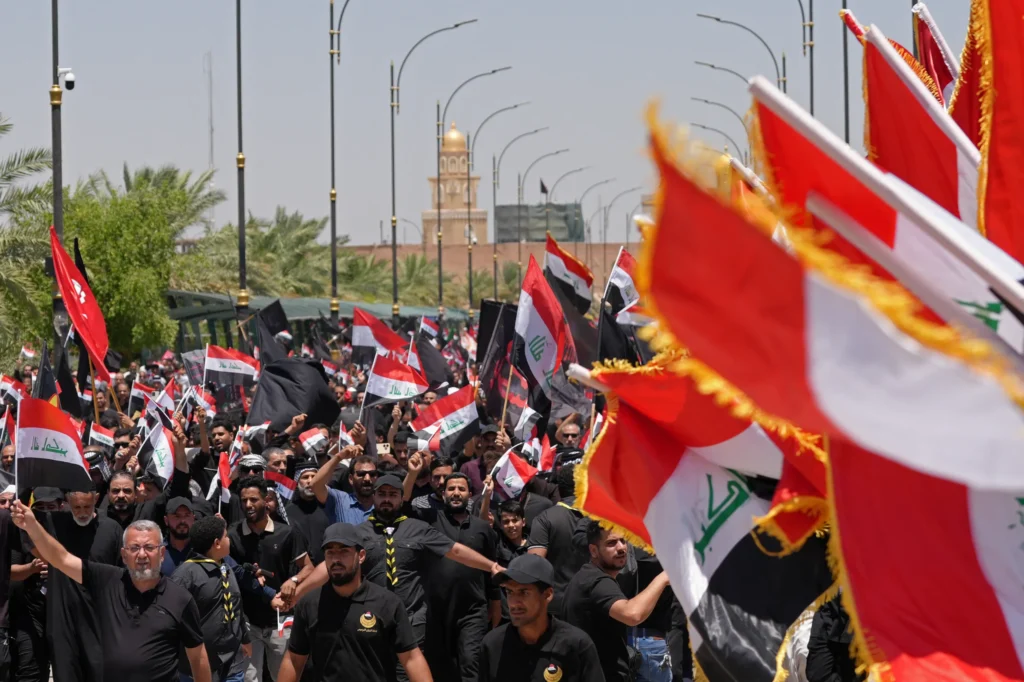
Winning quietly through intelligence
The better approach is to make intelligence cooperation with the Iraqi services that proved themselves against ISIL the first pillar of the new bilateral relationship. With the troops gone, it is the only presence Washington has left in Iraq. Financial intelligence, rather than blanket pressure on Iraq’s access to dollars, can target smuggling networks while limiting the economic consequences for the Iraqi state. The United States should also treat Baghdad’s ability to maintain channels with both Washington and Tehran as an asset rather than solely a liability.
Iraq has carried messages between the two before and is negotiating with both right now, over its own oil. If a deal is ever reached, and if after Trump’s rejection of the seven-day plan the two sides are still exchanging formal responses through mediators, progress will be reflected first in Iraq, in militia arsenals, oil manifests, and border ledgers, long before it appears in any formal agreement. Whatever the prospects for an agreement, any deal will be tested and enforced in Iraq, the country both Washington and Tehran claim to be sparing while fighting over it daily.