
Washington’s initiative to divide top offices between Haftar and Dbeibeh faces Libyan opposition, governance failures, and militia violence. The plan may undermine UN elections and strengthen elites who resist political legitimacy and reform.
The State Department’s decision to host Saddam Haftar signals a dangerous turn toward imposing elite power-sharing rather than restoring Libyan political legitimacy. The US Libya Plan, advanced through presidential envoy Massad Boulos, would split top offices between eastern and western factions. This approach treats stability as a product of elite bargaining, not institutional consent. Yet Libya’s current leaders suggest the opposite: Haftar’s coalition remains tied to military coercion, while Abdul Hamid Dbeibeh has stayed in office years past his mandate.
The US Libya Plan therefore risks triggering the same instability it claims to prevent. Electricity shortages and fighting in Zawiya already show how weak governance and militia power endure. Rather than anchor a transition, such a formula may permanently postpone elections and weaken the UN-led dialogue. Washington’s energy interests may require order, but order built on unaccountable elites cannot hold. Libya’s real path to stability runs through elections, economic transparency, and military unification, not through a bargain between two factions that benefit from continued division.
US Libya Plan Faces Immediate Backlash
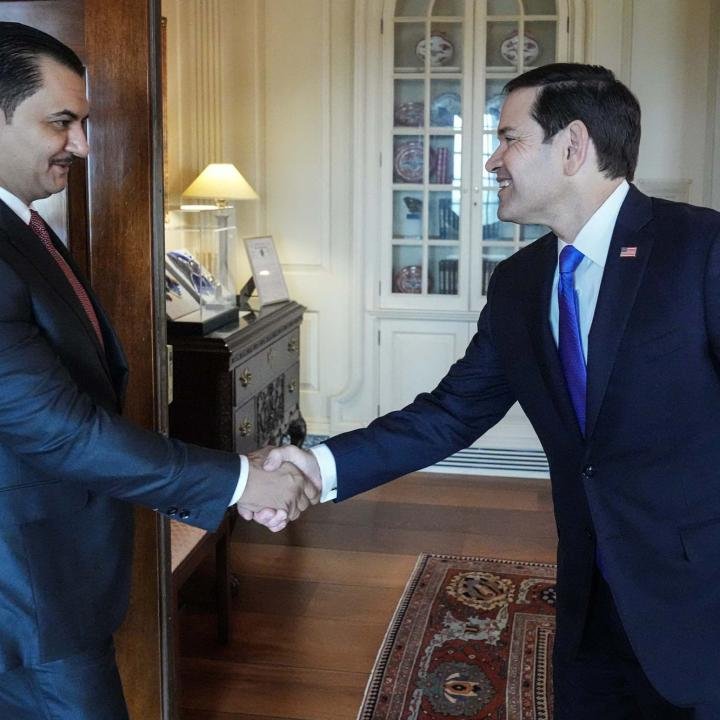
On 29 June, Secretary of State Marco Rubio welcomed Saddam Haftar to the seventh floor of the State Department, an unusual place to host a military leader. Despite his record of brutality and intolerance to opposition in Libya’s east, Saddam has become one of the primary faces of the Trump administration’s initiative to unify Libya.
The American initiative, identified with presidential envoy for Africa Massad Boulos (Tiffany Trump’s father-in-law), aims to unify Libya’s east and west by selecting leaders from each region to split the top government positions. The Trump administration seeks stability to expand access for American energy companies and increase Libya’s oil production. However, naming anyone to be president or prime minister, let alone Saddam Haftar, is a recipe for political chaos.
Why Libya Lacks Political Legitimacy
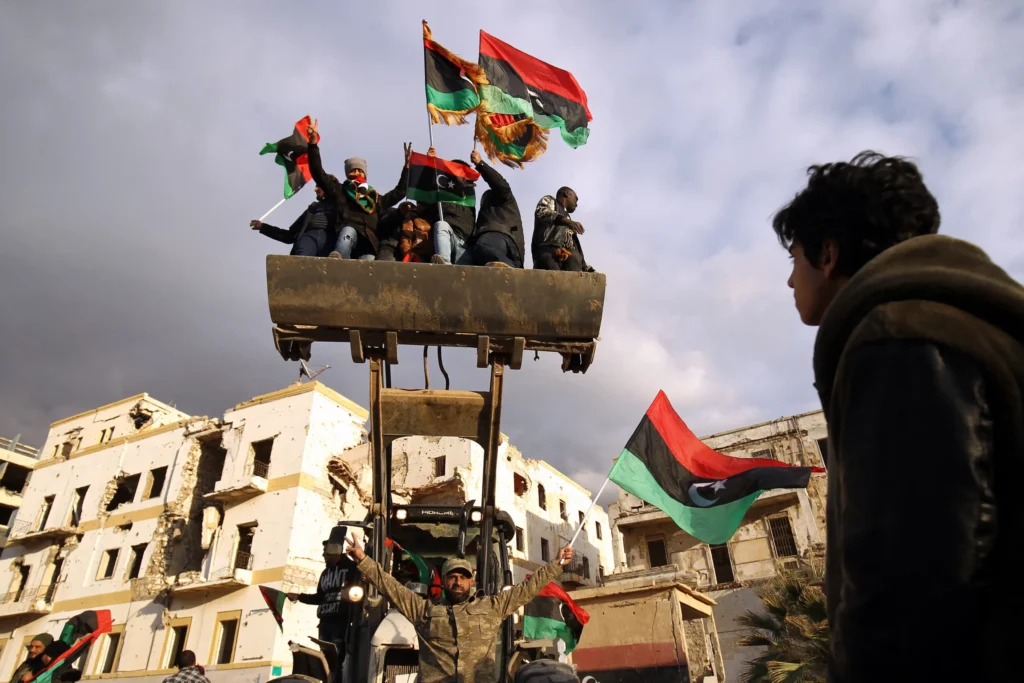
Since Haftar’s Washington visit, many Libyans have opposed the Boulos initiative, an electricity crisis has exposed Libya’s poor governance, and an outbreak of fighting in the western city of Zawiya shows the influence militias still have in the country. More fundamentally, the plan would effectively kill another UN-led effort to restore political ownership of Libya to its people.
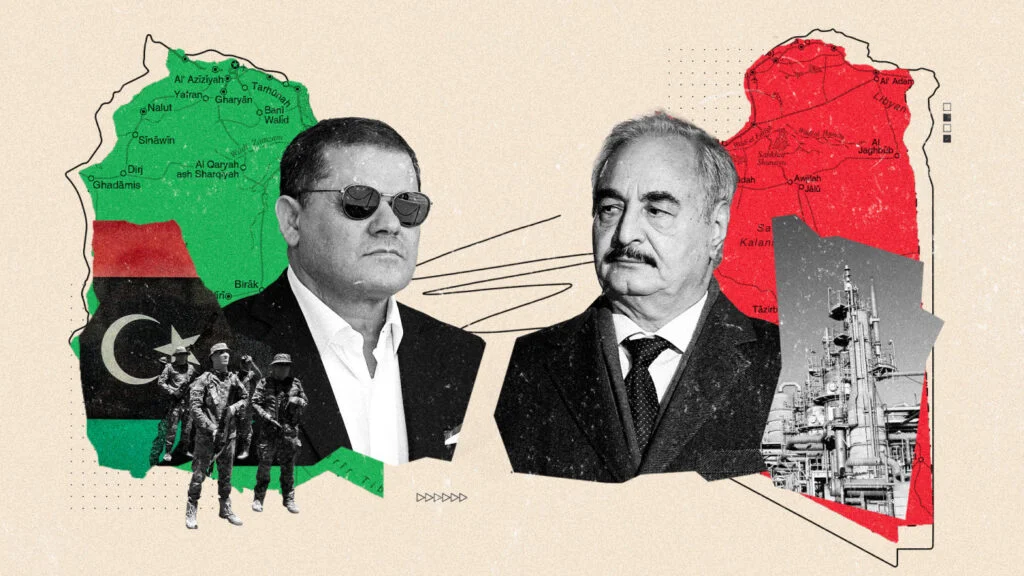
Libya has suffered from an absence of political legitimacy since the ouster of Muammar Gaddafi in 2011. Prime Minister Abdul Hamid Dbeibeh has been in office since 2021, when 39 members of the UN-sponsored 74-member Libya Political Dialogue Forum appointed him. He was supposed to serve for a maximum of one year but remains in office today after elections were indefinitely postponed in 2022. Dbeibeh and his influential nephew, Ibrahim, are the likely counterparts to Saddam under the Boulos plan.
Libya’s parliaments, the Eastern-based House of Representatives and the Tripoli-based High State Council, have even less legitimacy. The Speaker of the House, Aguila Saleh Issa, has been in office since 2014, elected with fewer than 1,000 votes from a tiny district. He has used his outsized role to block political change to the extent that he was sanctioned by the US for obstructing the peace and stability of Libya.
Vicious Cycle
Libya is trapped in a cycle in which political elites block any initiative that would restore political legitimacy to a new government. They cling to power and wealth in a rentier economy with rampant corruption. Outside actors, including neighbours, regional states, and the West, have contributed to Libya’s divisions by supporting the warring sides or using their influence to stymie political progress.
Given these challenges, it’s little wonder the Trump administration would be tempted to bypass the Libyan people and formalise an arrangement with the country’s two main power brokers, the Haftars and the Dbeibehs. However, if the stated goal is power-sharing and unity as a stage in preparation for elections, which Boulos is quick to emphasise, the protagonists could not be more unreliable.
Khalifa Haftar launched a war against Tripoli in 2019; his son, official deputy since August 2025, is unlikely to relinquish national power if it is handed to him. Dbeibeh, meanwhile, has already extended his tenure years beyond his initial mandate. Neither is equipped to meet Libyans’ basic governance needs, as the current challenges over electricity and inflation show.
UN Dialogue Offers Another Path
What’s the alternative? In June, the UN mission in Libya (UNSMIL) completed a “Structured Dialogue” among 120 Libyans that outlined the country’s political, economic and security future. The governance group laid out options for determining a constitutional framework and holding elections. A smaller group is working to outline specific electoral law and processes. They meet regularly and recently agreed on how to appoint the chair and members of the election commission. The UN and the dialogue group should finalise arrangements and set an election date. The US and its partners would be better served supporting that process rather than imposing a new political structure that will be even less likely to relinquish authority than the current one.
Economic Reform, Military Unification
In addition to supporting elections, the US should continue to press for economic reforms and the military unification effort, in which Saddam Haftar has a legitimate role to play. In April, US experts helped negotiate a unified budget for the first time in over a decade.
Chaotic spending patterns and unaccountable oil-revenue receipts threatened the stability of the Libyan dinar. The budget is only a first step. It provides top-line figures and essentially caps funds for development projects controlled by the eastern and western development “institutions” who happen to belong to Dbeibehs and Haftars. The US and its partners should continue to press on issues of financial transparency and reforms that will allow Libya’s small population to benefit from its oil income instead of suffering from corruption and economic mismanagement.
Military Unification Still Faces Obstacles
Second, continuing the military unification efforts will better integrate the Libyan Armed Forces with their Western military counterparts. The US Africa Command hosted a major regional exercise in Libya in April, and the administration continues to advance talks with both sides. Even though there is an imbalance in the reunification discussions since Western security forces include militias as well as a more formal military, the process keeps the sides talking rather than fighting. A further important step would be to disclose weapons acquisitions by both sides. The US should also maintain a close military dialogue with Turkiye and Egypt since they have the most influence on the ground and neither wants another war.
US Libya Plan Must Support Elections
For years, Libyans have insisted that they are fed up with temporary solutions. The US initiative is structured to be just that—another transitional phase that lets political elites permanently postpone elections.