
Baghdad’s failure to control Iraq’s armed factions becomes a strategic liability amid the regional conflict. Shifting pressures and elite interests create a rare opening, but informal power networks and divided loyalties threaten genuine integration of Iraq’s armed factions.
Baghdad’s perennial failure to control Iraq’s armed factions is now a strategic liability as Iran and the US-Israel conflict uses Iraqi soil. The new prime minister’s ability to rein in Iraq’s armed factions hinges on whether shifting regional pressures finally outweigh the patronage networks protecting these non-state forces. This elite opening remains fragile, but the militias now face unprecedented incentives to integrate.
Iraq’s armed factions Gain Unexpected Allies
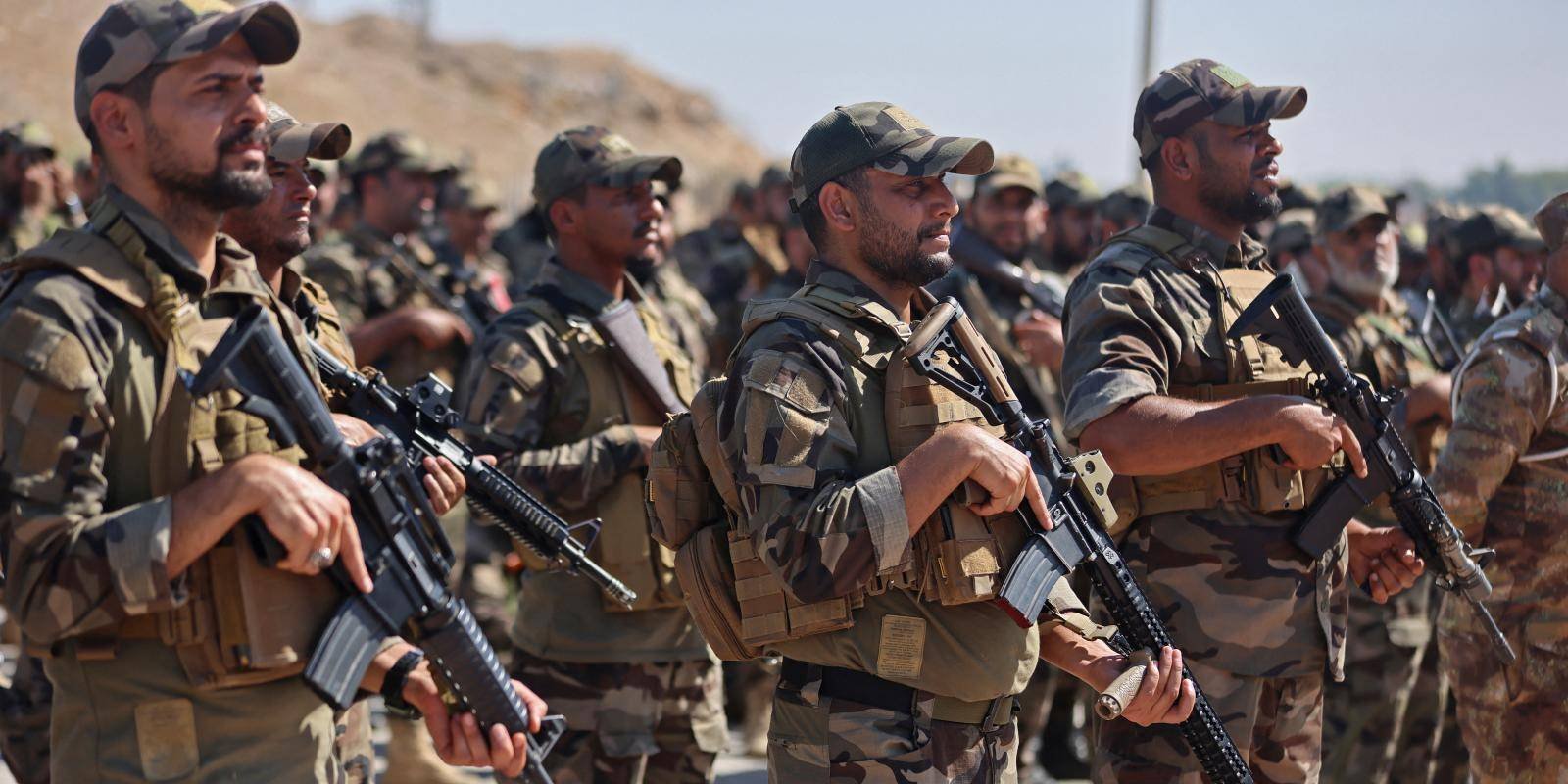
As the US-Israeli war with Iran drags on, Iraq’s government under new Prime Minister Ali al-Zaidi faces a challenge that has plagued successive governments: how to establish meaningful authority over the dozens of armed groups, loosely connected under the umbrella organization of the Popular Mobilization Forces (PMF), that operate outside the government’s direct command. The issue has become increasingly urgent because some of these groups, backed by Iran, are drawing Iraq into the regional conflict that Baghdad has sought to avoid.
The long-standing issue has gained fresh momentum in recent weeks. Shiite cleric Muqtada al-Sadr, who leads the Saraya al-Salam armed group, announced his support for its integration in May. More notably, Qais al-Khazali, the head of the Asaib Ahl al-Haq armed group and a long-time Tehran ally who has recently increased his focus on domestic Iraqi politics, also signalled his group would integrate into the state. While Sadr has made similar pledges before, it is noteworthy that such rhetoric is now being echoed by a wider range of actors.
The Limits of Iraq’s armed factions Loyalty to Tehran
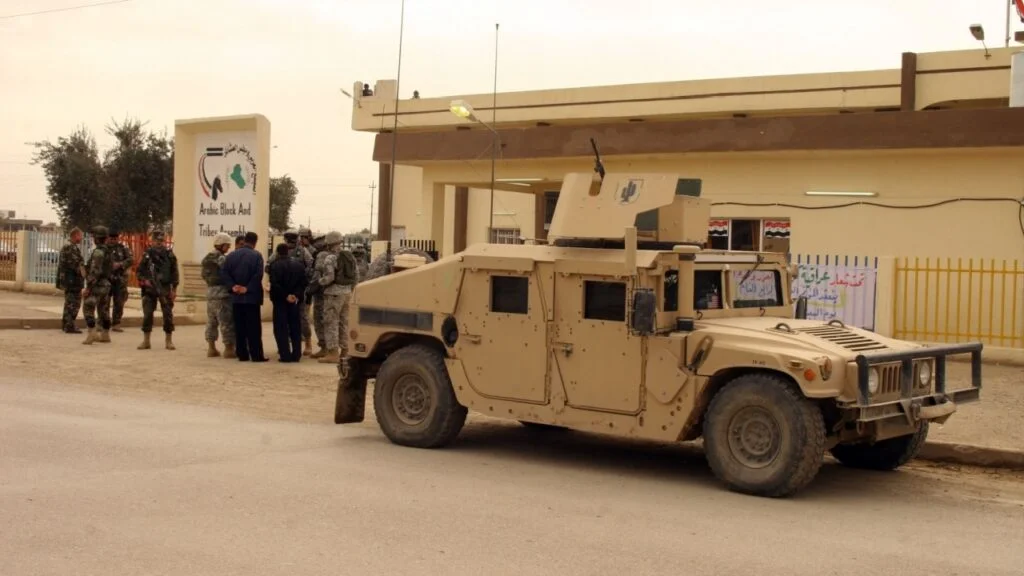
However, other factions have refused. These include groups that are more deeply embedded in Iran’s ‘axis of resistance’, among them Kataeb Hezbollah and Harakat Hezbollah al-Nujaba, who have made it clear that they will continue to fight regardless of Baghdad’s policies.
Their position exposes the limits of any integration effort: the groups with the greatest domestic political stake in Iraqi institutions are the most amenable to integration, while groups with more loyalty to Tehran’s regional project have less incentive to subordinate themselves to the government in Baghdad.
The key question is whether the Iraqi government and its allies have both the ability and the will to confront these groups. The recent killing of a government intelligence officer in a drone attack, which Iraq’s foreign minister attributed to ‘factions from the inside’, suggests that confrontation will likely be dangerous.
Every new Iraqi government arrives with ambitious promises. Yet governing reform agendas tend to lose momentum once confronted by powerful political parties, entrenched patronage networks and armed actors with influence inside and outside of the government. Zaidi’s new government must now consider whether the war has provided a potential opportunity to break this cycle, or whether these fundamental obstacles remain.
No Longer Neutral Iraq’s armed factions
Baghdad has attempted to shield Iraq from the escalating regional conflict that followed Hamas’s 7 October 2023 attack on Israel. Yet the latest phase of the US-Israeli confrontation with Iran has exposed the limits of that strategy.
During previous rounds of escalation, particularly the 12-day war in June 2025, Iran largely instructed its allied Iraqi armed groups to stand down. Preserving stability in Iraq served Tehran’s interests: Iraq provided an important economic lifeline amid sanctions and offered strategic depth that Iran was reluctant to jeopardize.
That calculation has changed. Tehran sees itself as in an existential conflict and no longer seeks to preserve the status quo in the region or in Iraq. Instead, it increasingly sees Iraq as a key arena through which it can project influence and reinforce a new regional deterrence as it seeks to raise the economic and security costs of continued conflict for its adversaries.
During the war, Iran-aligned Iraqi militias have claimed attacks against US interests in Iraq and the region, while the US and Israel have carried out strikes on groups in Iraq. The presence of armed groups in Iraq has diminished Baghdad’s room for manoeuvre as the US/Israel and Iran play out their confrontation on Iraqi territory.
Iraq’s armed factions Face a Political Opening
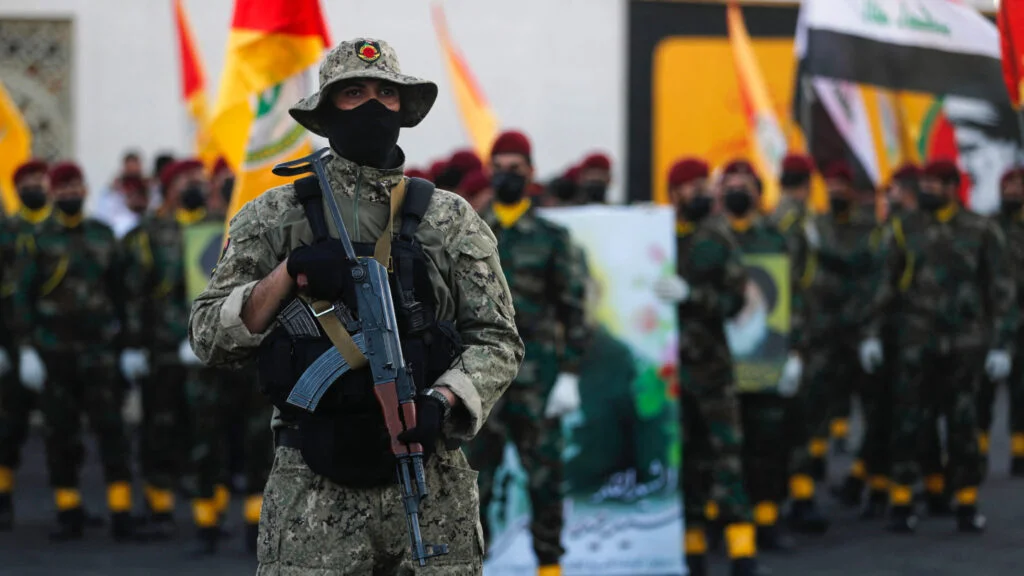
In recent years, many Iraqi faction leaders have experienced the benefits of the country’s relative stability. While other countries connected with Tehran’s project descended into conflict and economic crisis, Iraq has enjoyed relative calm and periods of economic growth. PMF leaders acquired parliamentary seats, ministerial portfolios and influence throughout the civil service. For many of them, participation in government became more profitable than permanent resistance.
The current war therefore threatens the gains they have made from stability. As Iraq becomes a battlefield, resistance is increasingly bad for business. Together, these developments have created a potential political opening as the interests of some PMF leaders increasingly align with the government’s interest in preventing militias from dragging the country into further conflict.
The push for action is not coming solely from within Iraq. The Trump administration has become increasingly impatient with Baghdad, demanding stronger action against Iran-aligned armed groups and greater government control over weapons. Tom Barrack, who was already playing an active role before being recently formally announced as special envoy to Iraq, has welcomed integration in line with the broader US goal of reducing the influence of Iran-backed armed organisations across the region.
Washington has continued to impose sanctions on individuals and institutions suspected of facilitating Iranian influence. Iraqi officials worry that inaction could expose the country to greater economic and diplomatic pressure, including restrictions on access to dollar flows that are critical to Iraq’s economy.
The Integration Illusion of Iraq’s armed factions
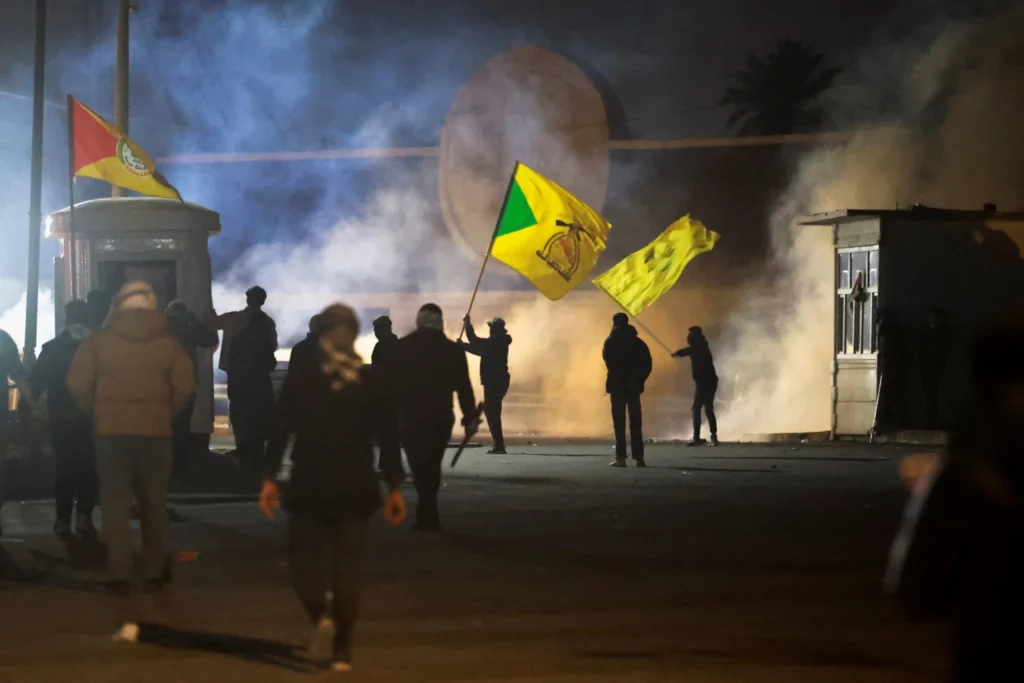
Yet even if the political conditions for integration are becoming more favourable, implementation remains extraordinarily difficult. Iraq has seen similar processes before. For example, the Badr Corps paramilitary formally entered government institutions after 2003, but this did not sever its pre-existing political loyalties and it continued to exercise influence outside of government.
This reflects a broader characteristic of the Iraqi political system. Power is frequently exercised through informal networks. Decisions are often made in party headquarters rather than government offices. Senior officials may answer as much to political or armed patrons as they do to their formal superiors.
The same challenge applies to militia integration. Moving fighters into state institutions does not automatically transfer their loyalty to the government. As one Iraqi fighter recently remarked to me: ‘What is integration? Moving the gun from my right hand to my left hand.’ Formal incorporation does not necessarily change who holds real authority.
The crucial issue is not whether fighters keep their guns. Iraq is awash with small arms. The more important question is whether factions will surrender the drones and rockets that provide their leaders with confidence that they retain the means to defend their interests independently of the state. Without addressing those capabilities, integration risks becoming an administrative exercise rather than a genuine transfer of coercive power to Baghdad.
Even if most groups were to be formally integrated, the deeper issue is whether command and loyalty can also be transferred. While some armed groups may accept demobilization or integration schemes, the networks of power that sustain them are likely to endure. Integration may formally change the structure of groups without necessarily reducing their power or resolving the underlying problem of divided loyalties and competing chains of command.
A Turning Point for Iraq’s armed factions
The Zaidi government may have inherited a more favourable environment for militia reform than any Iraqi administration in recent years. Regional conflict, Iran’s preoccupation with its own domestic security challenges, pressure from Washington and growing concern among Iraqi elites have combined to create a rare convergence of interests.
Yet Iraq’s history offers a cautionary tale. New governments often begin with ambitious promises and broad political momentum. Those ambitions frequently fade when confronted with the realities of governing a fragmented political system.
The coming months will reveal whether the current moment represents a genuine turning point or merely another cycle of unfulfilled reform rhetoric. Baghdad faces a challenge to finally overcome the political structures that have prevented previous governments from solving the issue of armed groups. For now, there is little evidence that those structures have fundamentally changed.