
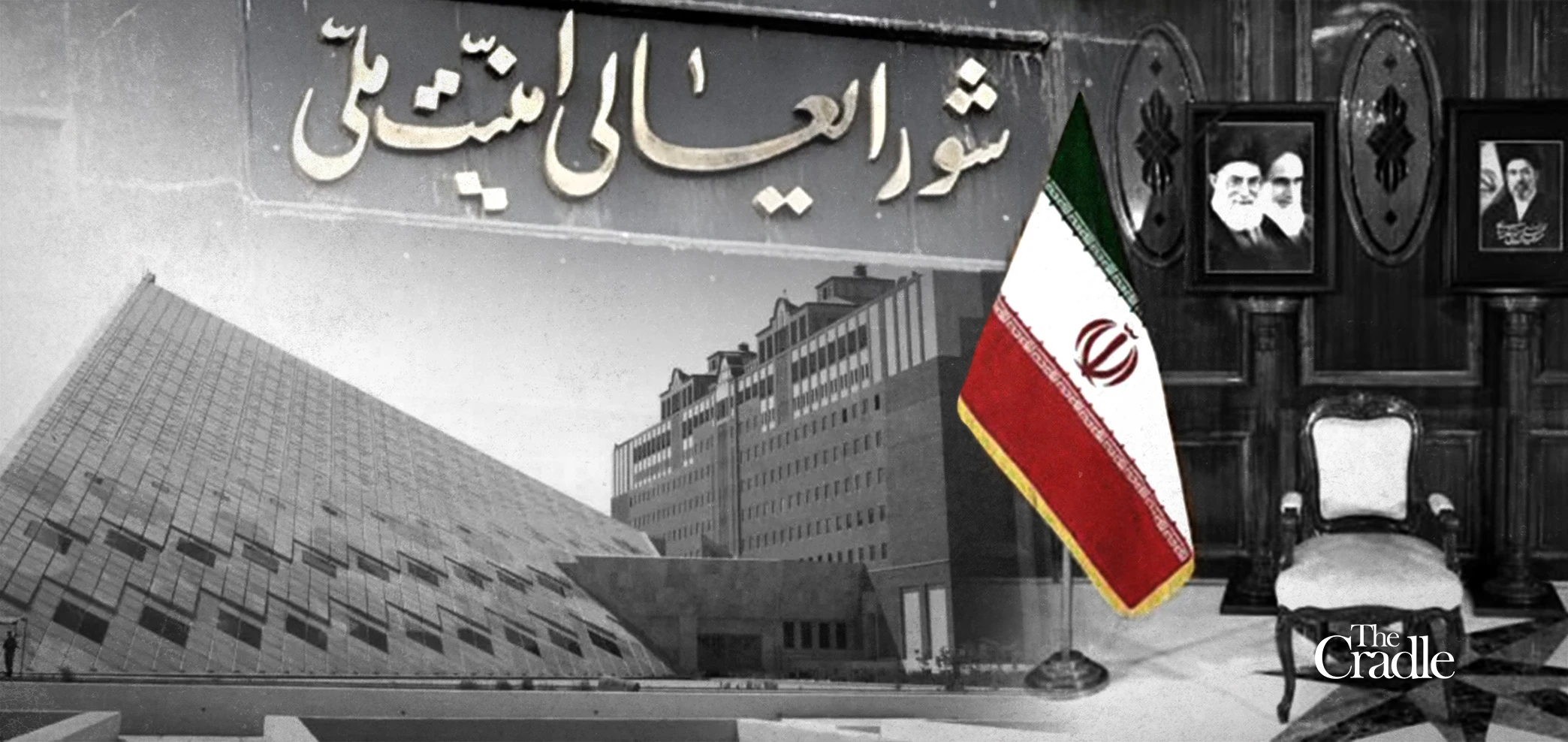
Iran’s parliament reopened this month, but the political fight it revealed traces back to a deeper problem: no constitutional provision clearly governs what happens when the full chamber cannot safely convene, a gap the ceasefire dispute forced into public view.
Iran’s parliament reopening this month did more than end a five-month closure — it forced into the open a legal fight the state has largely managed behind closed doors. The Iran’s parliament closure controversy exposed a structural blind spot in Iran’s constitution: no article clearly governs what happens when the full chamber cannot safely convene, leaving security officials to fill that vacuum through informal correspondence rather than the emergency mechanisms the constitution actually provides.
That gap matters beyond this ceasefire dispute. By resolving the political fallout — removing the loudest hardline critics from committee leadership — parliament settled who could speak against the ceasefire, but not whether future emergencies, including wartime negotiations or new security crises, can lawfully bypass ratification altogether. Framed as a security necessity, the closure also tested how far Iran’s post-war institutions can stretch existing rules before writing new ones becomes unavoidable.
Iran Parliament Closure Sparks Political Storm
When Iran’s parliament finally convened a formal open session this month, what followed produced the sharpest political consequence of the entire five-month closure. Parliament’s own leadership had already been elected electronically back in June, under the same wartime provisions that closed the floor.
The leadership elections for parliament’s specialized committees, however, are held every July, and this year they returned to an in-person vote.
When Iran’s National Security Commission held that vote, lawmakers removed the two most prominent hardline critics of the government’s ceasefire diplomacy from its leadership.
Mahmoud Nabavian lost his post as deputy chair, and Ebrahim Rezaei lost his role as the commission’s spokesperson. Mohammad Hassan Manan Raeisi, another vocal opponent of the negotiating process, lost his post as deputy chair of the Development Commission in the same round. A former lawmaker, Jalal Rashidi Kouchi, called it a deliberate signal that parliament would no longer let a bloc of 20 to 30 hardline deputies speak in its name.
Vote Exposes Iran Parliament Closure Rifts
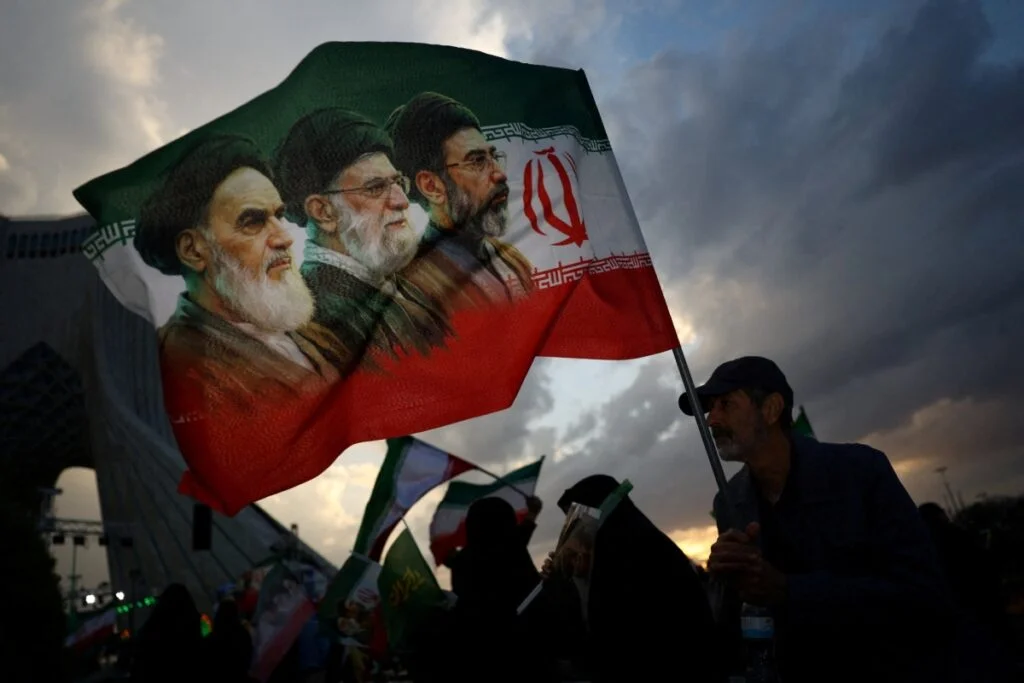
The reshuffle was not incidental to the closure dispute, but tied to a sharper accusation that had been circulating for weeks. Kamran Ghazanfari, a Tehran lawmaker, went further than any sitting MP, publicly alleging that a “coup” was underway against Iran’s own Supreme Leader, Mojtaba Khamenei.
He claimed that the heads of state institutions and the Supreme National Security Council had pressured Khamenei into accepting the ceasefire memorandum of understanding (MoU), and that the negotiating authority he had granted had effectively been nullified in the process.
Under Iran’s constitution, international agreements are supposed to require parliamentary ratification. Critics argued the ceasefire was pushed through the Security Council instead, bypassing that process entirely.
For weeks, government allies countered that the entire negotiation had proceeded under the supreme leader’s authority, and that objecting lawmakers were second-guessing a decision above their standing to question.
That defense became harder to sustain on 18 June, when the supreme leader issued his own statement on the MoU. He said he personally held a different view of the agreement but had authorized it based on the president’s commitment, as head of the Security Council, to safeguard the nation’s rights and the resistance front.
It was a carefully hedged endorsement rather than an objection. But for lawmakers who had been told the ceasefire was beyond dispute, the acknowledgment of reservations hardened rather than softened the language of dissent.
Lawmaker Hamid Rasaei, during a protest against the closed parliament, asked:
“Such an order must be approved by both the Supreme National Security Council and the leader’s approval, but there is no such approval; where in the constitution does it say that the Secretary of the Supreme National Security Council can make decisions for a member of parliament?”
A Procedural Breach Behind Iran Parliament Closure
The term “coup” does not accurately capture what occurred. A coup implies a seizure of power. What took place instead was a ceasefire ratified through an emergency security channel rather than the treaty process set out in the constitution, and defended after the fact rather than debated beforehand. This remains a serious issue, but conflating the two ultimately makes the underlying constitutional question easier to dismiss than confront.
The reshuffle settled the political dispute, at least for now, by removing the loudest voices advancing that argument from positions of institutional standing. It did not resolve the constitutional question. That deeper issue was already visible in the five months before parliament reopened, in the debate over why the chamber had closed in the first place.
Iran Parliament Closure Didn’t Stop All Business
The gap invites an easy conclusion in western coverage: that Iran’s legislature was shuttered, its lawmakers sidelined, another casualty of a state tightening its grip under wartime pressure.
That reading captures part of the picture, but not all of it. What unfolded inside Iran’s parliament since the war began is less a story about institutional collapse than one about a constitutional framework designed for ordinary crises being tested by an extraordinary one, and revealing ambiguity at the moment clarity was most needed.
The timeline itself is not in dispute. Iran’s last regular open session took place in mid-February. When US and Israeli strikes began on 28 February, in-person plenary sessions stopped. Parliament’s media center later confirmed that the decision followed two rounds of correspondence from security bodies, including the secretariat of the Supreme National Security Council, aimed at preventing lawmakers from gathering in a single identifiable location while the state’s political leadership was under direct threat.
The supreme leader avoided public appearances for months amid credible assassination threats during the opening phase of the war. The same logic, parliament’s leadership argued, applied to nearly 290 lawmakers sitting together in one chamber.
But describing those five months as a “shutdown” flattens what was in practice a partial and contested suspension. According to parliament’s response to renewed criticism this month, seven virtual plenary sessions were held with roughly 250 lawmakers participating, alongside around 200 specialized committee meetings conducted in person.
Oversight activity, ministry consultations, and constituency work continued largely uninterrupted. The open chamber, however, ceased operating in its conventional form, and with it the mechanisms that only that format can legally produce: binding legislation, votes of confidence, formal parliamentary questions, and impeachment proceedings.
Iran’s parliament, in other words, stayed institutionally alive. What it lost was its most public and legally consequential instrument.
No Legal Basis for Iran Parliament Closure
The security argument rested on Article 176 of Iran’s constitution, which assigns the Supreme National Security Council responsibility for setting defense policy, coordinating security activity across institutions, and mobilizing national resources against threats. On its face, this gives the council standing to assess the security risks of assembling the legislature in one building during wartime.
Deputy Speaker Ali Nikzad framed the logic directly: parliament does not take orders from the Security Council, but when its intelligence assessment counsels against a 192-lawmaker gathering, compliance becomes a matter of religious and practical obligation rather than choice.
The difficulty is that Article 176 does not explicitly authorize the council to suspend the core function of a co-equal branch of government. The constitution itself points elsewhere for how such situations should be handled.
Article 69 allows for closed sessions during emergencies under specific procedural conditions, with a requirement that minutes be published once the emergency passes. Article 79 permits wartime restrictions, but only with parliamentary authorization, capped at 30 days and subject to renewal. Article 68 goes further, stating that even during war or occupation, if elections cannot be held, the sitting parliament continues its work rather than lapsing.
None of these provisions describe what took place. The open chamber remained suspended for months through informal security correspondence rather than through any of the emergency mechanisms outlined in the constitution itself.
This gap turned a security decision into a political dispute even before the ceasefire controversy intensified it. Ghazanfari described the prolonged closure as lacking any legal basis, arguing that neither the constitution nor parliament’s internal bylaws grant the speaker authority to withhold the chamber for that length of time.
Rasaei questioned why the closure continued even as ceasefire negotiations progressed, and threatened to convene an informal session outside the parliament building if the chamber did not reopen. MP Hossein Samsami noted that lawmakers had lost even the procedural ability to file impeachment motions or issue formal statements, since the legislative system enabling those actions had effectively been frozen alongside the chamber itself.
Public criticism from figures such as expert on international affairs Mohammad-Javad Larijani was pointed enough that parliament’s media office issued a formal rebuttal, citing the correspondence with the Security Council and the number of virtual and committee sessions as evidence that the institution had remained active.
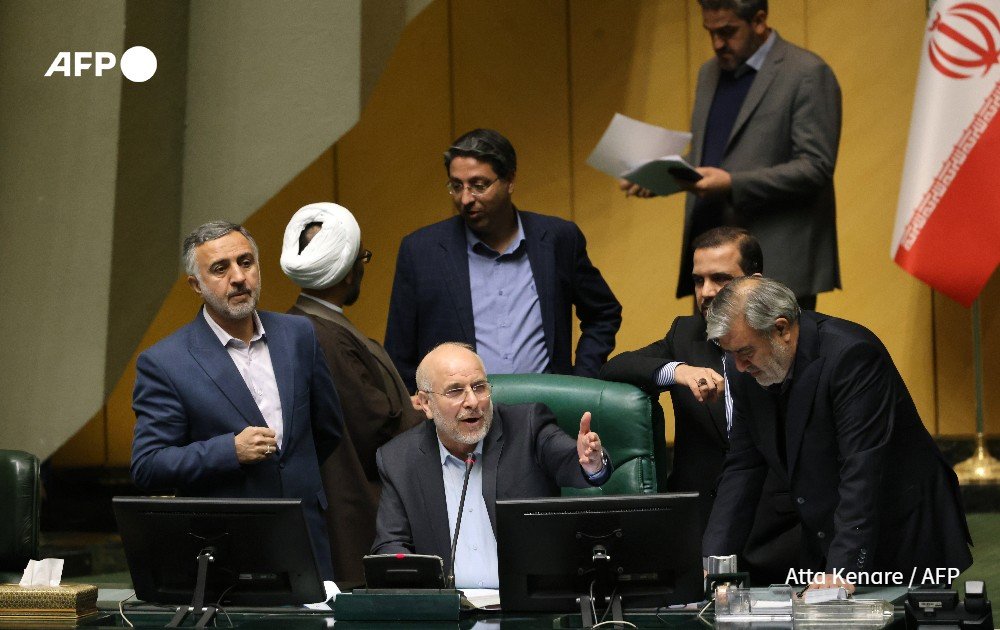
Parliament Speaker Mohammad Bagher Ghalibaf’s position in this dispute is not straightforward. He wrote to the Supreme National Security Council in the spring requesting updated guidance on resuming open sessions, a letter parliament says went unanswered for weeks. Whether that reflects institutional caution higher up the chain of command or a more convenient alignment between Ghalibaf’s dual role as speaker and lead nuclear negotiator is a question lawmakers themselves have not resolved.
MP Mojtaba Zarei, defending the closure, accused critics of handing adversaries a propaganda opening by airing the dispute publicly at all, a charge that in itself says something about how seriously the security rationale is taken inside the system, whatever its critics make of the legal gap.
Does the Iran Parliament Closure Gap Remain?
None of this fits comfortably into the framework most often applied to it abroad, where a parliament absent from its chamber for months is readily interpreted as evidence of democratic erosion. Iran was, and largely remains, a state that sees itself as defending its continuity, not merely its policies.
Nearly 140 consecutive nights of rallies since the war’s opening reflect a public that has broadly accepted exceptional measures, including the absence of its own leader from view, as the cost of that struggle. Parliament’s closure sits within that same logic.
But the legitimacy of the original security concern does not resolve the constitutional issue it exposed. The reshuffle within the National Security Commission does not resolve it either. Removing Nabavian and Rezaei addressed who speaks for parliament going forward.
It did not address whether the ceasefire required parliamentary ratification, or whether a Security Council directive can suspend the open chamber for months without invoking any of the constitution’s formal emergency provisions.
The Islamic Republic’s founders provided for closed sessions. They provided for parliamentary continuity during war and occupation. What they did not clearly provide for was a legislature unable to assemble at all, or a defined mechanism for translating its core functions into a distributed, secure, and legally binding form.
That omission was exposed, not created, by this war. It is likely to outlast the current ceasefire. The next crisis that disperses Iran’s lawmakers, or the next agreement reached in their absence, will confront the same gap unless parliament’s own bylaws are revised to address it