
Mutual breaches expose U.S.-Iran deal fragility, demanding U.S. coercion for a durable truce. Pilot zones test restraint, but old flaws and one-sided demands risk collapse without robust American enforcement.
Israel and Hizbollah’s repeated breaches expose the fragility of the newly minted U.S.-Iran memorandum, threatening to collapse a Lebanon ceasefire before it can stabilize. A meaningful Israel-Lebanon ceasefire demands more than ink; it requires U.S. coercion to pause offensive operations and pilot zones that test mutual restraint. Without this, the diplomatic window for a meaningful Israel-Lebanon ceasefire will vanish amid escalating tit-for-tat strikes.
Meaningful Israel-Lebanon Ceasefire Hinges on U.S.
The confrontation between Israel and Hizbollah in Lebanon risks undermining the recently concluded memorandum of understanding between the U.S. and Iran, just as that fighting threatened to derail it before it was even reached. On 19 June, high-level talks in Switzerland to hammer out protocols for implementing the agreement were abruptly postponed, reportedly over new exchanges of fire in Lebanon the night before.
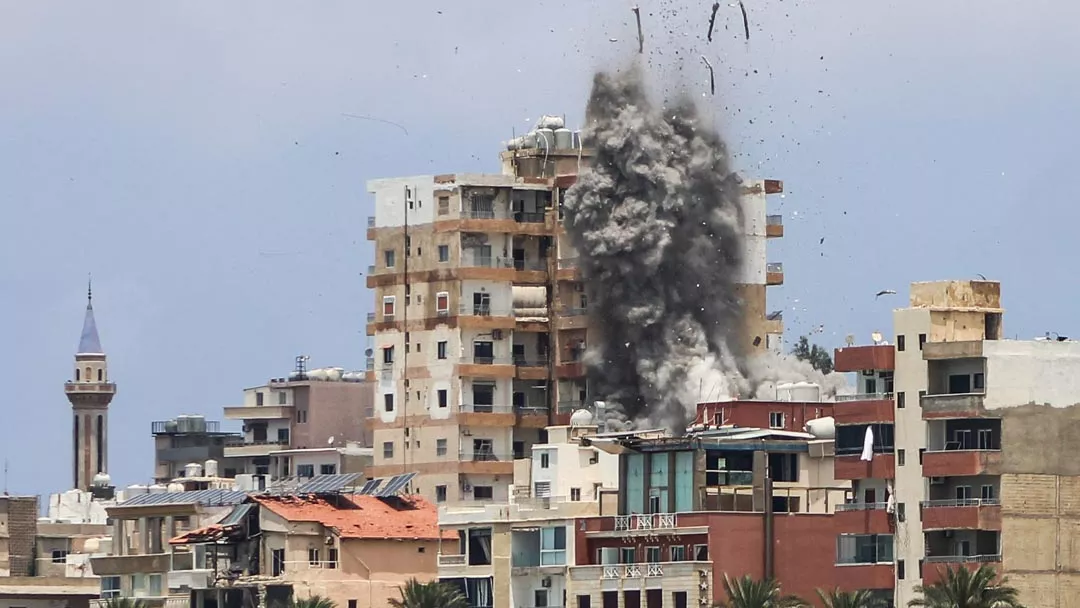
Clashes in Lebanon have complicated attempts to end the U.S.-Iran conflict for weeks, despite the announcement on 3 June of yet another U.S.-mediated ceasefire between Israel and Lebanon. Fighting intensified over the following days; on 7 June, in response to rocket fire toward northern Israel that it blamed on Hizbollah, Israel bombed an apartment building in Beirut’s southern suburbs that it claimed was a command site of the Lebanese armed group.
Then, acting on its prior warning that any attack on the Lebanese capital would draw direct Iranian fire on Israel, the Islamic Republic launched several salvos of ballistic missile toward Israeli territory. Israel in turn hit various sites in Iran the next day, prompting another missile attack from Tehran.
Though that particular tit-for-tat ended after the U.S. urged both sides to stop, the Iran-Israel truce remained shaky. Iran threatened to retaliate against new Israeli attacks on Lebanon, and Israel continued to bomb Lebanon, even as the U.S. and Iran drew closer to a deal. On 14 June, U.S. President Donald Trump strongly rebuked Israel for striking Beirut’s southern suburbs again, just as Washington and Tehran were about to conclude their agreement. Once more, it took Trump’s intervention to persuade Iran not to respond, possibly by altering some of the memorandum’s provisions in Tehran’s favour.
Doubts Plague Meaningful Israel-Lebanon Ceasefire
According to the version shared by the U.S., the memorandum of understanding signed on 14-15 June “declare[s] the immediate and permanent termination of military operations on all fronts, including in Lebanon” and “ensure[s] the territorial integrity and sovereignty of Lebanon”. Interpretations of these clauses sharply differ. Israeli Defence Minister Israel Katz promptly asserted that his country would not withdraw from the areas it occupies in southern Lebanon; Iran and Hizbollah both suggested that continued occupation would violate the deal.
Hizbollah also reiterated its warning that, if Israel resumes its attacks on Lebanese territory, those operations will not go unavenged. On 18 June, Israeli Prime Minister Benjamin Netanyahu reiterated that Israel will retain what it describes as a “security strip” in southern Lebanon. U.S. Vice President JD Vance, meanwhile, called on Israel to “respect the peace process” and President Trump declared that the U.S. “expects a complete ceasefire on all fronts, including Lebanon, Hizbollah and Israel”. Yet it remains unclear whether the U.S. intends to exert pressure on Israel to withdraw from Lebanon.
All of which provides added reason to salvage the 3 June proposal as a plausible off-ramp from the Lebanon conflict, albeit one in need of serious adjustment. The deal features elements that are more creative and pragmatic than those mooted in the past; in particular, it suggests a gradual Israeli withdrawal from southern Lebanon, with the Lebanese armed forces deployed in Israeli soldiers’ place.
But that is where the realism ends. Much of the rest, unfortunately, is reminiscent of old, failed peace proposals, in particular the condition that Israel will halt its attacks only if and when Hizbollah fully stops firing and completely withdraws from areas south of the Litani River – which the group promptly rejected. With Hizbollah refusing to withdraw while Israel is still attacking, Israeli Prime Minister Benjamin Netanyahu declined to refer the 3 June proposal to Israel’s security cabinet for approval.
Salvaging a Meaningful Israel-Lebanon Ceasefire
To move the proposal forward, the U.S., in line with the memorandum of understanding, would need to impose a definitive pause on Israel’s offensive military operations in Lebanon, a step Hizbollah should reciprocate, even absent an immediate Israeli withdrawal. Subsequent, swift implementation of the proposed “pilot zones” – areas that Israeli forces would hand over to the Lebanese army – would then remove another justification for Hizbollah to conduct attacks; bolster the legitimacy of the Lebanese state; and begin the process of Israel’s gradual withdrawal to the international border.
Israel has strongly resisted calls to end its operations, which go against its core security doctrine since the attacks of 7 October 2023 that its military must maintain a physical distance between Israel’s borders and any threat, real or perceived. Nonetheless, accepting these terms would be far more effective – and, of course, much less costly to the Lebanese people – than a prolonged Israeli military campaign, which is highly unlikely to achieve the goal of dismantling Hizbollah, and with it lasting safety for residents of northern Israel. For the U.S., a ceasefire along these lines would have the added benefit of preventing conflict in Lebanon from sparking fresh clashes across the region and endangering diplomacy with Iran.
A genuine truce could also help boost the credibility of Lebanese President Joseph Aoun, who had rejected any linkage between his country’s fate and U.S.-Iranian negotiations only to find himself compelled to welcome a deal that affirmed it. Aoun, who described the 3 June ceasefire agreement as the “last chance” to end the war, needs to show that it can succeed in order to demonstrate that Lebanon can protect itself by diplomatic means, as opposed to Hizbollah’s approach of armed resistance, backed by Iran.
Meaningful Israel-Lebanon Ceasefire Faces Old Flaws
In with the New?
The latest Lebanon ceasefire proposal reflects a degree of innovative, pragmatic thinking, which could help scale down the conflict if it were to be put into effect judiciously. The Lebanon-Israel-U.S. trilateral statement reiterated Israel’s longstanding position that its security and territorial integrity “can only be achieved through the disarmament of Hizbollah”.
Unlike previous arrangements, however, this one also outlines more immediately achievable steps toward the gradual realisation of this objective. It contemplates Israel and Lebanon creating, under U.S. guidance, “pilot zones” in which the Lebanese army would establish control, excluding Hizbollah and all other armed non-state actors. The deal does not specify whether the Israeli military would need to withdraw from such areas, though it is hard to see calm returning otherwise.
The proposal describes these steps as necessary to ensure progress toward “a comprehensive peace and security agreement” between the two countries. Importantly, a staged Israeli withdrawal should also start ameliorating Lebanon’s mass displacement crisis, set off by Israel’s sweeping ground invasion and aerial bombardment that forced hundreds of thousands from their homes. The majority of the displaced are Shiites, and many do not have secure alternatives for housing, let alone a realistic horizon for going home.
The most welcome aspect of this approach is its implicit recognition that to require the Lebanese army to disarm Hizbollah and dismantle its military structures – a demand that Israeli and U.S. officials and even some Lebanese critics of Hizbollah have periodically made – is unrealistic, at least in the near future. Indeed, such an endeavour would likely be not only unsuccessful, but also extremely dangerous, as Lebanon’s own leaders have repeatedly stressed.
They fear that it could set off deadly domestic strife, perhaps even causing the army to fracture along sectarian lines, with many Shiite soldiers deserting or defecting to fight alongside Hizbollah. In contrast, under the current proposal the Lebanese army would reclaim territory from which Hizbollah has withdrawn, allowing it to focus on asserting central state authority over sovereign Lebanese territory, empowering itself without prompting a direct intra-Lebanese confrontation.
Israel, too, would stand to benefit from winding down its military presence in Lebanon. Since 2 March, it has conducted devastating operations aimed at eroding Hizbollah’s capabilities, chiefly through intensive aerial bombardment, destruction of homes and the capture of swathes of Lebanese territory, with the stated goal of forming a “security zone”. In the process, Israel has killed many Hizbollah operatives and destroyed many of its military assets.
But even putting aside the shocking toll of deaths, injuries and displacement the attacks have inflicted upon Lebanese civilians, these aggressive measures have failed to meet their purported goals. Far from subduing Hizbollah, they have spurred it to ramp up its use of “first person view” drones controlled by fibre optic wire, leading to an increasing number of casualties among Israeli troops. In parallel, Hizbollah has continued launching rockets into northern Israel, disrupting civilian life there.
The evidence suggests that sustaining and even intensifying its military campaign, as Israel has warned it might do, is unlikely to bring about the Lebanese group’s collapse. Instead, it risks driving up cross-border attacks from both sides and stirring further conflict with Iran, which has threatened to retaliate in response to strikes on Lebanon.
Early developments on the ground point to benefits of these “pilot zones”. On 4 June, Israel withdrew its troops from the southern village of Debbine, thereby allowing the Lebanese army and UN peacekeepers to reopen a vital road link between the south and the Bekaa Valley, as well as connections to nearby villages where people continue to live.
While this withdrawal was reportedly unrelated to the 3 June agreement or the “pilot zone” scheme, it could still serve as initial proof of concept. Should this process expand so that some of the displaced Lebanese residents from the south can return safely to the pilot zones, the country’s political leaders could rightly claim that state-led diplomacy has worked in ways that armed resistance did not.
Even so, the parties clearly still need to agree upon a number of critical details if the pilot zones are to work. Nabih Berri, the Lebanese parliament’s speaker and the key interlocutor between Hizbollah and outside powers, rejected the initiative on the grounds that it did not impose a cast-iron obligation on Israel to hold its fire in Lebanon.
U.S. Ambassador to Lebanon Michel Issa later told journalists that he had met with Berri to fill in certain ambiguities in the trilateral statement, specifically that displaced residents could return to pilot zones, Israel would halt its strikes there and reconstruction could begin. Lebanon would understandably seek assurances that Israel will not treat the pilot zones as depopulated areas to which residents have no right to return. Despite Issa’s intervention, on 16 June Berri once more rejected the pilot zones approach, expressing concern that it would lead to a prolonged Israel occupation rather than a withdrawal.
And Critical Gaps for Meaningful Israel-Lebanon Ceasefire
Out with the Old?
The concept of pilot zones aside, the rest of the proposal contains the same flaws that marred previous truce agreements. Most prominently, the trilateral statement demands that Hizbollah wholly stop its military operations and evacuate all its fighters from the area south of the Litani River, without imposing any equivalent, immediate requirement on Israel. Indeed, right after the proposal was published, Defence Minister Katz declared that its terms provided his country with continued “freedom of action” to strike purported Hizbollah assets on grounds of self-defence wherever and whenever it sees fit.
Israel has stuck to this stance since the November 2024 ceasefire deal with Lebanon, which ostensibly ended the previous Israel-Hizbollah war. Over the next fifteen months, however, continued Israeli attacks killed some 400 Lebanese and injured more than a thousand. During this period, Hizbollah did not retaliate for Israel’s near-daily airstrikes on targets in Lebanon or for its occupation of several areas in the country’s south. That policy of restraint ended on 2 March, following the onset of the U.S.-Israeli war with Iran and the killing of Ayatollah Ali Khamenei, the Islamic Republic’s supreme leader, on 28 February.
Given this recent history, it was easy to foresee that the Lebanese group would reject the 3 June proposal. On 4 June, its secretary-general, Naim Qassem, publicly dismissed the suggestions as “futile and humiliating”, adding that “the ceasefire must be comprehensive … without the Israeli enemy having the freedom to kill”. Sources in and close to the party say they are convinced that, once the threats they pose to Israeli troops and towns in northern Israel are removed, Israel will ignore its commitments, or even cite alleged non-compliance by Hizbollah and the Lebanese army to make further inroads into Lebanese territory.
Moreover, they projected high confidence in their ability to inflict sufficient harm on their adversary so as to render the occupation unsustainable and argued that Iran’s direct retaliation will deter Israel from massive escalation. For the group, the Israeli-Lebanese talks were a sideshow, irrespective of optimistic statements from the Lebanese government. In its view, Trump’s desire to extricate himself from the conflict with Iran was what truly motivated Washington’s involvement in Lebanon.
This position stood in sharp contrast to the views of both the Israeli and Lebanese governments, which opposed any U.S.-Iran deal encompassing a ceasefire in Lebanon. The former was determined to deny Iran any authority over the region, while the latter rejected the notion that Iran can bargain on behalf of Lebanon. Indeed, the trilateral statement – which included a condemnation by all parties of Tehran’s “ongoing activities that undermine stability throughout the Middle East” – explicitly sought to preclude any role for Iran. On 5 June, President Aoun alleged that Iran was using Lebanon as a “bargaining chip”, stressing that his government remained committed to negotiating independently with Israel to end the war.
In this respect, it is difficult to view the recent chain of events – first, Trump’s repeated interventions to stop Israeli attacks, then the inclusion of Lebanon in the memorandum of understanding, and now the suspension of U.S.-Iran talks about implementation – as anything but vindication of Hizbollah’s position.
Tellingly, on 15 June, the group extolled Iran’s “insistence that Lebanon be included in any agreement leading to a cessation of war”. If the U.S. wishes to offer the Lebanese state an opportunity to assert itself against both Iran and Hizbollah, it will need to drive forward a prompt, realistic course toward a durable ceasefire and an Israeli withdrawal over which the Lebanese government can claim ownership. Implementation of the 3 June ceasefire process appears to be the most plausible path to that end.
The Question of U.S. Leadership
Left to their own devices, Israel and Hizbollah will almost certainly continue their tit-for-tat confrontation. The former cites the persistent threat posed by the latter to justify continued occupation and attacks on alleged Hizbollah assets, providing Hizbollah with the rationale for continued resistance. In the first four days after the U.S.-Iran deal’s announcement, Israeli attacks killed over 150 people and wounded hundreds more in Lebanon. On 19 June, Hizbollah fighters killed four Israeli soldiers on Lebanese soil, prompting far-right Israeli minister Itamar Ben-Gvir to demand that “all of Lebanon must burn”. It will take firmer, more consistent U.S. involvement to halt this vicious cycle and pre-empt further escalation.
To this end, Washington should first ensure that the ceasefire proposal, as distinct from its predecessors and consistent with the memorandum of understanding, requires both Hizbollah and Israel to pause their military operations, so that a genuine, mutually observed truce can take hold.
Hizbollah has indicated that, while it will not accept another one-sided arrangement, it would be willing to halt its fire completely should Israel do the same and a credible process toward withdrawal begin. To ensure day-to-day compliance with the truce, the U.S. could draw on the support of the mechanism created to monitor the November 2024 ceasefire agreement, which Washington already chairs. To date, the body has proven unable to restrain the belligerents. Yet France and the UN, which are already part of the mechanism, have expressed their readiness to help the parties ensure that a ceasefire finally takes hold.
In principle, Hizbollah also demands a concrete timetable for a swift, complete Israeli withdrawal to the international border – a desirable, yet improbable scenario at present. Yet it is worth testing how the Lebanese group would react if Israel stopped its attacks and the pilot zones were put in place, even absent a fixed timetable for withdrawal. Would it want to obstruct a process that allows the Lebanese army to recover territory in southern Lebanon, especially if it also offers the prospect of return for hundreds of thousands of displaced Lebanese, most of whom hail from the same Shiite community as the group does?
For this test to come about, the parties would still have to clear up details of the agreement concerning the pilot zones, including the right of displaced people to return commence reconstruction. Under the previous ceasefire, Israel repeatedly struck building equipment such as bulldozers in southern Lebanon, alleging that Hizbollah had or would use this machinery for military purposes.
Encouraging both Israel and Lebanon to quickly implement the proposed pilot zones, under these clear and agreed-upon conditions, could be crucial to extending any genuine pause in hostilities. Washington should insist that, in their next bilateral meetings, scheduled for the week beginning on 22 June, the two countries agree on a plan regarding the first pilot zone.
The U.S. and others should also aim to put in place credible, robust verification procedures to certify that these areas are free of armed Hizbollah fighters and remain so as the process moves forward. In the past, Israel and the U.S. often expressed their distrust of the monitoring carried out by both the Lebanese army and UNIFIL, the international peacekeeping force deployed in southern Lebanon since 1978. Yet with sufficient political will on all sides, and with a Lebanese government eager to assert its authority, getting these bodies to monitor small areas should be far more feasible.
The key to success will be achieving tangible, early results: a meaningful ceasefire on both sides of the border, the handover of pilot zones to the Lebanese army, the return of displaced people (even if initially in small numbers) and support for economic recovery in those areas. Should these things come to pass, civilians in both countries could begin to recover a semblance of normalcy; the Lebanese state would be strengthened; and Hizbollah would find it much harder to justify disrupting the process, as well as politically far costlier should it choose to do so.
An implementation of the 3 June declaration could help begin to chart a new course between Lebanon and Israel and allow the wider U.S.-Iran deal to take hold. But without robust, direct U.S. involvement, the Lebanon truce proposal will likely suffer the fate of its many forerunners, increasing the risk that Israel and Hizbollah will once more scale up their conflict. Renewed fighting would come at even greater cost to civilians and further complicate U.S. attempts to seal the deal with Iran, perhaps even reigniting war across the Middle East.