
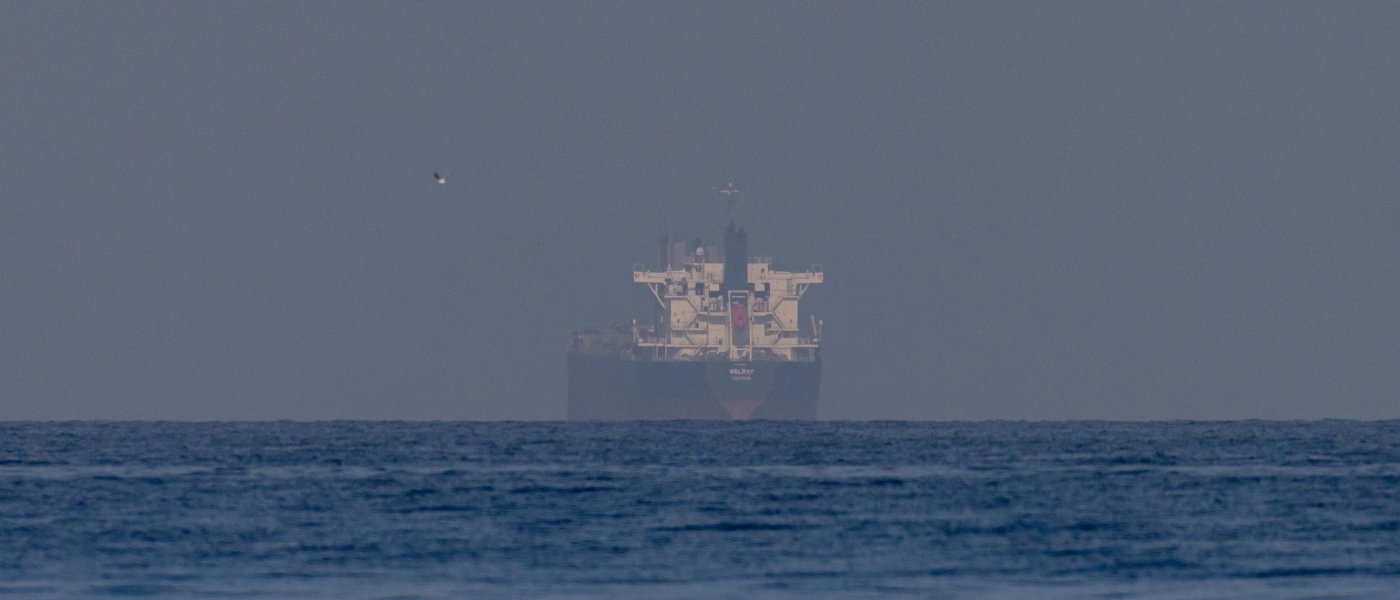
The maritime truce in the Strait of Hormuz remains highly precarious as periodic military skirmishes persist. While oil shipments have partially resumed, underlying geopolitical strains and domestic political resistance ensure that global energy markets face enduring risk premiums.
Global energy security now hangs on a knife-edge as the fragile U.S.-Iran Ceasefire fails to clear deep-seated hostility in the Persian Gulf. While oil tankers resume transit through the critical chokepoint, military commanders warn that this U.S.-Iran Ceasefire represents a temporary pause rather than a permanent resolution to the regional crisis.
U.S.-Iran Ceasefire Under Pressure
What a Fragile U.S.-Iran Ceasefire Means for Energy and Beyond The U.S.-Iran ceasefire agreement has allowed ships to begin crossing through the Strait of Hormuz. But tensions over the terms of transit and slow progress in negotiations remain. Episodic attacks are still occurring, as Iran aims to control traffic through the strait and the United States has responded to defend freedom of navigation.
The recovery remains partial and precarious, meaning that global energy markets are far from returning to normal. In this Experts React, CSIS scholars analyze the ongoing situation.
Pause, Not Peace: The U.S.-Iran Ceasefire on Borrowed Time
Raad Alkadiri, Senior Associate (Non-resident), Energy Security and Climate Change Program
This is a deal President Donald Trump wanted to make, and one Iran was happy to take given the security and financial concessions on offer. But it is not a peace settlement.
It is an extended ceasefire, and it remains hostage to the very dynamics that drew the United United States and Iran into conflict in the first place. How the next phase unfolds will turn on two variables: U.S. domestic politics and Israel’s willingness to hold to a regional truce. For all his bluster, President Trump clearly wants the Iran war behind him; reopening the Strait of Hormuz is achievement enough for now. But the price he paid does not sit
well with Republican hawks or some Democrats, who read the terms as strengthening Iran and betraying Israel. Trump has weathered the initial political storm, but pressure for more aggressive measures is likely to grow again if the complex nuclear talks slip past their initial 60-day deadline. Unlike Gaza, this is not a file the White House can simply let drift and hope Washington forgets about it. How Israel responds will also be critical. The latest war was never a standalone crisis—it was an extension of Israel’s post–October 7 campaign to reshape the regional balance of power.
The 14-point plan appears to bind Israel to a regional ceasefire even though the Netanyahu government was not a party to the talks, and recent friction with the United States signals the depth of Israel’s displeasure with the terms. Israel has made clear it will respond militarily if it believes its national security is threatened, irrespective of U.S. policy, and continued clashes in Lebanon illustrate the risks.
If U.S. domestic pressure or Israeli action prompts significant new military action, flows through the Strait of Hormuz will again be in jeopardy. Tehran understands the leverage conferred by its ability to choke the waterway, just as Washington wields the threat of sanctions on Iranian exports. Expectations that the Gulf will simply revert to business as usual are misplaced, as recent incidents have illustrated. The risk calculus around the world’s most important oil chokepoint has changed for good, and a bumpy road ahead will keep risk premiums elevated.

Evaluating U.S.-Iran Ceasefire Impacts
When to Hold ’Em, When to Fold ’Em
Clay Seigle, Senior Associate (Non-resident), Energy Security and Climate Change Program
Key U.S. interests, including energy security and Persian Gulf stability, require ending the war now—even at the cost of major concessions to Iran. The script is now fully flipped from last February, when the National Security Presidential Memorandum 2 called for driving Iran’s oil exports to zero. Instead, Washington has agreed to lift the U.S. naval blockade and waive sanctions on Tehran’s oil exports, which will eventually bring new international capital into the Iranian oil industry and likely boost output.
Iran will soon be poised to reclaim its prewar export volume of 1.6 million barrels per day (mb/d), and from there head back toward its 2.4 mb/d level from 2017–2018—and perhaps beyond. This has set up a potential “Venezuela” oil trajectory for Iran. The United States could only give itself so much time. Aggressive drawdowns of the U.S. Strategic Petroleum Reserve worked to prevent runaway fuel prices until a political settlement was reached.
But this is also why a deal should have been closed in early April, at the same time the ceasefire was reached and the U.S. blockade imposed. During the intervening nine weeks, the ongoing export hiatus helped erode global oil inventories by more than 340 million barrels and drained the Strategic Petroleum Reserve by more than 60 million barrels, now at its lowest level since it was first filled during the Reagan administration.
U.S. oil chiefs warned that dwindling reserves would cause oil and fuel prices to climb higher soon, while hopes that Iran would cave to prevent lasting upstream damage from production shut-ins proved to be wishful thinking. Iran had the stronger hand simply by being willing to continue the stalemate longer.
Trump acknowledged the resulting pressure himself, noting that “we run out of reserves at about four weeks.” While it may push for Hormuz transit fees, Iran is likely to prioritize a resumption of Gulf shipping to make this deal work. The waivers on and removal of sanctions, the unfreezing of funds, and the $300 billion rehabilitation fund rehab are well worth any foregone shipping fees. If Washington does not live up to expectations, Tehran can demand fees and—or—close the Gulf again.
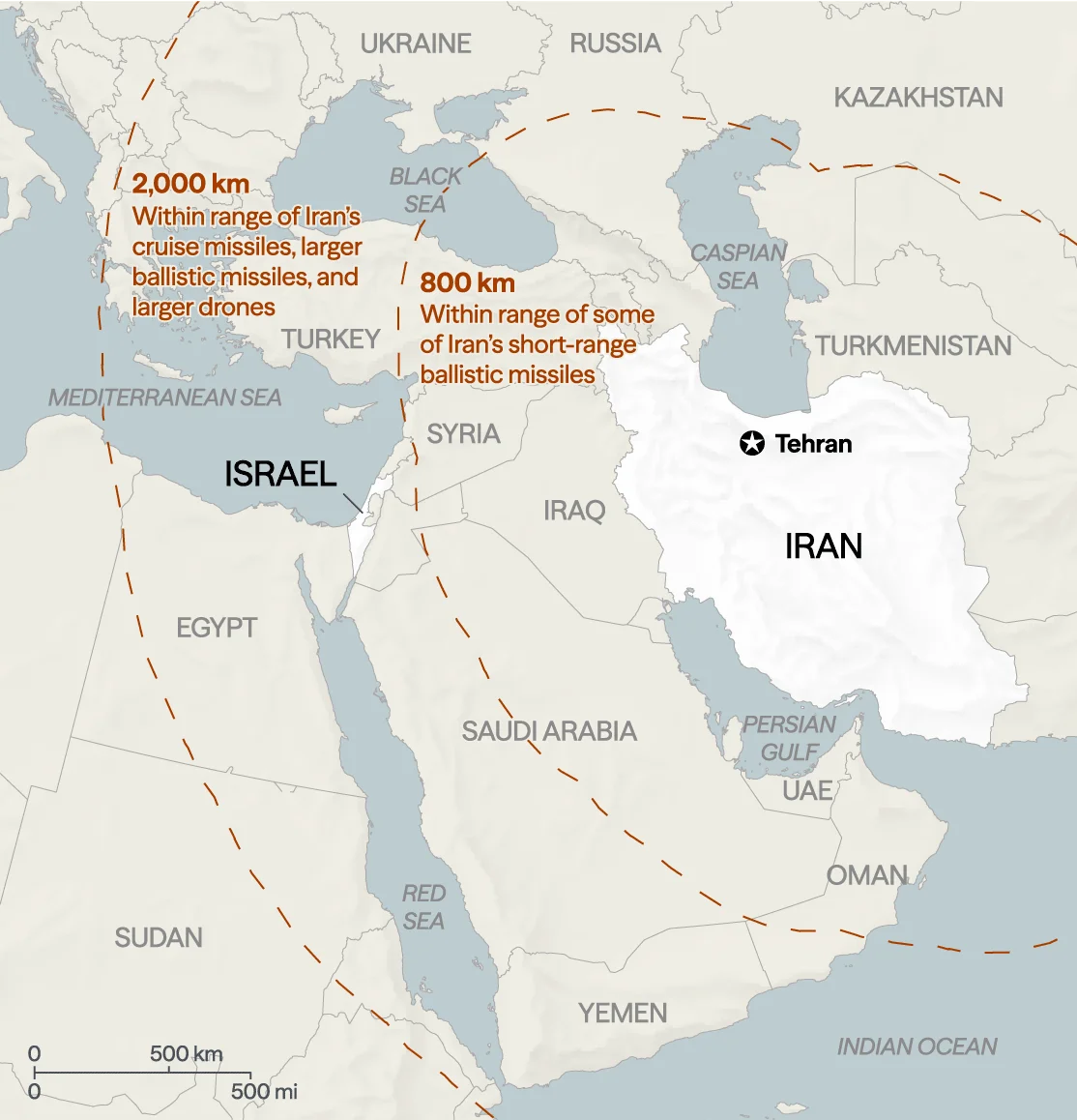
Stalemate Threatens U.S.-Iran Ceasefire
The World Wants a Modest Outcome, but with Insurance
Jon B. Alterman, Zbigniew Brzezinski Chair in Global Security and Geostrategy
For much of the world, the U.S.-Israeli strikes on Iran were an unwelcome surprise, as was the Iranian blockade of the Strait of Hormuz. The constant prospect of renewed violence, combined with the uncertainty over when U.S.-Iranian tensions would abate, left governments on edge for months and cast a shadow over the global economy.
For countries in the Global South, this was another instance of decisions made in Western capitals that shook their countries and their economies and into which they had no input. Not coincidentally, many of their publics came out of this conflict admiring Iran’s defiance and resilience. In fact, few governments around the world are sympathetic to Iran, but most don’t especially fear it either.
They much prefer an open-ended negotiation process in Switzerland to unilateral U.S. military action, and an open strait to a closed one. The hope, shared among BRICS+ states and advanced economies alike, is that the United States will yield to some sort of agreement that lends itself to multilateral window dressing. At the same time, they are counting on the United States remaining willing to act if Iran does something genuinely alarming.
They understand that such an outcome would be fragile, and it would require confidence in a U.S. government that they find increasingly unpredictable. The goal, in fact, is an arrangement that somehow reins in the United States and Iran simultaneously. While imperfect, it would be better than a range of other possible outcomes that they see. European governments bring particular anxiety about the future of diplomacy over the Iranian nuclear file, while Japan and South Korea are focused more squarely on energy security and the reliability of Gulf shipping. Ultimately, few governments believe that Iran can be reformed from outside, and certainly not at the point of a U.S. or Israeli gun.
Their instinct is to manage the situation until it improves. Expectations are relatively low. From their perspective, things were relatively good before the war began in February: Negotiations with the United States were ongoing, Iranian proxies were relatively quiescent, Gulf states felt secure, and the Strait of Hormuz was open. For developed economies in Asia and Europe, and for much of the rest of the world, getting back to that point is a worthy goal.
U.S.-Iran Ceasefire Alters Navigation
The “New Normal” for the Strait of Hormuz
Mona Yacoubian, Director and Senior Adviser, Middle East Program
Iran’s de facto control over the Strait of Hormuz may end up being one of the most consequential outcomes of the war, setting a worrying precedent not only for the Middle East but globally. Should Iran be successful in its quest to assert its control over the international body of water, others may seek to do the same in a marked erosion of the principle of freedom of navigation—a key underpinning of the international order’s architecture.
Tehran is driving to create a new status quo. In a June 26 X post, Kazem Gharibabadi, Iran’s deputy foreign minister, insisted that there would be no safe passage through the strait “with ambiguous arrangements, parallel routes, or decision-making outside of Iran’s considerations as the coastal state.” Tehran has also created a Persian Gulf Strait Authority to oversee operations in the strait and established a joint working group with Oman to discuss the strait’s future administration.
In addition, Iran appears determined to charge some type of fee—semantic gymnastics to avoid the term “toll”—for strait passage, with the MOU only restricting such charges for 60 days. Tehran has deemed its management of the strait a “red line” and seems impervious to U.S. military pressure.
The Islamic Republic will continue to wield the threat of drone and missile strikes on maritime traffic through Hormuz, while also pursuing efforts to monetize and institutionalize its control over the strait. Iran recently reinforced this posture by attacking a container ship transiting the strait via a route that Iran claimed was unauthorized. Even if this latest escalation unravels the MOU, Tehran appears willing to risk a return to full-on conflict rather than acquiesce to mounting pressure that the strait reopen unconditionally.
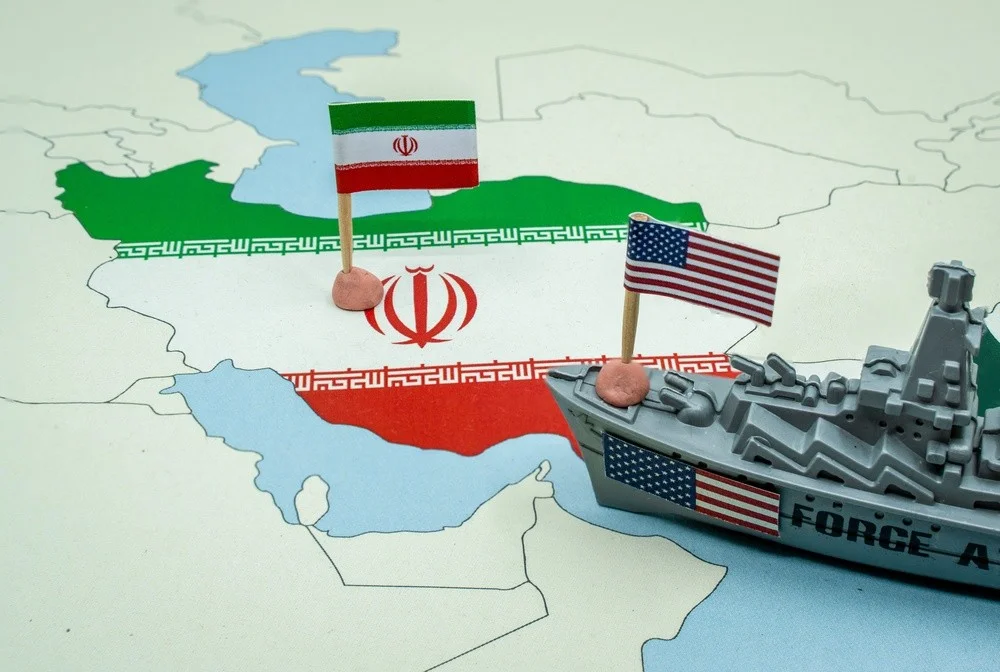
Why U.S.-Iran Ceasefire Lingers
The U.S.-Iran Peace Deal Will Not Fix the War’s Food Security Impacts
Joely Virzi, Program Coordinator and Research Assistant, Global Food and Water Security Program, and Caitlin Welsh, Director, Global Food and Water Security Program
Beyond oil and gas, the Strait of Hormuz is critical to the export of fertilizers, and the U.S.-Iran peace deal has allayed fears of a prolonged fertilizer market disruption. Since the June 17 deal, fertilizer shipments have begun to resume through the strait, with at least 16 vessels transiting. Coupled with China’s concurrent decision to ease urea export restrictions, resumed Hormuz shipments have helped push fertilizer prices to their lowest levels since February.
However, the diplomatic announcement will not unwind the widespread impacts of the Iran war on the global food system. Before the conflict, approximately 20–30 percent of global fertilizer exports transited the strait. Disruptions to these flows sent fertilizer prices soaring during the Northern Hemisphere’s spring planting season, forcing many farmers to choose between incurring higher costs, reducing or foregoing fertilizer application, or shifting to less fertilizer-intensive crops.
Those decisions have already been made, and their consequences—for crop production, and for farmers’ bottom lines—will be borne out in the months to come. In addition, the war affected about 20 percent of global liquefied natural gas exports and around half of global seaborne sulfur exports—key feedstocks for nitrogen and phosphate fertilizers, respectively. The price of phosphate fertilizer remains near historic highs even as other fertilizer prices have fallen. Restricted sulfur exports have led some major producers to cut output, while China, the world’s biggest phosphate fertilizer producer, has maintained phosphate export restrictions, raising costs for many farmers already facing tight margins.
Fertilizer aside, soaring fuel costs have driven up the costs of food production and transportation, pushing food prices higher worldwide, including in the United States, where the annual inflation rate hit 4.2 percent in May.
At the same time, the conflict has disrupted humanitarian aid channels, with the UN World Food Programme estimating that it will serve 1.5 million fewer people this year than it would have absent the Iran war’s disruptions. The peace deal is an important step in the recovery of global fertilizer markets and the easing of global food prices, but full food system recovery will not be immediate. The decisions farmers were forced to make this spring will continue to ripple through the global food system into 2027. Looking ahead, it will take months for the strait to resume normal shipping activity and years for energy and fertilizer production infrastructure to regain full capacity.