
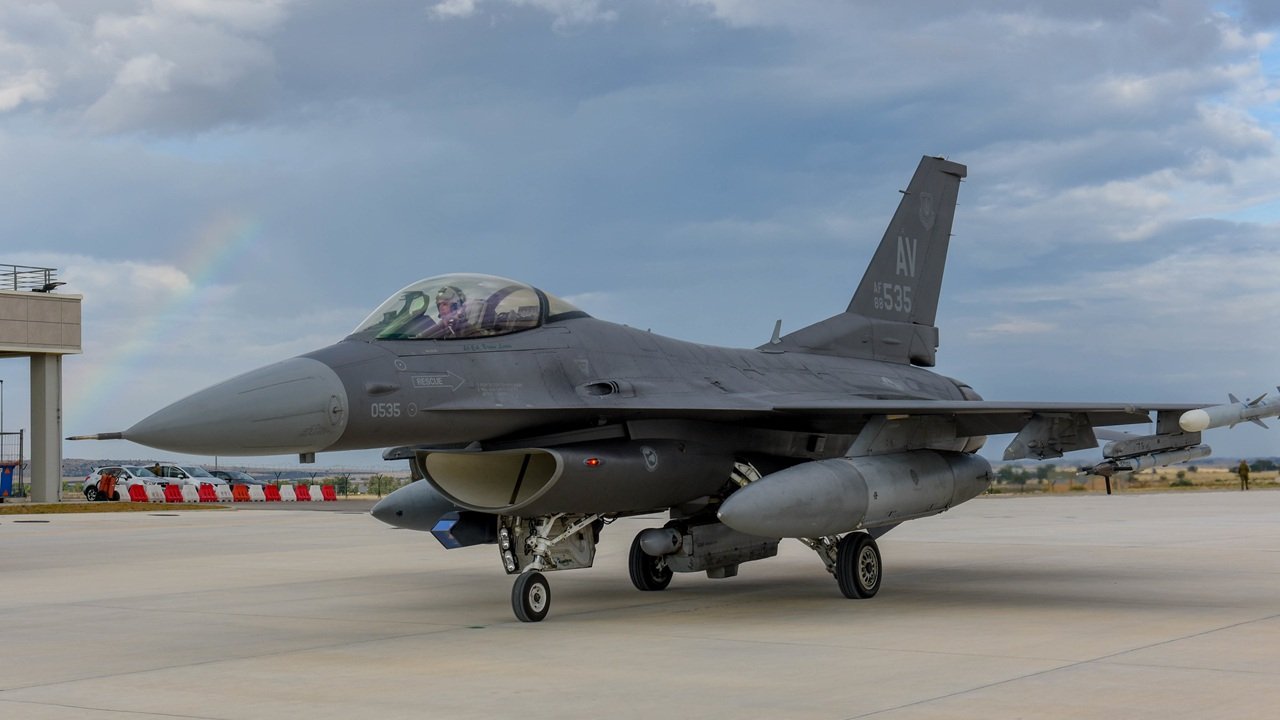
Despite fading public attention, the US Iran war remains active, with new US casualties, expanded F-16 and F-35 deployments, and additional aerial refueling tankers signaling that Washington may be preparing for a wider phase of the conflict rather than winding it down.
Public attention toward the US Iran war has faded even as the fighting on the ground shows no sign of ending. The renewed Air Force deployment — F-16s, F-35s and refueling tankers moving from European bases into the CENTCOM theater and Israel — suggests Washington is bracing for a heavier phase of the conflict rather than winding it down. That buildup carries weight beyond symbolism: SEAD-capable Wild Weasel squadrons and expanded tanker support point toward sustained long-range strike capacity, not a limited retaliatory gesture.
With Iran keeping the Strait of Hormuz effectively closed and oil prices climbing past $90 a barrel, the gap between domestic complacency and battlefield momentum raises the risk that Washington and Tehran are drifting toward a wider confrontation neither side has formally declared.
US Iran War Toll Rises After Deadly Strikes
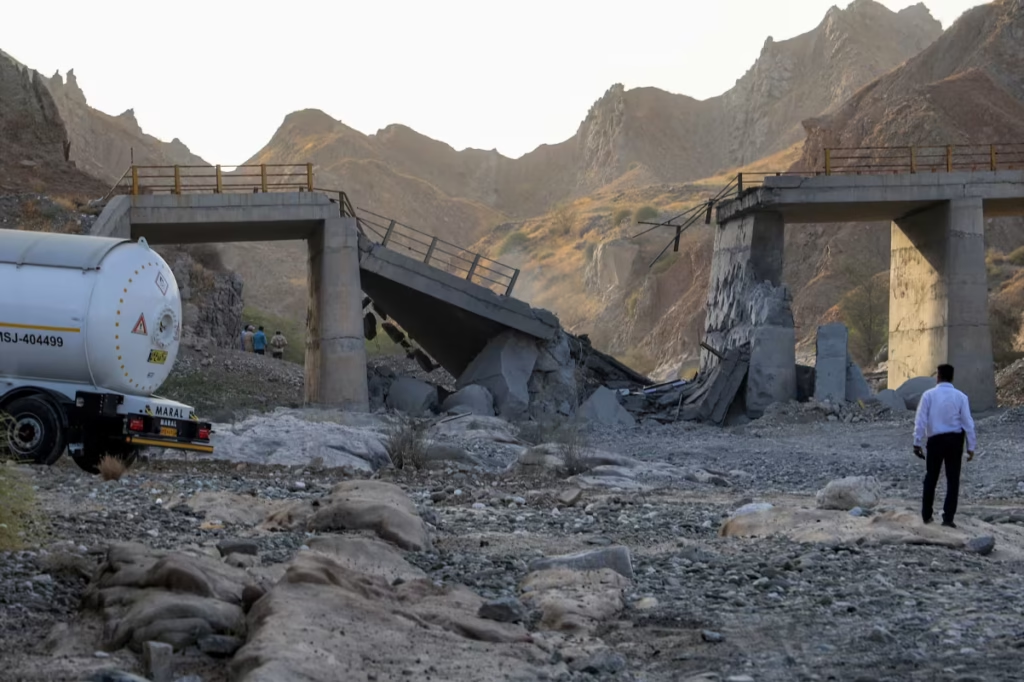
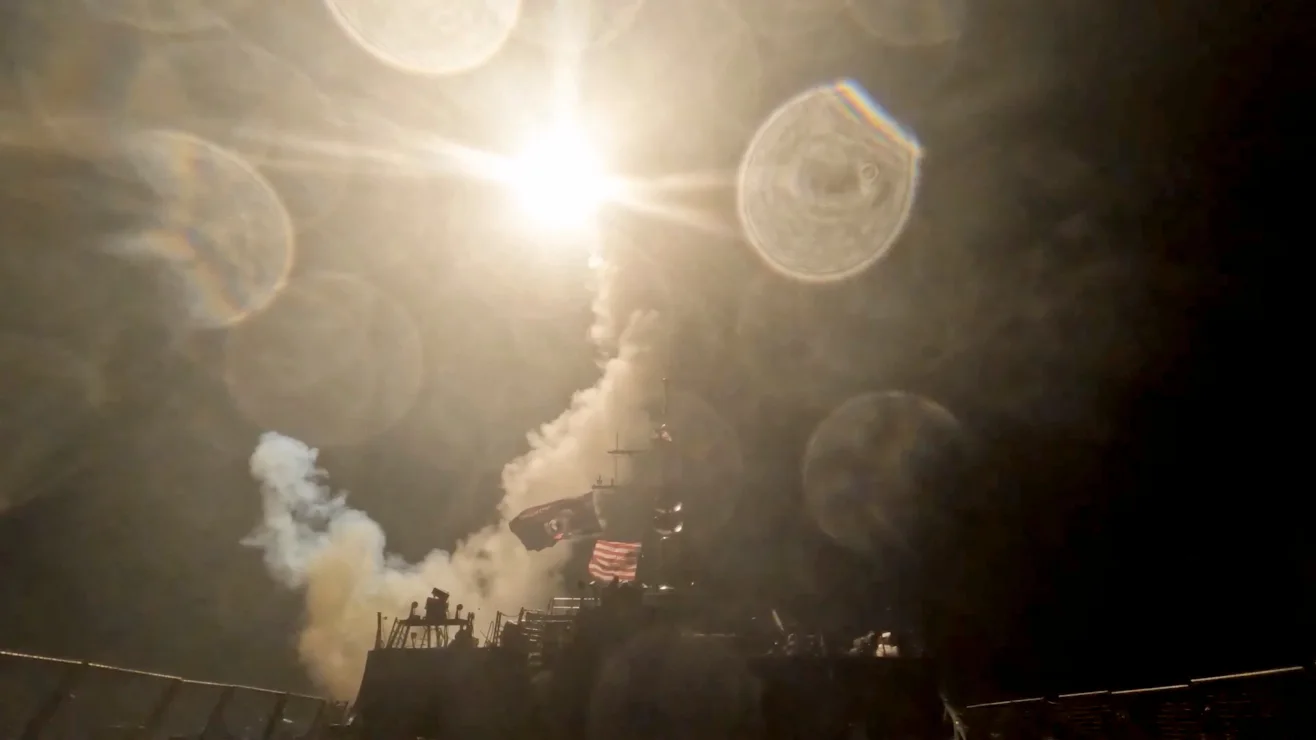
The United States military carried out another wave of airstrikes against Iran over the weekend in retaliation for a Friday attack on a US airbase in Jordan that killed two US military personnel, 1LT James Feehan of Ewa Beach, Hawaii, and Pvt. Isabella Gonzales of Carrollton, Texas. A third servicemember went missing during the attack, and human remains were later found, although that servicemember’s fate is still unconfirmed.
President Donald Trump said the US counterattacks were meant to “honor” the killed US military personnel, and said, “We hit them very hard again tonight,” on Sunday evening after attending the World Cup final in New Jersey earlier in the day.
Behind the Renewed US Iran War Escalation
A third American servicemember was killed on Saturday during a controlled detonation of an Iranian drone in the Kurdistan region of Iraq—a death that Secretary of State Marco Rubio described as an “accident.” The weekend’s events brought the US death toll from the Iran conflict up to 17—and underscored that the conflict is still very much ongoing, even as much of the United States has lost interest.
More US Aircraft Being Sent to Middle East
Last week, the United States Department of Defense (DoD) began to deploy additional US Air Force F-16 Fighting Falcon and F-35 Lightning II aircraft to undisclosed locations in the Middle East as hostilities with Iran heated up again. The New York Times first reported that the aircraft were being redeployed from US military bases in Europe—the latest build-up of US forces in the region in several months.
US Iran War Draws in More Firepower
The F-16 Fighting Falcons from the 480th Fighter Squadron at Spangdahlem Air Base, Germany, and Lightning IIs from the 48th Fighter Wing at Royal Air Force (RAF) Lakenheath, UK, have been dispatched to undisclosed bases in the US Central Command’s (CENTCOM’s) area of responsibility. Some of the F-16s had previously seen service against Iran, and had only just returned to Germany in the past month.
The 480th Fighter Squadron’s aircraft included the F-16 “Wild Weasel” model, according to a report from Air & Space Forces magazine. The Wild Weasel is specially equipped for Suppression of Enemy Air Defense (SEAD) missions, where it hunts down and destroys enemy surface-to-air missile (SAM) sites and radar platforms.
Why the US Iran War Keeps Widening
The rapid deployment of the aircraft may be meant to serve as a strategic show of force as tensions and maritime skirmishes near the vital Strait of Hormuz continue to escalate. But it could also be an indicator that Trump may move forward with his threat to “decimate and destroy” Iran.
The US has already reimposed a military blockade of Iran’s ports, and Iran announced a new commitment to keep the Strait of Hormuz closed. The fighting caused oil prices to top more than $90 per barrel for benchmark crude on Monday morning.
More US Tanker Aircraft Are Heading to Israel
In addition to the fighter aircraft, dozens of US Air Force aerial refuelers are also being deployed to Israel Defense Force (IDF) bases and to Ramon Airport in southern Israel.
US Iran War Reshapes Israel’s Airspace
An Israeli military official told Reuters on Sunday that the US “decided to adjust its force posture in the region,” and that included reinforcing “the existing fleet of aerial refueling aircraft stationed in Israel with additional refueling aircraft.”
The dozen tanker aircraft will be well-positioned to provide the critical aerial support necessary for long-range strike missions and sustained military maneuvers. This could suggest that even more intense strikes could be conducted on targets within the Islamic Republic.
Endgame Unclear as US Iran War Continues
As of late June, the US military had nearly 100 aircraft deployed to bases in Israel.
In addition, the tankers could be used to support the Israeli Air Force’s (IAF’s) F-35I Adir fifth-generation stealth aircraft, which have previously been employed to strike Iran.