
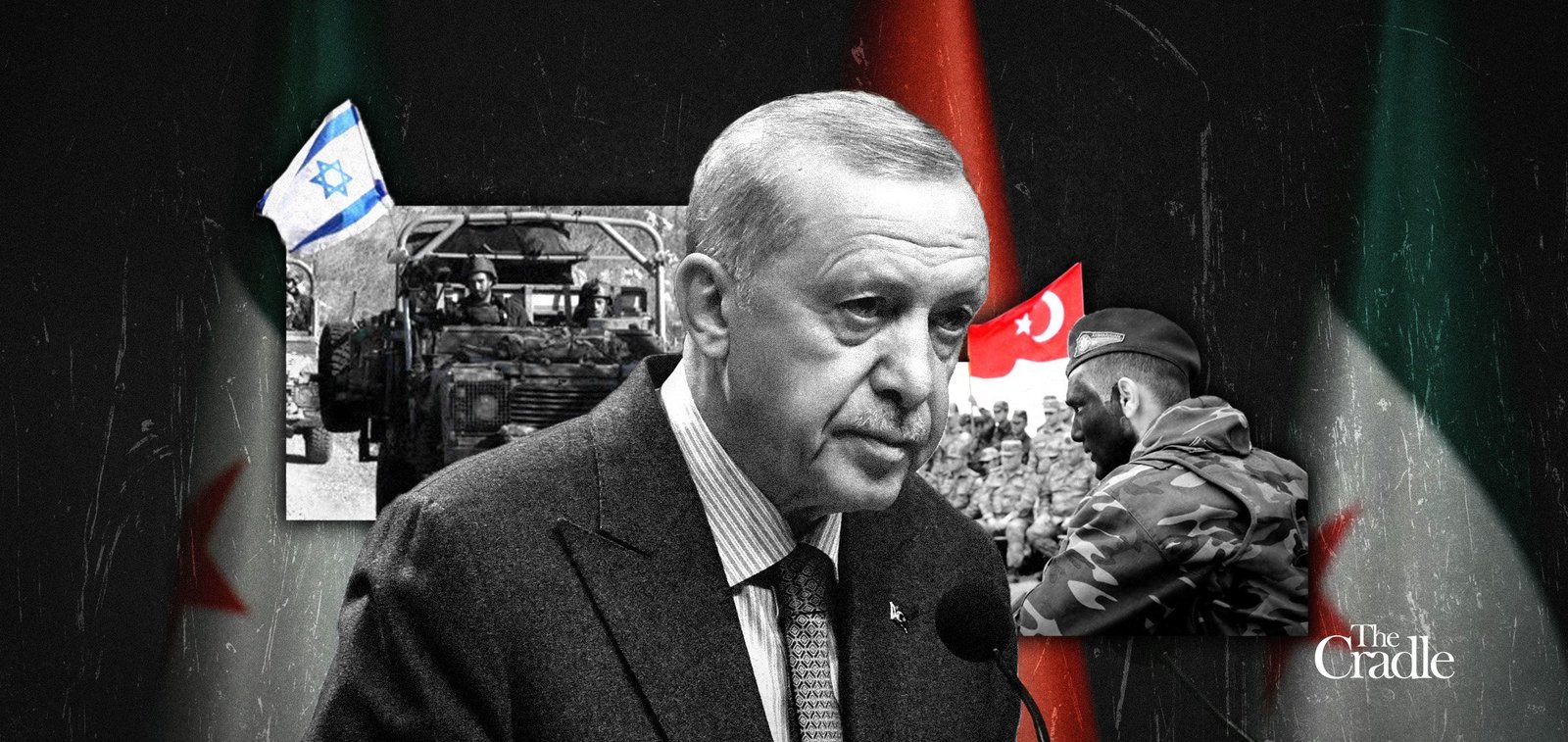
This analysis explains how Israel Turkey tensions have deepened despite deep historic ties, driven by Ankara’s rising strategic value to Washington within NATO, and examines the limited but real risk of escalation across Syria and the Eastern Mediterranean.
Two countries that once flew jets across each other’s airspace without incident are now eyeing one another with genuine suspicion. Israel -Turkey tensions have escalated well beyond diplomatic rhetoric this year, but the underlying driver isn’t a sudden military threat — it’s Ankara’s rising value to Washington. As Turkeybecomes indispensable to NATO’s posture against Russia, China, and Iran, Israel worries that its own strategic weight in the US-led order is shrinking by comparison. The result is a rivalry playing out less on battlefields than in Washington’s calculus over F-35 access, Syrian airspace, and alliance commitments. Understanding why requires looking past the headlines to the shared history — and shared patron — that still binds both states together.
Israel- Turkey Tensions: An Old Partnership Beneath the Hostility
In practical terms, neither Turkeynor Israel currently poses an existential threat to the other. Their relationship is also far older and more deeply rooted than the hostile rhetoric of recent years suggests. Turkeyrecognized Israel on 28 March 1949, less than a year after its establishment, becoming the first Muslim-majority state to do so.
An old partnership behind the hostility
Relations during the Erdogan era have repeatedly deteriorated at the diplomatic and rhetorical levels, yet their strategic and commercial foundations proved remarkably durable. President Recep Tayyip Erdogan supported the US-led “Greater Middle East” initiative and publicly described Turkeyas one of its co-chairs. Ankara also played an important role in the wars and regime-change operations that reshaped Iraq, Libya, and Syria.
On the night of 6 September 2007, Israeli aircraft struck the suspected Al-Kibar nuclear facility in Syria’s Deir Ezzor province during Operation Orchard. External fuel tanks were later found in the Turkish provinces of Hatay and Gaziantep, indicating that the aircraft had crossed Turkish airspace on their return. Ankara protested the violation, while then-Israeli prime minister Ehud Olmert later apologized in the event that Israeli aircraft had entered Turkish territory.
Economic ties also survived successive political crises. Even during Israel’s genocide of Palestinians in Gaza, Ankara initially maintained trade despite mounting domestic criticism. Turkeyformally halted direct imports and exports with Israel in May 2024, but Azerbaijani crude continued to reach Israel through the Baku–Tbilisi–Ceyhan Pipeline and the Turkish Ceyhan Port. The distinction allowed Ankara to defend its embargo while oil transit continued beyond the scope of direct bilateral trade.
Why Israel- Turkey Tensions Are Really About Washington
Israel’s growing hostility toward Turkeytherefore stems from a wider geopolitical concern, rather than any immediate military threat. Washington’s need for Ankara has increased across the Black Sea, the Caucasus, Central Asia, the Eastern Mediterranean, and the Levant. Israeli leaders fear that the resulting expansion of Turkish influence will eventually undermine their own strategic position.
NATO member Turkeyoccupies the junction between several theaters central to US policy. It is essential to western efforts to contain Russia in the Black Sea and Caucasus, limit China’s reach into Central Asia, and pressure Iran across West Asia.
Its geography, defense industry, control of energy corridors, and large, combat-experienced armed forces have made it increasingly difficult for Washington and NATO to bypass.
Tel Aviv wants to curb Turkish power at the same time that Turkeyis becoming more valuable to Israel’s principal patron. As Ankara’s position within the US-led order strengthens, Israeli efforts to contain it risk disrupting Washington’s wider regional plans.
Israel- Turkey Tensions Meet Washington’s Balancing Act
Washington’s indispensable frontline
The US understands this tension and has tried to keep both states within a shared strategic framework. US Ambassador to TurkeyTom Barrack has taken an unusually expansive regional role, acting at times less like a conventional envoy than Washington’s troubleshooter across turkey , Syria, Iraq, and Lebanon. A major part of that role has involved preventing Turkish–Israeli tensions from escaping US control.
Ankara’s own political vulnerabilities limit its room for maneuver. Erdogan’s government faces a deep domestic legitimacy crisis, intensified by pressure on opposition parties, the imprisonment of political rivals, and the steady erosion of rights and freedoms.
The support it receives from US President Donald Trump therefore carries added value. That dependence constrains how far Ankara can move against Israel, regardless of the severity of its public rhetoric.
The present dispute nevertheless extends across several fronts: Gaza and Palestine, the security order taking shape in Syria, energy routes and maritime claims in the Eastern Mediterranean, and the broader contest for influence across West Asia. Together, these disagreements have begun to affect the balance between two states that Washington still needs to keep on the same side.
At the same time, the US is turning its own global strategy into NATO strategy, placing the alliance’s members behind objectives drawn largely in Washington. The strains produced by that effort were visible at the NATO summit held in Ankara on 7–8 July 2026.
Washington wants NATO to intensify pressure on Russia, align more closely against China, assume a larger role in the Ukraine war and confrontation with Iran, and shift more attention toward the Asia-Pacific. It also wants alliance members to increase military spending and expand their capabilities, with much of that expenditure flowing back into the US arms industry.
Trump’s longstanding hostility toward European dependence on US protection shaped the summit. His demand that European states assume more responsibility and raise defense spending dominated the proceedings. The summit did not resolve the disputes that have deepened between Washington and its European allies over the past two years. It contained them long enough to produce new commitments.
NATO’s Expansion Complicates Israel -Turkey Tensions
NATO 3.0 takes shape
Washington presents rearmament as the solution to these divisions. Its immediate objectives are to push NATO members toward spending five percent of gross domestic product on defense and to construct a self-reinforcing cycle of weapons purchases, with US manufacturers among the principal beneficiaries. The Ankara Declaration pledged €70 billion (around $79.7 billion) in military equipment, assistance, and training for Ukraine in 2026, while summit announcements included tens of billions of dollars in new procurement.
turkey’s role in this emerging “NATO 3.0” is steadily expanding. It is being positioned as a frontline state entrusted with important tasks by Washington. This helps explain why the US has little interest in political change in Ankara and remains willing to overlook the government’s authoritarian practices when larger strategic interests are at stake.
For Washington, turkey’s value lies above all in its geography and military capacity. It sits at the intersection of the Black Sea, Eastern Mediterranean, and West Asia, making it a central pillar of NATO’s southern front.
Its access to the Black Sea, borders with Syria, Iraq, and Iran, gateway to the Caucasus and Central Asia, growing defense sector, and extensive combat experience give it a role few other alliance members can reproduce.
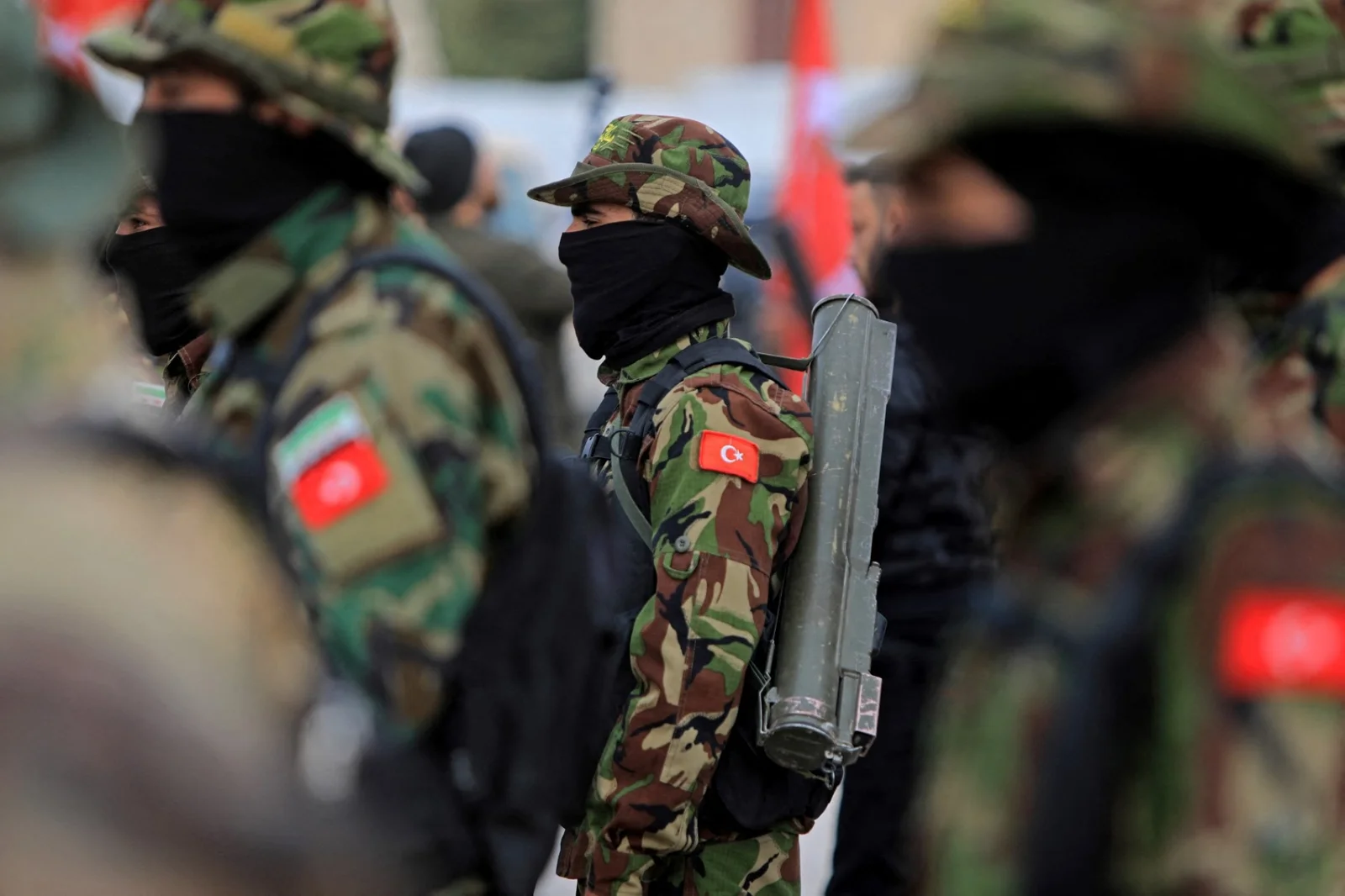
Turkeyis consequently moving beyond its traditional position as a state on NATO’s flank. In the alliance’s evolving posture, it is increasingly treated as both a central hub and a forward base. The establishment of a new headquarters at the 6th Corps in Adana and NATO’s Maritime Component Command on the Bosphorus are clear indications of this.
Trump used the Ankara summit to signal a possible reset in US–Turkish defense relations. He pledged to lift the CAATSA sanctions imposed over Ankara’s purchase of the Russian S-400 system and indicated that Turkeycould return to the F-35 program. Discussions also continued over US approval for engines and other components required by turkey’s KAAN fighter project.
These steps remain subject to legal, congressional, and technical obstacles, and negotiations are continuing. Yet the political direction is significant. Israel has openly opposed any restoration of turkey’s access to the F-35, fearing that it would alter the regional balance and erode the qualitative military advantage on which Israeli strategy depends.
Could Israel -Turkey Tensions Escalate to War?
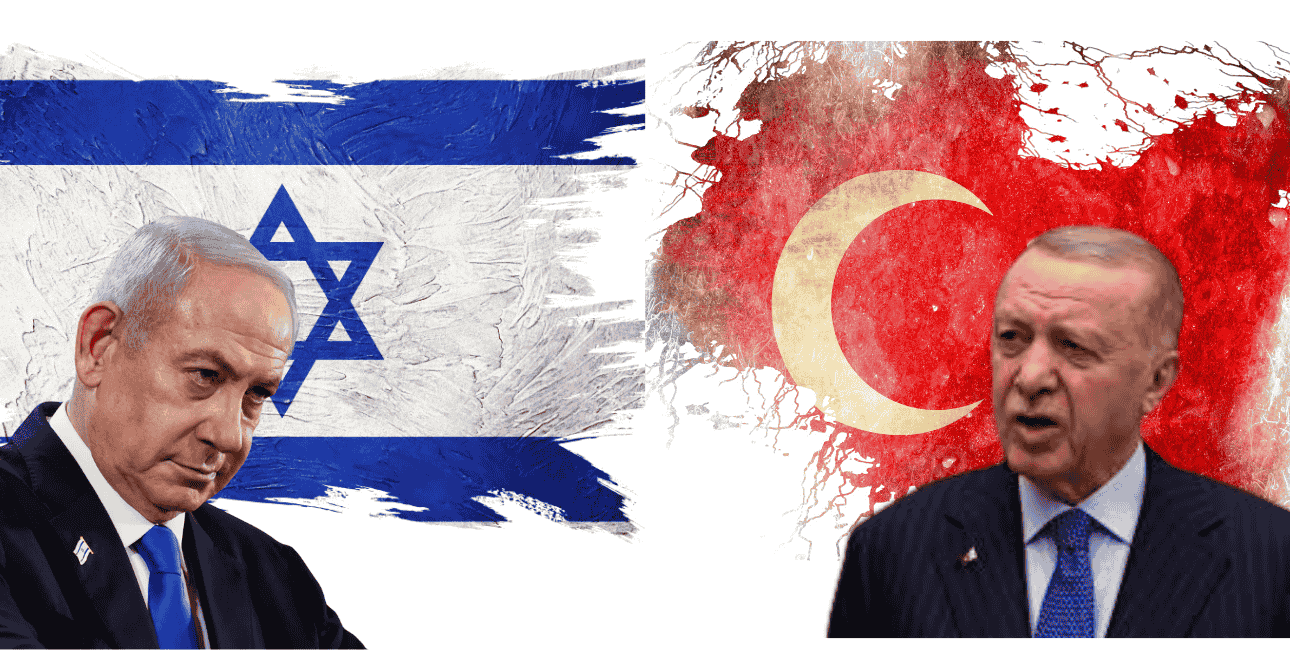
Could the increasingly hostile rhetoric between Turkeyand Israel lead to war, and how would the US and NATO respond?
A direct, large-scale war remains theoretically possible but highly unlikely in the near term. Indirect confrontation, proxy escalation, or an unintended clash in Syria presents a more immediate danger.
Several factors restrain both sides. They share no land border, while each possesses powerful armed forces capable of imposing high costs on the other. Washington and other major NATO states would work to prevent a direct conflict that could destabilize the Eastern Mediterranean and West Asia.
The global consequences for energy routes, commerce, and financial markets would give outside powers an additional reason to intervene before escalation reached that point.
The more plausible routes to conflict lie elsewhere. Turkish and Israeli aircraft could confront one another in Syrian airspace, while faulty intelligence or miscalculation could produce a limited military incident. Drone or missile strikes, special-forces operations, and escalation through regional armed groups offer both sides means of applying pressure without formally declaring war.
Political, diplomatic, and intelligence competition will therefore continue to intensify even if open war is avoided. Syria and the Eastern Mediterranean remain the most likely arenas for a limited clash.
If fighting expanded, NATO’s response would depend heavily on where and how it began. A direct Israeli attack on Turkish territory could bring Article 5 into play, although the clause leaves each ally to determine the assistance it considers necessary and does not guarantee military intervention.
A clash involving Turkish forces in Syria, or a war Ankara was judged to have initiated, would be far less likely to trigger collective defense. Washington would probably move first to contain the conflict while maintaining its bilateral military and intelligence support for Israel, leaving Turkeywith little assurance of meaningful NATO backing.
Ankara has few options for offsetting that imbalance. Its growing defense ties with Pakistan and Saudi Arabia are unlikely to develop into a separate collective-security pact resembling NATO’s Article 5, as turkey’s membership of the alliance limits its ability to enter a competing military bloc.
Ankara’s value to Washington is growing, its defense industry is expanding, and its reach across neighboring theaters is becoming harder for Israel to ignore. Yet its place within the US-led alliance structure continues to limit how far it can challenge Israel when the interests of the two states collide.