
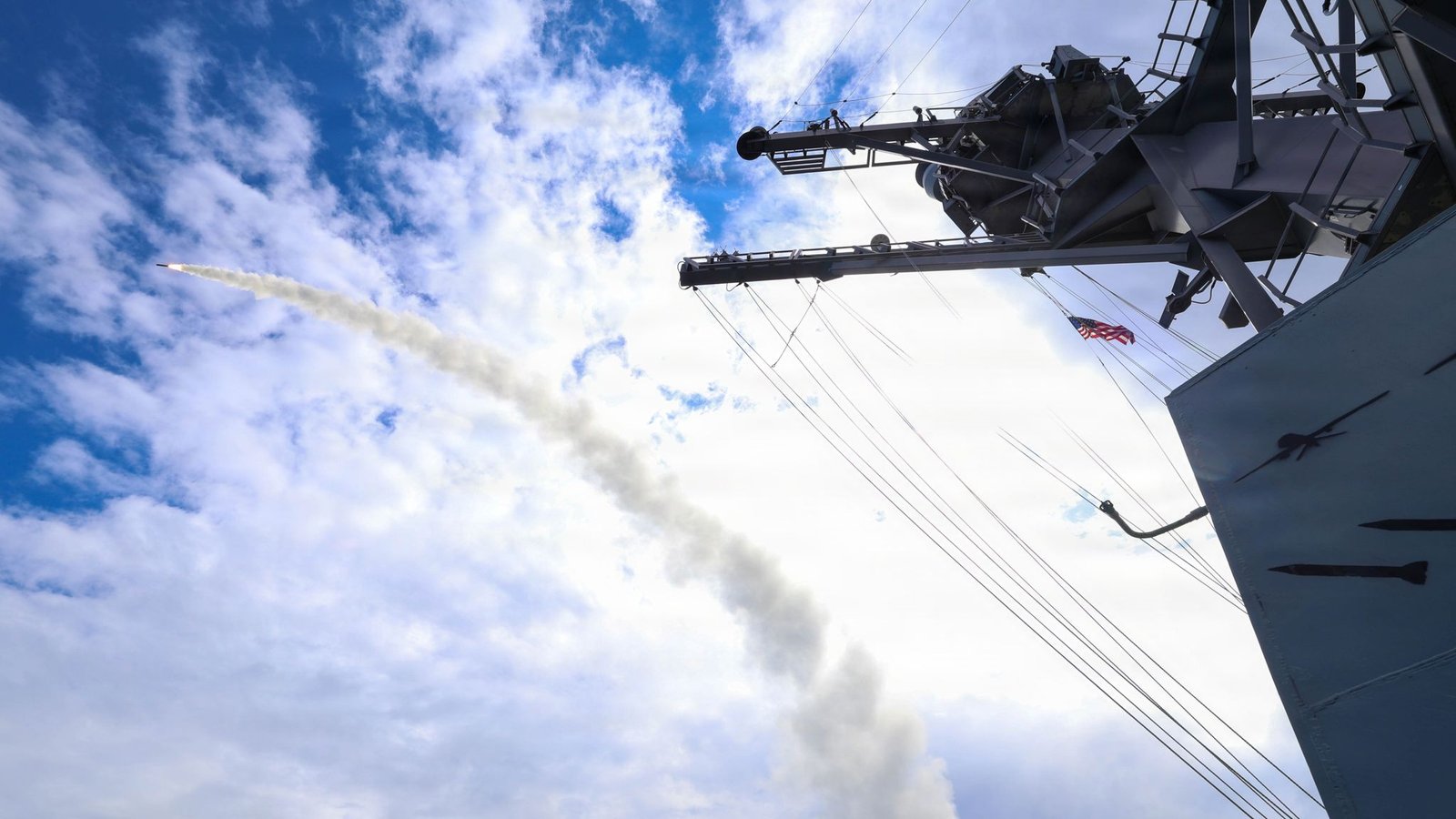
US forces fired 1,060–1,430 Patriot interceptors and 190–290 THAAD interceptors during the Iran war, and with production constrained by component shortages, replenishment will take three years, leaving Asian allies facing delivery shortfalls and weakened US deterrent in Western Pacific.
Patriot Interceptors Depleted in Iran
The war with Iran has depleted US missile stocks, complicating Washington’s security commitments in the Western Pacific. Replenishment will take years, and this leaves US allies likely to face delivery shortfalls and competition for limited arms shipments this decade.
As a result of the US–Israel war on Iran, the United States has expended a significant number of missiles that it has historically relied on for defence in the Western Pacific, including both Patriot and Terminal High Altitude Area Defense (THAAD) interceptors, as well as numerous Tomahawk land-attack cruise missiles and Precision Strike Missiles.
The Trump administration’s National Security Strategy and National Defense Strategy envisage greater allied responsibility for regional security, including in the Middle East, with more limited US support. The war’s demands on US munitions complicate even that more selective posture. While the US still has the munitions to keep fighting Iran, there is concern that replacing those already fired could undermine US commitments to other allies. The weapons that US missile-defence systems in the Western Pacific use are the same weapons that the US used against Iran. There are concerns that if US allies were to come under attack, the US would not have enough munitions to respond, including in a conflict involving China.
US production cannot quickly replenish the most depleted missile stocks: restoring Tomahawk, Patriot and THAAD inventories to pre-war levels is expected to take three years or more. Allied production offers limited relief. Germany’s planned Patriot GEM-T production is one source of additional interceptors, but it is already committed to European users and Ukraine.
Arming Ukraine and refilling national stocks already stretch Europe’s production capacity, and meeting the goals of NATO’s increased defence spending will take time. Deliveries of major weapons systems will take even longer. Moreover, the situation with Iran appears intractable and the direction of the conflict is difficult to predict. What is clear is that, in the coming years, the US and its allies will have to prioritise which countries will get weapons in line with prior planning and which will receive those from new production runs.
Operation Epic Fury
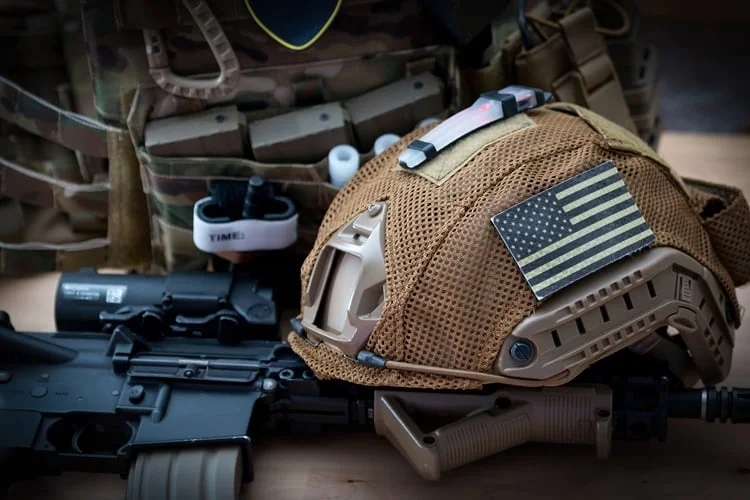
Operation Epic Fury began on 28 February 2026. By the time a ceasefire took hold in April 2026, US forces had struck thousands of Iranian targets. Throughout this operation, US forces depleted their weapons stocks in both defensive and offensive operations. Stocks of Tomahawk missiles fell sharply. Aircraft and launchers also fired other long-range missiles and air-to-ground weapons against Iran.
During the conflict, US forces also expended missile-defence and air-defence interceptors. Air-defence systems played a critical role in the conflict, as Iran fired missiles at US bases. A weakened Iranian air-defence system meant that US aircraft could switch from long-range missiles to shorter-range bombs. There were fewer alternatives against Iranian ballistic missiles. US forces had to rely on ship-launched and land-based interceptors, so missile-defence stocks came under particular pressure.
The differences between weapons also mean that aggregate numbers for the US arsenal are misleading. A surplus of one type of munition cannot make up for a shortage of another. Publicly discussed figures are approximations, given that the Pentagon has not disclosed full munitions inventories. These estimates vary by missile variant and reporting date.
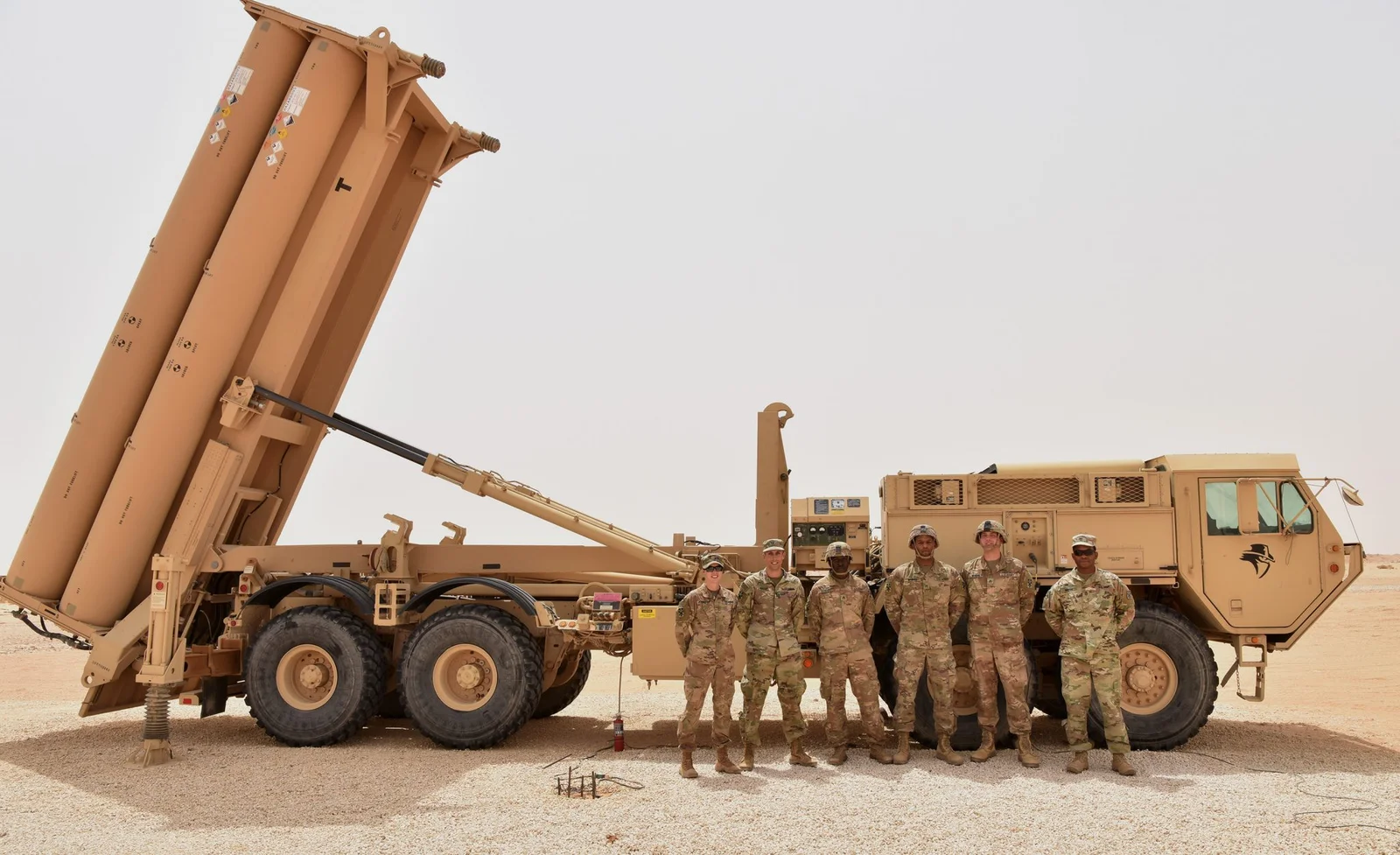
CSIS estimated that, during the 39-day campaign before the April ceasefire, US forces expended 1,060–1,430 Patriot interceptors, about 45–61% of an estimated pre-war inventory of 2,330, and 190–290 THAAD interceptors from an inventory of about 360. Other systems with notable declines included the Precision Strike Missile, at about 45% of the inventory, and the Tomahawk, with at least 1,000 missiles fired, or roughly one-third of the estimated pre-war inventory.
The state of US missile stocks remains unclear, and although US Secretary of War Pete Hegseth has publicly played down shortages, he has admitted it will take months to restock some munitions and years to restock others. Indeed, replenishment to baseline could take three years or more, with the pre-war baseline itself considered to be insufficient preparation for a future contingency involving China.
Limited production capacity
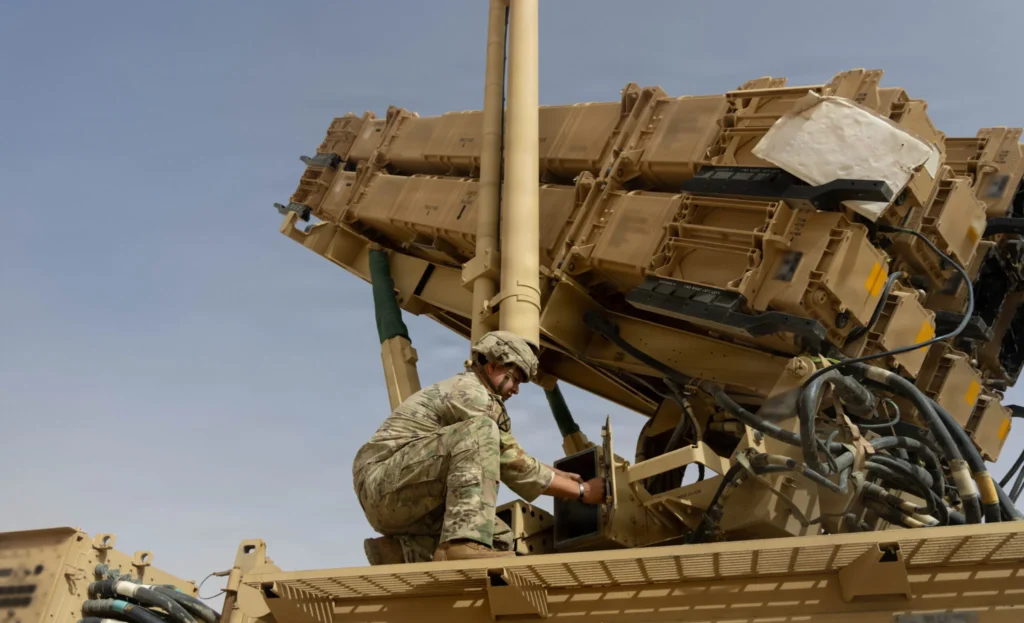
While it only takes a few minutes to launch a missile, it can take years to manufacture replacement missiles for missile-defence systems. In the post-Cold War era, defence contractors merged and many types of defence orders ceased. Contractors became less able to increase production rapidly to meet increased demand. While contractors retained their expertise in producing missiles and other defence systems, they had no incentive to retain production capacity. Similar constraints exist for their subcontractors.
For instance, Raytheon (a subsidiary of RTX) and Lockheed Martin manufacture the Tomahawk and the Joint Air-to-Surface Standoff Missile respectively. Both companies would have difficulty increasing missile-production rates in the short term. Various aspects of the production process, such as the manufacture of missile components and motors, testing and other facilities, can slow overall missile production. Long-term contracts and framework agreements assure producers of substantial, sustained demand. However, such contracts and agreements do not necessarily speed up the production process; new facilities still take time to build and qualify.
Ultimately, the missiles that manufacturers will be able to deliver in the short term are the ones the Pentagon has already ordered. The funds the Pentagon requested for the fiscal year 2027 will not help increase production for any year prior to 2029. Manufacturers will first have to produce the missiles already on order before they can fulfil the orders for later years. Many of the same suppliers that equip US production lines also equip allied production lines. Therefore, US stockpiles may recover more slowly than expected if Washington also fulfils allied orders.
This production issue is well known in Europe. Following the start of Russia’s full-scale invasion of Ukraine in February 2022, many European countries increased their military spending and orders to replenish their military stocks while also supplying Ukraine. The 2023 Act in Support of Ammunition Production removed barriers to increased munitions production by European manufacturers, and in March 2024 the European Commission predicted that the continent would be able to manufacture two million shells a year by the end of 2025.
While the predictions point to an increase in capacity, actual production and delivery of munitions to Ukraine are different measures. Capacity estimates do not show how much ammunition factories produced or delivered. The current output of French and Polish ammunition-manufacturing plants underscores the divide between estimated and actual production of munitions. The same could be said of new manufacturing facilities, as establishing or converting production lines requires changes to components, facilities and manufacturing systems.
Comparing Russia and the West on munitions output during the Ukraine conflict shows the limitations of the data. Estimates from various sources bundle different calibres, leading to potential confusion. For instance, when assessing 155mm munitions output from Europe and comparing it with Russian output, it is important to consider the whole picture, particularly differences in production rates and various calibres. Russia has sustained demand throughout an ongoing war. In contrast, many European governments have limited arms-production capacity and are expanding production after years of relatively small purchases, especially when compared to the requirements of a protracted and large-scale conflict.
Two theatres and the strain on deterrence
Numerous similarities exist between the theatres of the Middle East and East Asia. A potential conflict in the Western Pacific would call on many of the same arms and ammunition used in the war with Iran: Tomahawk and other types of cruise missiles; Patriot and THAAD systems; Standard Missile systems; and other similar systems. China has formidable ballistic-missile forces and air defences. Consequently, to prosecute a conflict against China, the US would have to use all of these and others.
Before stocks are depleted in either theatre, commanders face several difficult choices. A theatre commander must determine the appropriate level of munitions to employ against the enemy, the level to retain for possible follow-on attacks, and the level to requisition from other, possibly more remote, locations.
Moving combat systems into the theatre of war changes where forces are, but it does not replace munitions already fired. Endurance ultimately depends on the logistics support system. Public data on procurement and platform capacity can support estimates, but they do not establish the current missile load of an individual ship or launcher, or the usable stocks in a particular depot.
Washington has the option of rebuilding its military capabilities, and the length of time this takes will depend on how aggressively it engages Tehran. The longer that engagement continues, the less time Washington will have to rebuild its stocks. Reporting in July 2026 showed continuing pressure on US munitions stocks.
Depleted munitions stocks weaken US regional deterrence by reducing the capacity to sustain operations, especially on two fronts simultaneously. Chinese planners would still weigh US political will, Taiwan’s military capabilities, allied involvement and the prospects for cross-strait diplomacy. Shortages nevertheless narrow Washington’s conventional options: they could increase pressure to accept an unfavourable diplomatic settlement or to escalate to end a conflict before stocks run low. The scale of these risks would depend on the contingency, but diminished missile stocks make US security commitments harder to sustain.
NATO and EU spending targets
NATO allies meeting at The Hague Summit on 24–25 June 2025 committed to increasing defence and security-related expenditure to 5% of their GDP annually by 2035. Of this, allies committed to spending at least 3.5% on ‘core’ defence requirements. Spending in the remaining category, up to 1.5%, would include, among other things, critical infrastructure, resilience and the defence-industrial base.
From an industry perspective, the headline figure says little about what governments will spend on munitions. It will be up to individual countries to decide how to allocate defence-related spending in their overall budgets. Such decisions would ultimately determine how much financial support a defence company would receive.
The European Defence Agency reported in July 2026 that 2025 defence spending by European Union members reached €418 billion (US$474.6bn), or 2.2% of their combined GDP, and predicted it would increase to €454bn (US$515.5bn) in 2026. There is also the European Defence Industry Programme, which provides a total of €1.5bn (US$1.7bn) from the EU’s 2021–27 budget to support the defence industries of the member states. The programme particularly aims to enhance defence-industrial cooperation and prepare the defence industries for long-term political and military commitments.
While the programme supports a wider effort, it is unlikely to address the restocking needs of the member states’ armed forces. Member states will also probably need additional support programmes to fund their defence-industrial sectors fully. In the absence of sustained defence orders by national governments, it would be difficult to keep any newly established defence industries in operation.
These announcements should facilitate long-term planning by the defence industry. In the near term, however, the major constraints are more likely to be on the supply side. The increases in defence spending within the EU and NATO may close the gap between funding and delivered equipment for member states, but only over a prolonged period. Europe’s own replenishment needs and procurement backlogs therefore limit its ability to relieve US missile shortages in the near term.

Outlook
The magnitude of munitions orders for the US fiscal year 2027, which runs until 30 September 2027, and the delivery schedules of the US Department of War and its contractors will likely provide the first public indicators of the recovery of stocks of various weapons systems. Recovery rates will vary considerably between systems. It is likely that long-range precision-strike systems and air-launched cruise missiles will recover before other systems, including Tomahawk, Patriot and THAAD systems.
There will be considerable competition among US allies for munitions imports. The situation will be particularly difficult for the US because there is a trade-off between restocking the US armed forces and supplying munitions to allied states. For example, Australia, Japan and South Korea depend on the US for munitions. Ukraine is also in need of air-defence munitions. On 25 September, Ukrainian President Volodymyr Zelenskyy said that US President Donald Trump had agreed to grant Ukraine a licence to manufacture Patriot missiles. Such production could eventually ease demand on US stocks, but would require manufacturing capacity and access to components. Competition for those components could delay output.
US allies can expect delivery shortfalls and competition for limited arms shipments into the late 2020s.
European governments’ procurement plans will show how committed they are to their investment pledges. NATO is not scheduled to review the spending trajectory until 2029, and so allied readiness will depend on the contracts governments sign and the availability of weapons systems before then.
Those governments will likely start considering alternative arms manufacturers to reduce their reliance on the US defence industry. In turn, European companies will not be able to meet the demands for the specific missiles the US will need in the Western Pacific for some time. US allies can expect delivery shortfalls and competition for limited arms shipments into the late 2020s.