
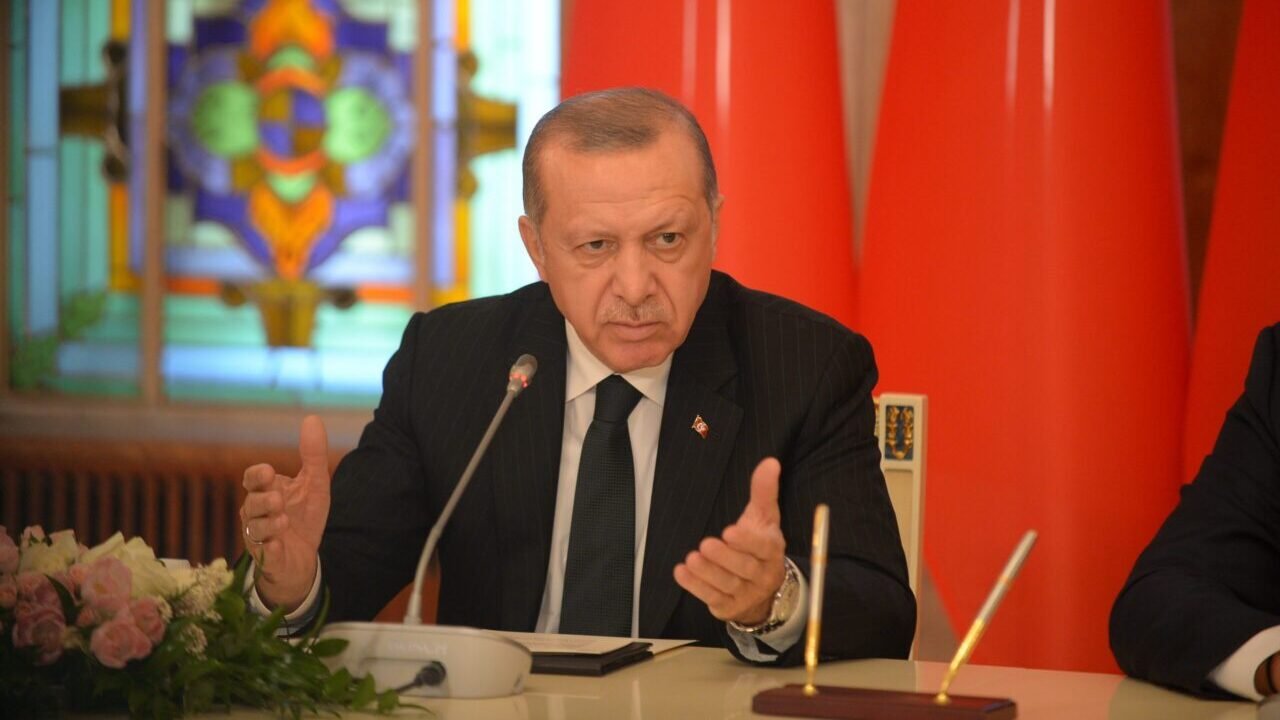
Turkey’s parliament passed a 12-article amnesty measure for PKK members after the National Security Council verifies disarmament. Critics warn the Kurdish peace process aims to secure Erdoğan’s third term and a new constitution.
Turkey’s latest Kurdish peace initiative unfolds less as a humanitarian settlement than as a calculated instrument of executive consolidation. The Kurdish Gambit now before parliament offers conditional amnesty to PKK fighters while carving out exclusions for Abdullah Öcalan and senior leadership, a legal structure that appears designed to secure nationalist and pro-Kurdish votes for a new constitution.
That constitutional project, openly discussed by parliamentary speaker Numan Kurtulmuş, could grant Recep Tayyip Erdoğan a third presidential term and entrench one-man rule. Historical context sharpens the stakes: Atatürk built the republic on secular homogenization, the Sheikh Said rebellion and Dersim massacre suppressed Kurdish identity, and the PKK insurgency produced decades of state violence. The current Kurdish Gambit reverses Erdoğan’s own 2015 collapse of the Dolmabahçe Agreement, when electoral panic reignited war. Now the arithmetic is stark: AKP and MHP hold 323 seats, DEM’s 56 votes clear the 360 threshold for a snap election. Peace, then, functions as a parliamentary transaction, not a resolution of root causes.
Kurdish Gambit in Historical Shadow
After World War I, Turkish general Mustafa Kemal, who had defeated the Allies at the Battle of Gallipoli in 1915, faced a formidable problem. The Treaty of Sèvres had partitioned Turkey, and the United Kingdom, France, Greece, and Italy had occupied it.
In May 1919, the Ottoman government dispatched Kemal to oversee the disbandment of its army in Anatolia under the treaty. He instead used the opportunity to organize resistance and begin the war for Turkish independence. As a result, foreign forces were driven from Turkey, culminating in the Lausanne Treaty in 1923, which established the borders of modern Turkey.
Mustafa Kemal (later known as Atatürk, “the father of the Turks”) faced the task of creating a national identity from the remnants of the Ottoman Empire. However, his secular reforms, for example, the abolition of the caliphate and Sharia law, were met with resistance and led to the Sheikh Said rebellion in 1925 and incipient Kurdish nationalism. There was also the Dersim massacre from 1937–1938.
A demand for a separate Kurdish state came in 1984 with the armed rebellion led by Abdullah Öcalan and the Marxist-Leninist Kurdistan Workers’ Party (PKK), which led to the displacement of some 1–3 million Kurds and more than 40,000 killed. Öcalan was captured in 1999.
How Erdogan Opened to Kurds
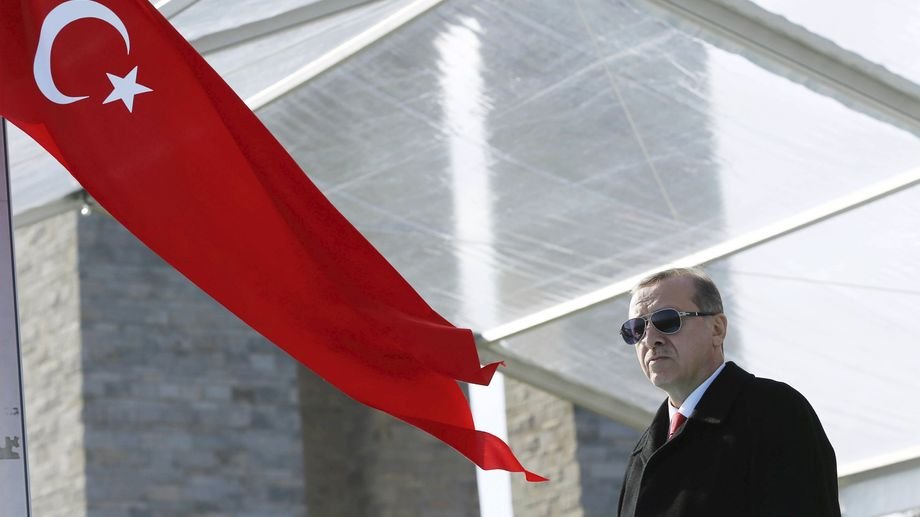
In 2005, in a keynote speech held in Diyarbakır, the main city in Turkey’s Kurdish southeast, then-Prime Minister Recep Tayyip Erdoǧan reached out to the Kurdish diaspora and acknowledged Turkey had a Kurdish problem.
Behind the scenes, in the “Oslo process,” which took place between 2008 and 2011, a ceasefire was brokered in 2013. At the end of February 2015, the Justice and Development Party (AKP) government and the pro-Kurdish HDP (Peoples’ Democracy Party) negotiated a 10-point peace plan, the Dolmabahçe Agreement, which paved the way for a settlement.
Why Did Dolmabahçe Collapse?
However, at a party meeting the following month, HDP leader Selahattin Demirtaş declared three times that they would not make Erdoǧan president. After the HDP’s success in the parliamentary elections, where it gained 80 of the parliament’s (then) 550 seats and the AKP lost its majority, Erdoǧan turned his back on the agreement.
In July, in a bait-and-switch deal, Erdoǧan offered US President Barack Obama access to the Incirlik air base as he reignited the war against the Kurds, which led to widespread destruction and loss of life.
Crackdowns Reshape Turkey’s Opposition
After Istanbul’s popular mayor, Ekrem Imamoǧlu, was prevented from running in the 2023 presidential election, Erdoǧan won again. The Republican People’s Party’s (CHP) candidate, Kemal Kılıçdaroǧlu, helped. However, with the CHP’s success in the 2024 local elections under new leader Özgür Özel, Erdoǧan can see the writing on the wall. The government has cracked down on 41 CHP municipalities, arresting or suspending mayors.
Imamoǧlu’s arrest in March last year on extensive charges and the court order in May replacing Özgür Özel with Kılıçdaroǧlu are preemptive measures to ensure Erdoǧan’s reelection. However, in July Özel formed the New Party (YP), which with its 91 seats (out of the Turkish parliament’s 600) is Turkey’s second-largest party and a threat to Erdoǧan’s hold on power. Consequently, steps have been taken to remove Özel’s parliamentary immunity as a prelude to prosecution.
What Bahçeli’s Handshake Started
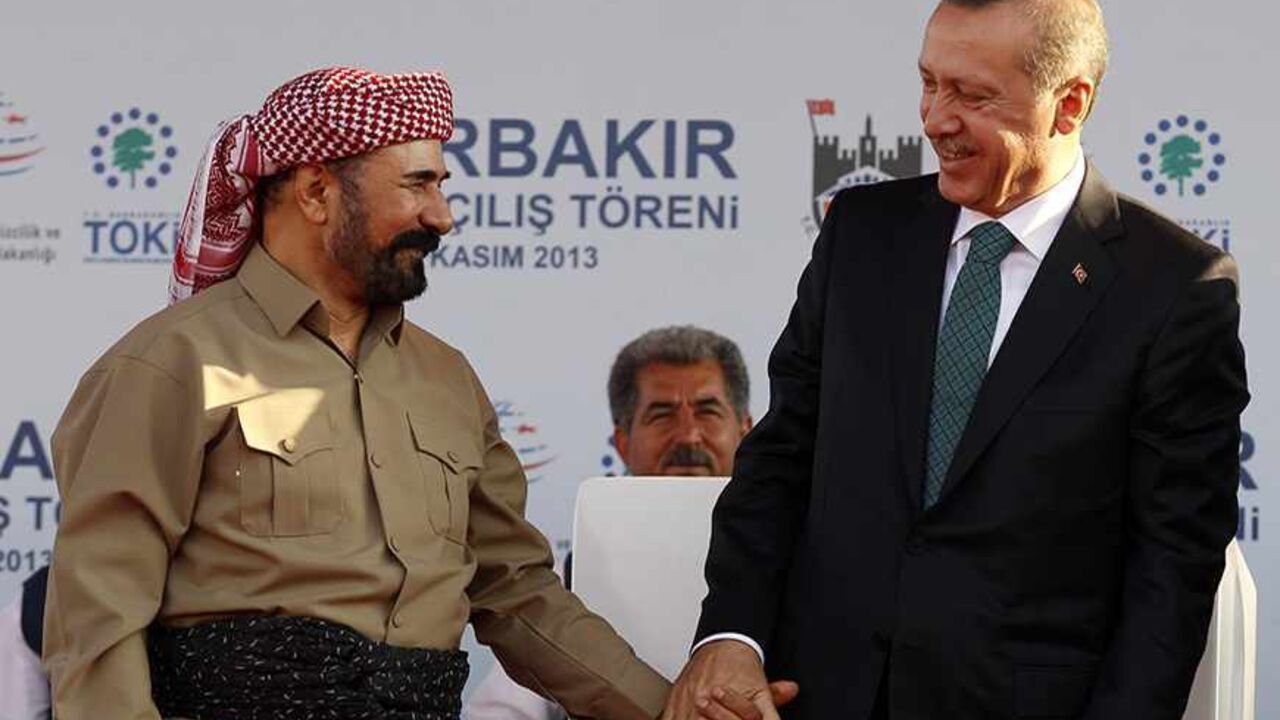
In October 2024, a major step towards reconciliation with Turkey’s Kurds was taken when Devlet Bahçeli, the leader of the National Movement Party (MHP), the AKP’s partner in the People’s Alliance, crossed the parliament floor to shake hands with the leader of the Peoples’ Equality and Democracy Party (DEM), the HDP’s successor.
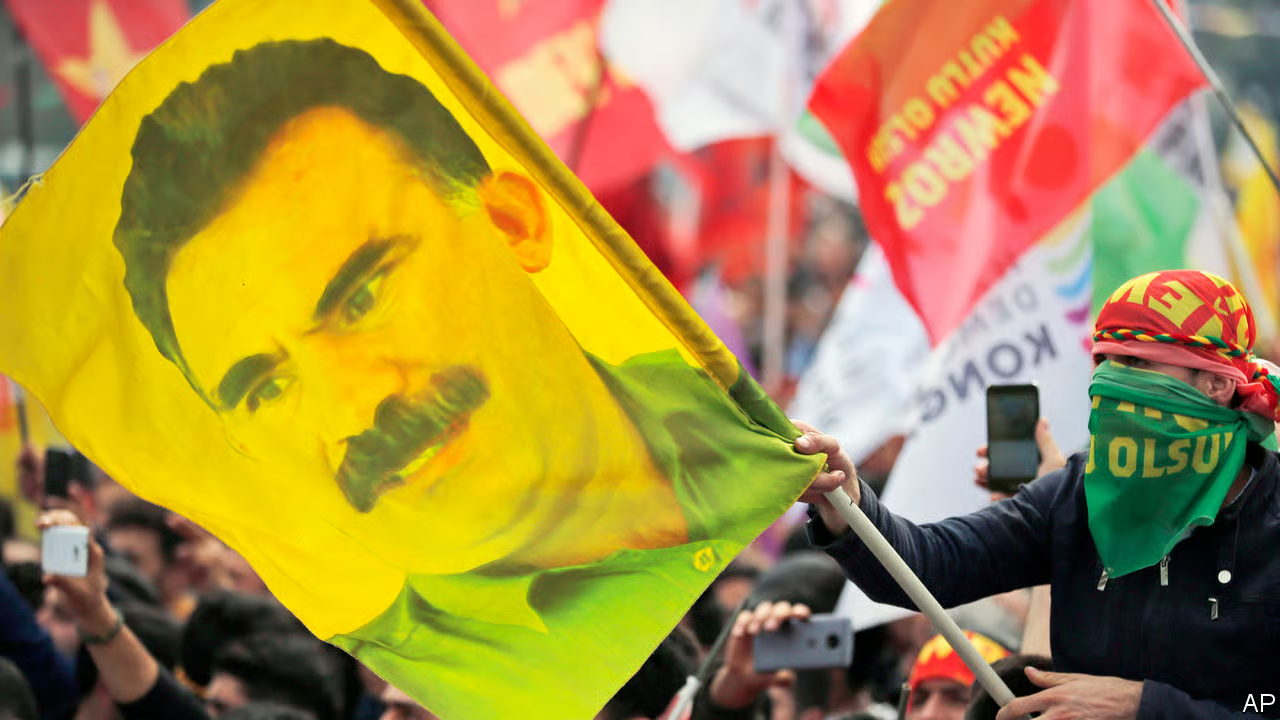
Delegations met with Abdullah Öcalan on Imralı prison island, and Bahçeli called on Öcalan to urge the PKK to lay down its arms, which Öcalan did. In July last year in Sulaymaniyah in Iraq’s Kurdistan, 30 PKK fighters laid down their arms in a symbolic ceremony, which Erdoǧan hailed as the dawn of “a terror-free Turkey.”
Inside the PKK Amnesty Bill
Last August, a parliamentary commission was formed to oversee the disarmament of the PKK. Chairman of the AKP’s parliamentary group Abdullah Güler said that 18 meetings were held, including MIT (National Intelligence Organization) and the Foreign Affairs, Interior, Justice, and National Defense ministries. They worked closely with the MHP and the DEM, and on August 5 the “Strengthening National Solidarity and Social Integration” bill (known as the framework law) was submitted to parliament.
Initially, 367 deputies signed the bill, and three days later the Justice Committee approved it after 18 hours of debate. On August 10, the General Assembly passed the bill with 467 votes in favor, mainly from the AKP, MHP, and DEM.
In effect, the 12 articles provide a conditional amnesty for a number of members of the PKK. First, the National Security Council has to determine that the PKK has ceased its activities and that its weapons and ammunition have been handed over.
Those who have committed the crime of intentional killing or crimes committed before June 2005 that carry a sentence of life or aggravated life imprisonment are excluded, which means Öcalan and the PKK’s senior leadership. Others will receive a probationary period. A government board and a parliamentary commission will monitor the process.
Özgür Özel, leader of the New Party (YP), criticized the bill for failing to address the root causes of the Kurdish problem. While he voted for the bill “to pave the way for Turkey’s future,” he left it to party members to decide. 54 YP members voted against.
Mansur Yavaş, the mayor of Ankara, who has been targeted as a rival to Erdoǧan, wrote that true peace cannot be established by passing a law alone. The foundations of peace are justice, the rule of law, trust, and social consensus. Turkey’s greatest problem is that citizens’ trust in the state and in justice has been severely damaged.
Kurdish Gambit as Reelection Strategy
Müsavat Dervişoğlu, chairman of IYI (Good) Party, a breakaway party from MHP that voted unanimously against the bill, cut to the chase. He argued that the main purpose of the bill was to secure Erdoǧan’s lifelong presidency.
He is not alone with that suspicion. Al-Monitor has pointed out that the AKP and MHP together have 323 seats, but with DEM (56 seats) they will pass the 360-seat threshold, enabling them to hold a snap election. If successful, this will guarantee Erdoǧan a third term. However, the fact that several DEM mayors have been arrested and replaced with trustees since the 2024 local elections must make DEM support for Erdoǧan unpalatable.
On the other hand, Numan Kurtulmuş, the speaker of the Turkish parliament, which has gone into recess until October 1, now believes there is a basis for making a new constitution, “a civilian constitution,” to replace the 1982 constitution passed after the military coup in 1980. If 400 deputies vote “yes,” this is possible.
There is a paradox. Although Erdoǧan claims the new law will lead to a terror-free Turkey, since 2015, 394,090 have been convicted because of Turkey’s anti-terrorism laws, and the number is rising. Turkey has systematically cracked down on lawyers and, in particular, human rights defenders.
Last year, Erdoǧan said a terror-free Turkey would take the Turkish economy to new heights. This might be news to millions of Turkish families impoverished by economic mismanagement and crippling inflation, who nonetheless have to deal with the further erosion of Turkish democracy.