
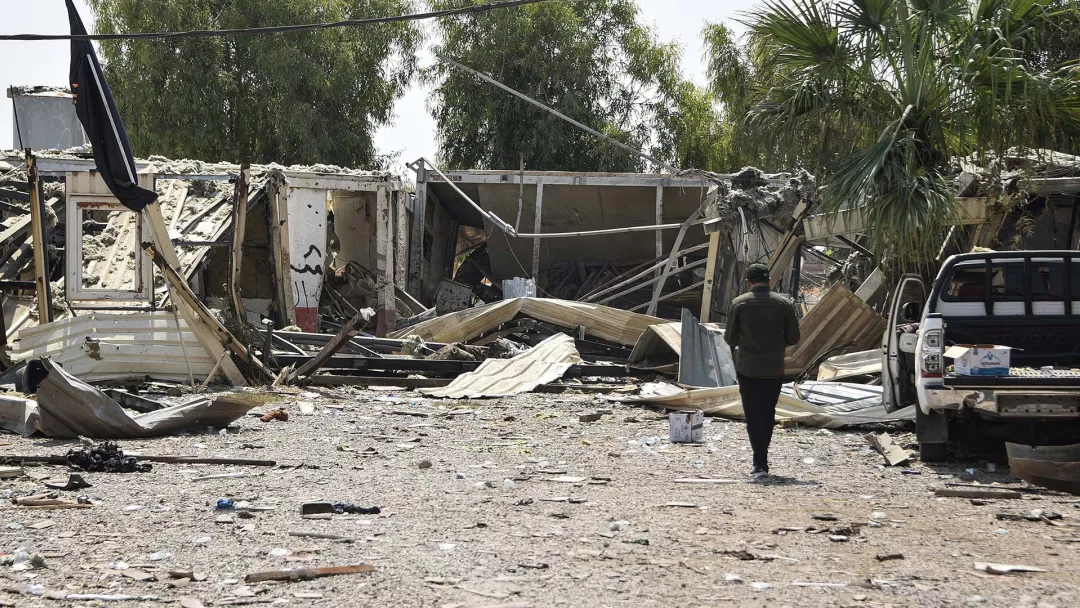
Iran’s proactive strikes, Saudi entry into Iraq, and the Damietta drone attack fuse separate Middle East Conflicts into one networked theater, where local grievances and transnational agendas now escalate beyond any actor’s control.
Iran’s Proactive Strike Redefines Conflict
As it entered its sixth month, the U.S.-Israeli war with Iran, which had already paralysed much of the commercial traffic through the Strait of Hormuz and dragged Gulf Arab countries into the fray, began merging with other conflicts in the Middle East and its vicinity. The lull brought by the 18 June U.S.-Iranian memorandum of understanding is over, and the 24 July decision by President Donald Trump to suspend a military campaign launched in the wake of that agreement’s collapse also seems like a distant memory.
Now, the conflict is spreading in new and dangerous ways:
On 13 July, warplanes from Saudi Arabia struck the international airport in the Yemeni capital Sanaa, threatening the de facto truce between the Saudi-led coalition and the Houthi faction controlling much of Yemen that had held since April 2022 – and triggering renewed hostilities.
On 25 July, a Ukrainian drone hit an Iranian commercial vessel in the Caspian Sea, killing a sailor.
On 28 July, Iran fired ballistic missiles at U.S. forces in Jordan, for the first time acting proactively rather than in response to an attack.
Overnight on 28-29 July, U.S. and Saudi aircraft struck Iran-aligned groups in Iraq – Riyadh’s first publicly acknowledged participation in such attacks.
On 29 July, a drone hit two liquefied natural gas vessels at Egypt’s Damietta port, near the Suez Canal, though no party has claimed responsibility.
The war is thus no longer merely widening: it is knitting together previously distinct theatres, turning every point of vulnerability in the region into a potential front and every act of retaliation into the prelude to the next.
Why did Iran attack Jordan on 28 July, disrupting what had been a few days’ calm in its tit-for-tat exchanges with the U.S.?
By striking Jordanian territory, Tehran appears to have wanted to deliver a warning to Washington: that Iran, rather than merely reacting to U.S. decisions to pause or resume hostilities, can and will seize the initiative. It is also prepared to act pre-emptively if it detects U.S. preparations for another major campaign.
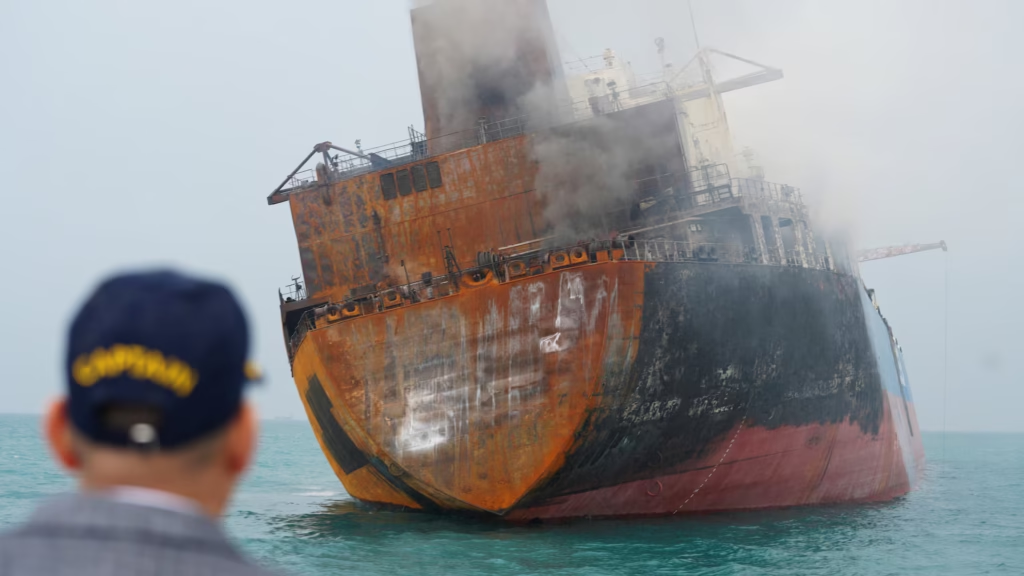
The details of the attack appear to bear out this overall interpretation. On 28 July, the Islamic Republic’s Revolutionary Guards launched several ballistic missiles – reportedly liquid-fuelled projectiles of the Emad model – at a U.S. air base and Central Command facility. The U.S. claimed that it intercepted the surprise barrage, thus preventing the missiles from causing casualties, but the attack was nevertheless jarring for both Amman and Washington.
Tehran’s choice of older, easier-to-intercept missiles suggests an attempt at calibrated escalation, in which Iran sought to demonstrate that U.S. bases are no sanctuary, but stopped short of inflicting the casualties that might have triggered a much larger U.S. response. If so, the calibration did not survive contact with the adversary. Overnight on 29-30 July, Washington conducted a two-hour “heavy wave” of attacks on dozens of Revolutionary Guards command centres, missile and drone facilities, coastal defences and maritime capabilities inside Iran.
Tehran then fired another salvo toward Jordan, where authorities said they intercepted five missiles, and extended its retaliation to Kuwait, where an Iranian strike killed a worker – showing once again that each side’s attempt to ostensibly restore deterrence is merely resetting the escalatory cycle at a higher and more geographically expansive level.
As for why Iran felt it needed to make this move when it did, the status quo since the June memorandum of understanding fell apart has made it increasingly uneasy. The Islamic Republic faces a resumed naval blockade that has prevented it from exporting oil, which has only compounded its significant economic woes; U.S. strikes in response to Iranian attacks on shipping through the Strait of Hormuz; oil prices that are rising but not to the point of forcing Trump to stand down; and little sign of progress in reaching a more durable deal.
Under these circumstances, the Iranian leadership may have concluded that, rather than settle for a mix of low-level military exchanges and deepening economic duress, it needed to up the ante for Washington by demonstrating its resolve to act and further destabilising the oil market in the run-up to the U.S. midterm elections. It may hope that this approach, combined with the depleting stockpile of U.S. interceptors, will compel Trump to agree to a deal that provides Iran with meaningful economic relief while maintaining its de facto control of the strait.
The approach, if it is indeed Iran’s, is far from being risk-free. Indeed, if it keeps launching such attacks. Iran might very well prompt more substantial counterstrikes – and mobilise much of the Middle East – against it. Though decision-makers in Tehran seem confident that Iran can absorb pain while meting it out to the U.S. and allied countries, the ensuing spiral, especially if that brings attacks on infrastructure, could add to the war’s devastating impact on an Iranian economy already on the brink.
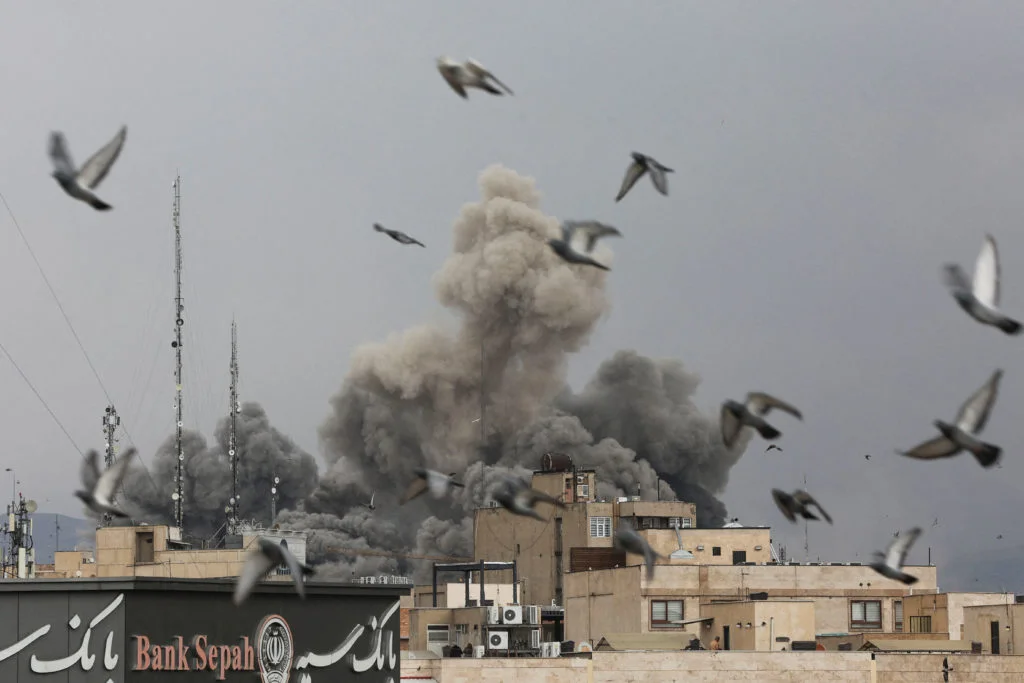
Middle East Conflicts Bind Regional Theaters
What triggered the U.S.-Saudi strikes in Iraq, and why did Riyadh join this fray after months of restraint?
It is not entirely clear what happened to set off this escalation, and some of the facts around it remain murky. On 27 July, the Saudi defence ministry issued a statement saying “Iranian-backed terrorist militias” had fired drones from Iraq at petroleum facilities in the kingdom’s Eastern Province. The same day Ansar Allah, the Yemeni movement also known as the Houthis, claimed responsibility for the attacks. Later on 27 July, the so-called Islamic Resistance in Iraq – an array of groups backed by Iran – denied Saudi Arabia’s accusation that the drones had come from Iraq, saying “these fabrications are an attempt to justify their inability to respond to the painful Yemeni strikes”.
Regardless, the following evening, the U.S. and Saudi Arabia launched airstrikes on targets in Iraq. U.S. Central Command described the joint operation as a response to more than 30 drone attacks over the preceding 72 hours by “Iran-aligned terrorists [and] directed by Iran’s Revolutionary Guards against U.S. forces and Saudi energy infrastructure”.
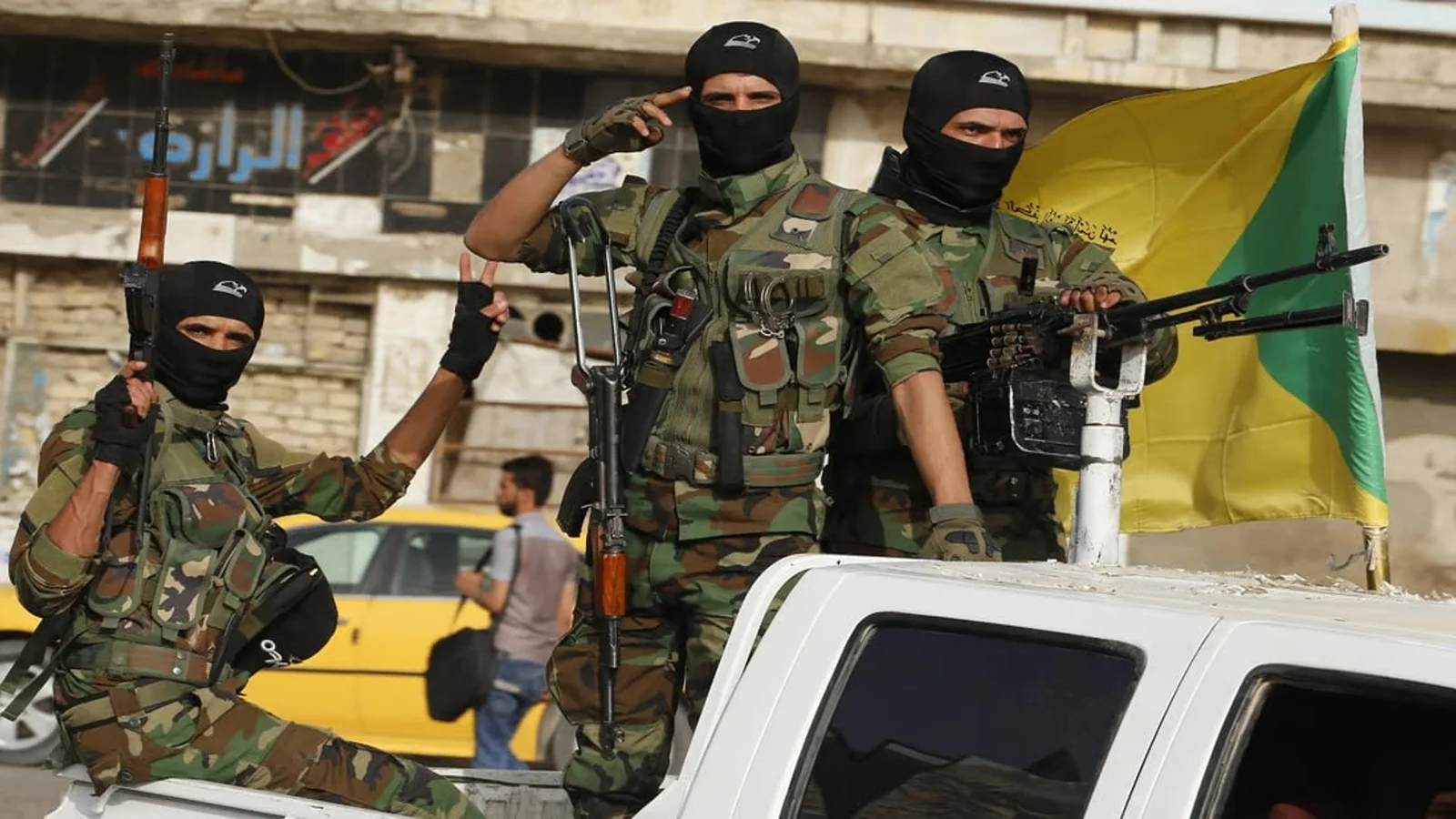
U.S. and Saudi jets targeted facilities of the Hashd al-Shaabi – an Iraqi umbrella institution comprising armed groups, including the Islamic Resistance factions but also others, many of which first assembled in 2014 to fight ISIS – in several provinces across Iraq. These air raids resulted in at least twenty fatalities and 32 injuries among Hashd members. Iran’s Mehr news agency confirmed that four Revolutionary Guards had been killed alongside Iraqis in the strikes. Thus, the episode suggests Iranian involvement at least in previous attacks launched from Iraqi territory, whether in this one or not.
On the surface, if the strikes that prompted the U.S.-Saudi response were indeed carried out from Iraqi soil, the timing is at least somewhat puzzling. They occurred only five days after the Trump administration had abruptly suspended its two-week bombing campaign in Iran and amid efforts by Riyadh to de-escalate tensions with Tehran. Also noteworthy is that Iran had chosen not to target the kingdom in its response to the more recent U.S. attacks.
That said, if indeed Iran wished to signal its rejection of the status quo, it might have seen firing at Saudi Arabia as an opportunity to add to the economic volatility it believes plays to its advantage – albeit without venturing the riskier direct strikes it has been willing to make on smaller Gulf Arab neighbours such as Kuwait or Bahrain.
As for Saudi Arabia’s decision to join the U.S., Riyadh has grown increasingly frustrated with Baghdad over its inaction against the Iran-aligned groups in the Hashd. These groups have struck Saudi Arabia and other Gulf countries repeatedly since the war began in late February, but until now Riyadh has not claimed a retaliatory attack on their bases in Iraq. In March, Saudi Arabia and five other Arab states issued a joint statement demanding that the Iraqi government prevent aggression against Gulf nations emanating from its territory.
Saudi officials spent the following months pressing Baghdad to acknowledge that attacks on the kingdom were originating from Iraq, asserting that they had provided the Iraqi government with incriminating evidence in the hope that Baghdad would hold the Iran-linked Hashd groups accountable. The choice to join the U.S. in striking Iraq reflects Riyadh’s waning patience and its determination to deter future attacks. In its view, Baghdad’s unwillingness or inability to restrain the Iran-aligned groups could no longer go unanswered.
How might this episode affect stability in Iraq?
It will be the first major test for Prime Minister Ali al-Zaidi, who is new not just to the office but also to politics. Zaidi immediately ordered a probe into the Saudi defence ministry’s claim on 27 July, examining evidence provided by Riyadh and vowing legal action against the perpetrators if they were found to be Iraqis. The U.S.-Saudi strikes occurred while this investigation was under way, prompting the Iraqi government to issue a statement on 29 July condemning them.
Zaidi must tread carefully in dealing with Iraq’s dominant Shiite parties, which are often at odds with one another but tend to coalesce in defending the Hashd. These parties are angered when outsiders conflate the Islamic Resistance elements of the Hashd – the Iran-linked factions – with the whole organisation. Most of them have endorsed Zaidi’s attempts to separate those Hashd brigades that do not subscribe to the Resistance groups’ transnational ideology and integrate them into the state’s formal chain of command. That likely remains the best way to shield the Hashd from becoming collateral damage should Iraq once again turn into a U.S.-Iranian battleground.
Meanwhile, 30 September looms on the calendar: on that date, U.S. and allied forces are due to withdraw from Iraq, pursuant to a U.S.-Iraqi agreement. Should they stick to the schedule, the Islamic Resistance factions would lose a major stated motive – the presence of foreign troops on Iraqi soil – for attacks inside Iraq, linking their actions much more clearly to Iran’s agenda. But Zaidi’s efforts have only just begun, and the war may outpace the speed with which he can accomplish his vision.
Turning to Yemen, what explains the new Saudi-Houthi exchanges of fire, and what is the likely trajectory of this escalation?
The Saudi-Houthi confrontation, at first a calibrated exchange, has entered a more dangerous and unpredictable phase. In 2022, the belligerents arrived at a de facto truce, which was interrupted by the mid-July Saudi airstrikes on Sanaa’s airport to stop a plane from Iran from landing. In reprisal, the Houthis fired a volley of drones and ballistic missiles at sites in Saudi Arabia. Though Saudi air defences intercepted most of the projectiles, some of them hit oil facilities, particularly in Najran.
Riyadh, in turn, carried out limited strikes on the port city of Hodeida, Kamaran island and other Houthi-controlled areas of Yemen, demonstrating its willingness to retaliate while continuing to avoid a full-scale military campaign. Since then, Houthi rhetoric has become increasingly uncompromising, as the group adopts a more maximalist negotiating position.
During previous talks about a peace settlement, the group insisted that Sanaa airport be reopened in full and that the internationally recognised Yemeni government pay public-sector salaries in parts of the country under its control. Now, it reiterates those conditions but adds that it wants a Saudi withdrawal from Yemen as well as financial compensation for damage caused by the war. The Saudi and Yemeni governments categorically reject all these demands.
Looking ahead, two broad trajectories are possible. The first is renewed containment through Omani mediation that restores the de facto truce. Omani diplomats are working toward that goal. But their chances of success appear increasingly slim.
The more likely course is gradual but sustained escalation. Both sides appear to be preparing for a prolonged confrontation rather than signalling willingness to compromise. On 30 July, Abdel-Malik al-Houthi, the Houthis’ leader, threatened broader military action, accusing Saudi Arabia of provocations, while Riyadh has reinforced its posture through closer coordination with the U.S., increased support for Yemeni government-aligned forces and attempts to form a fourteen-country maritime alliance to safeguard freedom of navigation through the Bab al-Mandab Strait, the Red Sea and the Gulf of Aden. Neither side appears to be seeking all-out war, but the combination of continued exchanges of fire and rigid negotiating positions is steadily narrowing the space for effective mediation.
What happened at Egypt’s Damietta port? Was it connected to the regional war?
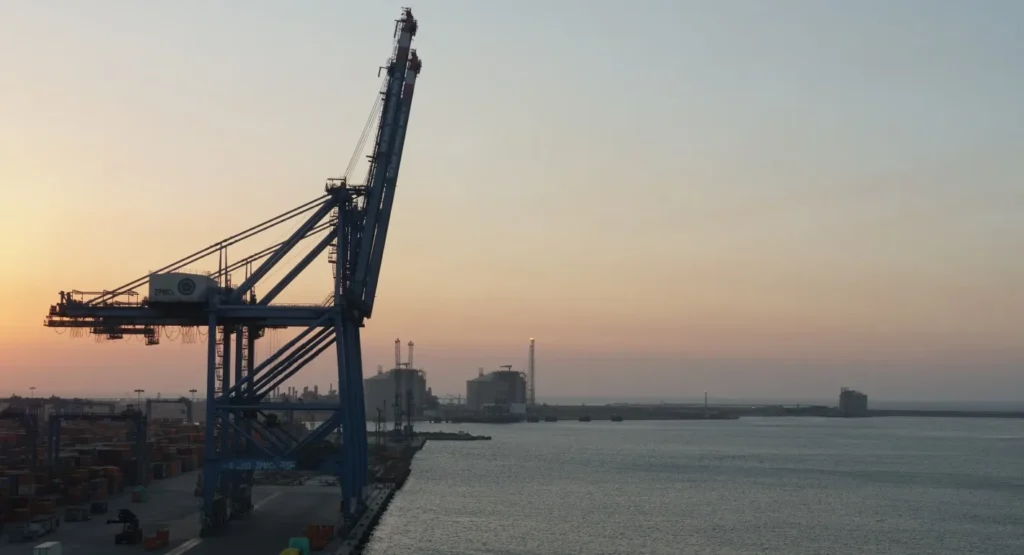
On 29 July, a fire broke out on two vessels docked at Damietta, Egypt’s main Mediterranean port for exporting liquefied natural gas. The Egyptian cabinet confirmed the following day that a drone was the cause but said an inquiry was continuing.
Early speculation fingered the Houthis for the attack, but the Yemeni group denied involvement. Egyptian authorities have yet to disclose the drone’s type, flight path or launch point. Privately, officials say their suspicion has fallen on Iran, acting directly or indirectly through its regional partners, possibly including Iraqi groups, though the identity of the perpetrators remains uncertain. Cairo has yet to publicly apportion blame. Meanwhile, Iran’s foreign minister suggested, without evidence, that an Israeli false flag operation was the culprit.
If the drone strike was in fact deliberate, its significance may lie less in the damage caused than in the target selected: the vessel apparently struck first, the Energos Winter, is U.S.-owned, suggesting that the perpetrators may have intended to hit a U.S.-linked asset rather than Egypt itself.
But Damietta’s proximity to the Suez Canal and the Suez-Mediterranean pipeline, which runs from Ain al-Sukhna on the Red Sea to Sidi Karrir on Egypt’s northern coast, also raises the possibility that the conflict is creeping toward one of the few remaining routes through which Gulf oil and gas can bypass the turmoil in the Strait of Hormuz and Bab al-Mandab. Even a perceived threat could drive up insurance premiums and other shipping costs.
If Iran or an aligned group was responsible, the strike would signal willingness to spread the war’s economic costs to previously insulated states – but at the considerable risk of turning Egypt from a mediator into an aggrieved party and expanding the very coalition Tehran is seeking to fracture.
Are the Iran, Iraq and Yemen fronts tied together now?
Yes, but not in the sense of a single conflict with a central motor. Iran, Iraq’s Islamic Resistance militias and the Houthis each have distinct domestic calculations, yet they coordinate closely when advancing shared objectives or responding to common threats. As per the “unity of fronts” doctrine promulgated by Tehran and adopted by the “axis of resistance”, its transnational network of partners, such collaboration allows them to apply pressure to their enemies concurrently in several theatres. The “axis” seemed to be on the back foot for the last two years, especially after Israel decimated the Hizbollah leadership in Lebanon, but it has rebounded to some extent.
In the war’s current phase, Iran likely sees benefit in harrying the U.S. and Gulf states while maintaining a degree of plausible deniability, which it believes it can achieve via attacks perpetrated by its partners. As noted above, Iraq has increasingly emerged as a staging ground for attacks by Iran-aligned groups, adding a new dimension to the regional threat. By the same token, the Houthis are driven by both local and regional motivations: a desire to extract concessions from Riyadh, but also the ability to roil energy markets by attacking shipping in the Red Sea and Bab al-Mandab. The result is the confluence of a metastasising regional confrontation and a series of local conflicts.
How does Ukraine feature in this web of conflicts?
On 24 July, a Ukrainian drone struck an Iranian commercial vessel in the Caspian Sea, killing one crew member and injuring another. Ukrainian President Volodymyr Zelenskyy indicated that drones were fired at “vessels used in military cargo shipments involving Iran”, with reports that the ships were carrying Russia-bound Iranian materiel. Tehran condemned the attack, warning that it could not go unavenged. It was not the first time these two conflicts had overlapped, insofar as Iran has supplied direct military assistance to Russia from the beginning of Moscow’s all-out invasion of Ukraine in 2022. For its part, Ukraine has provided anti-drone technology to Gulf Arab states and openly engaged with Iranian opposition groups.
Still, the strike was most likely a singular event, possibly planned in anticipation of Zelenskyy’s 28 July visit to Washington. A key Ukrainian objective from the start of the U.S.-Israeli war with Iran has been to demonstrate to the Trump administration that Russia and Iran are one enemy – and that, by extension, the U.S. needs to do more to help Ukraine.
It also is notable that, prior to Zelenskyy’s trip, Ukraine had already reiterated its claim that Russia was helping Iran with targeting U.S. assets. But the two sides seemed to back away from further confrontation. On 28 July, a call between Iranian Foreign Minister Abbas Araghchi and his Ukrainian counterpart Andrii Sybiha appeared to help defuse tensions, at least for now. Kyiv described the attack as unintentional, and both sides signalled a wish to avoid escalation.
Middle East Conflicts Demand Immediate Bargain
The greatest danger lies in the broader U.S.-Iranian confrontation. So far, discussions between Oman and Iran about the Strait of Hormuz have not produced a formula acceptable to the two of them – let alone to neighbouring Gulf Arab states or the U.S. – that would restore traffic through the chokepoint and ease the U.S. blockade on Iranian shipping.
The most realistic short-term understanding would build on the June memorandum and focus on the following: a ceasefire; agreement on a temporary arrangement for the daily transit of a certain number of vessels in the strait, with traffic to be jointly coordinated by Iran and Oman, without tolls or fees (and with the U.S. committing to uphold freedom of navigation as a general matter); access by Tehran to frozen assets; and a freeze of both U.S. sanctions and Iran’s nuclear program.
Such a deal would provide breathing space for addressing longer-term arrangements on Strait of Hormuz navigation and resuming broader U.S.-Iran talks on nuclear issues and more extensive sanctions relief. It is now all the more urgent to strike this bargain, in order to forestall the possibility that individual conflict dynamics, such as between Saudi Arabia and the Houthis, take on a life of their own and turn the U.S.-Iran conflict into a far more combustible tapestry of regional ones.
In Iraq, so long as the war continues, Iran-backed groups are likely to remain active in support of Tehran.
In Iraq, so long as the war continues, Iran-backed groups are likely to remain active in support of Tehran. In that respect, the planned departure of U.S.-led coalition forces by 30 September pursuant to Baghdad’s agreement with Washington may remove a pretext that the resistance factions have used to stage attacks on U.S. assets in Iraq. That, combined with the government’s plans to gradually integrate the Hashd into the state’s formal command structures, constitutes the most realistic path forward for the Iraqi state to reassert its full sovereignty.
The U.S., Saudi Arabia and other states considering retaliation against Iraqi armed groups should be mindful of Zaidi’s delicate balancing act and avoid any step that would complicate his task. It will be particularly important not to delay the departure of coalition forces and to avoid attacks that, by causing large-scale casualties among Iraqi security forces or the larger Hashd, generate political pressure on Zaidi’s government while strengthening Islamic Resistance factions.
Any such attack would inevitably make it harder for Baghdad to bring armed groups under state control. The Hashd comprises dozens of groups, only a handful of which conduct or claim attacks on U.S. assets and civilian infrastructure in Iraq and the Gulf. These factions’ use of facilities belonging to the broader Hashd exposes the entire institution to retaliation. Zaidi’s efforts to separate the Resistance factions from the rest of the Hashd are therefore vital but inevitably will take time.
As for Yemen, there is an urgent need for de-escalation and a return to the political track. The Houthis clearly are seeking to break out of their predicament and force Saudi Arabia to give them tangible economic concessions. But they are running a considerable risk of producing the exact opposite, leading to greater economic pain and severe humanitarian consequences for the population living under their thumb.
Both Riyadh and Tehran could help, the former by offering the Houthis a package including eased restrictions on key transport nodes they control, namely Sanaa airport and the Red Sea port at Hodeida; the latter by resisting the temptation to use the Houthis as leverage and, instead, pressing them to step back. The regrettable alternative could be an unravelling of the China-brokered 2023 agreement between Iran and Saudi Arabia, which focused in part on Yemen.