
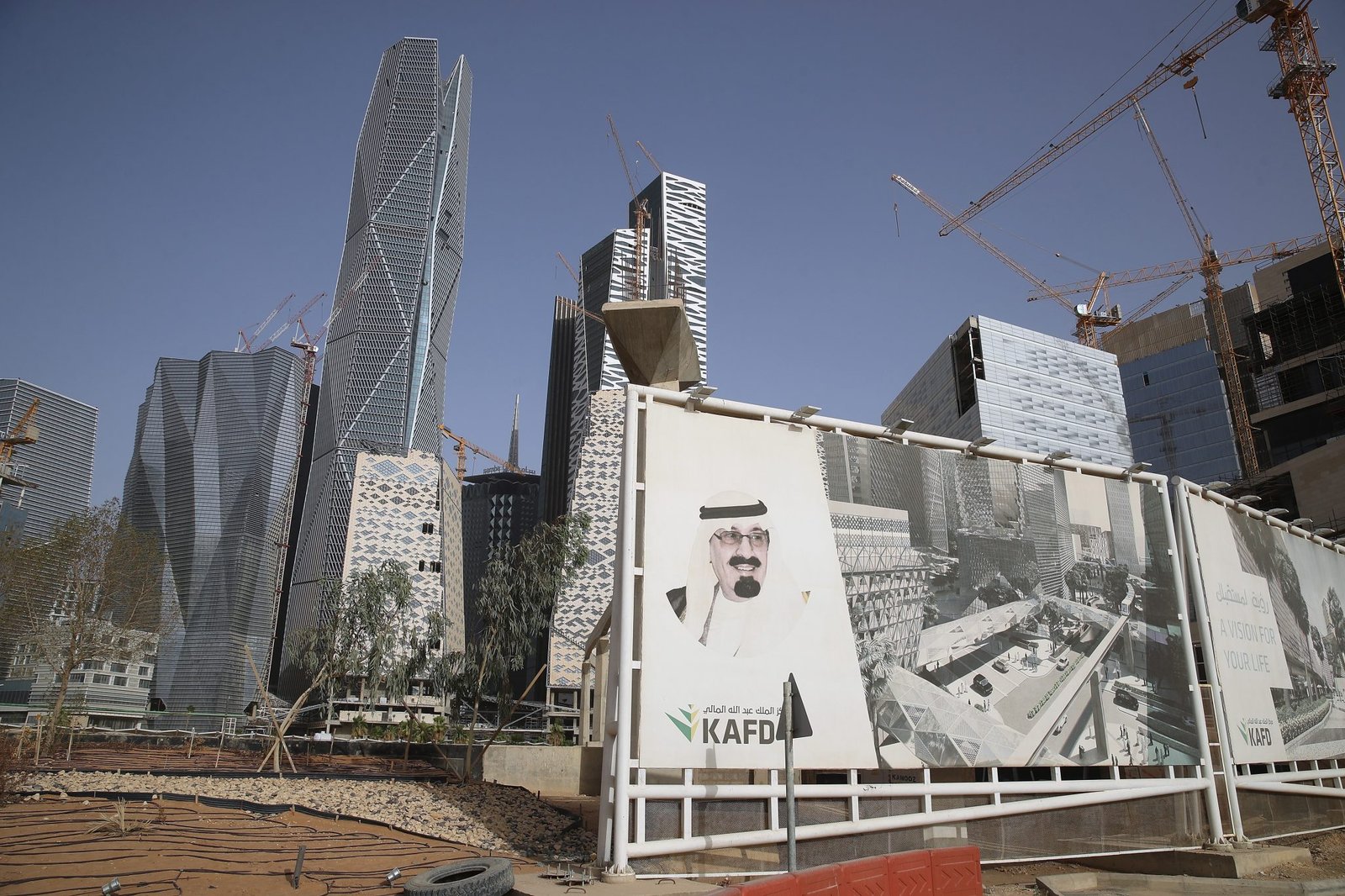
Saudi PIF entered 2026 with nearly $1 trillion in assets, but the Iran war, falling oil export volumes, and reduced Aramco dividends are forcing Riyadh to shrink Vision 2030 from ambition-led megaprojects toward execution, liquidity management, and fiscal survival.
Saudi PIF faces a wartime test
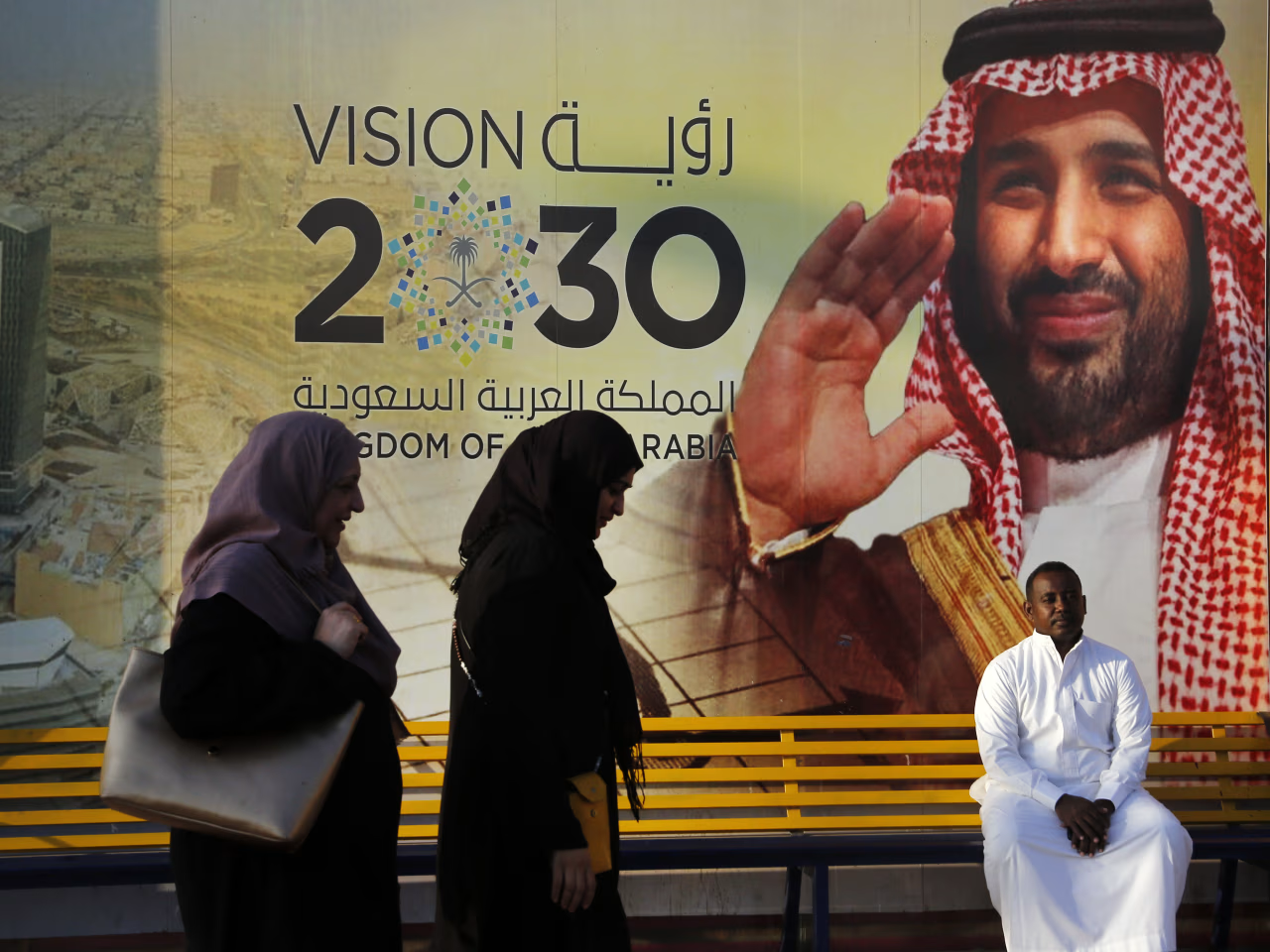
Saudi Arabia launched Vision 2030 a decade ago to ambitiously diversify the economy beyond oil by expanding non-hydrocarbon sectors, attracting foreign direct investment and establishing the Kingdom as a global business and investment hub. However, eight months into the United States-Israeli war on Iran, and with the resumption of Saudi-Houthi hostilities as of July 2026, Vision 2030 faces an extraordinarily difficult test.
Conflict in the Middle East has disrupted oil production and export routes, increased defense spending and exposed the vulnerability of sectors central to Vision 2030, including tourism, logistics and transport. Nonetheless, Saudi Arabia has proved more resilient than some other Gulf Cooperation Council (GCC) member states. The Kingdom’s geography and extensive energy and transport infrastructure have given Riyadh alternatives to the Strait of Hormuz, helping cushion the economy from the conflict’s worst effects.
Saudi Arabia’s resilience has limits
The chaotic regional situation is accelerating a shift in Vision 2030 that was already underway before February 28, 2026. Faced with the enormous costs and uncertain returns of projects such as NEOM, Riyadh had begun moving toward greater fiscal discipline and more targeted investment in artificial intelligence, manufacturing, mining, logistics and domestic industry. The U.S.-Iran crisis has given that recalibration greater urgency, highlighting the importance of economic and supply-chain resilience alongside diversification. The question is whether Saudi Arabia can continue to finance this transition without substantially scaling back its post-oil ambitions, while at the same time absorbing the costs of a prolonged regional crisis.
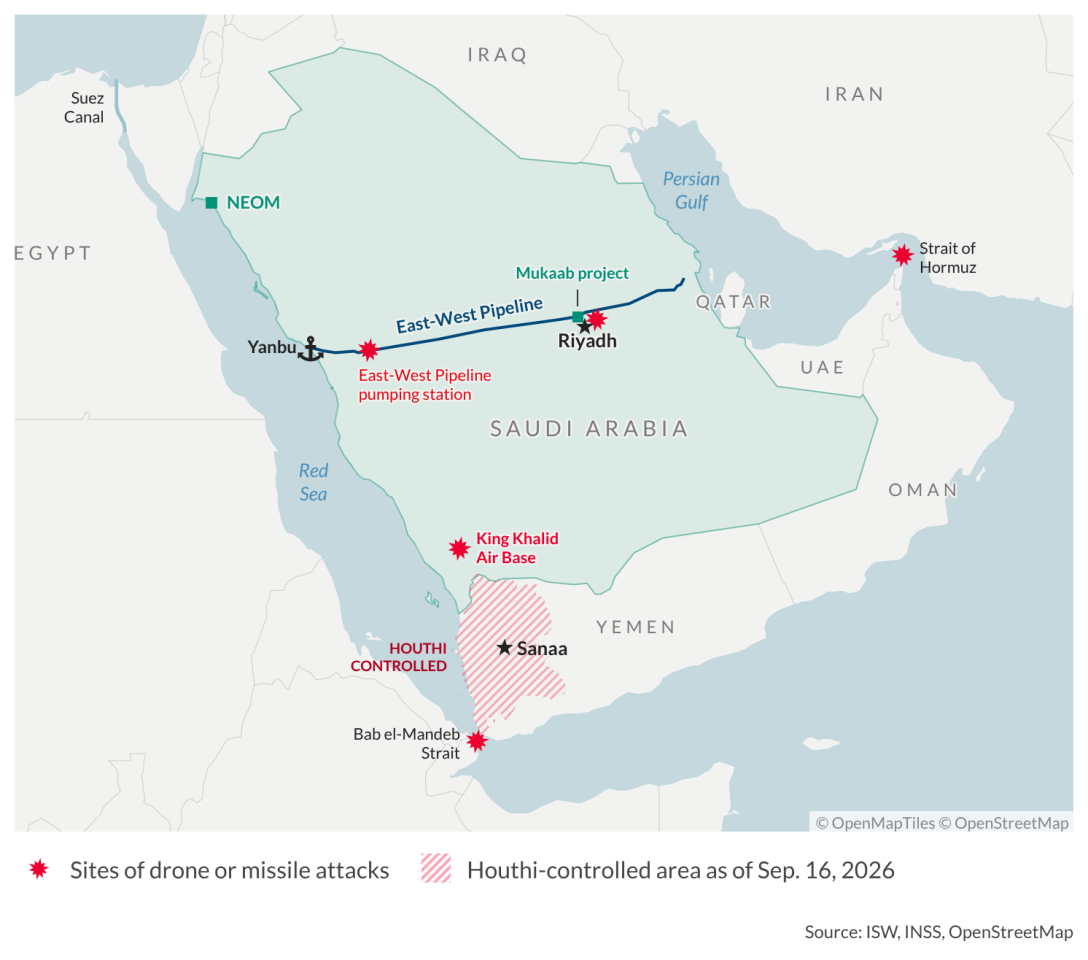
Saudi Arabia’s relative resilience is rooted in its geography. Unlike Bahrain, Kuwait and Qatar, the country has a substantial Red Sea coastline and infrastructure that lets it bypass the Strait of Hormuz for a significant share of its oil exports and commercial traffic. The 1,200 kilometer-long East-West Pipeline, built in 1981, transports crude from the eastern province to Yanbu, while road and rail connections provide alternative routes for goods. These assets have helped Riyadh maintain a greater proportion of its oil exports than most other GCC producers. Its large domestic market has provided an additional buffer, helping sustain consumer activity as regional tourism and business have deteriorated.
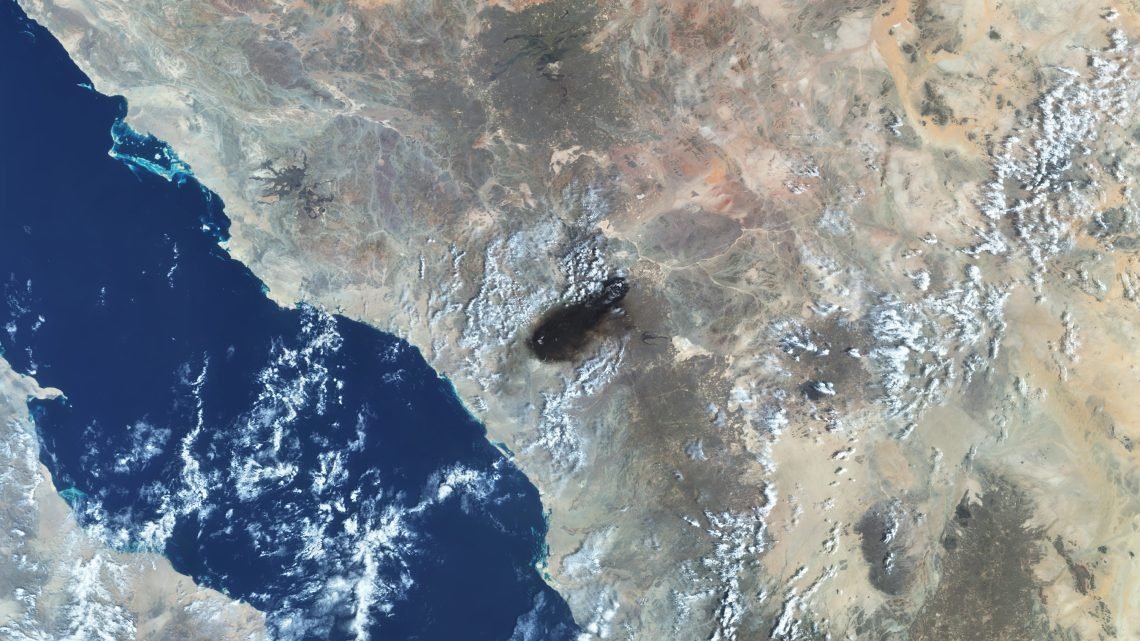
Still, this resilience has limits. The East-West Pipeline cannot fully compensate for oil volumes normally shipped through Hormuz, while disruption to eastern refineries, petrochemical facilities, the East-West Pipeline itself and industrial centers has compounded the decline in both production and exports. The Red Sea and Bab el-Mandeb Strait have proven extremely vulnerable to Houthi attacks and disruption, which threaten the infrastructure and maritime routes that allow Riyadh to circumvent Hormuz.
Currently, higher oil prices can offset some revenue lost from lower export volumes, but rerouting cargoes, higher insurance and freight charges, infrastructure repairs and alternative supply chains all carry additional costs. Saudi Arabia has more room to maneuver than some neighbors, but geography alone cannot eliminate the consequences of a prolonged conflict.
The disruption to the non-oil sectors central to diversification is particularly harmful to Vision 2030. Tourism, hospitality, aviation, logistics, transport, entertainment and foreign investment all depend on Saudi Arabia being perceived as a safe, stable and accessible destination. The conflict has weakened international tourism, disrupted regional air routes, increased the cost and uncertainty of maritime trade and undermined investor confidence.
Conflicts accelerate ongoing Vision 2030 recalibration
The war is not solely responsible for the scaling down, or even freezing, of Saudi Arabia’s most ambitious Vision 2030 projects. Prior to February 28, the Kingdom had already begun reassessing the scale and pace of spending. The enormous costs, rising construction and financing expenses, uncertain commercial returns and difficulty attracting foreign capital at the originally anticipated scale had made some flagship projects increasingly difficult to justify.
Megaprojects lose their priority
Construction of The Line at NEOM (a planned 170-kilometer linear city) had been scaled back, the Mukaab project (a planned cube-shaped skyscraper in Riyadh) had been put under review and other projects had faced delays or cancellations. The regional crisis has reinforced the logic behind this recalibration. Rather than abandoning economic transformation, Riyadh appears to be prioritizing projects that can generate clearer financial returns or strengthen the Kingdom’s strategic resilience.
This shift is reflected in the changing priorities of the Public Investment Fund (PIF) – Saudi Arabia’s main sovereign wealth fund, which has been the principal financial engine of Vision 2030. PIF’s new strategy places greater emphasis on sectors capable of generating sustainable economic activity, while reducing the emphasis on some of the most capital-intensive megaprojects.
Vision 2030 is evolving from an ambition-led program, in which large-scale projects were intended to transform the country’s image and attract global capital, into a more execution-focused strategy centered on development that can be completed and integrated into the domestic economy. The war has reinforced the importance of this approach by highlighting the value of domestic production, resilient supply chains, food security, defense industries and infrastructure that can function despite disruptions to regional trade. In this sense, the conflict may ultimately make Vision 2030 more economically grounded, even as it makes the program more difficult to finance.
Navigating financial straits
The central obstacle, however, is the deteriorating fiscal arithmetic. The war has forced Riyadh to absorb falling oil production and exports while also compelling it to spend more on military operations, air defense, infrastructure repairs, subsidies and measures to cushion the domestic economy from the conflict’s fallout.
Higher oil prices have provided some relief, but they do not fully compensate for the decline in volumes reaching international markets. Consequently, there has been a sharp expansion of the budget deficit and a growing need for borrowing. This creates a particularly difficult problem for Vision 2030 because the Kingdom’s fiscal commitments have increased substantially over the past decade. Saudi Arabia now has to finance an expensive economic transformation while paying for a war that is undermining some of the economic activity that transformation was designed to create. A key challenge is whether Riyadh can continue spending at the level required to sustain Vision 2030 while maintaining fiscal stability.
PIF sits at the center of this dilemma. The fund entered 2026 with assets approaching $1 trillion, making it one of the world’s largest sovereign investment vehicles. Yet, its headline asset figure obscures the more important question of liquidity. PIF’s resources are already committed across a vast portfolio of domestic and international investments, while its income has come under pressure, including from a reduction in the dividend paid by Saudi Aramco, the national oil company of Saudi Arabia.
At the same time, PIF is under pressure to support an increasingly broad set of national priorities. Investments may strengthen Saudi Arabia’s long-term resilience, but they also compete for capital with the projects that defined the earlier phase of Vision 2030. The fund is therefore being transformed from an engine of economic expansion into something closer to a strategic financial manager – one that must balance economic transformation against the immediate demands of national security and fiscal stability.
Resilience comes at the expense of ambition
Despite the severity of the regional situation, Saudi Arabia retains considerable capacity to manage this pressure. Its large sovereign assets, foreign reserves, access to domestic and international debt markets, continuing oil revenues and comparatively strong domestic economy give Riyadh far more room to maneuver than some of its fellow GCC states facing a comparable shock. Ultimately, the issue is less about imminent insolvency than about opportunity cost.