
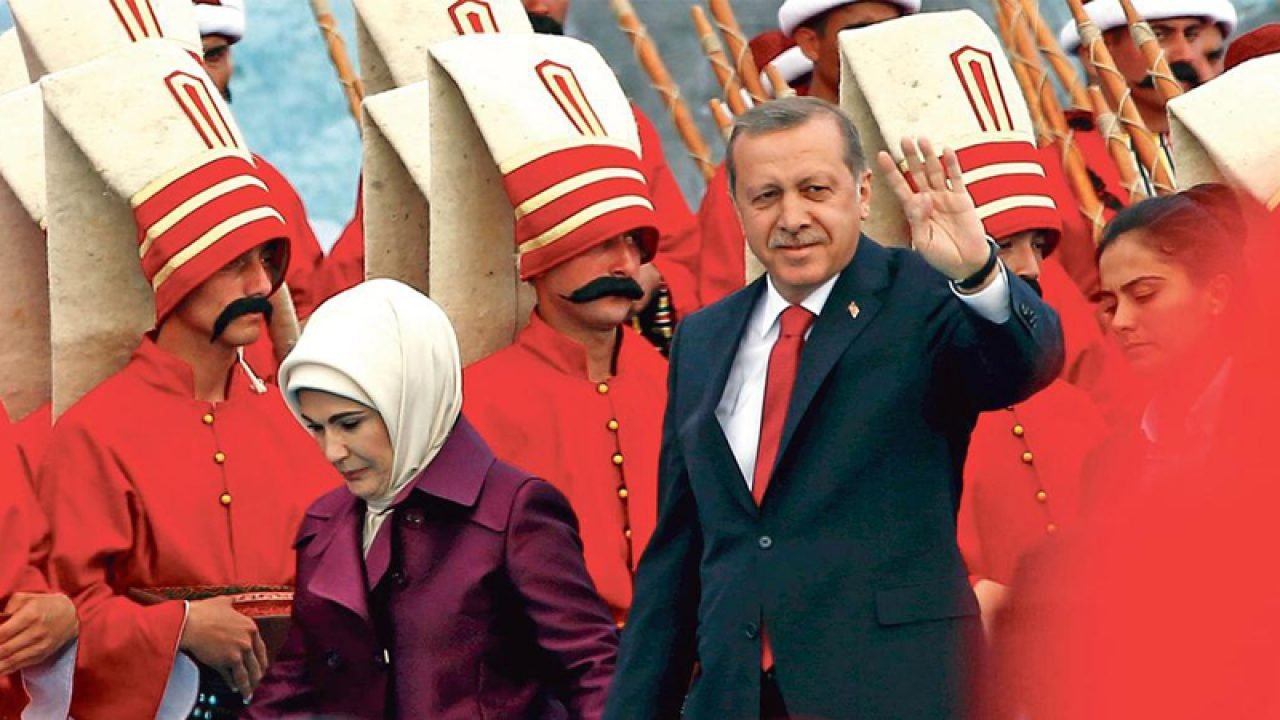
Ankara actively expands its geopolitical footprint across Arab lands, utilizing historical revisionism and regional proxies like the Muslim Brotherhood to re-establish hegemony. Critics warn that Turkish officials’ claim on Jerusalem threatens modern Middle Eastern sovereignty.
Ankara’s geopolitical posture reflects a broader ambition to restore regional prominence through the strategic use of historical narratives. By invoking the legacy of the Turkish Empire, the current leadership seeks to project authority across former Ottoman spheres of influence. This pursuit of power is challenging the established balance of the modern Middle East as Ankara advances a more assertive regional vision.
Turkish Empire Projects Regional Power
When Turkish President Recep Tayyip Erdogan presented Lebanese Prime Minister Nawaf Salam with a copy of his grandfather Salim Salam’s memoirs, he was making more than a diplomatic gesture. By invoking the elder Salam’s service in the Ottoman parliament, Erdogan cast himself as the legitimate heir to the Ottoman sultans and the Salams as subjects of the empire.
This encounter was emblematic of a larger and more troubling ambition. Erdogan is determined to revive Turkish influence over Arab lands once occupied by the Ottomans. Turkey’s aspirations extend well beyond Lebanon.
On June 7, Turkish Interior Minister Mustafa Ciftci openly said he hoped to one day serve as the governor of Jerusalem. It is striking that Palestinians, who claim their struggle is for sovereignty over Jerusalem, have not opposed these Turkish imperialist aspirations.
Where Turkish Empire Asserts Influence
Similar Turkish irredentist rhetoric has also been directed toward other former Ottoman territories. In September 2025, Turkish Ambassador to Algeria Muhammet Mucahit Kucukyilmaz said that between five and twenty percent of Algerians are of Turkish origin. Although framed in terms of historical ties, the remark suggested that Turkey might view Algeria, like other parts of the Ottoman Empire, as part of its political orbit.
Such demographic claims echo those made by Nazi Germany in the 1930s, when Berlin asserted claims over German communities beyond its borders, and by Putin’s Russia regarding ethnic Russians living in neighboring countries.
Turkish officials consistently highlight their country’s past sovereignty over predominantly Arabic-speaking Ottoman provinces, keeping alive narratives of historical rights that could justify future actions.
These narratives are amplified on social media, where accounts suspected of being Turkish government bots disseminate content vilifying the Hashemite dynasty, whose last surviving members are Jordan’s royal family. Turkish propaganda portrays the Hashemites’ alliance with the British during the 1916 Arab Revolt as an act of treason that ended 500 years of Turkish rule over Arab lands.
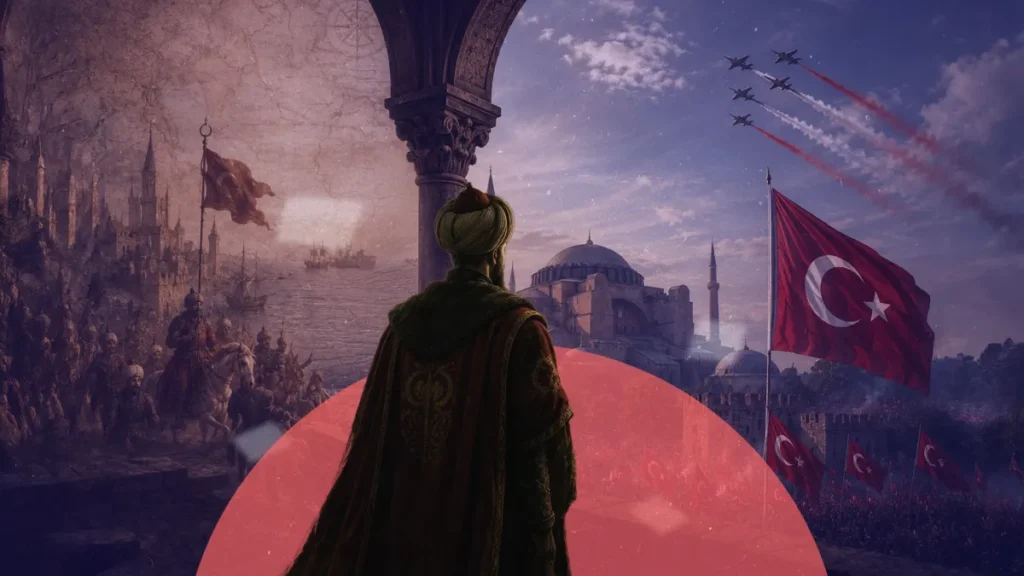
Challenging the Turkish Empire
Erdogan has actively participated in this historical revisionism by praising the Ottoman Empire as free from genocide, massacres, oppression, and colonialism. He has claimed that “in our thousands of years of glorious history there is only justice and compassion.”
This version of history stands in contrast to the lived experience and national memory of Arab peoples. Martyrs’ Square in Beirut remains a powerful symbol of resistance to Ottoman rule. It commemorates the victims of Jamal Pasha, the last Ottoman ruler of Lebanon, who became known as the “Butcher” for ordering the execution of Lebanese nationalists and independence activists. The square serves as an enduring reminder of the struggle for independence from Turkish tyranny.
For much of the 20th century, the independent nations of the Levant and Iraq remembered the five centuries of Ottoman imperialism with a sense of grievance and antagonism. This feeling persisted until the rise of the Muslim Brotherhood, an organization whose ideological roots trace back to Muhammad Rashid Rida, a Lebanese resident of Egypt.
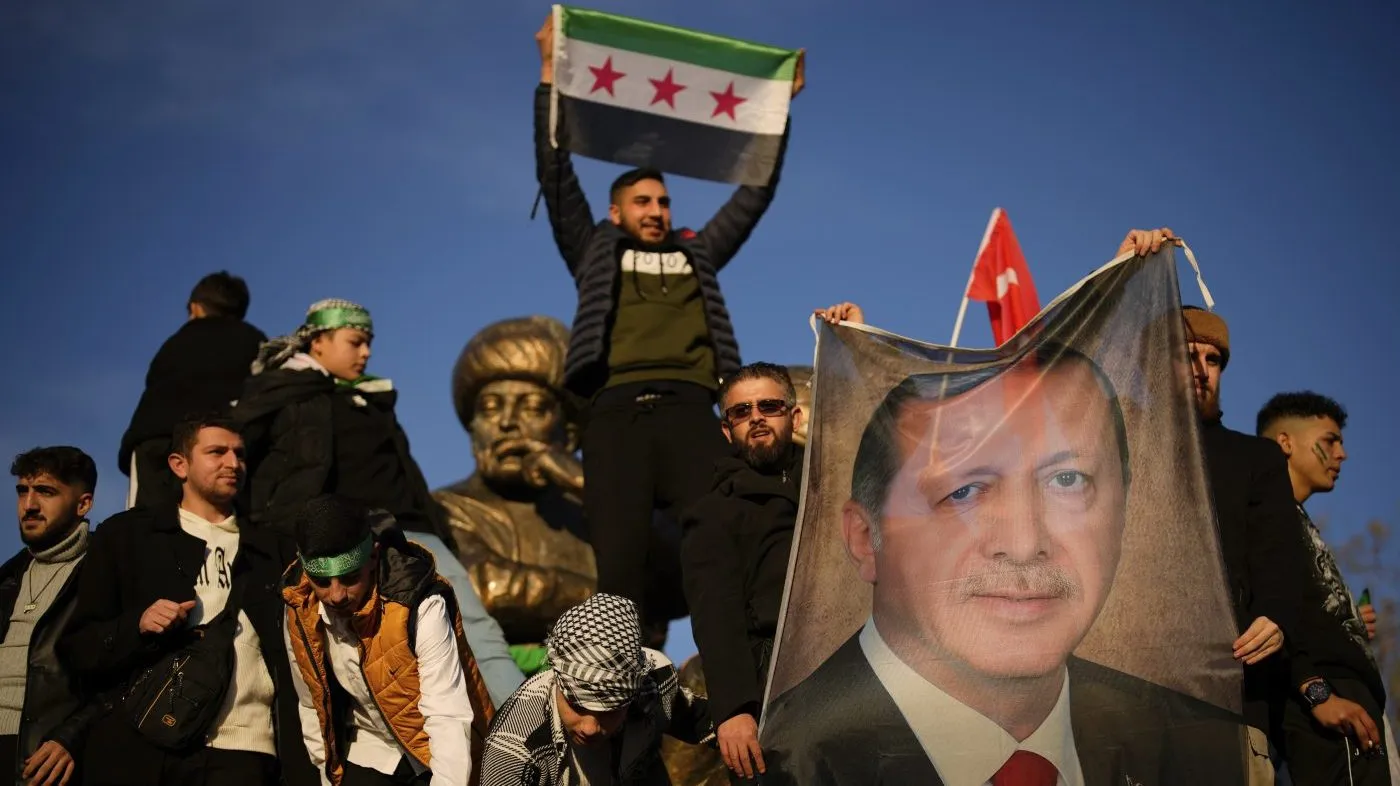
Turkish Empire Inspires Islamist Ideology
At the 1919 Paris Peace Conference, which laid the foundations for the modern political map of the Middle East, Rida opposed the creation of independent Arab states and secular democratic systems. Instead, he advocated for the revival of the Muslim Sultanate in Istanbul as the leader of all Muslims and their territories across the world.
Rida’s ideas were taken up by Hassan al-Banna, the founder of the Muslim Brotherhood in Egypt. In turn, Banna’s ideology was developed further by Sayyid Qutb, who introduced a more radical dimension to the movement’s thought. The Brotherhood’s overarching plan has been to revive the Islamic Umma by restoring a structure resembling the Ottoman Sultanate and reestablishing a unified Muslim polity.
This ideology aligns closely with Erdogan’s own ambitions for Turkish regional dominance. Since the end of the Global War on Terrorism, the Muslim Brotherhood has enjoyed a significant resurgence, backed by Qatari resources and Turkey’s status as a NATO member.
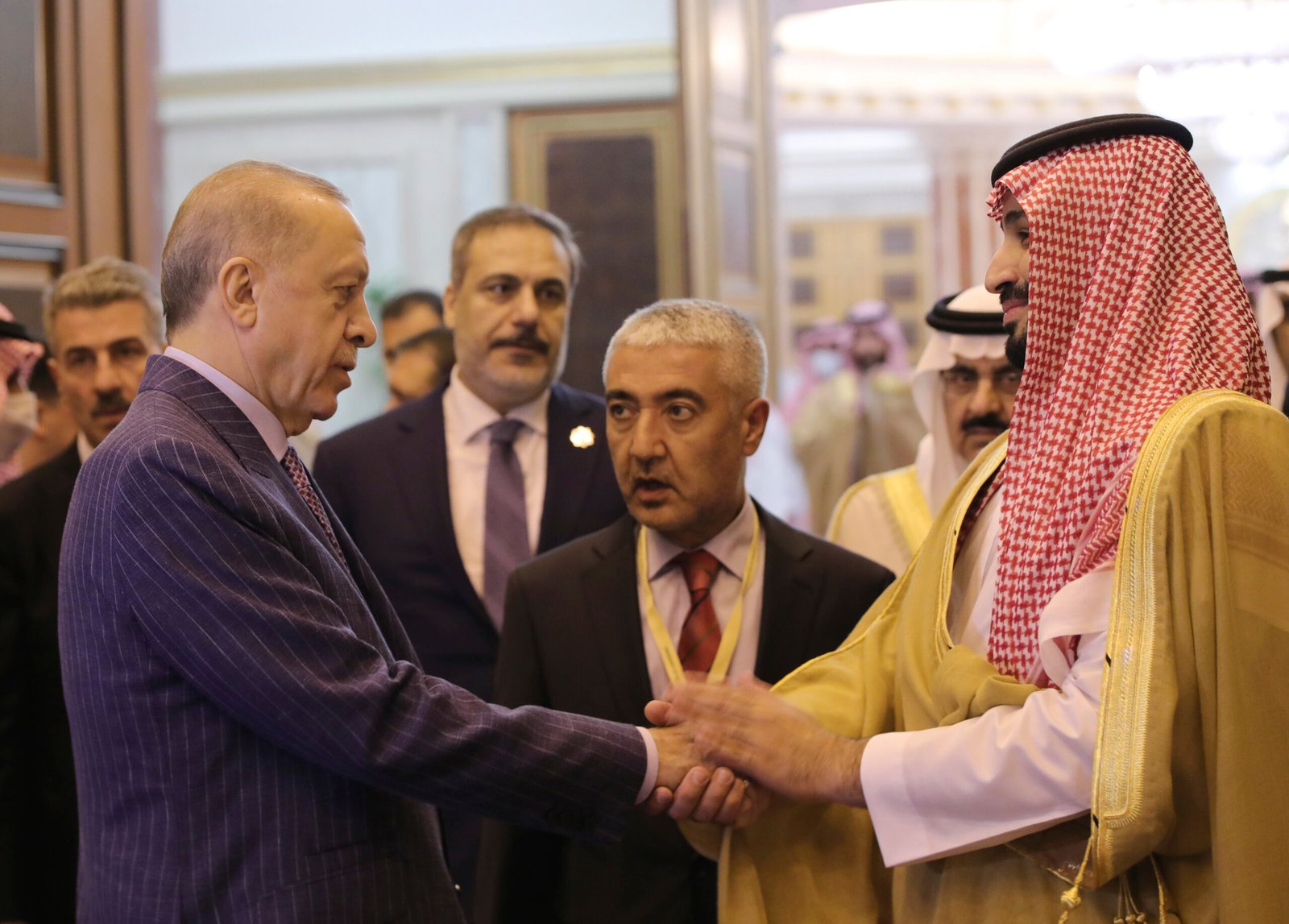
Confronting Turkish Empire Expansion Plans
The Brotherhood now promotes the idea that the time has come for the world to accept political Islam as the superior form of human government. They argue that governance based on Islamic teachings represents the best model, while liberal Western democracy, informed by the Enlightenment, leads to degenerate societies and corrupt governments.
Under the cover of promoting political Islam, Erdogan is advancing a policy of Turkish imperialism aimed at reviving the Ottoman Sultanate. Brotherhood organizations, such as Hamas, embrace this vision, seeing it as consistent with the idea of Jerusalem becoming a Turkish province. Similar sentiments are found among Brotherhood supporters in Lebanon, Syria, and Jordan.
Yet this imperial project is deeply problematic for the Arab world. Arabs fought long and hard to rid themselves of centuries of Turkish imperialism and have been engaged for decades in resisting Iranian colonialism. The prospect of a revived Turkish empire poses a new threat to Arab sovereignty. It is essential for Arab nations to recognize and counter this danger to protect their independence and national identity.