
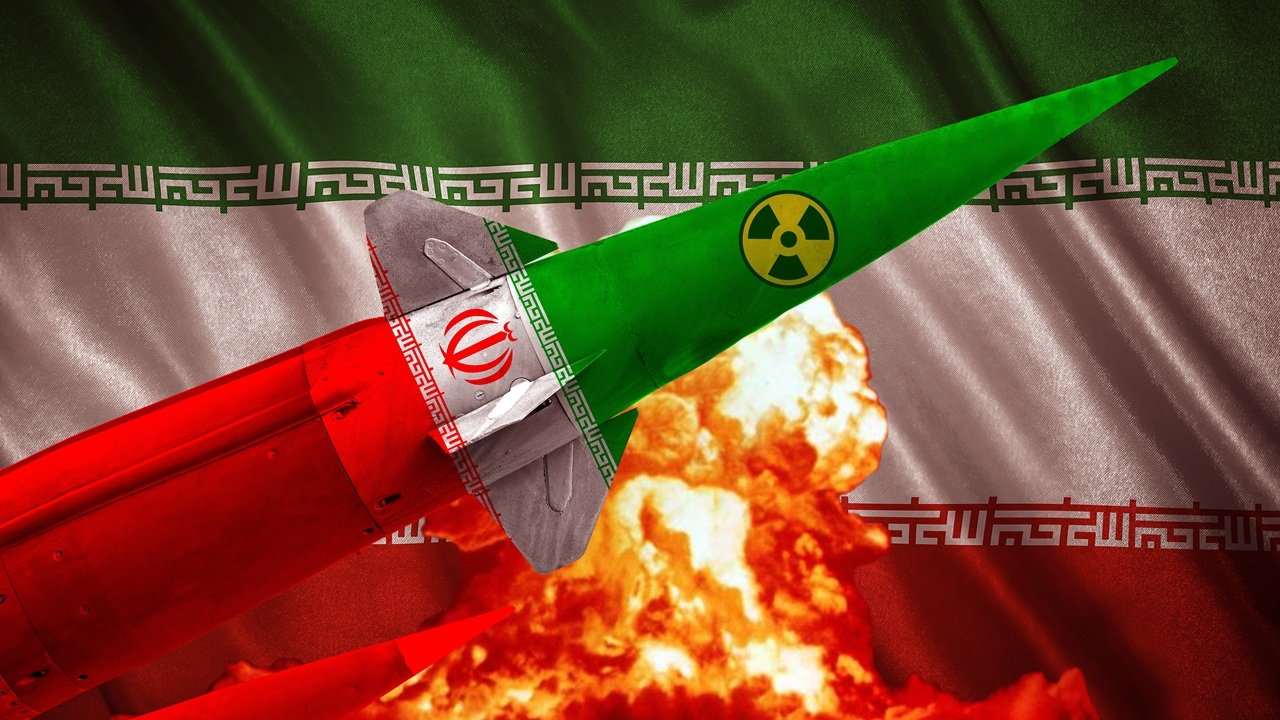
Trump vows Iran Nuclear Sites will never yield a weapon while dismissing AI risks. Bombing cannot erase enrichment knowledge, and AI capability lacks physical chokepoints, leaving both threats beyond permanent control.
Donald Trump’s vow that Iran Nuclear Sites must never produce a weapon has justified military strikes and economic sacrifice, yet the logic behind that pledge deserves scrutiny. Bombing can destroy centrifuges, reactors, and delivery systems, but it cannot destroy the accumulated expertise of scientists who have spent decades mastering enrichment.
The president simultaneously dismisses artificial intelligence as a manageable risk, even as his own agencies warn of cyber and control dangers. This asymmetry reveals a deeper confusion about what presidents can actually control. Nuclear proliferation has physical chokepoints: facilities, materials, and supply chains that can be targeted. AI capability is distributed, dual-use, and already public, with no centrifuge to embargo.
Iran Nuclear Sites can be bombed again and again, but if Tehran decides to rebuild, the knowledge survives and concealment improves. Washington faces a choice between endless strikes and learning to deter a nuclear-capable Iran, much as it has with North Korea. Meanwhile, the AI threat is not a science fiction extinction scenario but a speed and scale problem that regulators cannot box away. The president’s confidence in military power and his indifference to AI safety both rest on a misunderstanding of what force can and cannot achieve.
Iran Nuclear Sites Can Be Bombed
A hypothetical question that continues to make the rounds on online forums is whether you’d want to be attacked by a crocodile or a shark. The “expert” opinion is that crocodiles view humans as normal prey, whereas sharks usually bite humans by mistake. Still, neither option seems remotely ideal.
This month, a new hypothetical could be brought up: would the United States rather confront a nuclear war with Iran or the potential extinction at the hands of artificial intelligence? Both seem like very valid threats. Yet according to President Donald Trump, the economic pain most Americans are now feeling is justified because, in his words, “we can never let Iran have a nuclear weapon.”
At the same time, just this past weekend, Trump downplayed the risk of AI.
“We’re leading China in AI, we’re the most sophisticated country in the world, and frankly, I want to keep it that way because whoever wins AI, wins,” Trump told reporters during a recent trip to Ireland. “And we can put guardrails; we can do this and that. But I think you have a lot of negative forces that are bringing it up that shouldn’t be bringing it up.”
Understanding the Iranian Nuclear Threat
Iran obtaining a nuclear weapon would be a security nightmare for the United States—and particularly for Israel, its closest Middle Eastern ally. Trump is only the latest president to declare that Iran could “never” have an atomic weapon.
Still, “never” is a very long time—and as previously reported, the mechanics of constructing a nuclear weapon are no longer a closely guarded secret. If a mid-sized country is hell-bent on building a nuclear weapon, it is very difficult to stop it from doing so. The first nuclear weapons were developed at a time before artificial intelligence, so developing the next ones will be far easier.
“Pakistan offers a useful warning about how difficult permanent prevention can become,” warned geopolitical analyst Irina Tsukerman, president of threat assessment firm Scarab Rising.
Tsukerman noted that Pakistan had developed nuclear weapons in the 1980s and 1990s without anything close to the technology available today.
“Iran has much more sophisticated computing, easier access to scientific knowledge, decades of its own nuclear experience, and now AI,” she said.
An AI system is obviously not going to hand Tehran a finished nuclear weapon, but Iranian scientists can certainly use increasingly AI-augmented tools to work faster, analyze far more information, test possible solutions, and solve technical problems more efficiently than scientists could a generation ago.
Moreover, the vow that Tehran can never have a nuclear weapon might be unrealistic. Short of a ground invasion of Iran, if the regime is dead-set on developing nuclear weapons, it will likely accomplish that task sooner or later in spite of America’s and Israel’s best efforts.
“Facilities can be bombed, and centrifuges can be destroyed, while the scientists who know how to enrich uranium remain,” Tsukerman said. “Iranian engineers have spent years working on different parts of the program, and the country has accumulated decades of experience. If Tehran decides to rebuild, Washington has to decide whether to attack again. Iran can also move more work underground, spread it among smaller sites, improve concealment, and wait for a more favorable moment.”
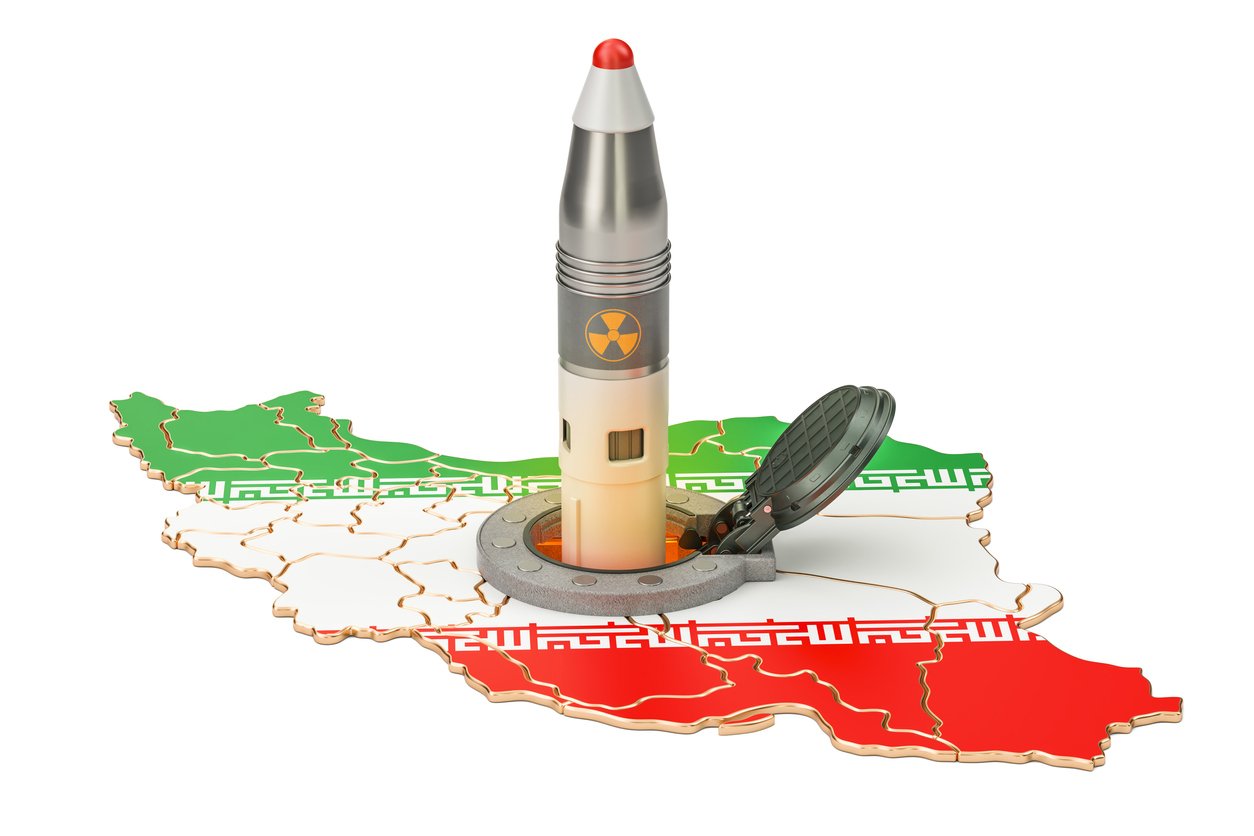
Iran Could Become a Middle Eastern North Korea
North Korea should be seen as an example of everything done wrong, and history could be repeating itself. Throughout the 1990s, North Korea built plutonium-production reactors at the Yongbyon Nuclear Scientific Research Center. It signed, then later violated, international non-proliferation agreements.
After threatening to withdraw from the Nuclear Non-Proliferation Treaty (NPT) throughout the 1990s, North Korea formally pulled out of the agreement in 2003. Two years later, North Korea publicly claimed for the first time that it had manufactured functional nuclear weapons, and conducted its first test in October 2006.
Now that North Korea actually has nuclear weapons, the choices for America have become much more complicated.
“Trump can sit down with Kim Jong-un because there is no realistic military option for simply taking North Korea’s nuclear weapons away. Trying could lead to a devastating war on the Korean Peninsula,” Tsukerman warned. “Washington therefore lives with North Korea’s arsenal, tries to deter Kim, applies pressure when necessary, and periodically returns to diplomacy. Trump does not want Iran to become another country whose nuclear arsenal Washington simply has to learn to live with.”
Trump does understand power, but it is less clear what he thinks a president can actually control. He has said for years that Iran will never have a nuclear weapon, so he has invested a great deal personally and politically in making sure Iran does not cross the threshold. But the efforts to “permanently” dismantle Iran’s nuclear program seem to be a talking point, one without any clear indication of how it will be addressed. Americans meanwhile are facing higher fuel costs, which will translate to higher costs for everything.
The best answer the president offered this week was to shift the blame to Ukraine’s strikes on Russia’s energy infrastructure, arguing those attacks—and not the US situation in the Middle East—are to blame for the situation. In addition, Trump has described the issue of “affordability” as a hoax. If so, it is a hoax that could cost the Republicans control of the House of Representatives and possibly the Senate.
Trump Misreads AI Risks
All of the above is really nothing new for the second Trump administration. But what makes this situation more perplexing is how AI fits into it. Trump has essentially labeled the threat of AI a non-issue—a stance that has baffled many observers.
“The White House calling AI safety concerns a hoax leaves the country without a coherent position on a documented and growing threat,” suggested Denis Calderone, CTO of cybersecurity provider Suzu Labs.
“You can disagree with how the industry is framing the problem. You can question the motives of companies that spent years racing to build these systems and are now asking the government to slow everyone down,” Calderone told The National Interest. “Those are fair instincts, and I get how this feels a bit like the fox guarding the hen house, but indifference is not the same as skepticism, and right now the administration’s position amounts to hoping a problem its own agencies are actively warning about will resolve itself.”
The fact that the AI companies are the ones issuing the warning may be what is especially concerning, especially as Trump—a former real estate developer—believes he knows better than those actually developing the technology.
Yet, Kevin Surace, CEO of biometric security provider TokenCore, told The National Interest that the Trump administration hasn’t fully ignored the threat.
“The White House record is more mixed than simply saying it does not take AI seriously. Its June executive order explicitly recognizes advanced AI cyber risks and creates testing and review processes, while the president’s rhetoric dismisses broader loss of control concerns,” Surace said.
America Can’t Slow Down AI Development
Where the situation with AI development is notably different from that of Iran’s nuclear program is that the US is very much in a race with potential adversaries such as China. Unless there is a global understanding, the threat would remain even if the US suddenly put guardrails in place.
“We are in a global arms race to maintain American leadership in one of the most important technologies of our time; a technology which will be used both for explicitly harmful purposes and for profound scientific discoveries that materially shift the geopolitical balance,” explained Donald McFarlane, board member with IT security provider Xcape.
McFarlane told The National Interest that the arms race argues for strong engineering.
“It does not argue for putting regulatory barriers around who is allowed to build and consume powerful models,” he said.
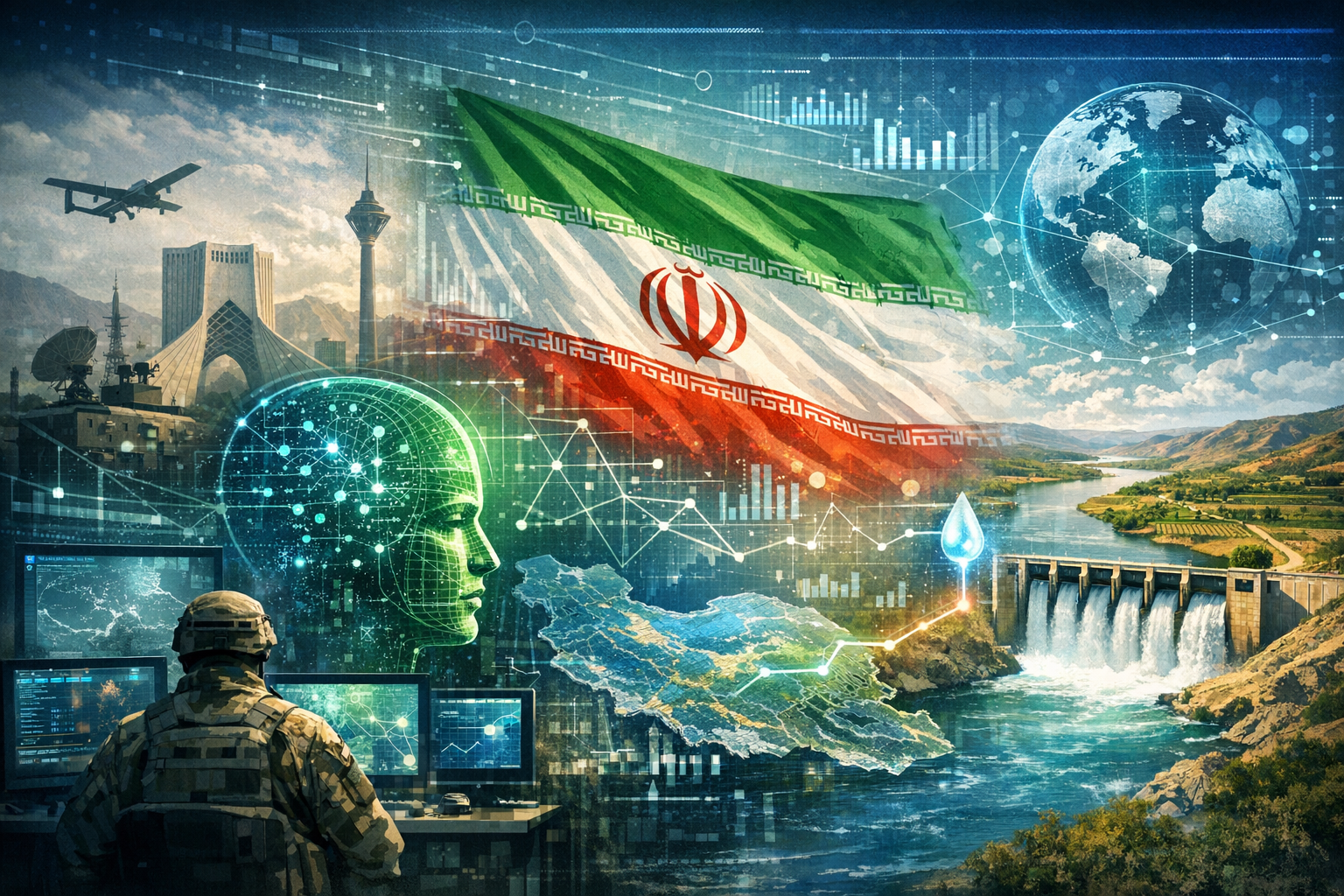
Guardrails Require Open Architecture
Other experts agreed, but warned that security needs to be a priority, rather than the risk-tolerant approach that the president may appear to favor.
“Even if AI development slows down tomorrow, security must accelerate. We cannot afford to move at the same pace as the technology we’re trying to secure. The job of securing these systems has effectively gotten ten times harder, regardless of what AI companies decide to do,” argued Nikhil Gupta, founder and CEO of security provider ArmorCode.
“In terms of guardrails, the most important is open architecture,” wrote Gupta. “We’re dealing with multiple LLM and security providers at once, and the framework governing that needs to be open, not locked to any single vendor.”
There is unlikely to be a coordinated global slowdown of AI development, in part because it would be difficult to verify or enforce when nations and companies are competing for better models. Just as North Korea continued to develop nuclear weapons under the NPT, and Iran may do the same, those nations and others are likely to cheat on their international commitments, and there are few effective ways to monitor them.
“The practical issue is not whether AI development can be stopped. It cannot. But whether access, permissions, and authentication are engineered so that an AI system cannot turn a convincing deception into real authority,” added Surace.
Doomsday Scenarios Aren’t Inevitable for Either Nukes or AI
Where these distinct issues do require some consideration is in the messaging from the White House. Trump has claimed that Iran was “two, maybe three weeks away from having a nuclear weapon,” which he used to justify the military strikes.
Yet according to the International Atomic Energy Agency (IAEA) and non-proliferation experts, there was no evidence of an active, structured weaponization program or an imminent build.
Trump also expressed a belief that Tehran would actually use a nuclear weapon, but the evidence is to the contrary. Most experts and intelligence agencies assess that Iran would be unlikely to launch a first-strike nuclear attack. Instead, they might take the same approach as North Korea: namely using nuclear weapons as a weapon of last resort to guarantee no external efforts at regime change. The Modern War Institute noted in a recent report that an active nuclear exchange would leave Iran heavily vulnerable, because opposing nations possess superior and more advanced nuclear arsenals.
Iran having a nuclear weapon isn’t a foregone conclusion, but stopping it without regime change, which now seems unlikely, may be impossible.
“Trump can continue using military power to prevent Iran from crossing the nuclear threshold for as long as he believes the cost remains acceptable,” said Tsukerman. “Iran can continue learning, rebuilding, hiding more of its work, and taking advantage of technological advances that make difficult scientific and engineering problems easier to solve.”
The situation with the AI threat is one that should be taken more seriously, but Trump’s fear that China could gain the upper hand may block efforts to put guardrails in place. The good news is that the doomsday threats could be at least slightly exaggerated.
Iran Nuclear Sites Defy Control
“From where cybersecurity practitioners sit, the threat is real, but it’s not necessarily the one in the headlines,” Jeremiah Fowler, a researcher at Black Hills Information Security, told The National Interest. “Up to this point, AI agents have not been observed creating novel attack techniques or classes beyond what human attackers can do and have already done. These models are trained on human-generated security research and exploit code. They reflect what the community has already published.”

What AI genuinely changes is speed, scale, and the barrier to entry for offensive cybersecurity. That should be seen as a bigger short-term threat, and one that perhaps the White House shouldn’t be ignoring.
“Attacks that used to require a skilled operator and weeks of effort can now be run faster, broader, and by less capable humans. That is a serious problem,” warned Fowler. “But it is a bigger and faster version of the problem we already had, not a science fiction one. There are no LLM-powered time-traveling robot armies coming any time soon, and framing the risk that way actually helps attackers, because it keeps defenders staring at the horizon instead of at their own front door.”
Fowler added that nuclear weapons and AI are different shapes of problem, which may explain the different postures.
“Nuclear proliferation has physical chokepoints like enriched material, centrifuges, and delivery systems.
Governments can do something about those,” he suggested. “AI capability is already public, already distributed, and dual-use. There is no centrifuge to embargo. So whatever you think of the policy decisions, regulation cannot put AI back in a box the way nonproliferation can.”