
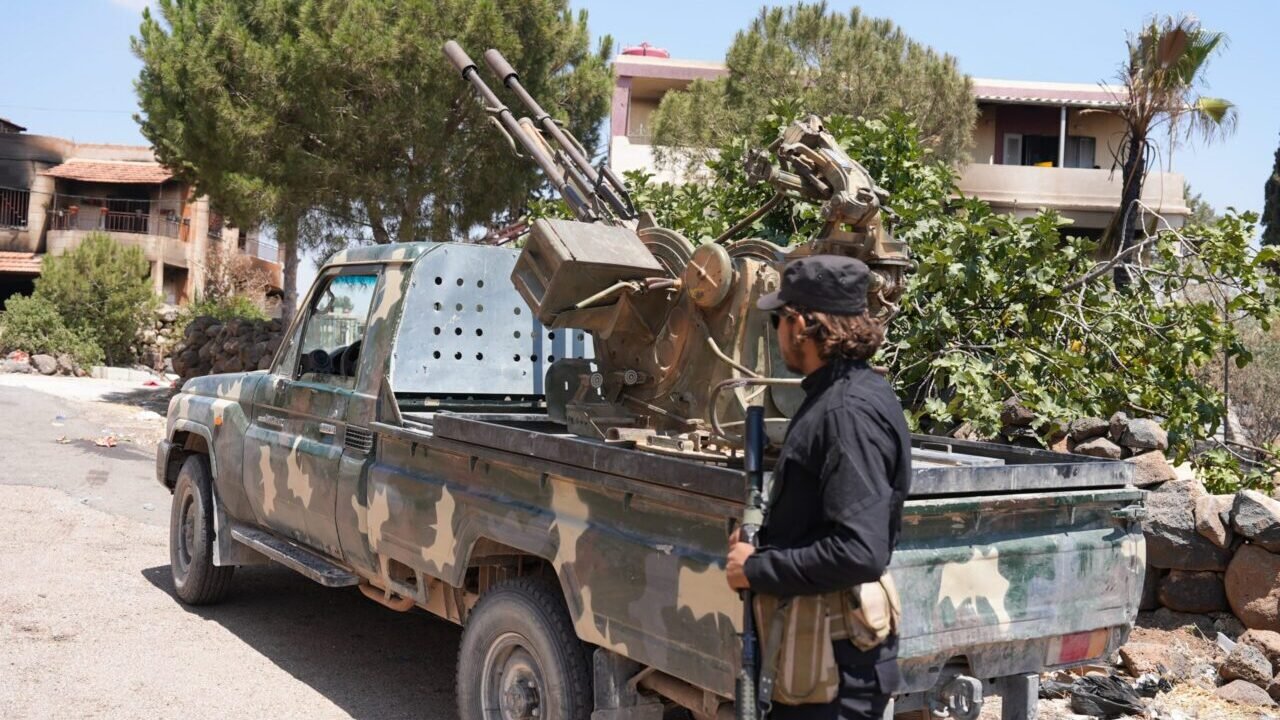
After Assad’s fall, sectarian massacres and Suwayda’s autonomy push exposed Syria’s fractures. Drug trafficking, regional opposition, and economic isolation leave a Druze enclave dependent on Israel and vulnerable to internal revolt.
Druze State Prospects Face Sectarian Violence
Throughout the 14-year civil war, the regime of Bashar al-Assad somewhat disingenuously presented the protection of Syria’s minorities as a justification for the regime’s rule. According to this narrative, the regime was the only defense of religious minorities in the face of the largely Islamist opposition groups fighting it, who would persecute them should the Assad government fall. Regrettably, these cautions materialized not too long after the regime collapsed and Assad fled in December 2024.
In March of the following year, a series of sectarian massacres against the Alawites occurred in the coastal governorates of Latakia and Tartus after remnants of the former Assad regime, who had declared themselves the new “Military Council for the Liberation of Syria,” ambushed the transitional government’s security forces. In reaction, both state and non-state forces waged a bloody campaign, killing at least 1,400 Alawites. Throughout their 50-year grip on Syria, the Assads disproportionately recruited their fellow Alawites into the Baathist military, exploiting sectarian fears to fortify the regime. As a result, the harrowing violence was a form of retaliatory and collective punishment.
Sectarian violence broke out again in July in the Druze-majority governorate of Suwayda in southeastern Syria. The violence was sparked by a robbery and confrontation at a checkpoint, leading to retaliatory kidnappings between Druze militias and armed Sunni Bedouin tribesmen. The escalating unrest prompted the transitional government’s forces to intervene in support of the Bedouin tribes, killing up to 1,700 civilians, mostly of the Druze sect, as well as Israeli strikes in support of the Druze.
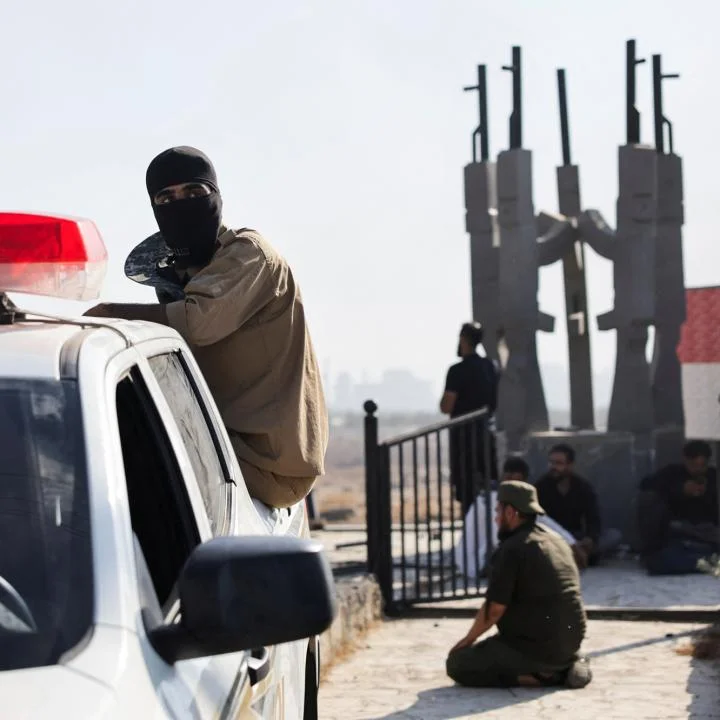
Suwayda Slips Into Autonomous Rule
While President Ahmed al-Sharaa was able to reestablish control of Latakia and Tartus in the aftermath of the Alawite massacres, the government was forced to withdraw from Suwayda. Since then, a Druze paramilitary group, the National Guard, led by local spiritual leader Sheikh Hikmat al-Hijri, has governed the region autonomously.
Despite having a somewhat turbulent relationship, the cleric supported Assad throughout the civil war. As the regime collapsed, many members of Assad’s notorious security forces fled to Suwayda and sought al-Hijri’s protection to escape retribution. More than half of al-Hijri’s National Guard leadership are former senior officers of the Assad regime. Most notable are Talal Amer, the National Guard’s spokesperson, and Jihad al-Ghoutani, who served in the infamous Fourth Division alongside Iranian militias.
Al-Hijri said in a statement for the first anniversary of the massacre that Suwayda’s future could include independence, autonomy, protection by another state, or integration with another country. However, pursuing any form of self-determination is likely futile.
Economic Isolation Undermines Self-Determination
While the Alawite regions have modern infrastructure and a Mediterranean coastline, and the north-east Kurdish regions have gas and oil reserves, Druze-majority Suwayda’s geography is largely desolate, lacking agricultural production, exportable natural resources, or even enough water to support self-sufficiency.
Over the decades, the lack of socio-economic opportunities in Suwayda has often compelled many Druze locals to move to Damascus for tertiary education or join the military. As a result, although Suwayda remains Syria’s only Druze-majority governorate, almost half of Syria’s Druze population lives in Damascus, Idlib, and Mount Hermon.
In the year since the massacre, Suwayda has become almost entirely isolated from the rest of Syria. The only road access into the periphery region is via a highway from Damascus. Consequently, Suwayda has become heavily dependent on humanitarian aid authorized by Damascus, as well as a lifeline of funds from neighboring Israel.
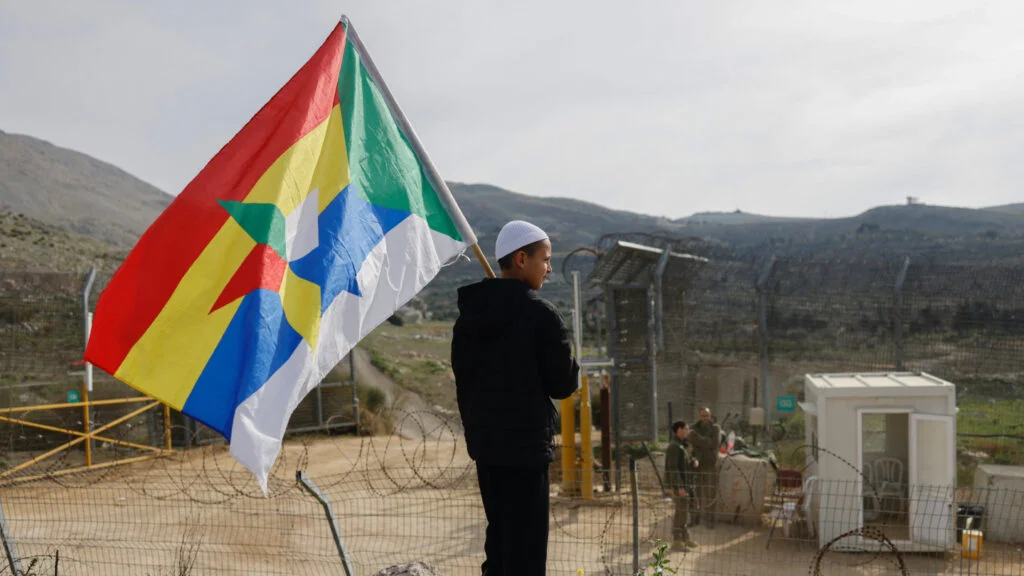
Drug Trafficking Sustains The Enclave
Despite these grim economic factors, one viable economic sector that has preserved Suwayda has been the trafficking of drugs, weapons, gasoline, and alcohol into Jordan. Since the transitional government banned its production and movement, the Assad regime’s Captagon cartel has relocated to Suwayda, allowing al-Hijri and the National Guard to capitalize on its trafficking into Jordan.
Compounding the economic infeasibility of self-determination, the international community offers little support for either Druze autonomy or independence.
Jordan And Lebanon Reject Druze State
For Amman, an independent Druze state on its border would disrupt Jordan’s direct access to Damascus, necessitating a longer detour. In addition to their support for al-Sharaa’s government, the Jordanians are staunchly opposed to a narco-state on their border. Consequently, Jordan declined a request for a border passage and has launched airstrikes against Suwayda’s drug trafficking networks several times.
From Lebanon’s perspective, sectarian-based regional autonomy or secession in Syria would disrupt an already fragile social cohesion amongst Lebanon’s equally diverse religious communities, as well as threaten its own territorial integrity too. For this reason, Walid Jumblatt, the leader of the Lebanese Druze, emphasized the need for national reconciliation in Syria and stressed that Suwayda is an integral part of Syria, reaffirming his categorical rejection of an independent Druze state.
Western And Israeli Interests Harden
The West has little appetite for an independent Druze state. Al-Hijri’s fiefdom in Suwayda is under the theocratic rule of three religious families and backed by remnants of the Assad regime. Unlike al-Sharaa, Suwayda’s rulers have shown no intention of holding referendums or pursuing a democratic transition. During his visit in July, French President Emmanuel Macron expressed support for Syria’s territorial integrity.
For Israel, financing al-Hijri and the National Guard, as well as supporting their international PR campaign, does not necessarily translate into outright support for autonomy or independence. This support is largely due to pressure from Israel’s Druze minority, whom candidates are determined to appease in the lead-up to October’s elections.
While al-Hijri’s proposal for Israel to annex Suwayda and turn it into “an inseparable part of Israel’s strategic framework” could extend their existing security buffer alongside the occupied Golan Heights, a contiguous buffer state would require Israel also to annex the Sunni-majority Daraa governorate between the Golan and Suwayda. This would leave Israel with the dilemma of either absorbing a hostile population or ethnically cleansing it.
Damascus Can Wait Out Suwayda
In the absence of any external state support for Druze self-determination, Suwayda is headed for disaster at worst. At best, it will become an unviable narco-proto state: a theocratic religious dictatorship lacking local consultation, official foreign relations, formal recognition, agricultural or natural resources, and economic opportunities for its youth.
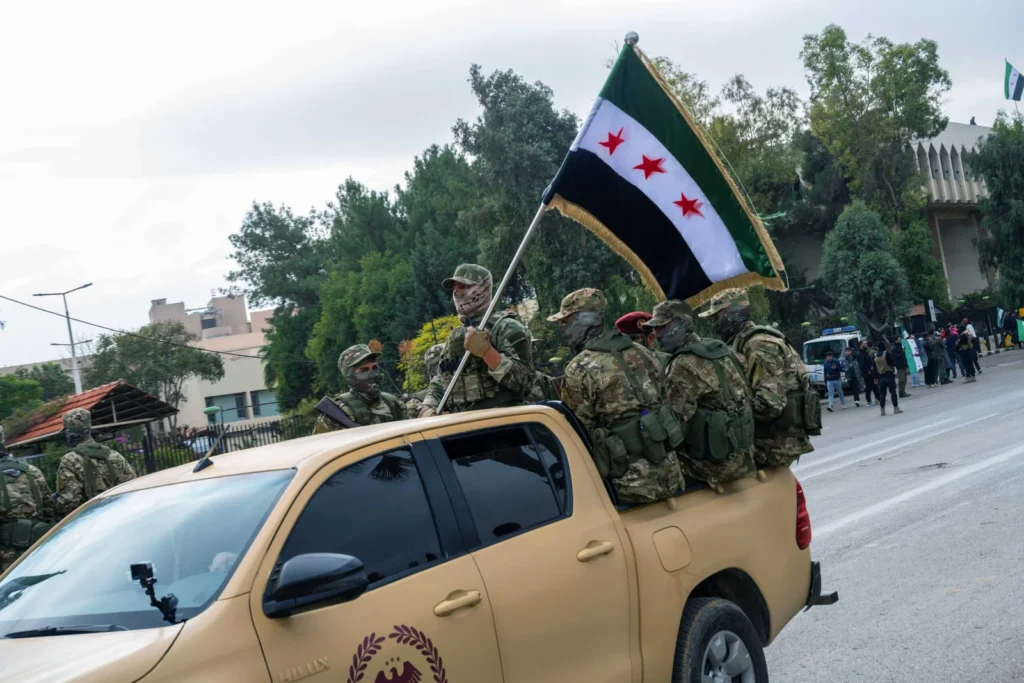
Although Damascus could easily retake the governorate by force, the risk of Israeli intervention remains too high for a country reeling after 14 years of devastation.
However, al-Sharaa may not need to deploy force. Instead, Damascus merely needs to wait for Druze youth to rebel against al-Hijri and his National Guard. Desperation, isolation, limited socio-economic mobility, and deep poverty in Suwayda may catalyze a revolt.
In June 2026, more than 13,000 secondary school students in Suwayda could not sit for the national examinations in Damascus, sparking protests in the city. It is unclear whether al-Hijri’s National Guard or government security forces prevented students from traveling to the capital.
Equally important is the Druze community’s long affinity with Syrian nationalism, pan-Arabism, and anti-colonialism, a history that renders the country’s territorial integrity sacrosanct amongst them. No figure embodies this legacy more than Sultan al-Atrash, the Druze Syrian nationalist from Suwayda who led an armed rebellion against French imperial rule in 1925, and in whose memory the Druze continue to take immense pride.
Leveraging this, the transitional government must strive to build an inclusive state and disprove narratives that the character of post-Assad Syria will be defined by majoritarian chauvinism and minority alienation.
Ultimately, the likelihood of local autonomy and the risk of territorial secession is minimal. Damascus merely needs to sit back and wait for Suwayda’s local population to explode from within. For this reason, Syria’s newly opened assembly has three vacant seats for Suwayda waiting to be filled.