
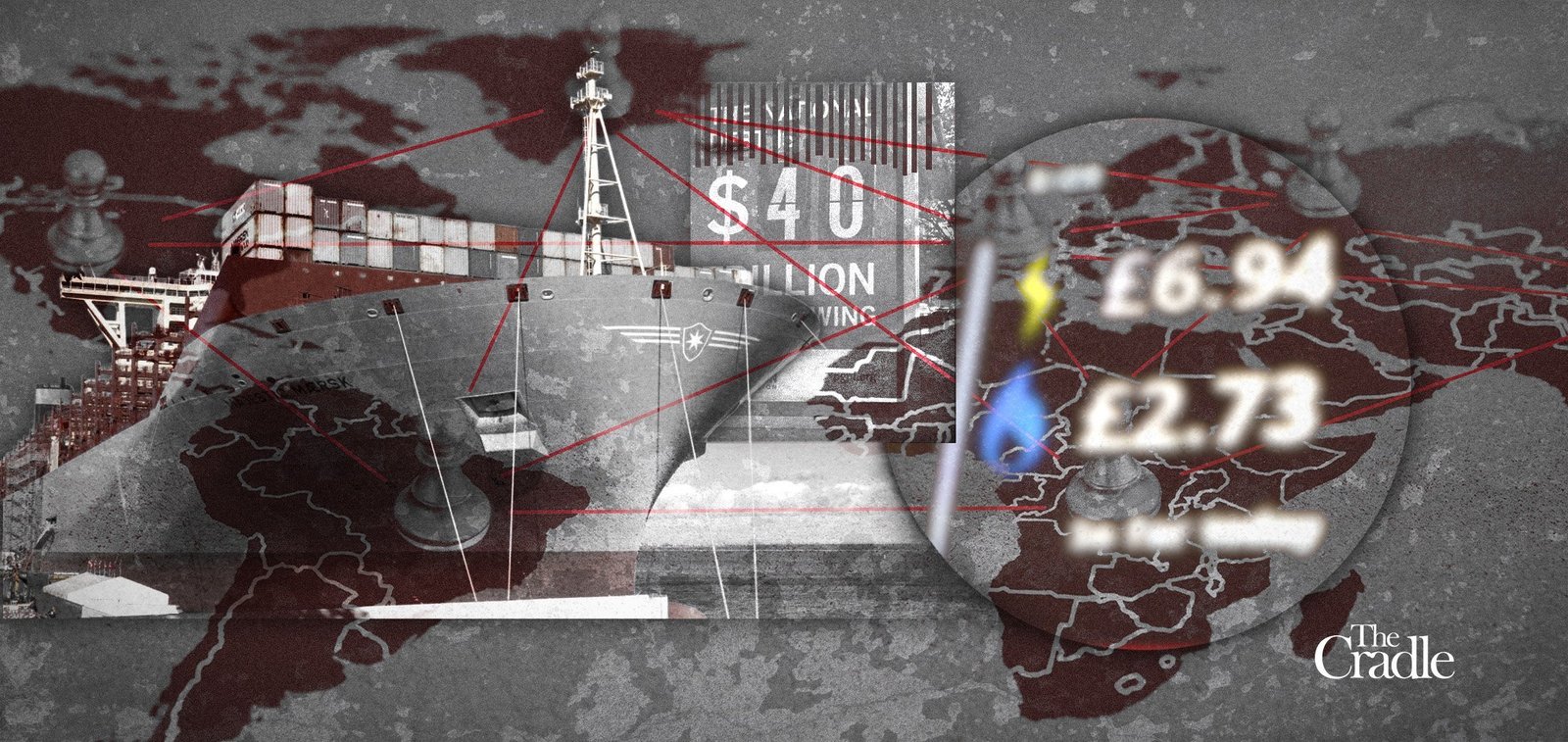
Global debt reached $365.5 trillion, ending the era of cheap credit. Rising borrowing costs, AI investment risks, climate shocks, and multipolar fragmentation constrain every government’s fiscal room, forcing austerity battles and reshaping alliances.
Global Debt Hits Historic Threshold
In his book ‘Four Futures: Life After Capitalism,’ Jacobin editor Peter Frase describes four radically different systems that could shape the future of global politics and economics: communism, rentism, socialism, and exterminism.
Each is an ambitious proposition, but before any of them takes hold, we are more likely to experience another phase of capitalism incorporating elements of several.
This transition could last until the middle of the century. Capitalism is unlikely to die easily in the short or medium term, yet it cannot survive indefinitely in its present form. Economic and political transformation has become unavoidable, and the entire world is experiencing its growing pains.
The transition will bring new alliances and shifting partnerships, alongside diplomatic and military moves that often contradict one another.
Energy routes under pressure
The search for temporary balances in global politics reflects the multiple crises confronting the world economy. The figures for the first half of 2026 offer a revealing picture.
According to the World Trade Organization’s (WTO) Global Trade Outlook and Statistics, global merchandise trade volume exceeded expectations, growing by 3.5 percent despite disruptions caused by the war in West Asia. Supply chains have adapted to disruptions in energy, fertilizer, and transportation markets.
Although crude oil exports from West Asia fell by approximately 24 percent year-on-year in the first half of 2026, and liquefied natural gas (LNG) exports declined by 47 percent, increased shipments from other suppliers limited the global decline to six percent for crude oil and just one percent for LNG.
Fertilizer markets also adjusted as alternative suppliers stepped in, although prices remain elevated.
Trade flows were redirected through alternative ports and corridors, while global container throughput increased by 3.9 percent through July.
The WTO consequently raised its forecast for merchandise trade growth in 2026 from 1.9 to 3.9 percent, with growth projected to reach 4.1 percent in 2027.
The AI trade boom
Strong demand associated with artificial intelligence (AI) investment has helped offset the damage inflicted by the war in West Asia.
Semiconductors, servers, and other AI-enabling goods accounted for 47 percent of the increase in global merchandise trade value during the first half of 2026. Trade in these products surged by 67 percent year-on-year, accelerating an expansion already evident over the previous two years.
Yet the gains from AI investment and expanding trade have been distributed unequally. Services trade and regions exposed to the fighting have suffered more heavily.
Commercial services trade, for example, is expected to grow by just 3.3 percent this year, substantially below the WTO’s earlier forecast of 4.8 percent.
Despite wars and geopolitical tensions, global trade has continued to function, with supply chains adapting to disruptions and shipments shifting to alternative routes and suppliers.
Trade survives the fractures
A new pattern is emerging as the world economy adjusts to geopolitical fragmentation. Approximately one-fifth of global merchandise trade takes place between economies that are geopolitically distant from one another.
Conflicts in West Asia and growing logistical risks are reshaping trade routes. While US trade with China has declined, commercial relations with the Association of Southeast Asian Nations (ASEAN) and Mexico continue to expand.
The concentration of strategic production in particular countries presents another vulnerability. China dominates the supply of electric motor magnets, the Netherlands and Japan occupy critical positions in semiconductor manufacturing equipment, and Taiwan remains central to advanced chip production.
Yet beneath this resilience, the International Monetary Fund (IMF) identifies three major threats to the global economy: high energy prices, mounting public debt, and the rapid expansion of AI investment.
Energy costs are fueling inflation, while growing debt burdens make financing increasingly difficult. AI promises substantial productivity gains, but its enormous financial requirements introduce additional risks into an already strained system.
The next struggle will be over who can produce more efficiently, not simply who can produce more.
AI-driven productivity gains could spread rapidly, but relatively few countries are positioned to benefit fully. The resulting inequalities threaten to deepen existing economic and political divisions.
Meanwhile, the AI boom is creating inflationary pressures of its own. Capital expenditure reaching trillions of dollars, alongside operating costs running into hundreds of billions, is placing extraordinary demands on financial resources.
Supply constraints affecting essential commodities because of the wars in West Asia and Ukraine could persist into 2027. Rising bond yields will also keep governments carrying excessive debt under mounting budgetary pressure.
Advanced economies are among the most exposed. Energy and food shocks continue to drive inflation, while electrification programs and growing electricity demand from data centers place additional strain on energy systems.
Tariff wars, military spending, and public borrowing will add to the pressure.
IMF Managing Director Kristalina Georgieva has emphasized the need for monetary discipline and difficult fiscal decisions as governments confront these pressures.
Among the countries facing the greatest challenges are the US, Japan, the UK, France, Italy, and Germany.
In France, efforts to impose spending cuts and bring the budget deficit closer to the Maastricht ceiling of three percent of GDP have encountered popular resistance. Purchasing power has deteriorated, public services have suffered, and austerity has become a political battleground.
Japan faces its own economic difficulties, with Prime Minister Sanae Takaichi under pressure to reconcile public demands with the country’s fiscal constraints.
The same battle over austerity and living standards is looming across other advanced economies, particularly in Europe.
Neoliberalism reaches boiling point
Neoliberalism has been under pressure for years. Now the water is approaching boiling point. National economies and the international financial system cannot continue indefinitely on the same footing.
Consider the sheer volume of debt.
According to the Institute of International Finance (IIF), global debt reached $365.5 trillion in the first half of 2026, an increase of more than $10 trillion.
Rising borrowing costs and enormous government financing needs have already shaken bond markets.
Bank of England Governor Andrew Bailey has warned of the dangers facing governments whose fiscal capacity has been depleted by weak growth and repeated economic shocks.
When borrowing costs rise while growth weakens, debt becomes harder to manage. Governments face mounting pressure to increase spending, even as investors demand higher yields to finance it.
The end of easy money
The IMF’s October economic outlook describes a global economy that remains resilient but increasingly vulnerable to fiscal pressures, renewed trade tensions, and a reversal in AI investment expectations.
The era of cheap credit is drawing to a close, bringing an end to nearly two decades of easy money.
For much of the period following the 2008 financial crisis, low interest rates allowed policymakers considerable room to maneuver. That environment is disappearing as debt-servicing costs rise.
Meanwhile, expectations surrounding AI continue to drive stock markets upward. Asia’s leading manufacturers of chips and related equipment are recording extraordinary export growth.
But the enthusiasm surrounding AI has also become excessive. Valuations are being inflated by expectations of future earnings that may never materialize on the scale investors anticipate.
The technology stock bubble cannot expand forever. The only question is how and when the reckoning comes.
Bond markets are already struggling with structural pressures intensified by the US–Israeli war on Iran, which began on 28 February.
Climate shocks and the food crisis
The growing interaction between natural climate cycles and the worsening climate crisis threatens to deepen the world’s food supply problems.
A strong El Nino – a periodic warming of Pacific Ocean waters that disrupts weather patterns across the globe – could bring prolonged droughts, excessive rainfall, and serious damage to agricultural production, driving up food prices and adding to inflationary pressures.
Central American countries face recurring drought risks, while increasingly erratic monsoon rainfall threatens agricultural production across parts of Asia.
Europe has also experienced severe heat and low water levels, disrupting navigation along major waterways such as the Rhine and Danube, with reduced river traffic potentially costing billions of euros.
The impact on agricultural commodities could be substantial, particularly for sugar, oilseeds, palm oil, and rice, whose production is highly vulnerable to drought and excessive rainfall. For poorer countries already struggling with high import bills, another surge in food prices could worsen shortages and make basic necessities increasingly unaffordable.
The IMF and other international institutions may consequently face growing demands for financial assistance from countries struggling to secure adequate food supplies.
A temporary truce in the trade wars
Record global indebtedness and the possibility of another bond market collapse remain among the greatest dangers facing the financial system.
A sharp correction in technology stocks could compound the damage, potentially triggering broader financial instability and even a banking crisis.
Almost no country can escape the effects of prolonged supply shortages and rising prices, particularly in energy and food. With global debt at record levels and financial markets increasingly vulnerable, the world economy badly needs breathing space.
The tariff war between Washington and Beijing has entered a temporary lull ahead of the US midterm elections, although what follows remains uncertain. Europe’s advanced economies are already under severe economic pressure, while the mounting costs of the climate crisis add to their difficulties.
Neither Washington nor the EU can easily afford another major military confrontation, however reckless their political leadership may prove.
Both the US and China have compelling reasons to ease their confrontation, at least temporarily. An unchecked tariff war would inflict further damage on trade, technology investment, and financial stability, while a period of relative calm could give their struggling economies some room to maneuver.
The slippery ground of multipolarity
The world is unlikely to divide neatly into two hostile camps as it did during the Cold War. Instead, a more fluid and dangerous form of networked multipolarity is emerging, in which countries can cooperate militarily with the US, maintain economic relations with China, and pursue energy partnerships with Russia simultaneously.
Multipolarity has become a necessity, but until the rules and balances of power are established, every additional center of influence brings another potential confrontation.
Even a temporary settlement in Ukraine would hardly guarantee lasting peace in Europe, where NATO and the EU could seek new arenas for confrontation with Russia, whether in the Baltics, Moldova, or Kaliningrad.
Global Debt Reshapes Every Calculation
While the major powers seek temporary accommodations elsewhere, West Asia remains a battleground, with its peoples bearing the highest costs. The geography of instability stretches from Morocco to Afghanistan, Cyprus to Iran, and Turkiye to Oman, extending well beyond the territory traditionally associated with Washington’s so-called “Greater Middle East Project.”
The Horn of Africa has also become part of these calculations, with Ethiopia, Eritrea, Somalia, Puntland, Somaliland, and Djibouti drawn into the struggle over maritime routes, military positions, and commercial corridors. The Mecca Joint Defense Agreement, signed by Saudi Arabia, Turkiye, and Pakistan in August, reflects the growing reliance on regional military arrangements.
The pact was activated in October amid Saudi Arabia’s renewed confrontation with Yemen, although Ankara ruled out sending troops to fight on Riyadh’s behalf, offering defensive support instead. Western imperialism is increasingly turning to regional powers to police the region and safeguard its interests, leaving its newly appointed “gendarmeres” to pull the chestnuts out of the fire.
Sleepless nights in the palaces
Across West Asia, plans for new energy pipelines, railways, highways, and trade corridors are being drawn up to bypass the Strait of Hormuz and Bab al-Mandab. Even borders are entering the calculations as regional powers reassess their positions and prepare for further upheaval.
The Axis of Resistance has not been destroyed, and Saudi Arabia has struggled to subdue the Ansarallah-aligned Yemeni armed forces despite years of military intervention.
Bahrain remains vulnerable to renewed unrest among its Shia majority, while Lebanon faces the threat of another internal war. Tensions persist around Cyprus, and Israel and Turkiye are engaged in a bitter struggle for influence in Syria, where competing interests increasingly intersect with plans for new energy corridors.
In Damascus, self-appointed Syrian President Ahmad al-Sharaa, formerly an Al-Qaeda chief known as Abu Mohammad al-Julani, is being pulled in different directions by regional and international powers. How long he can remain in power while juggling their competing demands remains an open question.
The Gulf monarchies, meanwhile, have poured enormous sums into transforming their economies from energy-exporting hubs into centers for fintech, AI and data infrastructure, real estate, and international trade.
Their ambitions, backed by investments worth trillions, now face the consequences of a war that has exposed the vulnerability of the very infrastructure on which their diversification plans depend.
Having already suffered substantial losses, the Gulf rulers may have to wait for another spring to realize their post-oil ambitions. In their opulent palaces, the Gulf’s kings and emirs now sleep uneasily, fearing revolution at home and missiles from abroad.