
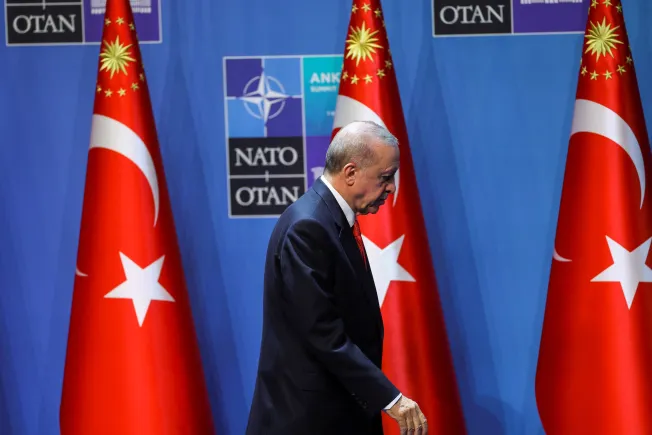
Turkey’s post–October 7 strategy restored regional influence through U.S. ties, Syrian gains, and the Mecca Defense Alliance. Yet Ankara cannot impose order, and the fragile Kurdish peace process offers a more achievable security path than open-ended alliances.
Ankara’s Post-2023 Regional Gambit
Since Hamas’s October 7, 2023, attack on Israel, the future of the Middle East has been fiercely contested. The previous Gulf-centered order had Saudi Arabia and the United Arab Emirates (UAE) trying to stabilize and shape the region using economic statecraft and the normalization of relations with former foes in Iran, Israel, Turkey, and Syria. Three years of war in Gaza, and more recently in Iran and the Gulf, have severely disrupted that order-building project and generated a deep sense of uncertainty about what comes next.
Turkey, like every major power in the Middle East, has tried to fill the vacuum. Before 2023, Ankara’s influence had been in decline; after years of diplomatic isolation following the Arab uprisings, it had just begun repairing its ties with major regional actors.
But in the past few years, Turkey has earned American backing for its policies in Syria and its regional diplomacy, and it has made an effort to secure the home front by pursuing a peace process with the Kurdistan Workers’ Party (PKK), a militant group that has fought a decades-long insurgency against the Turkish state. Most recently, in August, Pakistan, Saudi Arabia, and Turkey signed the Mecca Defense Alliance, a collective security agreement that institutionalizes Turkey’s regional positioning and pulls the country directly into Saudi Arabia’s war with the Houthis.
Turkey’s post–October 7 strategy has restored the country’s position as a regional heavyweight. But it is not capable of meeting its larger objective: establishing order on its own terms. Turkey, like the region’s other aspiring leaders, lacks the power to impose a new security framework on its own. Its nascent efforts to build one, such as the new Mecca pact, merely make countries outside the bloc feel unsafe, feeding instability. Turkey’s most ambitious plays for regional leadership are therefore likely to prove ineffective or even counterproductive. As long as the Middle East’s highly militarized, zero-sum security dynamics remain, Ankara would be better off concentrating on interests closer to home that it has the power to protect.
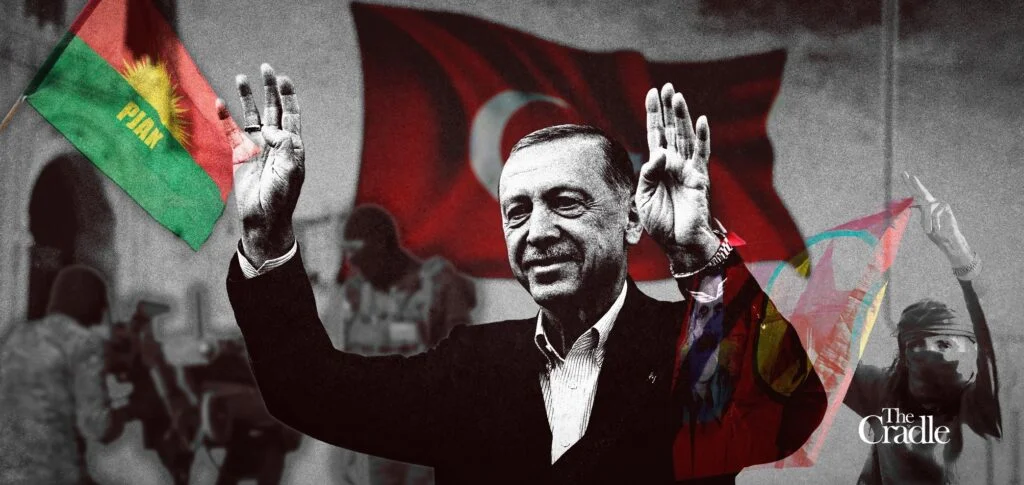
Turkish Ambitions Meet Regional Limits
RISK AND REWARD
This is not the first time that Turkey has tried to shape the broader Middle Eastern order. Ankara saw the Arab uprisings in the early 2010s as a historic window of opportunity. The ruling Justice and Development Party (AKP) described the political transformation sweeping the region as “the people’s coming to power,” and the Turkish government expected that eventual elections in the Arab countries rocked by protest would bring into office parties aligned with the Muslim Brotherhood, which was ideologically sympathetic and had practical links to the AKP. The emergence of friendly governments, the thinking went, would increase Turkey’s influence in the region.
Yet these hopes soon receded. Egypt’s Muslim Brotherhood–affiliated president, Mohamed Morsi, was overthrown in 2013, and Turkey’s bet on the opposition movement in Syria failed as Bashar al-Assad clung to power. Turkey was left isolated. A rival axis composed of Egypt, Saudi Arabia, and the UAE objected to Turkey’s Muslim Brotherhood ties and sought to limit Ankara’s influence. This group contested Turkey’s positions across the Middle East, North Africa, the eastern Mediterranean, and the Horn of Africa, effectively fighting proxy battles with Turkey in conflicts in Libya, Somalia, and Syria.
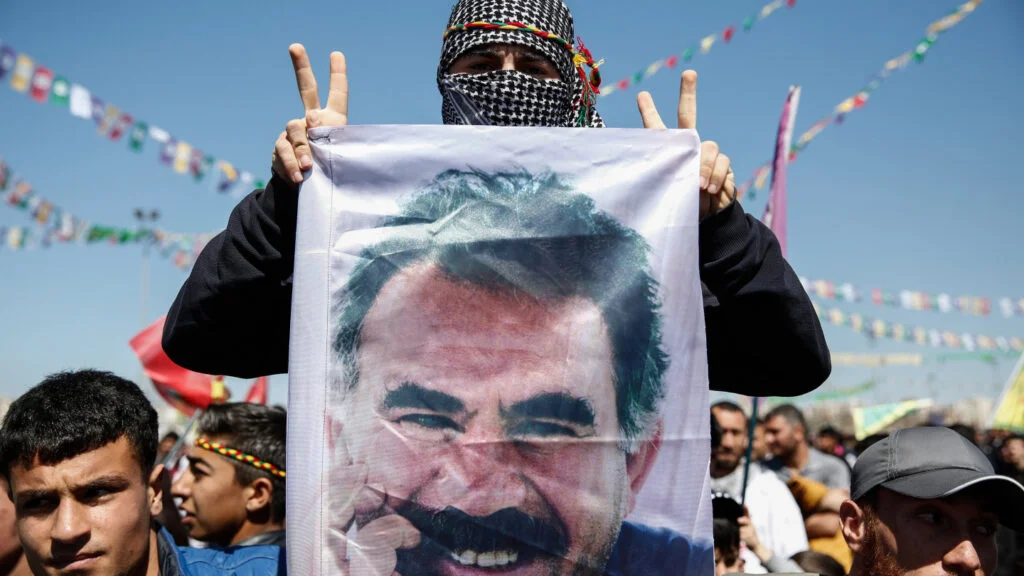
Upheaval Reshapes Ankara’s Risk Map
Then, the attacks on October 7, 2023, ushered in another period of upheaval. Some changes since have played in Turkey’s favor. Chief among them is the collapse of the Assad regime in Syria in December 2024 at the hands of opposition groups led by Hayat Tahrir al-Sham.
Turkey had arguably invested more than any other country in pursuit of regime change in Damascus; it assisted opposition groups for years. Yet as the years went by, that objective seemed increasingly out of reach. The region’s other major powers made their peace with the regime’s survival, and even Ankara began considering rapprochement with Assad to avoid being left out in the cold. Assad’s fall changed Turkey’s fortunes overnight, handing it a level of influence in Syria it had not held in more than a decade.
Other developments proved more dangerous for Ankara. Israel’s foreign policy became more assertive and revisionist after October 7, and its expansive security objectives began to clash with Turkey’s own. Turkish President Recep Tayyip Erdogan’s sharp criticism of Israeli policies in Gaza strained the relationship, and it deteriorated further when Turkey expanded its foothold in post-Assad Syria and Israel came to view Ankara’s military presence there as a direct threat. As Israel continues to strike sites in Syria—attacks Ankara has condemned—the risk of escalation is only growing. A miscalculation on either side could lead to a direct clash between Israeli and Turkish forces.
The U.S.-Israeli war with Iran, meanwhile, has cut both ways for Turkey. While Tehran’s attention has been focused elsewhere, Ankara has welcomed Iran’s retreat from Syria and the chance to push back against its remaining influence in Iraq. Turkey also has no interest in seeing a nuclear-armed Iran upend the regional balance of power. Yet the prospect of chaos across Turkey’s eastern border, should the Iranian regime fall, has bred real anxiety in Ankara, as has the possibility that Iran could become emboldened if the regime emerges from the war intact.
In this complex environment, Ankara has pursued a three-pronged strategy to protect its security interests and, it hopes, capitalize on opportunities the upheaval has created. Since U.S. President Donald Trump’s return to power, Erdogan has drawn Turkey closer to the United States and tried to use his relationship with Washington to advance Ankara’s regional policies.
Turkey has also pressed ahead with regional normalization, building on efforts to repair ties with Saudi Arabia, Egypt, and other key Arab countries in the early 2020s, with the aim to forge a broader regional bloc. And, domestically, Ankara launched the “Turkey Without Terror” process, an attempt to resolve the conflict with the PKK inside and outside Turkey, which Turkey’s adversaries have long exploited by arming Kurdish groups or backing them politically.
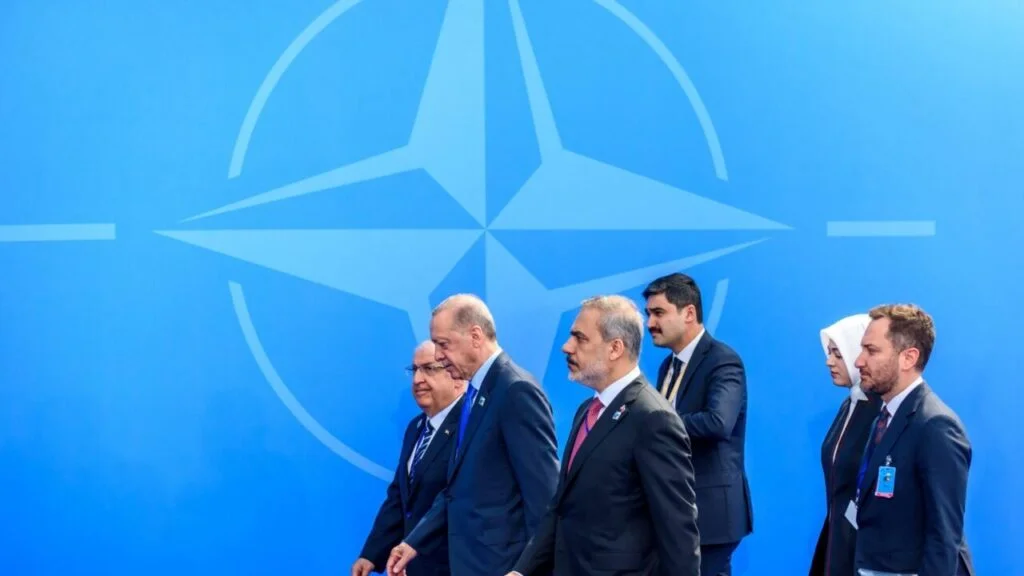
FALLING SHORT
Some of Ankara’s policies have borne fruit. Consider, for instance, the outreach to Washington. Erdogan’s close relations with Trump helped bring the United States on board with Turkey’s expanded role in Syria. Turkey was one of the four countries Washington brought in to help negotiate the U.S.-proposed October 2025 cease-fire agreement between Israel and Hamas, and as a result, Trump offered and Erdogan accepted a seat on the U.S. president’s so-called Board of Peace for Gaza’s reconstruction.
Turkey has played an active part mediating between the United States and Iran during the latest war. And Trump publicly endorsed the Mecca Defense Alliance, calling it “big, bold, and important.” All of this points to a recognition in Washington of Turkey’s regional importance, the U.S. administration’s willingness to support some of Ankara’s priorities, and Turkey’s determination to elevate its own position.
Yet there are undeniable limits to Turkey’s quest for influence. At a February 2026 Board of Peace summit, for instance, Turkey was excluded from participating in a planned international troop deployment and police training in Gaza—a sign that warming relations with Washington were not enough to override Israeli objections to having a Turkish military footprint in the Palestinian territory. In Syria, similarly, the support Turkey has secured from the Trump administration has not stopped Israel from launching military strikes at Syrian targets near Turkish positions. Simply put, Turkey has not been able to use its relationship with the Trump administration to overcome the limit Israeli opposition places on the scope of Turkey’s regional role.
Mecca Pact Risks Deeper Entanglement
Turkey’s regional normalization efforts have yielded mixed results, too. Restoring diplomatic ties with significant players such as Saudi Arabia is in Turkey’s interest, to be sure. But the alliances Ankara is entering with these countries risk making Turkey and the region less secure, not more. The Mecca pact with Pakistan and Saudi Arabia could end up hardening rival blocs and elevating regional tensions. Turkey insists that the alliance is directed against no country in particular and has suggested that Egypt, Syria, or even Iran could eventually join. But in the meantime, Iran, Israel, and the Houthis could see it as a threat and try to test or weaken its members’ commitment.
Furthermore, the pact could pull Turkey into other countries’ wars. That possibility is already on the table now that the Turkish parliament has ratified the agreement and the Houthis are escalating their attacks on Saudi Arabia. The Turkish government has insisted that any military support it provided would be confined to deterrence, intelligence sharing, and defense-industrial cooperation. Yet Saudi Arabia is now seeking Pakistan’s and Turkey’s help with air defense and territorial protection, and the three states have agreed to prepare forces for rapid deployment. Sending Turkish troops to Saudi Arabia would still require separate parliamentary approval. If parliament allowed it, even a limited deployment would risk drawing Turkey into a wider regional conflict.
Some kind of regional security framework is necessary. The problem is that no country in the region, including Turkey, has the power to impose a security order on the rest, so whenever someone tries, other countries feel threatened
. An informal cooperation framework that is open to all countries in the region—and that asks its members to commit to nonaggression instead of making mutual-defense pledges—might work better. But the assembly and functioning of such a coalition require trust that governments in the region do not have.
Breaking the impasse would likely require the United States to play a more constructive role than it has in recent years—not simply endorsing whatever regional arrangement emerges, as Trump did with the Mecca pact, or pressuring countries to normalize relations with Israel without expecting Israel to change its policies in return, as Trump has also done.
Instead, Washington, perhaps with the help of Beijing, would need to compel regional rivals such as Iran and Saudi Arabia to take confidence-building measures that would make an inclusive security framework viable in the long run. Without this external push, the narrower security blocs that emerge in the region will only lead to further instability.
PLAY TO YOUR STRENGTHS
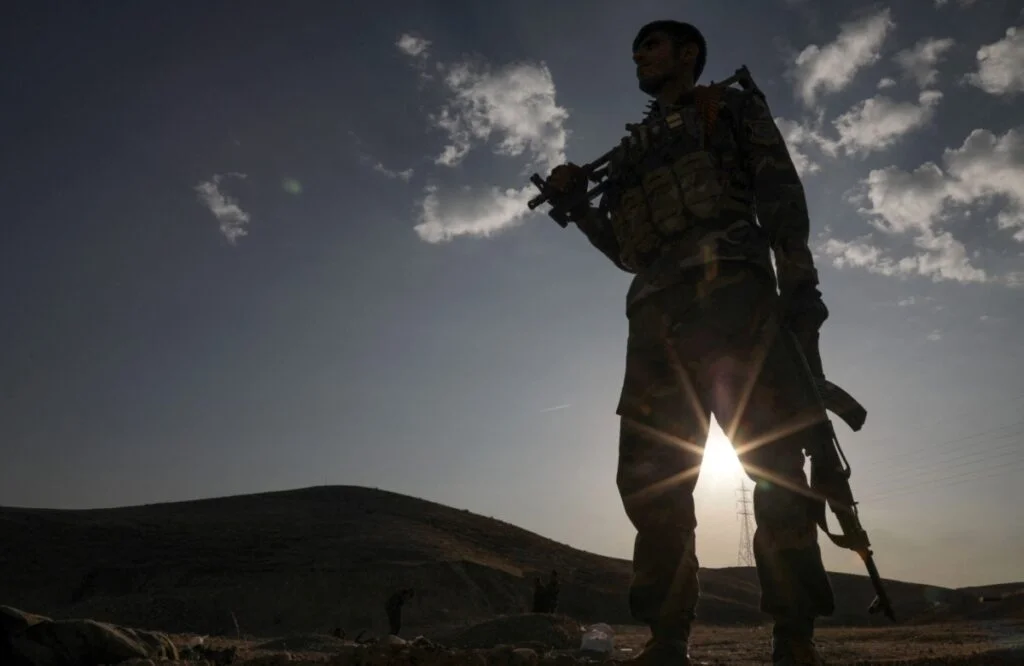
Ankara’s strongest cards lie closer to home. The Kurdish peace process has moved slowly since February 2025, when Abdullah Ocalan, the imprisoned leader of the PKK, called on the militant group to disarm. But it has yielded tangible progress.
In May 2025, the PKK announced that it would dissolve. In Syria, Kurdish forces are being integrated into the Syrian army, and Mazloum Abdi, the commander of the People’s Defense Units, a Kurdish armed group affiliated with the PKK, was appointed as a presidential adviser in August. Syria’s postconflict transition remains fragile, and the reconciliation between Damascus and Kurdish militants in the northeast may owe as much to American pressure as it does to Turkey’s domestic efforts to make peace with the PKK.
But for Turkey, the eventual integration of Syrian Kurdish forces into the Syrian state removes the risk Ankara saw in having an autonomous, armed Kurdish entity on its southern border. And, given the close security and economic ties Ankara has developed with Damascus, as well as the political and legal steps the government can take at home to complete the disbanding of the PKK and to deepen democratic reforms, Turkey has the ability to keep these encouraging developments on track.
Turkey’s regional policies are most successful when the country plays to its strengths—not when it is trying to throw its weight around the region.
In the first decade of the twenty-first century, Ankara built real influence by mediating between Syria and Israel and between Palestinian factions, expanding its economic engagement in the Levant, and proposing projects to connect the region’s energy and transportation infrastructure. Military power, meanwhile, has proved most effective when applied for specific purposes, such as to secure the border with Syria.
This combination is Turkey’s winning formula: diplomacy and economic outreach to extend its influence, and limited force to protect its core interests. Broad, open-ended commitments, by contrast, risk drawing Turkey into regional conflicts without making it safer.
Prioritize Kurdish Peace Over Overreach
Today, sticking to a more effective formula does not mean retreating from regional politics. It means setting priorities and planning long-term. Consolidating the Kurdish peace process, keeping Washington invested in Syria’s stabilization, managing the risk of confrontation with Israel in Syria, and maintaining constructive relations with the Kurdistan Regional Government in northern Iraq and the Iraqi government in Baghdad are key to keeping Turkey’s borders secure and are within Turkey’s ability to achieve. Ankara can continue to use its experience in mediation when opportunities to advance peace processes present themselves.
It can also promote economic connectivity, both by expanding trade ties and by supporting regional infrastructure projects such as the Iraq-Europe Development Road and a proposed pipeline network connecting the Gulf to Jordan, Syria, and Turkey. It need not shy away from security cooperation with the Gulf, either, if it can engage without making formal commitments. Yet in all these endeavors, Ankara should remember that it has the most clout when it stays out of the region’s conflicts.
The Middle East’s escalating wars and rival blocs could make a narrower Turkish security policy more difficult to sustain today than it was in the past. Defending Ankara’s interests and playing a constructive role in a volatile neighborhood will require a careful balance. The best way Turkey can contribute to regional stability may be to avoid trying to do too much.