
A year after the ceasefire, Gaza Reconstruction remains far below need: $2.45 billion committed against $71.4 billion required over a decade. Hamas has not disarmed, Israel controls more than half of Gaza, and no verification mechanism links disarmament to reciprocal political gains.
How Gaza Reconstruction Fails on Funding
The central question facing Israel, the Palestinians, the Arab states, and the international community is no longer whether another peace plan can be written, as several have been drafted thus far. The leading questions should be whether the region can turn the fragile cessation of war into a political transition and whether that transition can preserve the possibility of a durable Israeli-Palestinian settlement.
A year after President Donald Trump’s 20-point Gaza peace plan produced a ceasefire and the release of remaining Israeli hostages, the war has not returned to its previous intensity, but neither has the promised transition taken hold. Hamas has not disarmed, while a potentially multiyear phased disarmament plan has recently been announced but not implemented. Israel still controls more than half of Gaza, with territorial expansion continuing after the fragile ceasefire. The international stabilization force and the Palestinian technocratic administration have yet to enter Gaza. Reconstruction funding also remains far below what is required: The Board of Peace’s $2.45 billion program announced in September 2026 compares with an estimated $71.4 billion in needs over the coming decade.
As the G20 foreign ministers will meet in Atlanta on Oct. 30–31, the international community has an opportunity to support managing Gaza’s political transition, while preserving the political destination of a two-state-for-two-people solution. That means stabilizing Gaza, preventing further deterioration in the West Bank, building credible Palestinian governance, establishing enforceable security arrangements, mobilizing regional investment, and creating a political process in which each concrete improvement makes the next one possible.
This commentary offers five guiding principles for implementing such measures, while negotiations to establish a permanent framework continue simultaneously. Given the G20’s strengths of economic coordination, this leadership is well poised to support Gaza’s political transition and, thus, wider regional stability.
Issues on the Ground Remain
Instigating meaningful progress in Gaza largely hinges on Hamas undertaking a credible, externally verified process of disarmament. Notably, disarmament is a precarious venture, as its challenge to Hamas’ control over Gaza and ideological identity leaves questions regarding the sustainability of the group’s demilitarization. However, this uncertainty should not obscure the central policy proposition: Hamas’ disarmament does not need to be completed before progress begins on Palestinian technocratic administration, reconstruction, or Israel Defense Forces withdrawals.
A substantial and demonstrably irreversible demilitarization process should be the first step of a clear sequencing in which meaningful disarmament generates reciprocal and measurable gains, rather than making its completion a precondition for every other step. Until then, Gaza will likely remain in stalemate.
Disarmament complications are compounded by Israel’s accelerating settlement construction around the E1 zone of the West Bank, with tenders for more than 3,000 housing units. With Israel’s election set for Oct. 27, the E1 process is being accelerated.
Thus, settlement expansion, land registration, movement restrictions, and settler violence continue to change the West Bank’s physical and political environment. What is at stake is whether a future Palestinian state remains territorially and politically feasible.
Palestinian Governance Structures
In its survey of Palestinians in Gaza and the West Bank, conducted in October 2025 as the ceasefire was beginning and published in April 2026, Arab Barometer found that a majority regarded diplomatic negotiations — including increased support for a two-state solution — rather than armed resistance, as the best means of resolving the conflict. Additionally, most wanted to remain in Gaza rather than leave. Despite profound trauma and destruction, the aspiration was to remain and rebuild, which has direct implications for reconstruction.
The same polling points also demonstrated that Palestinians have little confidence in their current options for political leadership. Asked about the parties that contested the 2006 legislative elections — the most recent year that Palestinian legislative elections were held — a majority rejected all the listed parties or said they would not vote. Thus, Palestinians’ political center of gravity appears to be political alienation. Additionally, in early October 2026, Palestinian National Authority President Mahmoud Abbas postponed legislative elections that were scheduled to take place the following month, likely further weakening the Palestinian Authority’s governmental credibility and Palestinians’ viable political options.
The international community should be cautious with aligning the need for Palestinian governance with that of restoring the Palestinian Authority to Gaza in its existing form. Additionally, if pursued, a transitional technocratic administration should be explicitly transitional, accountable, connected to both Gaza and the West Bank, and directed toward political renewal rather than permanent technocratic rule. The goal should be to foster the conditions under which Palestinians have access to credible governing structures, including sovereign representation and consistent elections. Altogether, a principal obstacle toward political transition is a significant deficit of confidence in the current political institutions operating in Palestine.
Five Guiding Principles for Political Transition
With the G20 foreign ministers’ upcoming meeting, Gaza’s political transition and durable Israeli-Palestinian settlement should be a primary focus of the summit. The following are five guiding principles to move from drafting plans to implementing concrete measures toward achieving credible governance, long-term reconstruction, and regional stability:
Moving from military action to political statecraft.
Connecting the Israeli-Palestinian transition to regional integration.
Treating reconstruction as a political strategy.
Avoiding the separation of Gaza and the West Bank.
Completing measures while negotiating a larger framework.
Moving From Military Action to Political Statecraft
Three years of war have demonstrated the limits of military power as a substitute for political strategy. Force can destroy capabilities, alter territorial realities, and create leverage. It cannot answer who governs the territory afterward, how security is maintained, how civilians live, who finances reconstruction, or what political order replaces the one that existed before the war. Prioritizing these questions are central to moving from military action to political statecraft.
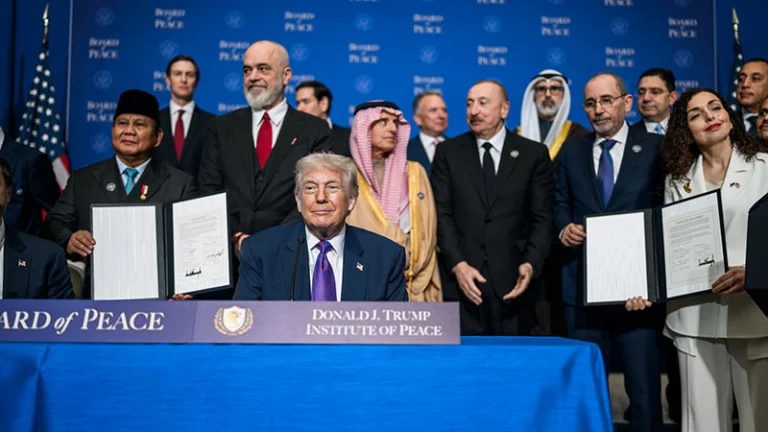
While the Board of Peace’s Gaza peace plan contains many of the components required for such work, implementation remains a primary issue. Israeli strikes have continued, and the gaps described above remain open. Rather than inventing another architecture, the G20 can help execute the existing framework by establishing an agenda called, “The Gaza Implementation Compact,” which should follow these tenets:
Security milestones should be independently verified; dismantling military infrastructure and decommissioning armed capabilities should not depend on unilateral declarations.
Gaza needs clear Palestinian administrative responsibility for policing, utilities, health, education, municipal services, taxation, and civilian life.
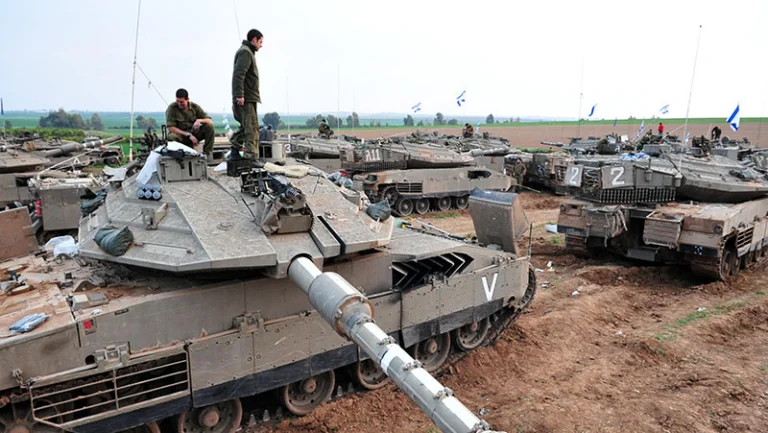
The international stabilization force needs a clear mandate, adequate resources, defined rules of engagement, and measurable responsibilities, in order to provide the confidence required for either Israeli withdrawal or Palestinian reconstruction.
Reconstruction financing should be released in certified packages tied to concrete benchmarks.
Implementation should be reciprocal: Every verified step should unlock the next political, economic, security, or governance step.
Instead of following the largely traditional model in which parties propose expansive promises at the outset and postpone implementation until trust has emerged, implementation itself can generate and sustain trust. The guiding principle should follow the sequence of clear, phased implementation first rather than ambitious pledges.
Connecting the Israeli-Palestinian Transition to Regional Integration
The Israeli-Palestinian transition should be pursued in connection with the wider regional order. The Arab Peace Initiative of 2002 placed the Palestinian question inside a broader Arab-Israeli framework; the Abraham Accords of 2020 later showed that normalization could proceed without first resolving it. However, the post-Oct. 7 period has demonstrated the limits of treating Israeli-Palestinian resolution and regional peace as separable: Normalization can proceed without Palestinian statehood, but a stable regional order is more difficult to build if the issue remains unresolved. The opportunity is to connect three layers: Gaza’s implementation architecture; the Israeli-Palestinian political process; and Arab-Israeli regional integration.
The G20 is well suited to this task because its comparative advantage involves not only mediation but also economic coordination. The group could support a package titled, “A Regional Peace and Connectivity Fund,” that brings together G20 governments, Gulf states, international financial institutions, sovereign wealth funds, development banks, and private capital. Such ventures should focus on improvements in energy, water and desalination, transport and logistics, digital infrastructure, industrial zones, health, agriculture, technology, and cross-border supply chains.
Regional peace should become visible in the infrastructure; thus, normalization should not merely lead to the recognition between governments but should strive toward the construction of interdependence.
Treating Reconstruction as a Political Strategy
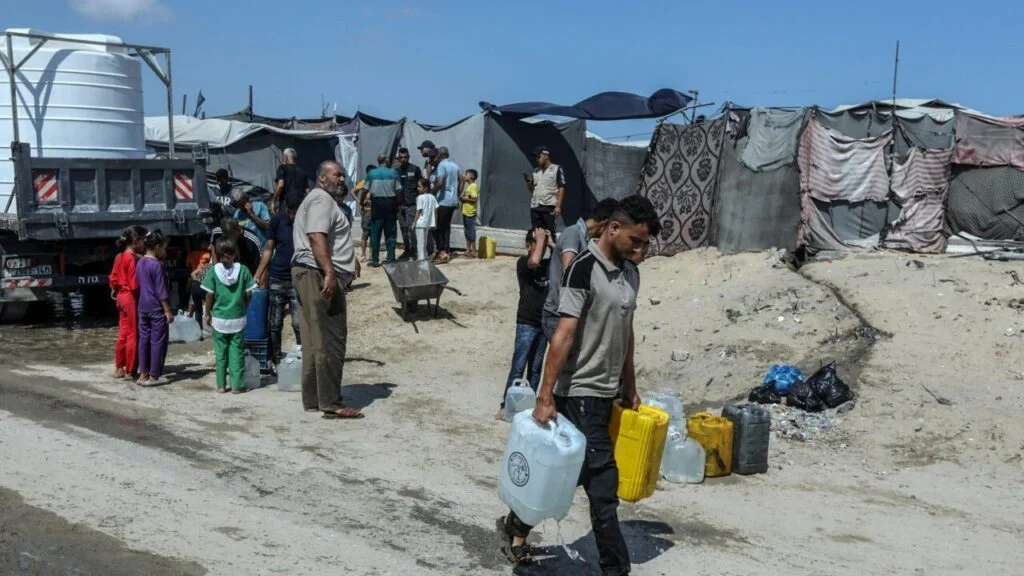
Reconstruction should be seen as not only humanitarian relief but also an instrument of political transformation. The scale of the task is considerable: The Board of Peace’s initial $2.45 billion fund — a six-month program — equals roughly 3% of the $71.4 billion its own assessment puts over 10 years.
Reconstruction should not simply replace what was destroyed; it should build a different economic geography. Gaza’s war debris is a humanitarian burden as well as an economic and technological challenge, particularly connected to the supply of construction materials. Reconstruction also offers the opportunity for new infrastructure to incorporate modern water and energy systems, such as desalination, wastewater treatment, distributed solar generation, digital connectivity, logistics, health facilities, vocational education, and industrial zones.
Reconstruction should create employment, and in turn, employment should create a stake in stability, as the Palestinian public should see the benefits of transition in everyday life. Security, water, electricity, mobility, schools, hospitals, jobs, and functioning government are not substitutes for politics. They are the material foundations on which political stability and security rest.
Avoiding the Separation of Gaza and the West Bank
Gaza and the West Bank are two parts of a similar political issue. For example, a Gaza reconstruction project that leaves the West Bank deteriorating will produce two disconnected Palestinian realities: one governed through an internationally supported transitional mechanism, the other increasingly shaped by Israeli administrative and territorial control. Such an approach would likely institutionalize Palestinian fragmentation.
A G20 response that avoids treating Gaza and the West Bank as separate governance, security, and economic entities may pursue a project under the title of “The West Bank Stabilization Package” that includes the following objectives: reducing violence against civilians; preserving freedom of movement; protecting economic activity and employment; ensuring predictable transfers of Palestinian tax revenues; strengthening Palestinian administrative and security institutions; expanding infrastructure investment; and preventing unilateral measures that could prejudice final-status negotiations. These tenets are unlikely to require the prejudging of final borders but should preserve the possibility that they can still be negotiated.
Completing Measures While Negotiating a Larger Framework
Given current political conditions, an immediate comprehensive agreement is not a pragmatic solution, as delays in action will likely persist if parties wait to ensure full consensus. An alternative approach is a two-level process. At the first level, the parties and their international partners should implement and verify concrete measures every few months: security, governance, reconstruction, movement, economic activity, humanitarian access, and restraint from unilateral actions. At the second level, negotiations should continue establishing the permanent framework. Each successful milestone should enlarge political space, and each deterioration should prompt corrective mechanisms.
The G20 could establish an assessment protocol called, “The Israeli-Palestinian Transition Scorecard.” Published every six months, the review would measure verified disarmament, Israeli military redeployment, stabilization-force deployment, humanitarian access, reconstruction, Palestinian employment, movement and access, fiscal stability, institutional performance, violence against civilians, settlement-related activity, and progress in negotiations. The purpose is to create a common factual baseline: An agreement on what progress means is essential toward ensuring an effectively managed transition.
Gaza Reconstruction Needs Measured Milestones
The G20 should leverage its advantage in economic coordination: It can connect, finance, institutionalize, and measure. G20’s foreign ministers can support the implementation architecture currently created for Gaza through the following: mobilizing capital for reconstruction; building a regional infrastructure network linking Israel, the Palestinians, Jordan, Egypt, and the Gulf; establishing common benchmarks; and helping preserve the territorial options required for a settlement.
Implementation should not be treated as separate from diplomacy; it is the mechanism through which diplomacy becomes credible. The Board of Peace’s Gaza peace plan, the stabilization force, a Palestinian transitional administration, the Arab Peace Initiative, and negotiations each supply a piece of the architecture. The G20 can supply the resources, verification, and coordination to connect them.
A potential risk is a successful ceasefire becoming a substitute for a political settlement. A Gaza neither at war nor reconstructed, a Gaza governed indefinitely by a technocratic body without a path to legitimacy, a West Bank where territorial realities change while negotiations are deferred, and normalization that brackets the Palestinian question should not be treated as solutions. The political horizon should be and remain explicitly at the forefront of all measures and agreements. Thus, Palestinian statehood should be the strategic direction against which the transition is measured. That does not predetermine borders, security arrangements, Jerusalem, refugees, or settlements, only preserves the possibility of resolving them.
As the five principles outlined above suggest, Gaza’s political transition should be undertaken through a path focused on constructing, deliberately and measurably, the conditions in which a political settlement becomes possible, while preventing policy and actions that would reverse or risk progress. The strategic objective is therefore moving from managing the conflict to managing the transition out of it.