
The global economy faces existential risks from potential Chinese maritime blockades of Taiwan. Unlike oil, microchip supply chains lack substitutability, leading to profound systemic collapse. European strategy must pivot toward aggressive supply chain diversification, enhanced intelligence cooperation with Taipei, and coordinated diplomatic efforts to impose reputational costs on Beijing.
As China ramps up its pressure on Taiwan, the Strait of Hormuz closure must serve as a wake-up call for European policymakers.
The closure of the Strait of Hormuz following the start of the Iran war has had huge consequences for the global economy. It has cut off essential supply lines for oil and gas, fertilizer and industrial chemicals, prompting the IMF to warn of a possible global recession if the war does not abate. As governments scramble to respond, the conflict in the Gulf should also prompt them to ramp up their preparations for a possible crisis over Taiwan – which would have a far more devastating impact on Europe and the global economy.
This is not an academic point. China has been intensifying its military, diplomatic and economic pressure on Taiwan, as it seeks to absorb the de facto independent island, which it claims as its sovereign territory. In recent years, Beijing has started to use military exercises to trial a possible blockade of Taiwan. Chinese leaders refuse to renounce the use of force to achieve their stated goal of unification, which they describe as a ‘historical mission that we must fulfil’.
Why Taiwan would be an even bigger shock
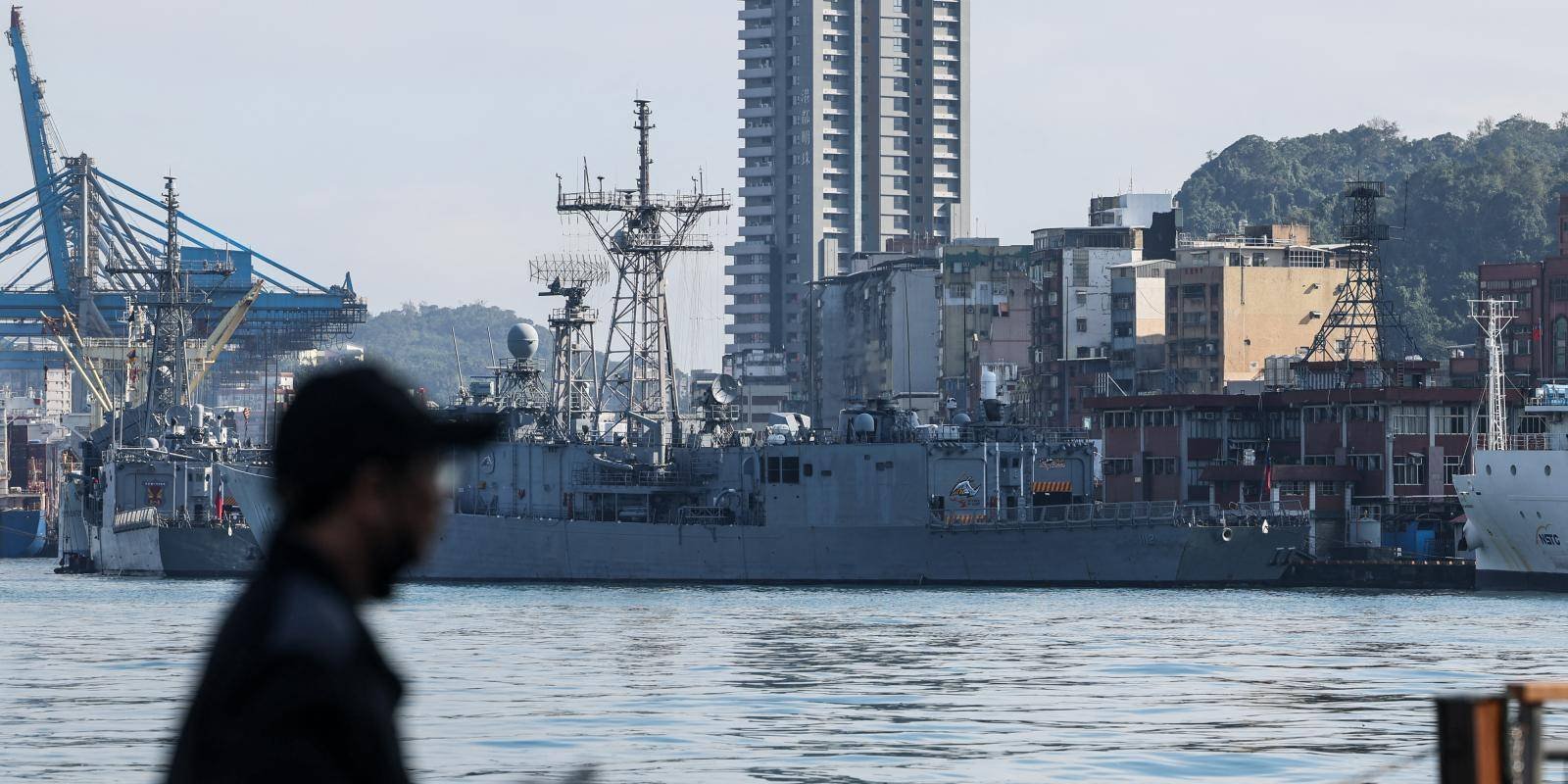
Taiwan plays a pivotal role in the global economy and supply chains, as the leading producer of the advanced semiconductors that power AI and cutting-edge electronics. The Taiwan Strait – the 180-kilometre-wide channel that separates the island from China – is one of the world’s busiest shipping lanes. Like the Strait of Hormuz, it is also a major maritime chokepoint that could be restricted or cut off in a range of scenarios from a Chinese customs quarantine or blockade to a full-blown military conflict. Given the role that Taiwan’s semiconductors play in driving the global economy, significant disruptions to this trade could have catastrophic, cascading impacts on the global economy.
Semiconductors are very different from hydrocarbons such as oil and gas. They are not commodities that can be easily stockpiled or substituted. If companies need to find new sources of microchip, they must alter their software design and certification, which can be lengthy processes.
A Chinese air and sea blockade of Taiwan would prompt a 5 per cent fall in global gross domestic product, similar to the downturns of the 2008-09 global financial crisis and the COVID-19 pandemic, according to a forecast by Bloomberg. If the situation were to escalate and lead to war between the US and China, the global economy would shrink by nearly 10 per cent. The European Union and Southeast Asia would be among those most impacted, after Taiwan itself.
What can Europe do to prepare?
Governments and companies in Europe have already started talking about contingency planning in private. These discussions have intensified in the aftermath of US attacks on Iran. But the problem is that building alternative sources of semiconductor supply will take decades and vast pools of political and financial capital – and Europe is short on both. The European Chips Act, which came into force in September 2023 to help boost the region’s semiconductor ecosystem, was a step in the right direction, but it is far from sufficient.
To move forward more quickly on the long-term push to diversify electronics supply chains, European governments need to expand their cooperation with Taiwan. They should learn from Taiwanese officials, experts and industry leaders like TSMC, which is working with Europe’s Bosch, Infineon and NXP to build a €10bn advanced semiconductor fab in Dresden, Germany.
European governments and their partners should also consider how best they can forestall China from taking escalatory steps towards Taiwan. While only the US has the capacity to deter Beijing militarily, there is much that Europe can do to support Taiwan’s efforts to make itself a harder target for China. Through their extensive – if technically unofficial – relationships, European governments should do more to help boost Taiwan’s international connections and presence. They should also deepen intelligence sharing and cooperation with Taipei on their shared challenge of managing grey-zone threats, from economic coercion and information warfare to democratic interference and submarine cable disruption.
Europe should also intensify its efforts to communicate the global costs of escalation to China and countries in the Global South that maintain strong relationships with Beijing. Although Xi Jinping and other Chinese leaders are acting in an increasingly assertive manner, they are not geopolitical gamblers like their partners in Russia and North Korea. The Chinese leadership still cares how it is perceived in the world – especially across the Global South – which explains why it is mounting a concerted campaign to bring other nations on side with its position on Taiwan.
A key focus for Europe should be talking to Southeast Asian nations, who have hundreds of thousands of citizens living and working in neighbouring Taiwan and would be heavily impacted by the spillover effects of any trade disruptions and military tensions. Southeast Asian governments are wary of upsetting Beijing and being perceived to support interference in the internal affairs of another country, which is how China presents its relationship with Taiwan. But Southeast Asia and Europe have shared national interests in keeping Taiwan’s economy open to the world and deterring Chinese military aggression. Through quiet diplomacy, Southeast Asian and European officials need to discuss how they can best use their respective capabilities to influence Beijing.
The Trump administration’s use of force against Venezuela and Iran without proper legal justification – and the limited pushback against it – has prompted many analysts to wonder if the reputational costs to China of military action against Taiwan might be reducing. The global consequences of the war in Iran should also remind policymakers of just how far-reaching the impact of further escalations over Taiwan could be. And time is of the essence, because the less resistance Beijing meets now, the harder it will squeeze.