
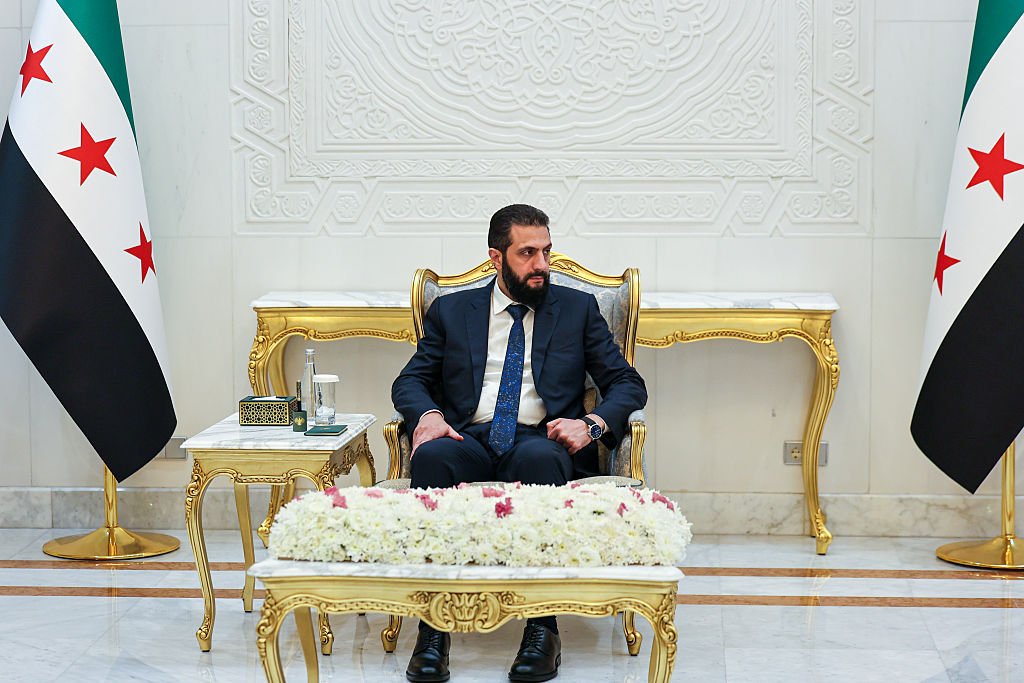
Washington removed Syria’s state sponsor of terrorism designation, completing a sanctions dismantling begun in 2025. The delisting unlocks investment but removes formal leverage. Hezbollah financial networks and terrorist infiltration persist.
The removal of Syria from the U.S. state sponsor of terrorism list marks a decisive shift in Washington’s approach to Damascus, but it also raises difficult questions about the terms of engagement. The Syria terror list exit fulfills a promise Trump made to Syrian President Ahmad al-Sharaa and completes the dismantling of the most significant U.S. sanctions architecture against the new government.
The decision reflects genuine changes in Syrian policy: Damascus no longer sponsors Hezbollah, has interdicted weapons shipments, and joined the anti-ISIS coalition. Yet the delisting was implemented without explicit conditions, leaving Washington with fewer formal levers to address persistent shortcomings.
Hezbollah-linked financial networks still operate within Syria, the security services have absorbed members of designated terrorist organizations, and vetting failures have already produced deadly consequences for American personnel. The Syria terror list exit therefore represents both a reward for progress and a gamble on further reform. Washington retains the benefits of security cooperation, investment access, and diplomatic normalization as informal leverage, but whether these tools can compel Damascus to dismantle remaining terror infrastructure remains uncertain.
Syria terror list exit Completes Policy Shift
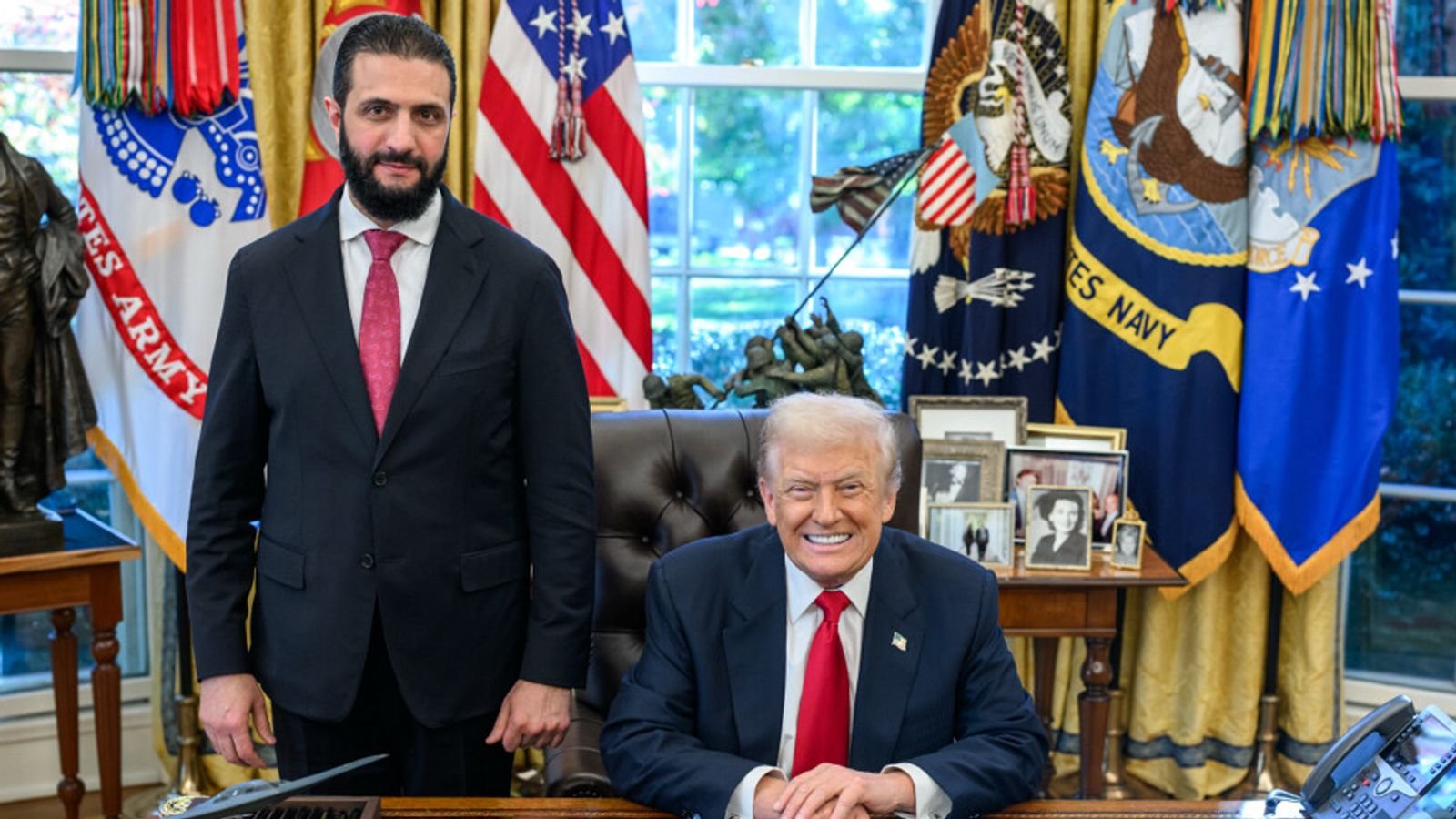
US President Donald Trump has fulfilled the promise he made to Syrian President Ahmad al-Sharaa in May 2025, to give Syrians “a chance at greatness.” At the end of August of this year, Trump lifted the last major US designation and sanctions regime on Damascus, declaring that Syria is no longer a state sponsor of terrorism (SST).
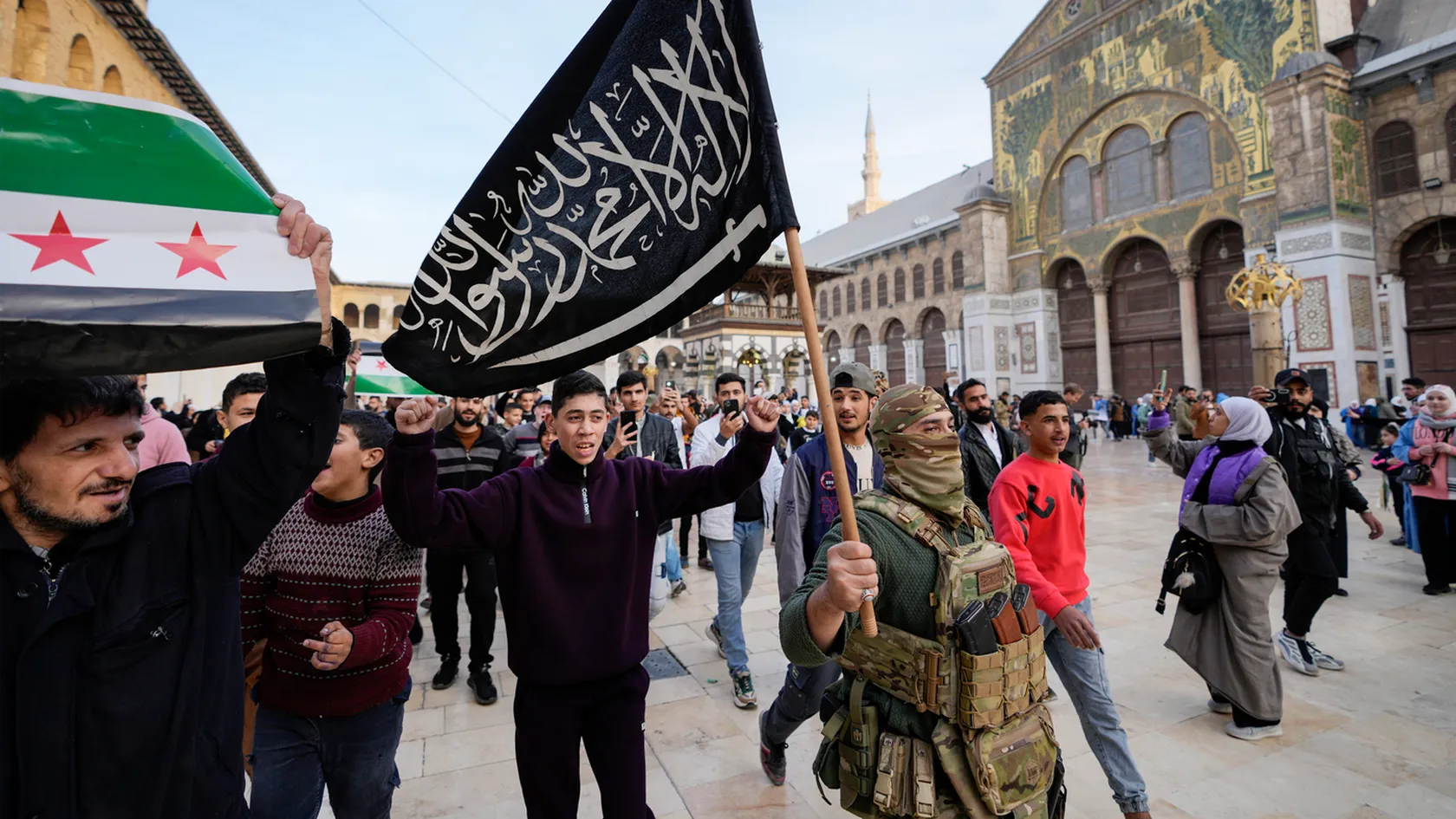
With the removal of the state sponsor of terrorism designation, Washington also delisted Hayat Tahrir al-Sham (HTS), the Islamist rebel group that Sharaa led before becoming Syria’s president. HTS grew out of Jabhat al-Nusra, which had served as Al-Qaeda’s official affiliate in Syria before breaking ties with the terrorist organization in 2016.
The SST designation was not imposed on Syria’s current leadership but on the former Assad regime in 1979, under Bashar al-Assad’s father, Hafez al-Assad. It was later reinforced in response to Syria’s backing of Hezbollah and other Iranian proxies. Until its removal, Syria had been among the longest-standing countries on the list, alongside Iran, Cuba, Venezuela, and North Korea. The designation restricted arms sales and foreign assistance and exposed Syria to terrorism-related lawsuits in US courts.
The Trump administration had already dismantled several other restrictions on Syria. In December 2025, Congress repealed the Caesar Act sanctions targeting the former Assad regime and its enablers, and rescinded Sharaa’s designation as a Specially Designated Global Terrorist.

What the Delisting Unlocks for Damascus
The SST delisting provides Syria’s new leadership with greater opportunities to attract investment and rebuild a war-torn country that requires at least $216 billion in reconstruction funding, according to the World Bank. Syrian officials had previously described the SST designation as the “last milestone” that needed to be removed to unlock American investment. The designation had deterred American companies, as well as foreign governments and firms, that were wary of the legal and financial risks associated with investing in Syria.
Why the Designation No Longer Fits
The current Syrian government differs substantially from the Assad regime on the issues that originally led Washington to designate Syria as an SST in 1979. Damascus no longer supports Palestinian armed factions in Syria or elsewhere, nor does it sponsor or support Hezbollah. In fact, Syrian authorities have repeatedly demonstrated a willingness to interdict weapons shipments destined for Hezbollah that transit through Syrian territory, a departure from the Assad regime, which helped establish and sustain the weapons corridor through Syria into Lebanon.
The Syrian government also joined the anti-Islamic State (ISIS) coalition in November 2025 and has since arrested more than 200 ISIS operatives, seized weapons, and disrupted plots across Syrian territory.
Syria terror list exit Carries Real Risks
Although the delisting has already been finalized, the decision still carries risks because it was implemented without explicit conditions or adding additional leverage over Damascus. On several fronts, there is still a gap between what Washington expects from Syria’s new government and what Damascus has delivered.
While Syria continues to interdict weapons shipments destined for Hezbollah, financial entities linked to the Iran-backed group continue to have a presence in Syria. Many of these companies were established during the civil war under the Assad regime. The new Syrian government has yet to crack down meaningfully on these networks, which has allowed them to continue generating revenue for Hezbollah and assisting the movement of funds and other financial support that could help the group rebuild and regenerate.
In June, the US Treasury Department sanctioned a Syria-based company for providing material support to Hezbollah. The company was owned and operated by an official tied to the Assad regime’s apparatus. Although he later fled to the United Arab Emirates, the company reportedly continued operating in Syria. Its continuation is a testament to the limited regulatory capacity and enforcement bandwidth of the new Syrian government, particularly in counterterrorism financing and anti-money laundering.
Terrorist Infiltration Remains a Problem
There are other reasons for Washington to remain concerned. A recent report by the UN Security Council’s monitoring team indicated that ISIS and Al-Qaeda members have infiltrated the “newly formed Syrian armed forces, particularly at mid-level ranks.” According to the same report, approximately “50-70 Hurras al-Din [al-Qaeda’s former affiliate in Syria] members” joined the Syrian military, in part because of “less stringent vetting procedures.” What makes this more troubling is the continued failure of Syria’s security apparatus to adequately vet recruits for terrorist ties, especially following the December 2025 Palmyra attack, in which a member of Syria’s General Security Service killed two American service members and an interpreter.
Adding to these vetting failures is Damascus’s decision to integrate US and UN formally designated foreign jihadist factions into the Syrian military. These include the Uzbek-led Katibat al-Tawhid wal-Jihad and the Uyghur-led Turkistan Islamic Party, whose leader, Abdul Haq al-Turkistani, is still a member of Al-Qaeda’s Shura Council.
How Washington Should Use Leverage
The SST designation was intended to punish a government that supported international terrorism, and the current leadership in Damascus has substantially changed many of the policies that originally justified that designation. Washington should therefore use the remaining benefits of engagement and normalization as leverage to deal with the persistent shortcomings.
Counterterrorism vetting should be a central condition for deeper security engagement with Damascus. If the United States seeks to expand cooperation with Syria’s security apparatus, that engagement should be conditioned on Damascus removing members of designated terrorist organizations from the security services and establishing more rigorous procedures for screening recruits.
Washington should also press Damascus to hold accountable members of the security forces and affiliated factions responsible for atrocities committed against Alawite civilians on the Syrian coast and Druze civilians in Suwayda. The presence of extremists and inadequately vetted fighters within the security services increases the risk that such abuses will recur. Washington should also press Damascus to dismantle Hezbollah’s remaining financial infrastructure inside Syria with the same determination that it has demonstrated in interdicting weapons shipments destined for the group.