
A profound evaluation of Middle Eastern security architecture post-Iran War, revealing how diplomatic frameworks have hardened into entangling, unratified military alliances that deeply commit United States regional assets.
The spring 2026 conflict conclusively transformed Middle Eastern security architecture, shifting regional dynamics from diplomatic normalization to overt military alignment. As regional actors navigate the fallout of the post-Iran War Middle East, the strategic utility of the Abraham Accords is being re-evaluated through a lens of hard-nosed realism rather than historic pageantry. To understand this new era of deterrence, analysts must dissect how the Abraham Accords have effectively locked Washington and its partners into a permanent state of defensive preparation.
The Abraham Accords’ Evolution Realized
The conventional reading of the post-Iran War Middle East is already taking shape, and it is a story of vindication. The Abraham Accords, the argument goes, were forged in shared antipathy toward Tehran; the spring 2026 war put that shared antipathy to its hardest test; and the framework held. No signatory walked away. Israel deployed an Iron Dome battery and IDF operators to defend Emirati airspace, the first time it had stationed its premier air-defense system on Arab soil. The Wall Street Journal reports that the UAE conducted its own strikes on Iran. Quiet intelligence-sharing with Riyadh, never officially acknowledged, was reportedly central to the regional missile-defense plan that CENTCOM coordinated during the 12 weeks of fighting.
Understanding The Abraham Accords’ Evolution
For the accords’ boosters, this is the proof of concept. For a realist, it should be the warning label.
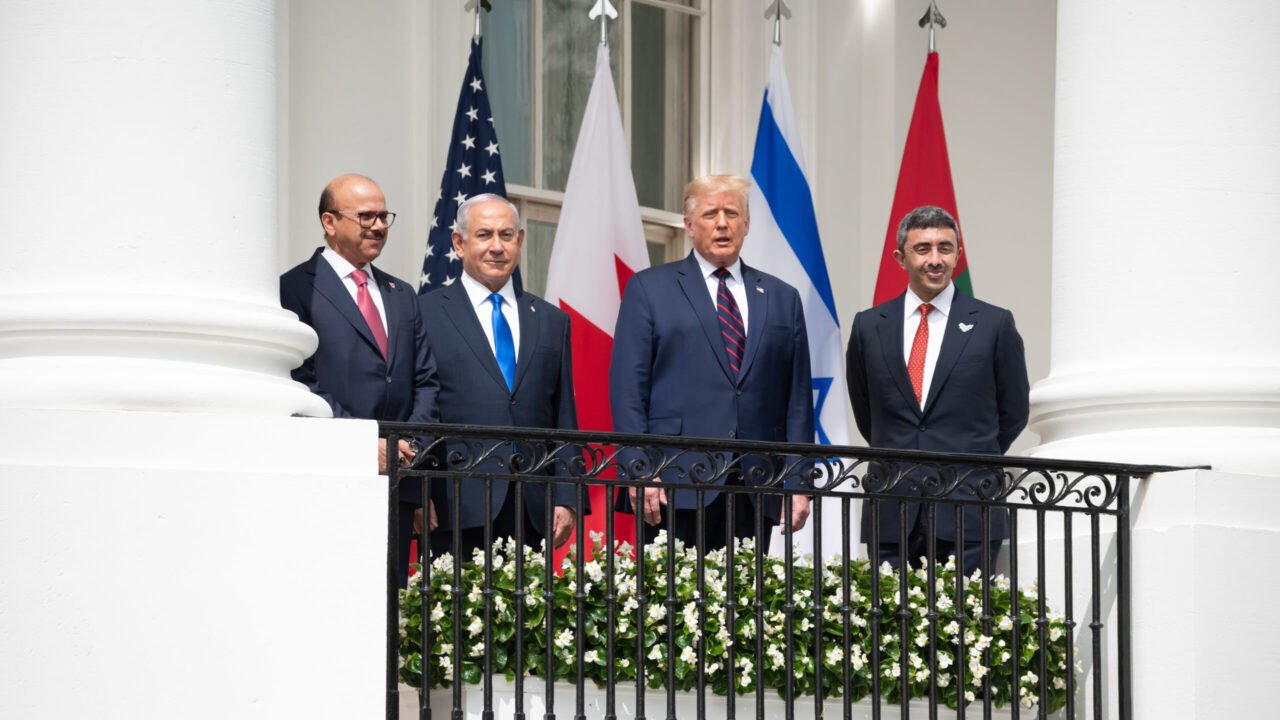
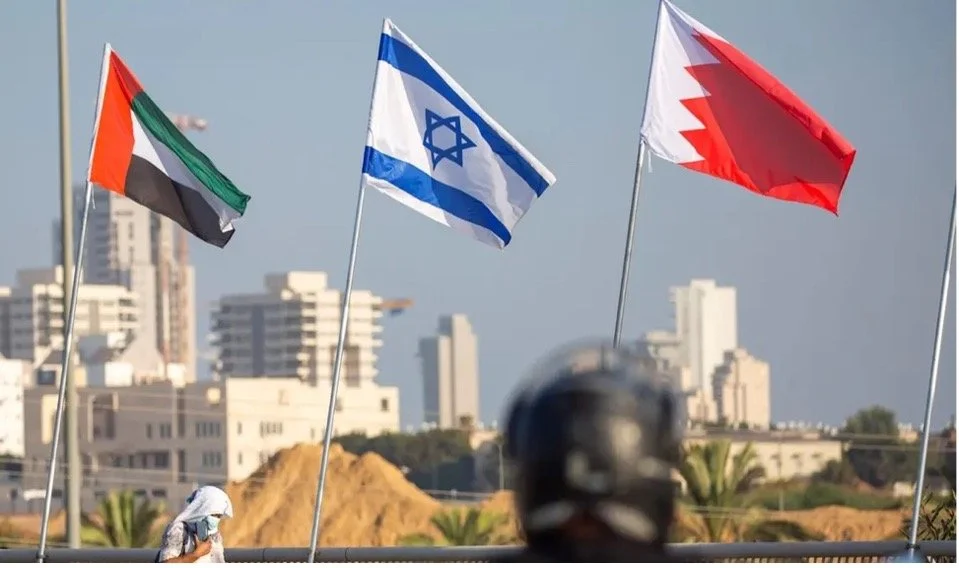
Begin with what the Abraham Accords were always for. Stripped of the biblical branding and the photo-op pageantry of September 2020, the agreements were a balance-of-power arrangement. The United Arab Emirates and Bahrain, watching Iran’s reach extend through Iraq, Syria, Lebanon, and Yemen, calculated that overt alignment with Israel, and through Israel, with American military architecture, was worth the domestic political cost. Israel, for its part, secured Arab partners for an anti-Iran coalition and shelved annexation in the West Bank as consideration.
Washington brokered the deal and threw in arms packages, F-35 commitments to Abu Dhabi, recognition of Moroccan sovereignty over Western Sahara, and Sudan’s removal from the list of state sponsors of terrorism. This was not peace among the nations but a series of transactions between elites in pursuit of a security order. That it was transactional was never a flaw. It was the design. The war confirmed the design works. What it also confirmed, and this is the part the celebrants are eliding, is what the design actually obliges Washington to do.
Strategic Realities of The Abraham Accords’ Evolution
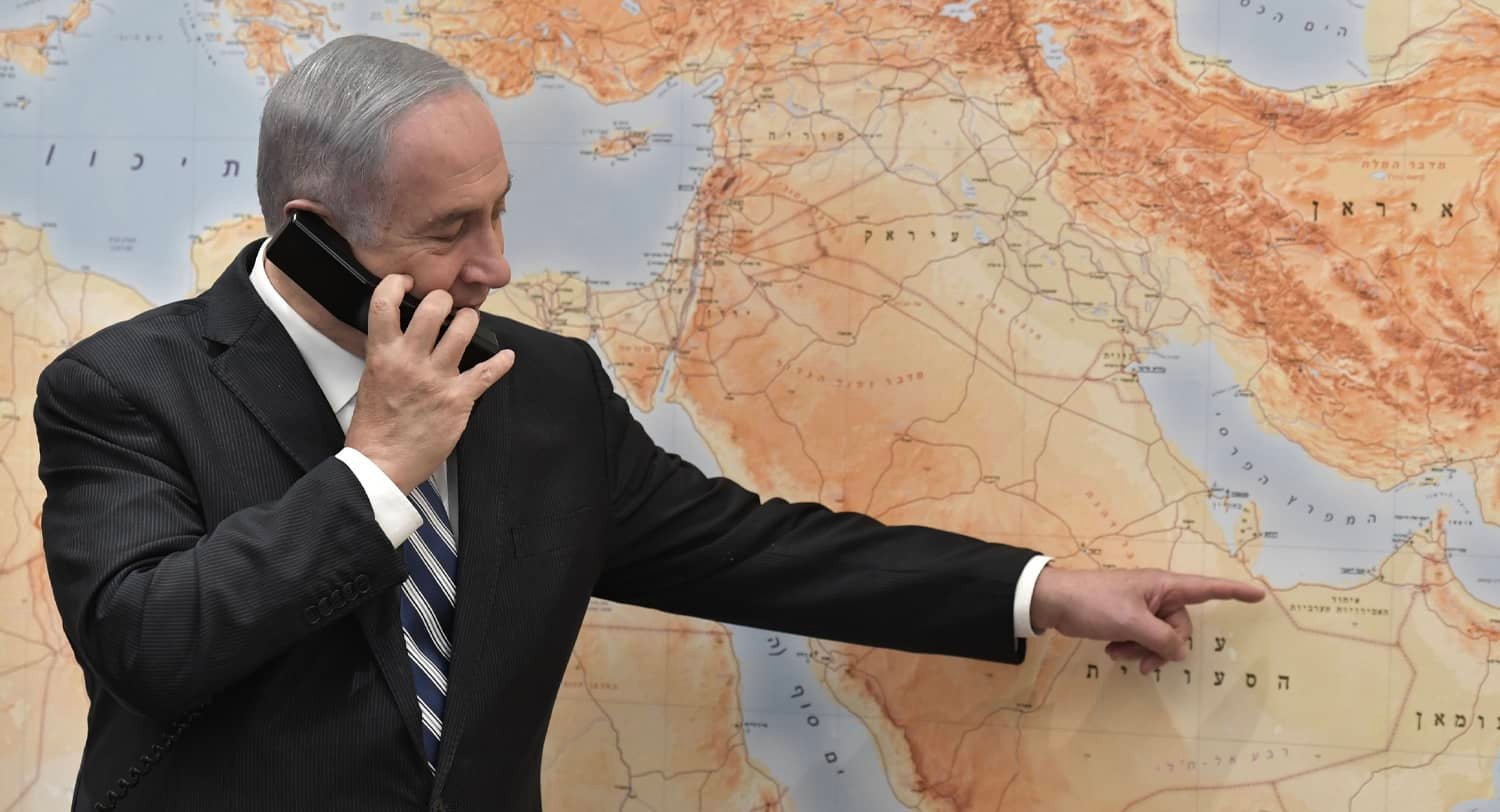
Consider the strategic geography the war revealed. When Iran retaliated in March, its missiles did not fall only on Israel. They fell on Bahrain, Kuwait, Qatar, the UAE, and Saudi Arabia. Iranian state media articulated the doctrine that Tehran could now target the accords signatories “at will.” The geography of Iranian retaliation, in other words, traced the geography of American commitment, and that commitment is now wider, denser, and more entangling than it was in 2020.
This is what a quasi-alliance looks like before anyone has the political nerve to call it one. There is no Senate-ratified mutual defense treaty with Abu Dhabi or Manama. There is something more awkward: a constellation of arms sales, basing arrangements, integrated air defense, and now demonstrated combat coordination, in which the United States has assumed the practical obligations of an alliance without the deliberative process by which alliances are normally contracted. The Abraham Accords made that constellation possible. The Gulf states are betting on Washington and Jerusalem.
Washington has not had the conversation with the American public about what that bet entails. The restraint critique here is not that the accords should be torn up. They will not be, and need not be. The critique is that an arrangement sold to Americans as a diplomatic triumph, opening the path to a long-awaited Arab-Israeli thaw and regional prosperity, has hardened into a security commitment whose costs are now visible.
The Abraham Accords’ Evolution Manifested
American bases in Bahrain and Qatar became Iranian targets because of the architecture the accords helped knit together. American interceptors expended over Jordan, American carrier strike groups repositioned, American servicemembers in harm’s way: these are the line items the original September 2020 ceremony did not itemize. A serious foreign-policy debate would ask whether the United States got what it paid for, and whether the bill is finished.
It is also worth asking whether the accords’ survival is being mistaken for their expansion. The Saudi file is the test. Riyadh’s strategic logic for normalization is, if anything, sharper after the war. Iran demonstrated it can and will strike Saudi infrastructure, and the kingdom now sees what an integrated regional defense actually buys. But Saudi public opinion, already overwhelmingly hostile to the accords before the Gaza War, has hardened further.
Tracking The Abraham Accords’ Evolution
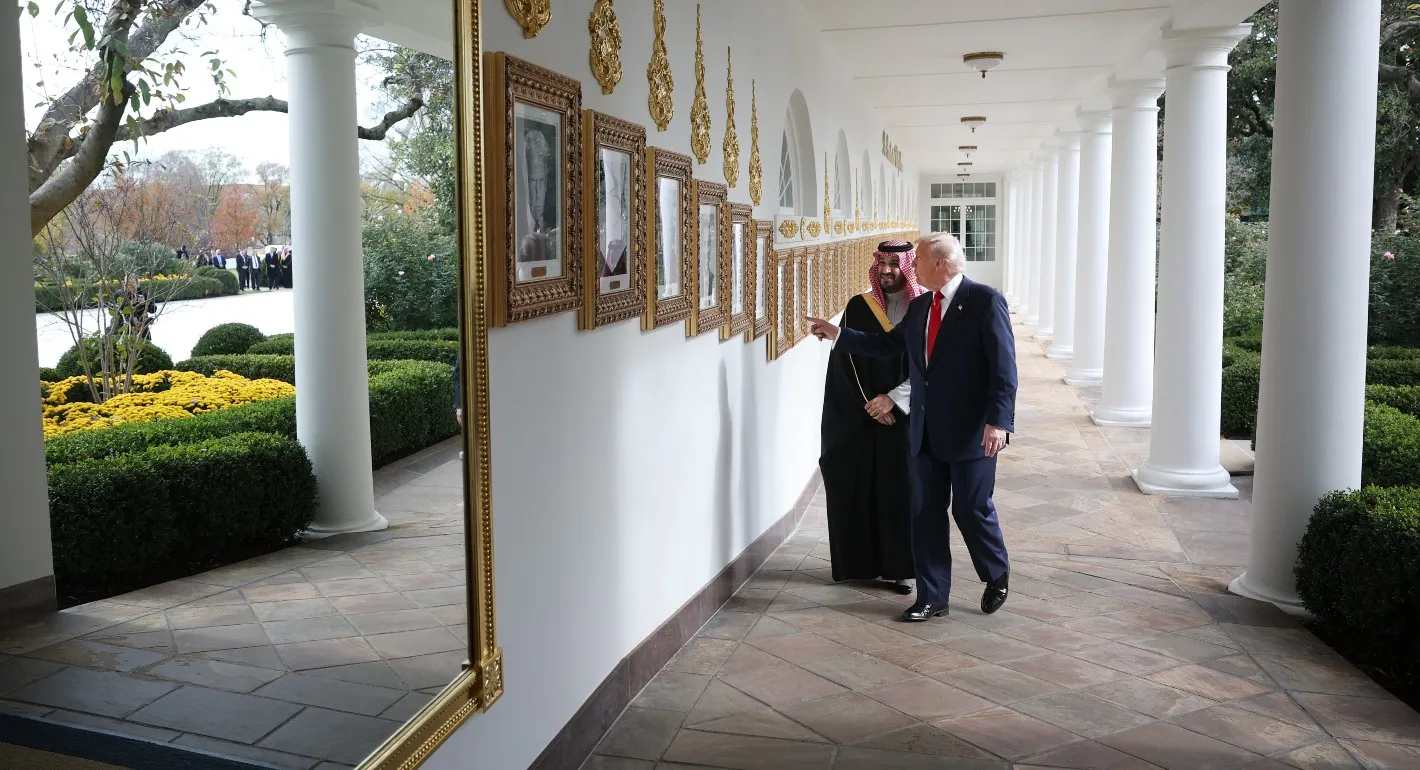
Saudi Crown Prince Mohammed bin Salman is a careful reader of his own street. The realist prediction is not that the Saudi-Israel deal happens because the war made it logical, but that it gets deferred because the war made it dangerous. Tehran has discovered, and advertised, that visible alignment with Israel is a target on its back. That insight will not be unlearned. Meanwhile, the file the accords were designed to suspend, Palestinian self-determination, sits where it has sat for six years, only worse.
The Gaza War did not modify the Abraham Accords; the accords modified the Gaza War by reassuring Israeli planners that the Arab security cost of any campaign would be manageable. That, too, is a feature, not a bug, of the original design. At the same time, trade has been modest. Tourism has been thin. The cultural opening predicted by the boosters has not materialized. What has flourished is precisely what was contracted: the joint defense business.
The honest accounting, then, runs as follows. The accords are more relevant than ever to the security order of the Gulf, less relevant than ever to the political problems they were originally said to address, and more entangling for the United States than ever. They have become an alliance system in everything but name. Washington should, at a minimum, stop pretending otherwise and ask, before the next round of expansion, what the price of the last one came to.