

This strategic intelligence assessment evaluates the rapidly deteriorating geopolitical viability of the Western alliance with Israel. Spiraling military expenditures, deep systemic inflation, and sharp electoral fragmentation are forcing a shift from loyalty to containment.
Western foreign policy is undergoing a profound structural crisis as the geopolitical cost of maintaining unconditional alliances overrides core domestic interests. The escalating liability of this relationship has shattered long-standing strategic calculations, transforming traditional diplomacy into an unsustainable economic drain and a severe electoral vulnerability. As global intelligence monitors track shifting alignments, it becomes clear that the price of friendship with Tel Aviv has fundamentally compromised the financial and political stability of Western democracies. The price of friendship with Tel Aviv is no longer a localized diplomatic calculation but an existential risk to Western governance.
Price of friendship with Tel Aviv becomes an unsustainable geopolitical luxury
“If you want a friend in Washington, buy a dog,” former US President Harry Truman said once. His classic line has just got a modern, satirical upgrade, though. A quick-witted colleague recently wondered what the late president would say about courting Israel today. The answer? If you want a friend in Tel Aviv, skip the pet shop, and prepare to empty your bank account, alienate your voters and tank your entire economy.
While framed as a dark political comment, this modern adage captures a growing, uncomfortable reality in Western foreign policy. The historical baseline of the US–Israel relationship has evolved from a mutually beneficial strategic partnership into an incredibly high-stakes, high-cost liability. When looking at the sheer momentum of today’s geopolitical landscape, the satire stops sounding like hyperbole and starts sounding more like a forecast.
For decades, the alliance between Israel and Western capitals was the ultimate VIP country club membership. It was exclusive and highly prestigious, and it came with a shared wardrobe of supposedly “democratic values”. Fast forward to today, and the club’s membership fee has gone through the roof. From Washington to Vienna, Western leaders are looking at the bill for this unconditional friendship, and the collective shock is turning into political panic.
Loyalty to the Zionist state is coming at a very high price, as a quick check of the receipts proves. The special relationship isn’t just expensive; it’s a fiscal black hole. Across the Atlantic, the Starmer government is finding out that giving diplomatic and military cover to Tel Aviv costs a fortune in street cred and votes. Successive British governments have loved to lecture the world on the importance of international law, but trying to defend Israel’s indefensible actions has our diplomats performing mental and verbal gymnastics.
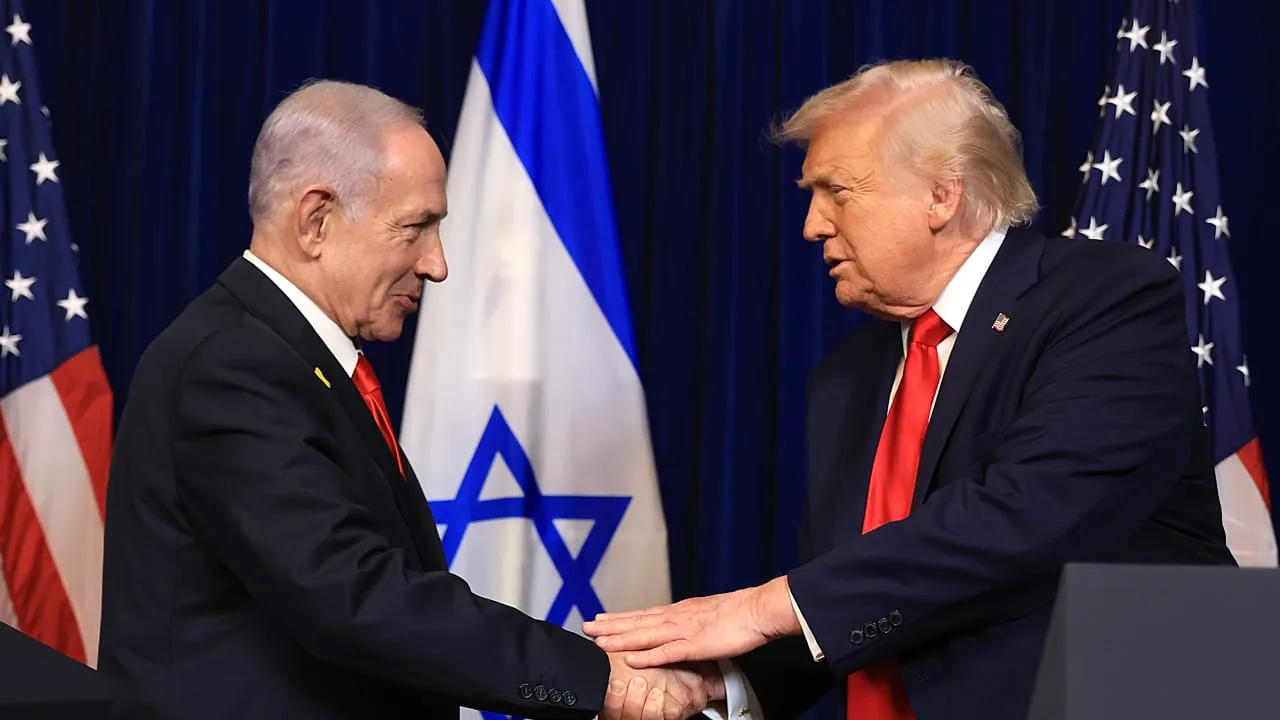
How the price of friendship with Tel Aviv isolates European capitals
Meanwhile, in Germany, Berlin’s guilt over the Nazi Holocaust has essentially been weaponised into a blank cheque for Israel; not Holocaust survivors, note, but Israel, a state that didn’t even exist during the horrors of the Third Reich. Germany has spent decades trying to prove that it is the ultimate morality student, but the cost of that education is now diplomatic isolation on the global stage. And social media can’t help drawing analogies with the Nazis when analysing the brutality of German police against pro-Palestine activists on the streets.
The “Israel right or wrong” contagion is spreading. In France, Emmanuel Macron is trying to play the grand statesman while his country fractures along sectarian lines, while the Austrian leadership in Vienna is realising that a hard-line, pro-Israel stance makes them a very lonely island in European politics. At the absolute heart of this political, fiscal and moral quagmire is Gaza, where the true cost of unqualified support for Israel is there for us all to see in real time. Western taxpayers aren’t just funding abstract military strategies; they are directly financing a catastrophe of the worst kind.
Not content with killing tens of thousands of Palestinian civilians and wounding hundreds of thousands more, Israel has reduced entire cities across Gaza to rubble. And who is paying for this slaughter on such a horrifying scale? Washington alone has sent a staggering, record-breaking $22.7 billion (£18 billion) in military aid to Israel since October 2023, funding and supplying the bombs that have destroyed block after block of civilian infrastructure and homes, killing whole families in the murderous process.
Western leaders are trapped in a grotesque loop: shipping billions in high-tech weaponry with one hand, while with the other coughing up millions more in humanitarian aid to fix the devastation caused by their own missiles. It is a wildly expensive, morally bankrupt cycle that is entirely unsustainable.
The voter backlash against the price of friendship with Tel Aviv
The real problem for European and American politicians isn’t the cash; it’s the maths at the ballot box where ordinary people have developed an acute case of foreign policy fatigue. In short, the politicos have been caught out. Voters don’t watch carefully sanitised American press releases any longer; they watch raw, live-streamed footage on TikTok and Instagram while eating cheaper brand food because inflation fuelled by Israel’s endless aggression is eroding their purchasing power.
Moreover, the generation gap is now a vast chasm. The political consensus hasn’t just fractured; it has been completely atomised.
So, in Tinder terms, will the West finally swipe left on Israel? If yes, don’t expect a dramatic, overnight breakup. Geopolitical divorces are messy, and the pro-Israel cheerleaders in Washington and Europe still hold the purse strings which control many politicians. Instead, expect a slow, painful, passive-aggressive fade throughout which we will all suffer.
We are already seeing the first signs of the ghosting phase. It started with “deep concern” whispered almost apologetically in press briefings. Then came the slow-motion delivery of specific ammunition shipments. Eventually, Western leaders will stop answering the phone altogether when Benjamin Netanyahu — or whoever succeeds him — calls for another few billion dollars to be handed over without question.
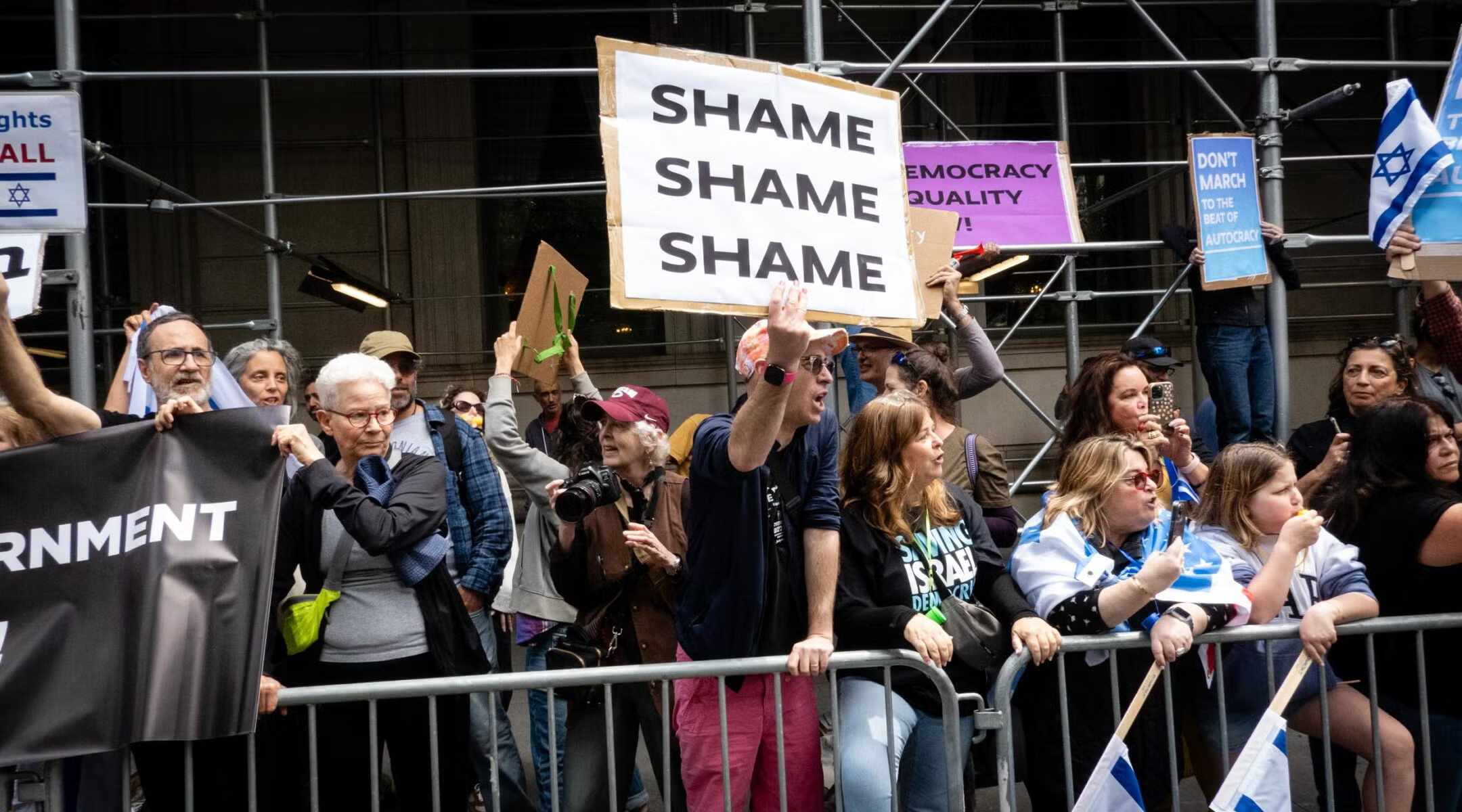
Price of friendship with Tel Aviv exposes deep systemic hypocrisy
This week. UK Foreign Secretary Yvette Cooper’s unprecedented expression of “concern” over Israel’s latest humiliation of Gaza-bound flotilla peace activists exposed her own glaring double standard when contrasted with her historic silence over Israeli contempt for international law. During the October 2025 Global Sumud Flotilla interception, for example, over 400 human rights defenders — I was one of them — were kidnapped by Israeli forces in international waters, filmed while facing targeted degradation and sent to K’ziot prison. Her sudden, mild shift to diplomatic “concern”, however, does nothing to mask the hypocrisy embedded in Cooper’s political record.
As Home Secretary, she aggressively targeted domestic dissent, famously declaring that the government would “never tolerate those who seek to use intimidation or commit criminal damage under the guise of protest.” Critics point out that her fierce intolerance of direct-action groups seeking justice in Britain stands in sharp contrast to her muted response towards an alien state that routinely kidnaps, humiliates and abuses British (and many other) citizens on the high seas. We used to hang pirates from the yardarm; today, we help them to commit “plausible” genocide.
The supreme irony of the West’s “rules-based international order” is that it was designed to show the Global South how civilised nations behave. Instead, Western elites have spent the past few years torching their own credibility on the world stage, sacrificing their economies and alienating their own electorates, all to protect a rogue state that openly treats their advice with contempt and usually ignores it anyway.
In the end, Washington and Europe won’t dump Israel because they suddenly found their long-lost moral compass. They will do it for the most traditional Western reason of all: the effects of supporting the Zionist state are just far too damaging to Western economies and democracies.

Severe economic fallout from the price of friendship with Tel Aviv
For decades, the standard price of admission for friendship with Tel Aviv was structured under predictable, multi-year agreements. The cornerstone of this was the 10-year memorandum of understanding signed by the Barack Obama administration, which locked US taxpayers into a minimum of $3.8 billion every year in military aid. However, since late 2023, that baseline has completely shattered.
Supplemental funding packages — including a massive $12 billion in approved military sales and supplemental bills passed by Congress — pushed total US military spending on Israel’s operations past $21 billion in just two years. Cumulative US aid to Israel since 1948 has ballooned past an inflation-adjusted $352 billion. Rather than working as a temporary buffer, emergency injections of billions of dollars for missile defence systems and the replenishment of ammunition and military hardware have essentially forced Western allies to write blank cheques with no clear end in sight.
Fiscal matters aside, what about the effects on domestic stability? Historically, backing Israel was one of the few bipartisan guarantees in Washington. Today, it is an active electoral fault line threatening America’s much-vaunted democracy. Data shows an unprecedented, historic shift in public opinion. This backlash is not confined to progressives.
Pew Research Centre data highlights that net favourability towards Israel has plummeted even among Republicans under fifty, converting a once-reliable base of support into negative territory. Politicians who blindly rubber-stamp weapon shipments are finding themselves fundamentally disconnected from their grassroots support. By prioritising the demands of foreign policy elites and powerful lobbying groups, leaders are facing a stark reality: maintaining unconditional loyalty for Tel Aviv requires them to alienate the very voters they need to survive election cycles.
Then there is the broader, systemic damage. While the direct financial cost is measured in billions of taxpayer dollars, the indirect macroeconomic fallout threatens entire state budgets. Billion-dollar foreign aid packages require additional borrowing, which swells national deficits.
At the same time, instability in the Middle East drives up global energy prices and shipping costs, feeding domestic inflation around the world. Diverting advanced weapon systems and munitions to Israel also depletes domestic defence stockpiles, posing a threat to security at home. Israel itself has faced an estimated $66.8 billion blow to its economy, forcing its own finance ministry to look at emergency austerity measures such as freezing public sector wages, slashing social services and raising taxes. For its global partners, subsidising this endless conflict creates a dangerous economic ripple effect.
Western economies are already dealing with inflation, high living costs, and fractured supply chains. Spending vast resources on a foreign conflict not only empties the state coffers, but also actively drains the economic foundation required to protect domestic financial stability.
If Harry Truman were walking the halls of Washington today, he would likely stand by his original advice. A dog asks for very little, offers unconditional loyalty, and never costs a politician an election, but as his political successors continue to navigate their alliances, the satire shared by foreign policy critics is morphing into a cold truth. The current price of unconditional support for Israel has simply become too steep for all democracies to afford without inflicting damage on their own people, forcing governments to choose between a rogue, foreign ally and their own economic and political survival.
Ultimately, if Western leaders refuse to heed Truman’s canine-led wisdom, they may soon find that this particular brand of diplomacy has done nothing but leave them in the doghouse with their own electorates. With America and Europe finally closing the chequebook, the geopolitical invoice is being handed over. Israel can either pay the astronomical bill through accountability under international law, or opt for the ultimate diplomatic euthanasia. At this rate, though, even a trip to state-level Dignitas might be too expensive.