
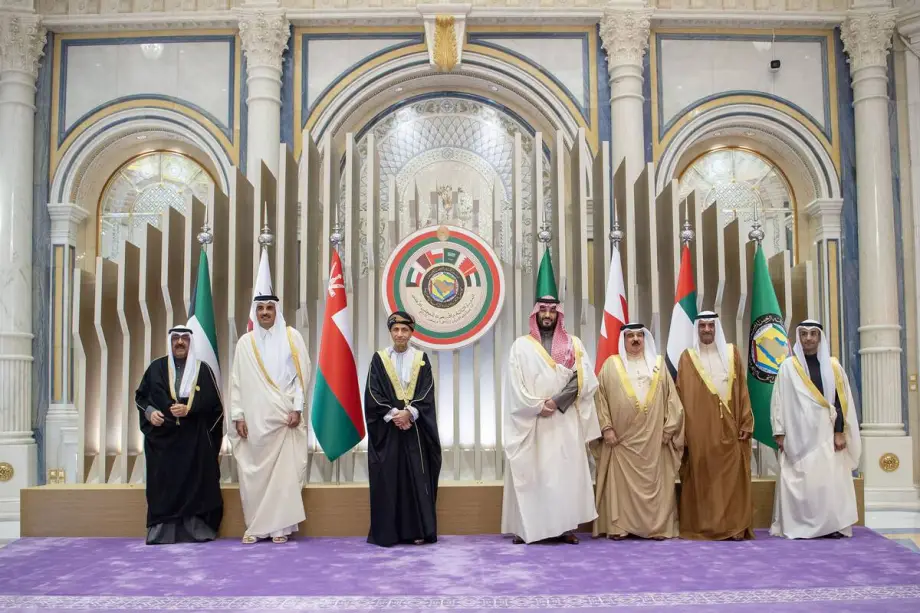
An intelligence brief analyzing the internal political fractures, divergent security doctrines, and growing economic rivalries among the member states of the Gulf Cooperation Council, exposing the illusion of strategic unity in the region.
The contemporary Middle Eastern security architecture demands a brutal acknowledgment that institutional solidarity in the Arabian Peninsula remains an elusive mirage. As regional volatility intensifies, the Gulf Cooperation Council faces systemic paralysis because its member states possess profoundly divergent threat perceptions and incompatible long-term geopolitical ambitions. This structural fragmentation ensures that the Gulf Cooperation Council operates not as a cohesive strategic bloc, but as an uneasy alignment of highly competitive, sovereign actors routinely undermining their collective leverage.
Gulf Cooperation Council internal fractures
The most accurate portrayal of the Gulf Cooperation Council (GCC) is perhaps the 2017 Kuwait summit, which was held at the height of the Saudi-UAE-Bahraini blockade of Qatar and was attended by none of the quarrelling states’ leaders — except for Qatar’s Emir, Tamim bin Hamad. Kuwait’s late Emir, Sabah Al-Ahmad, found himself effectively addressing a single guest at what was supposed to be a ‘Gulf’ summit.
This unintentionally declared that the GCC shines socially, but fractures politically.
This fracture is not new. The GCC was formed in 1981 as an urgent security response, one year after the Iran–Iraq War erupted, rather than as a mature political project. Iraq was excluded on the pretext of its republican system, despite being a Gulf state both geographically and historically. From its inauspicious beginnings, the GCC has remained a structure overtaken by events, much like the short-lived Arab Cooperation Council and the moribund Arab Maghreb Union.
At the 2021 Al-Ula summit, Saudi Arabia and Qatar announced that their dispute had been ‘resolved’. An elegant turn of phrase, but one that is detached from reality. Neither Doha nor Riyadh conducted a serious political review.
Divergent threats to Gulf Cooperation Council
To understand why the GCC keeps shooting itself in the foot, one must start with a simple question:
Have its member states ever viewed the threats around them in the same way?
The answer is clearly no.
Saudi Arabia has long feared pressure from the US for internal reforms.
Kuwait’s primary concern has always been Iraq.
Bahrain is concerned about Iran’s influence over its Shia population.
The UAE is concerned about both Iran and its own demographic structure, which is dependent on a large foreign workforce.
Meanwhile, Oman and Qatar have pursued more independent policies.
This divergence in the definition of ‘threat’ produced an early pattern: Gulf states coordinate politically when necessary, but avoid acting as a single strategic bloc. During the Iran–Iraq War, for example, billions of dollars were funnelled to Saddam Hussein as a ‘balancing force’ against Iran, but without a unified strategy. Iraq was a temporary tool, not part of a long-term plan.
Geopolitical fragmentation of Gulf Cooperation Council
Today, Giorgio Cafiero of Georgetown University describes the Gulf as a landscape of overlapping security calculations: Iranian threats, unpredictable US behaviour and shifting regional dynamics. The UAE and Bahrain — and possibly Kuwait — are moving towards embracing Israel as a security partner, while Saudi Arabia, Qatar and Oman are unlikely to follow suit. Across the Gulf, the pursuit of autonomy is producing selective partnerships and uneven reassessments, shaped by a combination of pragmatism and social-political constraints.
One Gulf, six different security doctrines.
Against this backdrop, reducing existential regional dilemmas to glossy economic projects and futuristic city renderings is a deliberate oversimplification. No ‘vision’ or ‘smart city’ can erase the deep mistrust between GCC states. Image-building cannot substitute for a political contract.
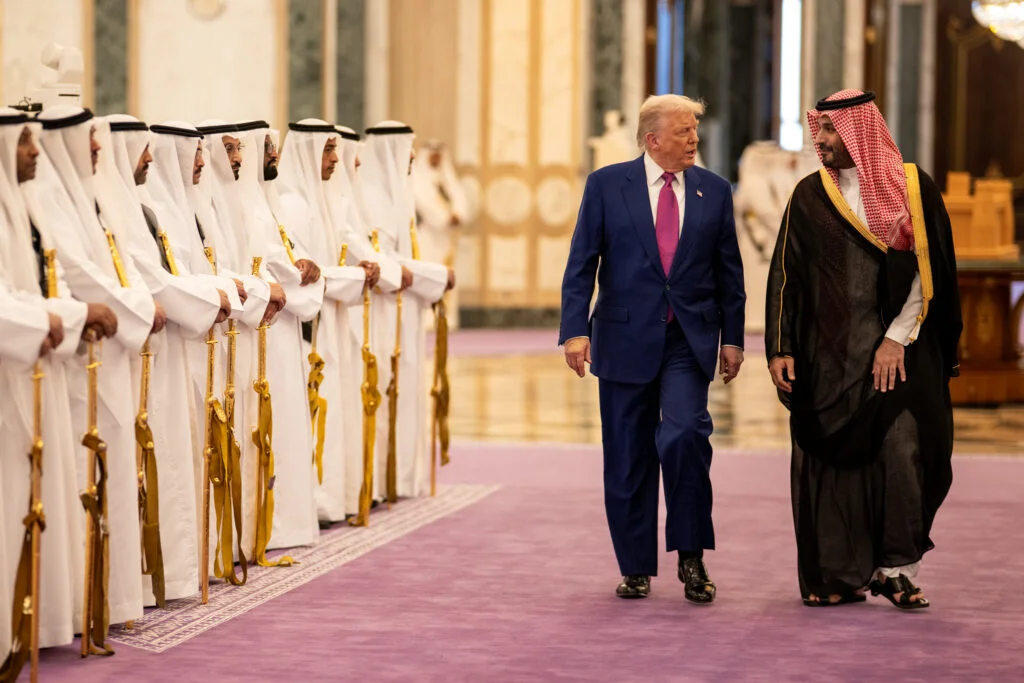
The Saudi–UAE rivalry is the clearest example of this. Former British ambassador to Riyadh, Sir John Jenkins, argues that its escalation is unsurprising. Crown Prince Mohammed bin Salman wants to transform Saudi Arabia into an enhanced version of the UAE, but Abu Dhabi refuses to revert to the role of ‘younger brother’.
John Gannon, a former CIA official, is more blunt: The Saudis want obedience — or at least alignment — while the Emiratis want freedom of choice.
Gulf Cooperation Council economic friction
Riyadh understood that the currency could not exist without Abu Dhabi, and today it also recognises that the UAE’s political and economic influence has established it as a respected hub for major powers, from China to the United States. This is precisely what unsettles Saudi Arabia, which is reluctant to relinquish its role as ‘big brother’.
A deeper transformation is underway. As globalisation recedes, Gulf economies are turning inward. Forecasts suggest that GCC states may withdraw between $50 billion and $100 billion from global investments in order to focus on domestic priorities. However, this inward shift may not bring stability; it may intensify competition within the Gulf itself.
Even public sentiment reflects this tension. Anwar Gargash, adviser to the UAE president, revealed that the UAE receives approximately 45,000 hate tweets daily, primarily from within the GCC. If similar data existed for Saudi Arabia, the situation would be even more alarming.
Future of the Gulf Cooperation Council
Then came the US–Israeli war on Iran, exposing the illusion that Gulf states could maintain simultaneous relationships with Tehran, Washington and Tel Aviv without paying a price. Saudi Arabia was one of the strongest opponents of the war, yet Iranian missiles struck Riyadh itself.
Once again, the Gulf states realised that ‘neutrality’ is not a strategy, but a vacuum that is filled by the decisions of others.
Meanwhile, the UAE made the strategic decision to leave OPEC, as Ambassador Yousef Al Otaiba explained in his essay ‘Why the UAE Really Left OPEC’. This was not an emotional decision, but a calculated step to free its oil policy from quota constraints. Disagreements with Saudi Arabia accelerated the decision, but did not cause it. Abu Dhabi wants to make its own decisions outside a collective framework that has lost its effectiveness.
All these realities lead to one conclusion. As long as each state defines danger and allies differently and aspires to play a larger regional role than its geography allows, the GCC will remain an entity that excels in rhetoric but not in reality.