
Ayatollah Ali Khamenei, the Supreme Leader of the Islamic Republic of Iran and the central figure in the country’s political and religious establishment since 1989, has died at the age of 86 after being killed in a coordinated joint military airstrike by the United States and Israel that struck his secure compound in Tehran. His death, came as part of one of the most dramatic escalations in decades of U.S.–Iran and Israel-Iran enmity – a targeted decapitation strike that also claimed the lives of several senior Iranian officials and members of his family.
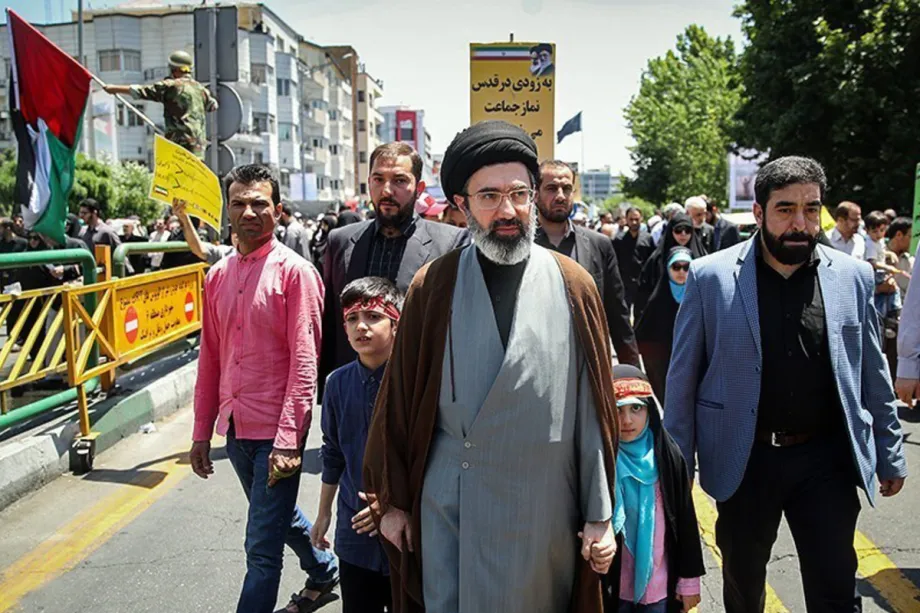
The future of Iran under a potential Mojtaba Khamenei leadership is projected to be characterized by intense, hardline continuity, relying heavily on the Islamic Revolutionary Guard Corps (IRGC) to maintain control amid severe regional instability and domestic unrest. As the son of the former leader, his potential rise signals a move towards a “re-revolutionary” stance that prioritizes regime survival over reform.
The 1979 Iranian Revolution was a seismic political shift that replaced Shah Mohammad Reza Pahlavi’s pro-Western, secular monarchy with an anti-Western, Shi’a Islamic Republic led by Ayatollah Ruhollah Khomeini. It transformed Iran into a theocratic state based on Velâyat-e Faqih (Guardianship of the Islamic Jurist), fundamentally altering Middle Eastern geopolitics, breaking US-Iran ties, and initiating a regional power struggle against Saudi Arabia. Elements of it included:
The revolution replaced monarchy with a system where supreme authority rests with a religious scholar (faqih).
It was a rejection of US influence and rapid, forced secularization, aiming to reverse Western cultural and political dominance.
The revolution utilized Shi’a Islam as a unifying ideology, aiming to export this model throughout the Muslim world.
The US lost a crucial strategic ally in the Middle East, leading to a new era of hostility between Washington and Tehran.
Although supported by a broad coalition of secularists, leftists, and religious groups, the clerical faction led by Khomeini consolidated political and influence.
The revolution is considered a defining event of the late 20th century, introducing a unique form of religious-political rule. The likely trajectory is a move toward a more consolidated, authoritarian, and militarized system, with the IRGC playing a central, if not leading, role in governance.
Reports are mixed, with some suggesting him as a frontrunner backed by the IRGC, while other reports indicate him not being among the top names listed by his father, suggesting a contested power transition. His potential leadership represents a pivot towards maintaining the core ideology of the Islamic Republic, potentially leading to increased confrontation with the international community and a tighter, more exclusive grip on domestic power.
When observers describe Mojtaba Hosseini Khamenei as a “hardliner,” the word is often used loosely – as shorthand for repression, intolerance, or severity. But in the Iranian political context, hardline has a far more specific meaning. It refers to a doctrinal position rooted in the 1979 Islamic Revolution and its governing philosophy. To understand Mojtaba Khamenei’s likely political orientation, one must examine what it means to “uphold the principles of the Revolution” and how his political associations align with those principles.
Under this structure, clerical authority stands above elected institutions. The Supreme Leader is not simply a ceremonial figure but the axis of political and military power. That architecture has defined the Islamic Republic for over four decades, particularly under Ali Khamenei, who consolidated and institutionalised it after Khomeini’s death.
To say that Mojtaba Khamenei would uphold the Revolution’s principles therefore implies continuity with this structure: preservation of clerical supremacy, resistance to liberal democratic reinterpretations of sovereignty, and reinforcement of institutions designed to defend the ideological state.
Evidence of Mojtaba’s orientation lies less in public speeches — he has largely avoided the spotlight – and more in his networks and influence. Over the years, he has been widely reported to maintain close ties with the Islamic Revolutionary Guard Corps (IRGC), the powerful military-political institution created to safeguard the Revolution from internal and external threats.
Alignment with the IRGC signals alignment with a worldview that prioritises regime preservation and revolutionary vigilance.
Similarly, Mojtaba has been associated with the Basij, the paramilitary volunteer force often deployed in moments of domestic unrest. The Basij’s founding mandate is explicit: to defend the Islamic Republic and its moral order. Association with such institutions situates Mojtaba within a current of politics that views the state’s religious identity as inseparable from its security apparatus.
This is where the term hardline becomes analytically clearer. In Iranian factional politics, hardliners differ from reformists not primarily on temperament but on doctrine. Reformist currents — visible at various moments in Iran’s post-revolutionary history — argue for expanding civil liberties, loosening cultural restrictions, and recalibrating relations with the West. Hardliners, by contrast, insist that the Revolution was meant to establish a distinctly Islamic polity immune to Western political models. They see compromise on foundational principles as erosion, not evolution.
Mojtaba’s political associations consistently place him within this latter camp. He has been linked to support for conservative candidates in past elections and is widely perceived within Iran as aligned with those who reject dilution of clerical authority. There is no public record of him advocating systemic reform or questioning the central doctrine of Velayat-e Faqih. Silence, in a factionalised political system like Iran’s, is rarely neutral. It often signals fidelity to the dominant ideological line of one’s network.
To say he would uphold revolutionary principles, therefore, is not to predict every policy he might adopt. It is to recognise that his political capital is rooted in institutions whose raison d’être is the defence of the 1979 order. That order rests on three pillars: clerical guardianship, anti-imperial resistance, and institutional vigilance against internal subversion.
Anti-imperialism, in particular, remains central to revolutionary identity. Confrontation with the United States and Israel is framed not merely as foreign policy but as moral positioning. Revolutionary continuity implies sustaining that posture, resisting rapprochement that appears to compromise ideological sovereignty.
At the same time, it is important not to collapse analysis into caricature. Upholding revolutionary principles does not automatically mean reflexive repression in every circumstance. Iranian politics is complex, and even hardliners operate within institutional constraints and strategic calculations. But it does mean that any reform threatening the supremacy of clerical rule or the ideological core of the state would encounter resistance.
Thus, the more accurate formulation is not that Mojtaba Khamenei “would not tolerate dissent,” but that he belongs to a political current that defines dissent through the lens of revolutionary stability. The preservation of clerical supremacy and the defence of Islamic governance are not peripheral commitments – they are structural imperatives.
In that sense, to describe him as hardline is not a moral judgment but a categorical one. It situates him within a tradition that sees the Islamic Republic not as a transitional phase but as the culmination of a civilisational project. Whether that project evolves or hardens further would depend on circumstances. But continuity, not rupture, is the most evidence-based expectation.
As Mojtaba Khamenei assumes power—whether formally as Supreme Leader or as the decisive force behind the office—he would do so at a moment of acute regional volatility. The transition itself would be politically charged. Unlike his father, Ali Khamenei, whose revolutionary credentials were forged in 1979 and consolidated during the Iran–Iraq War, Mojtaba’s legitimacy would rest less on public religious stature and more on institutional alliances. His long-reported proximity to the Islamic Revolutionary Guard Corps and influence within the Basij suggest that his consolidation phase would likely prioritize internal cohesion over outward reconciliation. In practical terms, this could mean a tightening of elite ranks, swift messaging of continuity with revolutionary doctrine, and an early demonstration that deterrence – not diplomacy under pressure – remains Tehran’s guiding principle.
If war were active or imminent at the time of his ascent, Mojtaba would be compelled to prove strategic resolve quickly. A new leader in Tehran cannot afford the perception of hesitation, especially when adversaries might test the waters of succession. He would likely frame the conflict not merely as a geopolitical struggle but as a civilizational defense of the Revolution’s core tenets—sovereignty, resistance, and regional autonomy from Western dominance. Yet pragmatism may temper rhetoric. Escalation would probably be calibrated rather than reckless: asymmetric pressure, regional proxy leverage, and calculated retaliation designed to raise costs without inviting total war. In this, his approach could blend ideological rigidity with tactical caution – projecting firmness abroad while ensuring that the state’s survival, above all else, remains the ultimate objective.