
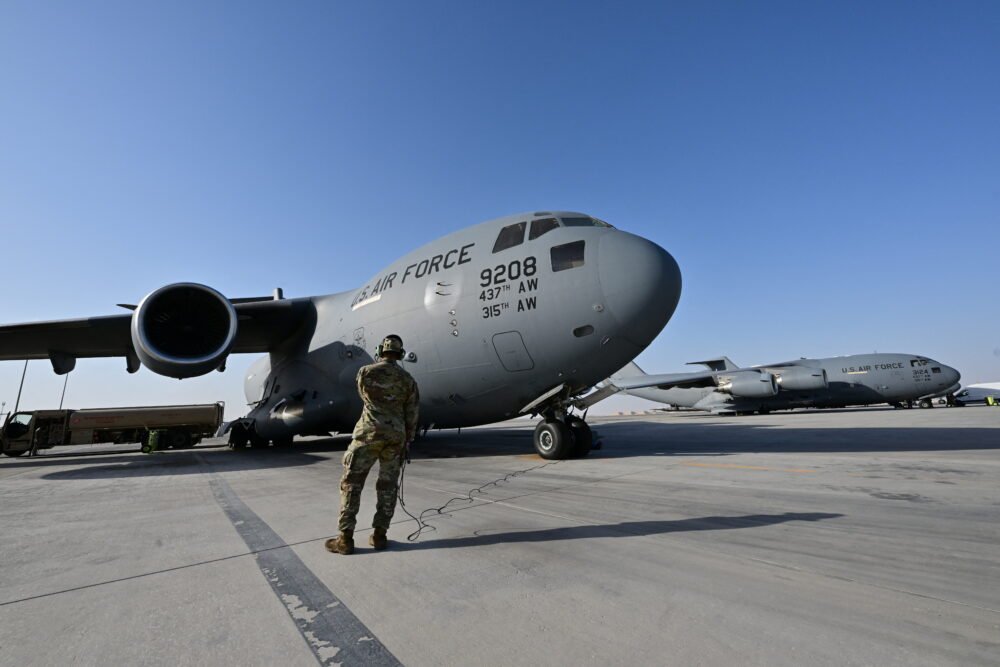
Iran’s broad targeting of Gulf infrastructure shows that U.S. bases are not the cause of regional risk but a consequence of deeper strategic alignment. Deterrence collapsed when Washington shifted from preserving the status quo to pursuing coercive regime‑altering aims, leaving Gulf monarchies questioning whether the American alliance still guarantees stability.
Did the presence of American military bases in the Gulf monarchies draw those states into the American-Israeli war against Iran, a war they had no say in initiating and no voice in prosecuting? That is certainly the feeling among some citizens of those states. It is unclear whether the current cease-fire will lead to a long-term cessation of hostilities or whether it will even last for the two weeks set out for negotiations. However, it is not too early to consider the American relationship with its Gulf state partners going forward. A very public manifestation of that relationship is the system of American military installations in those countries, which dates back to the early 1990s, immediately after the 1990-91 First Gulf War.
The United States has formal military bases in Kuwait, Bahrain, and Qatar, and access arrangements to military facilities in the other Gulf monarchies — the United Arab Emirates, Oman, and Saudi Arabia. For decades, the bases were seen by Gulf leaders and publics as guarantees of Washington’s security commitment to the region and, therefore, as deterrents against attack from Iraq, Iran, or any other power. But now, at least some in the Gulf see the bases as targets drawing them into an unwanted conflict.
This calculation is too simple. The bases are not the cause of the Gulf states’ security relationship with the United States. They are the consequence of that security relationship. A thought experiment: If there were no American bases in the Gulf states, but those states cooperated with the United States in the recent war, would Iran have spared them retaliatory strikes? Very unlikely. Despite the fact that all of the Gulf governments refused to allow American forces to use their facilities to launch attacks on Iran (though they did allow the US access for other purposes, like refueling), Tehran still targeted them. Moreover, that targeting was not limited to the bases. Iran struck energy infrastructure and pipelines, hotels, civilian airports, a desalination plant, and a range of targets tangential to military activity. Iran’s strategy of horizontal escalation was clearly intended to impose as much pain on the world economy, and the Gulf states themselves, as it would take to pressure the US to end the conflict. In that strategy, the Gulf states are targets whether they host American bases or not.
It is not the bases that drew Iranian fire. It is the fact of the Gulf states’ centrality in the world energy economy and their choice to embed themselves in an American alliance system that goes beyond security to include trade, finance, technology, education, and other areas of cooperation. The real question for the Gulf states in the wake of this war is whether they still find that deep American connection, which includes the bases but goes far beyond them, the best choice for their security, prosperity, and well-being.
In considering that question, Gulf leaders and citizens should remember the context in which the current attacks on their countries occurred. For almost the entire 30-plus-year span of the presence of American bases in their countries, they did serve a deterrent function. There were precious few conventional military attacks on them before the broader regional conflict that began in Gaza on October 7, 2023. Houthi missiles targeting Saudi and Emirati sites and the September 2019 Iranian attack on Saudi oil facilities at Abqaiq and Khurais were the most notable. The Houthi attacks were in retaliation for Saudi and Emirati involvement in the Yemeni civil war. Non-state actors are more difficult to deter than state actors because they have less to lose. Since the First Gulf War of 1990-91, the 2019 Iranian attack represented the only military action by a state against any of the six Gulf monarchies prior to the Israeli bombing of Qatar in September 2025, which was followed by the US’s very public upbraiding of Israel and an upgrading of the Qatari-American defense relationship. Even during the June 2025 12-Day War between Israel and Iran, which the United States joined at the end, Tehran chose not to retaliate against the Gulf states, save for a telegraphed and largely symbolic missile strike on the American airbase in Qatar. US-supported deterrence, with a few exceptions, basically worked as a security strategy for the Gulf monarchies.
Deterrence failed in the current war because the United States abandoned deterrence as the core of its Gulf strategy. This was a war to change the regime in Tehran, or, short of that, strip it of whatever military power it had. Once the United States, with its Israeli ally, decided it had to use force to drastically upend the Iranian status quo, it is little wonder the Islamic Republic regime acted without restraint in its retaliation. When Washington used the threat of its military might to preserve the Gulf status quo, deterrence worked to protect the Gulf states. When Washington became a regional aggressor but then (unlike in Iraq in 2003) failed to achieve its regime change goals, there was no reason for Iran not to escalate and bring the fight to the Gulf monarchies.
This war has left the Arab Gulf countries worse off than before it began. The Iranian regime is bloodied but unbowed, asserting a right to control the Strait of Hormuz that it never attempted before. The immediate question for the United States is whether it can restore the status quo ante in the strait, the lifeline for all the Gulf states and for the world energy economy. The longer-term question for the Gulf capitals is whether, with their security compromised by the reckless American-Israeli war, they can rely on Washington to return to the effective role it played for decades as a provider of deterrence and security rather than a foolhardy disruptor of the peace. That larger question of American purpose in the region will determine whether US bases, and the larger American-Gulf alliance, will endure.