
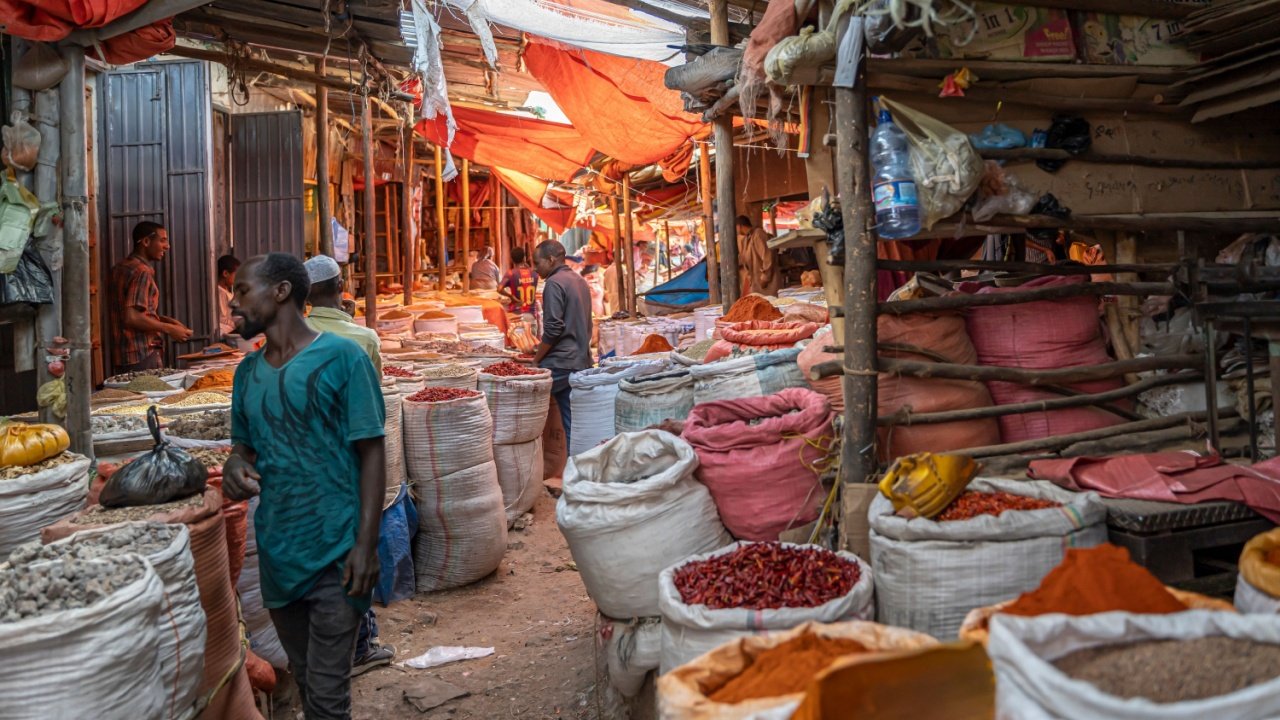
Iran’s intermittent closure of Hormuz endangers fertilizer supplies essential to agriculture across Africa and Asia, risking hunger, political unrest, and wider instability. With U.S. food‑security mechanisms weakened, preventing renewed Iranian leverage over maritime chokepoints becomes critical to safeguarding global harvests and geopolitical stability.
The closure of the Strait of Hormuz has revealed Iran’s ability to threaten the global food supply.
Life is precarious in Ethiopia’s highlands. The landscape is dotted with farmers working small mountainside plots—averaging less than a quarter acre—producing only enough to survive. These farmers, and more than 130 million Ethiopians depending on the Kiremt rainy season for their survival, now face an existential threat born thousands of miles away—Iran’s seizure of the Strait of Hormuz.
Most analyses of Iran’s seizure of the strait focused on oil prices and energy markets. But there is another, equally consequential story. The Strait of Hormuz is a critical transit point for the natural gas used to make DAP and urea fertilizers, which are essential for agriculture. Iranian control of the strait could threaten elevated fertilizer prices just as large parts of the world prepare to plant. Food crises don’t remain contained. They spill across borders in the form of mass migration, political upheaval, and armed conflict. After the Department of Government Efficiency’s (DOGE) dismantling of USAID’s food security support, these crises could spread even more quickly today.
On April 17, 2026, Iran declared the strait open—only to reverse the decision the following day. The status of the sea route may continue to change in the following weeks and months. However, it is clear that Iran retains both the capability and the incentive to close the strait again. The US naval blockade of Iranian ports remains in force for good reason. All nations should get behind American efforts to secure a durable end to Iranian leverage over global shipping. The fate of the world’s food supply demands it.
How the Closure of the Strait of Hormuz Threatens Global Agriculture
Ethiopia’s highland farmers—like many in Africa—face a dangerous combination of risks: small plots, soil erosion, and agricultural systems dependent on fertilizers to extract yields from exhausted soils. As a former US diplomat who worked with Ethiopian farmers to improve food security, I find it difficult to overstate how heavily these people depend on the Kiremt season, which provides 65–95 percent of Ethiopia’s total annual rainfall. Miss that window in June, or plant without adequate inputs, and the consequences will ripple far beyond Ethiopia’s borders.
Ethiopia is a central security partner in the Horn of Africa and a critical counterweight to al-Shabaab, the world’s most lethal Al Qaeda affiliate. It is already struggling with a tight budget because of high fuel import costs through Djibouti, and is desperate to carve new seaport access through Somalia or Eritrea—efforts that risk provoking conflict with its neighbors. For American military planners, the Horn of Africa is already one of the world’s most volatile regions. It hosts several foreign military bases, is prone to state failure, and has a coastline with a proven capacity to threaten global commerce. Hunger could push the region over the edge.
Across South Asia, the monsoon planting season lasts from May to July. For billions in India, Bangladesh, Pakistan, Nepal, and Myanmar, the harvest that follows is a lifeline. Farmers could be planting their fields as Iran seeks to assert leverage through strait closures, causing fertilizer prices to skyrocket. In South Asia, governments are already implementing driving restrictions and even weekly national holidays to weather fuel shortages. Rising energy costs hit both food production and the cost of bringing it to market. With minimal buffers against supply shocks, any disruptions could quickly turn into political instability for billions of people. The same dynamic could play out globally.
The world last confronted the security consequences of a global food crisis in 2007–08, and the lessons were sobering. As grain and fertilizer prices spiked, food riots broke out across more than 40 countries—from Haiti to Egypt to Bangladesh. Governments fell. Extremist movements recruited from the ranks of the hungry. Global food insecurity is not just a humanitarian issue but a national security threat, especially for countries with large youth populations, particularly African and South Asian nations already teetering under high fuel prices.
How the US Once Responded to Global Food Crises
In the wake of the 2007–08 food crisis, the United States responded with ambition. The Feed the Future Initiative, launched in 2010 with bipartisan support, brought together USAID, the US Department of Agriculture, and a dozen other federal agencies to address the root causes of food insecurity. Powered by American agricultural ingenuity, the program introduced improved seed varieties, drought-resistant crops, and modern planting techniques across Africa and Asia. The results were remarkable. Feed the Future lifted 23.4 million people out of poverty, prevented malnutrition-related stunting in 3.4 million children, and helped 5.2 million families escape hunger. It also built new partnerships for American agrobusiness, universities, and farmers.
Despite these successes, the initiative was effectively dismantled by the Department of Government Efficiency. Any gains made will be put to the test if Iran regains control of the strait. Even now, Feed the Future’s legacy—such as supply chains for improved seeds and early warning systems—may be one of the most effective forces mitigating Iran’s ability to sow chaos across food systems today.
Iran Cannot Hold the Global Food Supply Hostage
The US government already has statutory requirements and active appropriations to implement food security programming—it just chooses not to do so. Congress should demand that the State Department activate existing food security authority and appropriations to counter Iranian leverage and create new opportunities for American farmers, who are also struggling with high input costs.
If Iran decides to open the strait, it is welcome—but it would be a tactical concession, not a strategic retreat. Ensuring that Iran cannot again close the Strait of Hormuz must remain the world’s central imperative. The American blockade of Iranian ports may help force this opening, but the underlying leverage Tehran holds over global shipping has not been dismantled. Nations that depend on affordable fertilizer, which is nearly every nation on earth, must make clear that Iran cannot hold the world’s food, in addition to its energy, hostage. This makes China and Russia’s efforts to block UN Security Council Resolutions to open the strait especially sinister.
The Iranian regime is not simply threatening oil shipments. It is threatening harvests and global security. The world should act accordingly.