
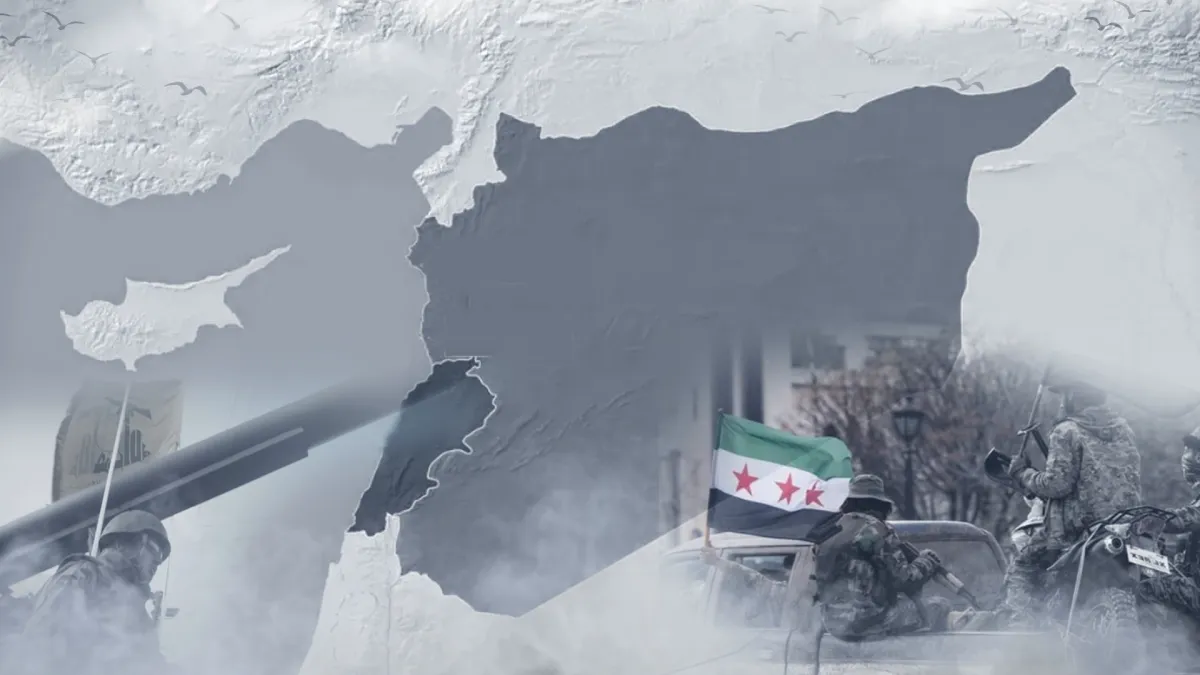
While attention is focused on Lebanon’s southern front, where fighting between Hezbollah and Israel continues to escalate, another front is quietly moving—less noisy but no less sensitive: the eastern border with Syria.
In recent days, reports of Syrian military reinforcements near the border and the deployment of short-range rocket launchers have raised questions in Lebanon: Are these simply security measures aimed at controlling the border, or could the region be facing the possibility of a new front opening amid the broader regional escalation?
These questions intensified after the Syrian army’s Operations Authority announced Wednesday that it was expanding the deployment of its units along the borders with Lebanon and Iraq, incorporating border guard units and reconnaissance battalions.
Although the authority emphasized that the move is part of an organized field deployment focused on monitoring border activity, combating smuggling, and preventing illegal activity, the timing of these movements—coinciding with the military escalation in Lebanon—has drawn attention in Beirut. The eastern border has historically been one of the country’s most complicated security files.
Damascus’ Narrative
Damascus is keen to portray these movements as internal security measures with no offensive intent. The Syrian Ministry of Defense’s Media and Communications Administration announced that the deployment of Syrian army units along the borders with Lebanon and Iraq is a precautionary step aimed at securing those borders and regulating movement across them amid current regional developments.
Syrian military sources also told the official Syrian news agency SANA that the step is “purely defensive and sovereign in nature,” intended to strengthen internal security and reinforce stability along the border strip.
They stressed that “Damascus is not planning any military action against neighboring countries, but it is prepared to deal with any security threat targeting it.”
According to the agency, the new deployment aims to enforce the law in areas that have witnessed activity by smuggling networks and organized crime, while enhancing stability in border villages and towns—something that would improve the security of local residents and have positive effects extending into Lebanon and Iraq.
The reliance on reconnaissance and continuous monitoring tasks also provides the authorities with the ability to detect suspicious activity early, before it develops into an actual threat.
As for reports about the deployment of short-range rocket launchers near the border, Damascus insists that the deployment is defensive and not offensive, stressing that border areas “are not platforms for escalation.”
Mutual Reassurances
The Syrian military movements raised questions in Lebanon, prompting officials there to contact Damascus to inquire about their nature.
Lebanese Prime Minister Nawaf Salam revealed during a Cabinet meeting that he had received a phone call from Syrian Foreign Minister Asaad al-Shaibani, in addition to a visit from Syria’s chargé d’affaires in Beirut.
According to Salam, Syrian officials confirmed that what is happening on the border does not go beyond measures to strengthen border control and maintain Syrian internal security—steps similar to those Damascus has taken along the Syrian-Iraqi border.
Salam noted that Syria stressed during the contacts its desire for the best possible relations with Lebanon, while the Lebanese side emphasized its wish to build ties based on mutual trust and non-interference in internal affairs.
Lebanese President Joseph Aoun had earlier also affirmed that Lebanese-Syrian relations are good and that security and military coordination between the two countries is ongoing.
The Lebanese army said in a statement that its units had reinforced their deployment along the eastern border in coordination with the relevant Syrian authorities.
A New Front?
Despite official reassurances, some observers believe that the Syrian military movements along the Lebanon border extend beyond the purely security dimension and are linked to a broader regional context in which military and political dynamics intersect.
In this regard, political analyst Nidal al-Sabaa said that field data indicates that “the Syrian army began around three weeks ago reinforcing its military presence along the eastern border with Lebanon, with circulating reports of the mobilization of around forty thousand fighters—something that goes beyond routine border control measures.”
Speaking to Alhurra, al-Sabaa added that these movements are “linked to external demands directed at Syrian President Ahmed al-Sharaa to carry out a military operation from Lebanon’s eastern front targeting remnants of the Bashar al-Assad regime and elements of Hezbollah, which the United States and several foreign countries classify as a terrorist organization.”
He said the move could come within the framework of incorporating Syria into the international coalition against terrorism, with the aim of pushing those forces to a distance of 20 to 25 kilometers away from the Syrian border.
Al-Sabaa also believes that “the possibility of a confrontation between Gulf states and Iran could be a factor pushing Damascus to reconsider its calculations.”
One possible motive, he explained, could be “seeking revenge against Hezbollah because of its intervention in the Syrian war and the battles it fought against the al-Nusra Front.”
For its part, the Israeli Public Broadcasting Corporation reported that “al-Sharaa wants to strike Hezbollah positions along the border in the Bekaa Valley region.”
A Volatile Border
The Syrian-Lebanese border is not merely a geographic line; it is a highly complex security and political zone.
After the fall of former Syrian president Bashar al-Assad, the region witnessed violent clashes in February 2025 between forces affiliated with Syria’s new administration and armed Lebanese tribal fighters. The fighting spilled from Syrian territory into Lebanon, prompting the Lebanese army to intervene directly.
At the time, the Syrian administration announced the launch of a broad campaign to close what it described as “arms and contraband smuggling routes.”
The border also returned to the spotlight last July, when media reports spoke of unusual military movements opposite the Lebanese areas of Arsal, Hermel, and Qaa in the Bekaa region.
Those reports mentioned the presence of foreign fighters, including Uyghur militants who had participated in the Syrian war, who were said to be planning attacks on Hezbollah.
However, the Syrian government later clarified that these fighters were being formally integrated into the Syrian army, rejecting claims that they were operating as an independent force.
Since Hezbollah announced what it calls the “Iran Support War,” and with security developments escalating in Lebanon, border crossings between Lebanon and Syria have seen a growing flow of Syrian citizens returning to their country.
Syria’s Priorities
Regarding the possibility of Damascus becoming involved in a confrontation with Hezbollah, Syrian military and strategic expert Ismat al-Absi says that “the Syrian leadership has repeatedly confirmed that it is not concerned with fighting Hezbollah inside Lebanese territory.”
Instead, he explains, Damascus is currently focused on rebuilding what was destroyed during the fourteen years of war.
However, al-Absi stressed in comments to Alhurra that Damascus also considers that “any attack on Syrian territory or any terrorist activity inside it will be met with a direct response.”
Similarly, Nawar Shaaban, a researcher at the Arab Center for Contemporary Syria Studies, ruled out the likelihood of Damascus engaging in a direct confrontation with Hezbollah at this stage.
Shaaban told Alhurra that the movements along the Syrian-Lebanese border are mainly related to security considerations in a region long described as loosely controlled, where smuggling networks and drug trafficking operate.
He added that securing the border has become essential, particularly amid the war between Hezbollah and Israel and the possibility that the group could exploit the area to transfer weapons stored inside Syria or expand the conflict across the border.
Shaaban believes that addressing these challenges should not be unilateral, calling for the creation of a joint operations room between the Syrian and Lebanese armies to control the border and prevent its use for illegal activities.
Meanwhile, political writer and researcher Dr. Makram Rabah argues that Israel does not need the Syrian army to carry out military operations inside Lebanon.
Speaking to Alhurra, Rabah added that Hezbollah, for its part, is attempting to frighten its support base with the threat of jihadist forces, referring to al-Sharaa’s forces or other Islamist groups.
Rabah believes that Damascus might see an interest in appearing as part of the confrontation with the Iranian project, especially amid tensions between Iran and several Arab states.
However, he notes that there is a major difference between political interest and the actual ability to engage in such a confrontation.