
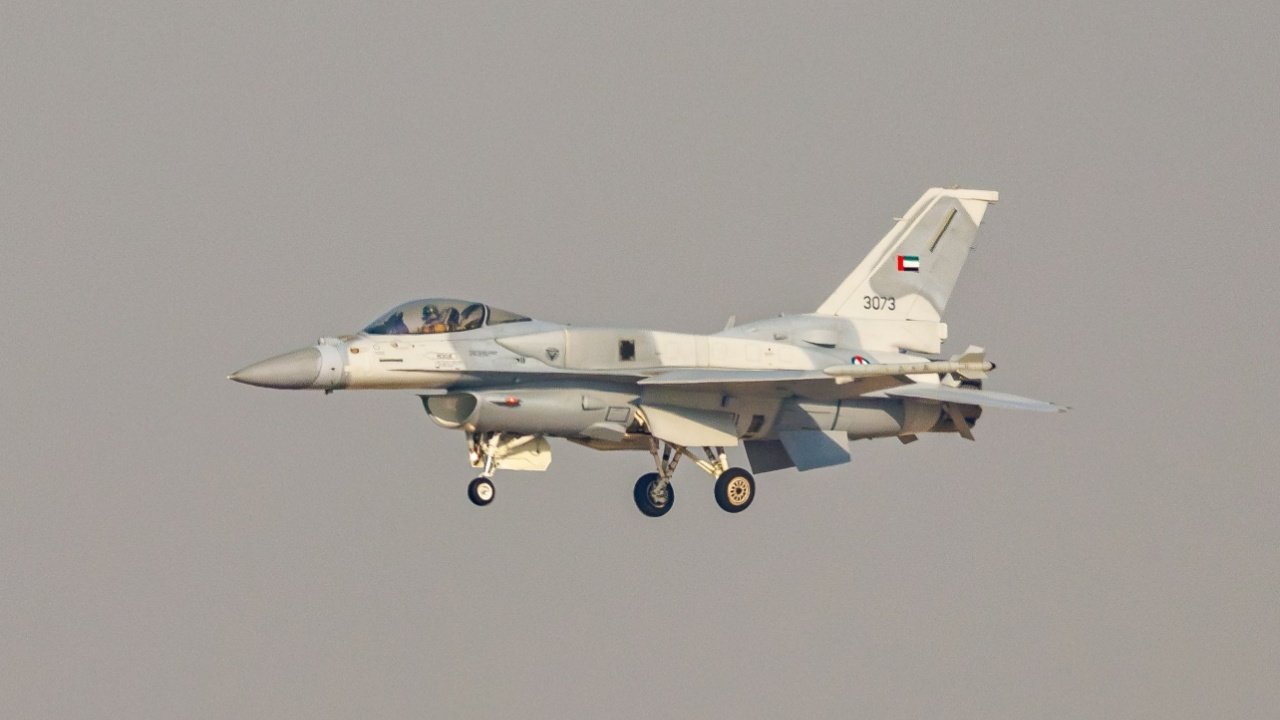
The conflict has pulled Gulf states into an expanded battlespace where missile warfare, maritime escalation, and U.S. burden‑shifting undermine their long‑standing insulation. Whether Iran collapses, survives, or the U.S. disengages, each trajectory erodes Gulf strategic centrality and strengthens an Israel‑centric regional order that sidelines Arab actors.
Whatever the outcome of the Iran War, the Gulf states will lose their central position in the Middle East.
What is unfolding between Israel and Iran is not a conventional regional escalation. It reflects a structural reordering of Middle Eastern power—one that has already begun to reshape the security geography of the Gulf. This became visible in the expansion of the conflict into maritime space, including escalation risks around the Strait of Hormuz, and the growing integration of Gulf infrastructure into the operational theater.
The conflict expanded the operational battlespace beyond traditional front lines and integrated the Gulf states into its escalation architecture. Assumptions that Gulf cities could remain insulated from regional conflict became increasingly untenable as missile and drone warfare eroded geographic buffers.
This shift had immediate implications. High-value urban and economic centers such as Dubai and Abu Dhabi in the United Arab Emirates (UAE) were no longer peripheral to the conflict environment; they became part of it.
The core analytical argument is simple: this war produces no stable outcome for the Arab Gulf States under any scenario. Whether the United States and Israel succeed in reshaping Iran’s political order, the Islamic Republic survives, or the United States eventually disengages, the Gulf’s strategic position deteriorates in ways that may not align with US interests. There is no clear equilibrium case that preserves the status quo.
Israel’s Strategic Objective: Regional Dominance
Israel’s strategic trajectory in confronting Iran extends beyond the narrow containment of nuclear or missile capabilities. Those are operational targets, not strategic endpoints. The deeper objective is the consolidation of regional military primacy across the Levant, Iraq, parts of the Arabian Peninsula, and adjacent maritime corridors—a condition under which Israel retains freedom of action across multiple theaters while adversaries are denied reciprocal capacity.
This is classical territorial and ideological expansionism. It is also outsourced US dominance: the ability to define escalation thresholds, set red lines, and enforce deterrence asymmetry across the regional order is increasingly delegated to Israel, enabling a policy of US withdrawal from the Middle East and a shift of strategic attention elsewhere—to Cuba, Greenland, and the Pacific. This trajectory aligns with the foreign policy priorities articulated by President Donald Trump.
In this structure, Israel increasingly functions less as a state within a traditional balance of power and more as the central security node around which the system is organized. That shift has profound implications for all neighboring states, particularly the Arab Gulf States, which are structurally dependent on stability assumptions that this conflict is dissolving.
The United States and the Venezuela Model
A critical dimension of the current war is the role of US strategic expectations. President Donald Trump’s initial framing of engagement with Iran reflected a “Venezuela model” assumption: that a rapid, coercive strike campaign could destabilize enemy leadership structures, force rapid concessions, and allow for a controlled political reset without sustained US entanglement.
This assumption has proven structurally incompatible with the Iran theater. Instead of rapid decapitation and stabilization, the war has produced distributed escalation onto the Arab Gulf States, sustained missile and drone attacks, and increasing exposure of infrastructure in third-party states. This mismatch is driving a second-order shift: a gradual US inclination toward a strategic exit through burden transfer rather than resolution.
In practice, this creates a pathway in which Washington reframes disengagement as “America First,” while operational responsibility increasingly shifts to Israel as the primary regional security actor. This leaves Arab states at a net loss. That transition is not yet explicit US policy, but it is the observable and foreseeable emerging structure of outcomes.
Recent US escalation steps should be understood as interim pressure rather than a long-term commitment. Expanded US naval deployments and the enforcement of a maritime blockade affecting Iran’s oil exports followed Tehran’s assertion of control over the Strait of Hormuz. While these moves may appear to signal deeper US involvement, they are more accurately read as coercive instruments designed to shape the immediate balance rather than establish sustained operational control.
Iran subsequently announced the reopening of the strait for commercial transit and signaled a return to negotiations on April 17, including renewed talks expected to take place in Islamabad. However, following the continuation of the US blockade, Tehran again moved to restrict access to the strait the following day, underscoring the fragility of maritime de-escalation. Yet Washington has maintained the blockade despite these shifts, indicating that current US actions are aimed at restoring maritime stability while simultaneously preserving negotiating leverage over Iran.
In practice, this reflects a time-bound strategy. Even sustained US pressure in this domain is likely to function as a transitional phase—one that increases pressure on Iran in the short term, but ultimately feeds into a broader US exit trajectory.
In that pathway, operational control does not disappear; it shifts. It shifts toward expanded Israeli operational primacy in closer coordination with certain regional partners, particularly the UAE. This takes the form of deeper security alignment, intelligence integration, and a more visible Israeli role within emerging regional security architectures as the US presence recedes—thereby consolidating Israel’s role as the primary regional security actor and, again, pointing toward a net loss for Arab states.
Recent developments reinforce this trajectory. A two-week ceasefire between the United States and Iran, brokered by Pakistan, has been followed by expectations of renewed negotiations on Pakistani soil. While these talks may contribute to de-escalation or even a formal settlement, they are unlikely to reverse the underlying strategic shifts already set in motion. Instead, any emerging framework is more likely to formalize a reconfigured regional order—one defined by reduced direct US involvement, expanded Israeli operational primacy, and a more exposed and structurally constrained position for the Arab Gulf States—rather than fundamentally alter it.
Why the Gulf States Could Not Escape the Iran War
Once escalation becomes reciprocal and asymmetric systems dominate warfare, high-value, infrastructure-intensive urban nodes become part of the strategic map. This is why Dubai and Abu Dhabi are among the Gulf cities most exposed to any renewed escalation, and why assumptions of neutrality did not translate into immunity.
Gulf state neutrality—especially that of the UAE—was not sufficient. From Tehran’s perspective, not allowing attacks from one’s territory does not absolve a state if it is politically aligned with the war effort. Iran targeted the UAE more frequently because Iran saw it as the Gulf state most strategically aligned with Israel, particularly during Israel’s War on Gaza. Normalization and deep security coordination created the perception of involvement, even if the UAE had not directly launched the war.
From a strategic perspective, Arab Gulf States face three vulnerabilities: extreme infrastructure centralization (energy, desalination, logistics hubs), high-visibility urban concentration (financial capitals as symbolic targets), and security alignment with Israel and the US’ broader regional security architectures.
A particularly dangerous escalation pathway involves strikes on critical nuclear infrastructure, including the Bushehr nuclear facility in Iran, which could trigger retaliatory action against civilian nuclear installations in Abu Dhabi, with catastrophic risk of radiation leakage and long-term contamination of shared water systems throughout Gulf waters.
This risk is compounded by an escalation logic in which infrastructure targeting already expands beyond purely military objectives into energy and industrial systems; reported US and Israeli strikes on energy infrastructure in Tehran have been widely described as having severe environmental consequences, such as catastrophic acid rain, while reciprocal strikes on key facilities such as Haifa’s refinery and energy infrastructure in Qatar’s Ras Laffan underscored the widening scope of economic and environmental vulnerability across the region.
Three Endgames for the Iran War—All of Them Negative for the Gulf States
What is missing from most analyses is that there are three plausible endgames—and all three erode the Gulf’s structural position.
Israeli Strategic Success: The “New Iran” Paradox
If Israel succeeds in eventually reshaping Iran’s political order or contributing to regime transformation, the outcome is not Iranian disappearance from regional competition. It is the emergence of a new Iran—reintegrated, economically revived, and strategically repositioned as a major regional power. In that scenario, Iran is likely to re-enter as a structural competitor to the Arab Gulf States’ economic and logistical hubs.
Over time, this produces a direct displacement dynamic: Bandar Abbas evolves into a competing prime seafront real estate, logistics, and energy corridor; a “New Iran” re-engages with global capital flows at scale; and Arab Gulf States’ financial dominance is structurally diluted.
In this trajectory, Dubai and Abu Dhabi are not beneficiaries of Iranian weakening—they are replaced by Iranian reintegration. A “successful” war does not preserve the Arab Gulf States’ primacy but rather diminishes it.
Iranian Resilience: Permanent Regional Exposure
If Iran does not collapse and instead adapts to sustained confrontation, the region does not stabilize. It enters a condition of persistent low-intensity escalation, with episodic missile and drone exchanges, continuous maritime and infrastructural targeting risks, and an expanded deterrence geography.
In this scenario, Arab Gulf States are not neutral observers. They become structural proximity zones to a sustained conflict system. The outcome is not their destruction, but gradual transformation into high-risk investment environments, episodically exposed infrastructure systems, and politically fragile security buffers. This is the trajectory of long-term erosion rather than decisive rupture.
In this scenario, the Arab Gulf States do not collapse. Instead, they transition into a troubled environment resembling that of Iraq or Lebanon: somewhat functioning economies operating alongside persistent security risks and potential political instability. As a result, they lose much of their global allure.
Managed US Disengagement: Israeli Operational and Strategic Dominance
The third scenario is the most strategically consequential. If the United States reduces direct regional involvement under an “America First” logic, it does not eliminate its regional footprint. It delegates or outsources it to Israel while Washington retains offshore strategic backing.
The result is a structural bypass: US-Israel-Iran interactions become direct, and the Arab Gulf States become increasingly excluded from core security bargaining, and regional crisis resolution occurs without their input. Under this scenario, the Gulf is no longer the center of regional geopolitics—it becomes a managed periphery.
The US in an Israel-Centric Middle East
From a US perspective, all three trajectories present significant risks. An approach that relies on withdrawal combined with outsourcing regional order to Israel may reduce short-term US exposure, but it introduces longer-term strategic losses.
First, it creates overreliance on Israel as the sole regional actor, limiting US flexibility and reducing its ability to balance competing regional dynamics. Second, it exacerbates Gulf vulnerability, undermining the stability of key US Arab partners that are central to global energy markets and financial systems. Third, it risks producing a regional order that is less stable and more prone to recurring cycles of escalation. These conditions could ultimately draw the United States back into the region on much less favorable terms.
The United States should not seek to withdraw by defaulting to an Israel-centered regional order. Instead, it should pursue a multi-vector regional strategy that preserves the balance of power and reduces systemic risk.
This includes, among other measures, maintaining direct US strategic engagement rather than full delegation, incorporating Turkey as a geopolitical stabilizer, reinforcing Egypt as a strategic balancing node, deepening coordination with Saudi Arabia, a central Gulf actor, and recognizing Pakistan’s strategic role within a broader regional security framework.
Such an approach would diversify partnerships, distribute risk, and prevent the emergence of a single point of dependence in the regional order, which would eventually be contested and broken by regional actors. The defining feature of the current moment is not unpredictability, but directional clarity. The US-Israel war with Iran is already reorganizing regional hierarchies, and the Gulf is already inside that transformation. The only remaining question is whether the United States will retain sufficient agency within the new system as it forms.