
Contrary to Western narratives, Iranian society has not risen against the regime under bombardment. Reuters reporting shows anxiety, anger, and defense of country. Netanyahu’s regime-change project and Persian-language media ecosystems shape US perception. Washington refuses to learn: citizens can reject their government and still reject foreign attack.
For many Americans, war with Iran is still explained through a dangerously simple story: foreign pressure turns the people against their government, bombs open the road to “freedom” and, sooner or later, Iranian streets rise up to applaud Washington and Tel Aviv. This is not analysis. It is geopolitical fantasy.
What the past two years have shown, from the 12-day war of June 2025 to the current US-Israeli confrontation with Iran in 2026, is far more complex. Foreign attack does not automatically widen the gap between state and society in favour of the attacker. More often, it strengthens national sentiment, deepens the sense of siege and pushes even many critics of the government into a defensive posture.
This does not mean that Iranians are satisfied with all of their government’s policies. Reuters field reporting has described anger at decision-makers, exhaustion from sanctions and war, and deep economic strain. Yet the same reporting recorded a more important fact: after Israel’s attacks in June 2025, there was no sign of widespread street protest against the Islamic Republic. Some government critics even said foreign attack had pushed them towards a stronger sense of national solidarity in the face of external aggression.
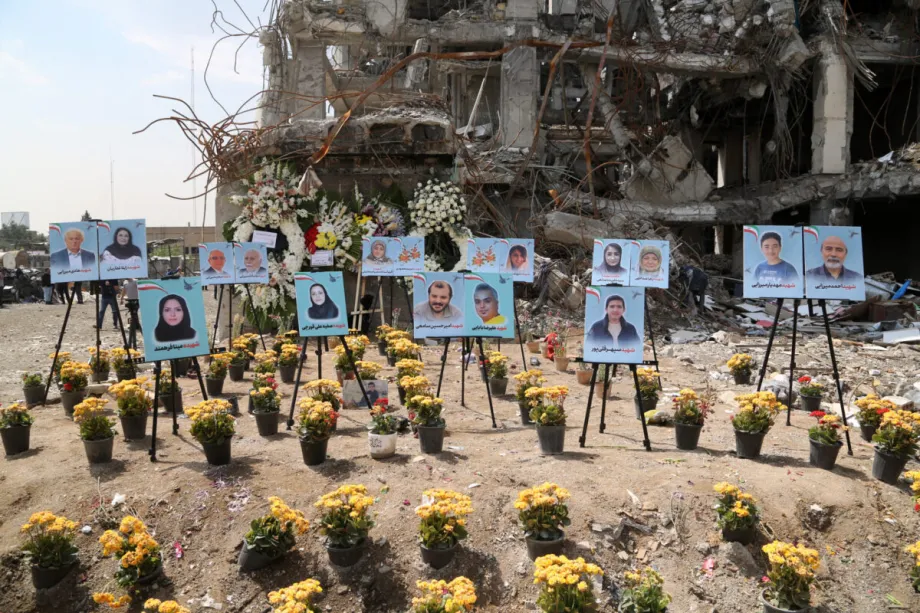
The same pattern appears in the current war. On 3 April, 2026, Reuters reported that Iranian officials were present among street gatherings and night-time rallies. These gatherings did not prove national consensus, but they did undermine the claim that Iran’s domestic legitimacy would collapse immediately under attack. Some participants were loyal supporters of the state. Some simply opposed the bombing of their country. Others were connected to official structures. Iran’s streets were not a stage for thanking Donald Trump. They showed a society under fire, caught between fear, anger, survival and the instinct to defend the country.
Much of the American misunderstanding comes from the way Iran has been framed for years: not through the complexity of Iranian society, but through a propaganda and security lens. Benjamin Netanyahu has spent two decades presenting Iran as an absolute and urgent threat, while pressing for the complete elimination of its nuclear capacity. In 2015 the White House had accused Israel of selective leaks and distortion of the US position during nuclear talks. In 2018 Netanyahu had made claims about Iran’s nuclear activity that were difficult or impossible to verify. In April 2025, he again said that the only “good deal” would dismantle Iran’s entire nuclear infrastructure. By June of that year, he was suggesting that Israeli attacks could lead to regime change.
That is no longer merely non-proliferation policy. It is a project to redesign Iran from outside.
Trump has added to this fog. On 1 April, 2026, he claimed that Tehran had asked for a ceasefire, a claim Iranian officials described as false and baseless. Days later, he publicly called on Iranians to rise up against their government. On the nuclear file, he has repeatedly spoken with certainty about Iran being close to a bomb or about the “complete destruction” of its nuclear programme. Yet it has reported that the US intelligence assessment in 2025 still held that Iran was not building a nuclear weapon.
None of this absolves Tehran. In 2025, the International Atomic Energy Agency raised concerns about past undeclared activities and insufficient Iranian cooperation. Concerns about Iran’s enrichment levels are real. But responsible foreign policy based on genuine concern is not the same as war-making built on exaggerated certainty. It is one thing to say that serious questions remain about Iran’s nuclear programme. It is another to turn those questions into a licence for apocalyptic narratives, regime change and military action whose claimed results even US intelligence does not confirm.
Anti-Iran media have also shaped this debate, especially Iran International, the Persian-language network launched in May 2017. The Guardian, in two separate reports, said the channel had faced allegations of financial links to the Saudi royal court, reported claims about the scale of its launch funding and described allegations of outside influence on its editorial line. The network has denied state affiliation and external interference. In 2023 Tehran accuses the channel of Saudi funding, while Saudi Arabia did not give a public response in that report.
For American readers, the point is simple: a Persian-language outlet based abroad is not automatically neutral, just as Iranian state media are not neutral. In a battle of narratives, money, political networks and strategic interests matter.
critics go further, arguing that parts of this media ecosystem align with Israeli security objectives and even with projects close to Mossad. I have not found solid independent evidence proving direct Mossad control. What is clear, however, is that part of this ecosystem helped construct an image of Iranian society as if it were lining up to thank Trump and the bombers. Reuters field reporting does not support that picture. What appeared instead was anxiety, anger, resistance and, in some cases, convergence between people and state against an external enemy.
This is the lesson Washington repeatedly refuses to learn. People can be angry with their own government and still reject foreign attack. When a country comes under bombardment, many citizens first defend their homeland, not the aggressor. This logic has appeared in Iran, Iraq, Lebanon, Gaza and elsewhere.
As the US-Iran ceasefire approaches its expiry on 21 April, 2026, and reports point to possible new talks in Pakistan, Washington needs clarity more than ever. It must ask whether it wants to remain captive to Netanyahu’s familiar strategy, which turns every crisis into a final emergency, or whether it is prepared to recognise the complexity of Iranian society and take diplomacy seriously.
Above all, it must reject the illusion that Iranians are standing in line to thank Trump. They are not. Many, despite their internal disagreements, have stood with Iran and, in the moment of foreign attack, with their own state. Any American policy that fails to see this reality is not only immoral. It is strategically blind.