
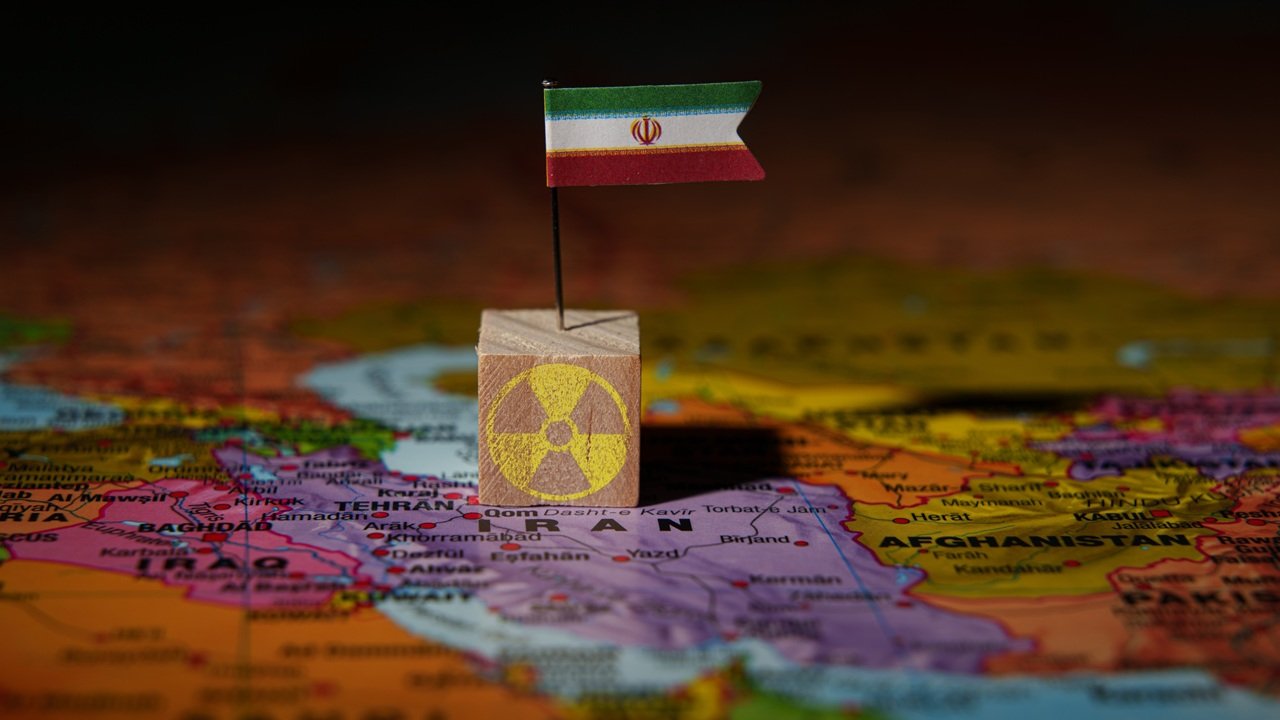
US-Israeli strikes have not reset Iran’s nuclear program to zero. Expertise and infrastructure survive. The knowledge is permanent; stopping Iran indefinitely is impossible. Delay, not “never,” is the achievable goal. A nuclear Iran remains likely.
Iran Nuclear Ambitions have become the focal point of global security as tensions escalate in the Middle East. While recent military operations aimed to dismantle enrichment sites, the underlying Iran Nuclear Ambitions continue to drive Tehran’s long-term strategic goals.
Experts argue that the persistence of Iran Nuclear Ambitions is fueled by a desire for regime survival and regional deterrence. Ultimately, historical precedents suggest that completely eradicating Iran Nuclear Ambitions may be an impossible task.
5 Factors Driving Iran Nuclear Ambitions
Today, nine countries possess nuclear weapons: the United States, Russia, the United Kingdom, France, China, India, Pakistan, Israel (privately), and most recently North Korea.
Even if other nations wanted to join this exclusive club, they likely wouldn’t be allowed in. The United States has exerted considerable diplomatic leverage to encourage other potential nuclear nations—both allies such as South Korea and Taiwan and adversaries like Libya—to abandon their nuclear programs. When diplomacy fails, other methods are used. Israel has repeatedly bombed its neighbors—Iraq in 1981, Syria in 2007—to stop their nascent efforts to acquire nuclear weapons.
The United States invaded Iraq in 2003 for the same reason, although much of the information suggesting Iraqi dictator Saddam Hussein had been pursuing the weapons turned out to be fabricated. And both last year and this year, the United States and Israel conducted a series of strikes on Iran to ensure it wouldn’t join the very exclusive club of nuclear powers.
There are legitimate reasons to fear a nation such as Iran having nuclear weapons. However, a valid question remains whether Tehran’s nuclear ambitions can even be stopped. Nuclear weapons were first built more than 80 years ago, in 1945. The process of building them is well-understood by now, and the technology required is widely available. Barring outside interference of the sort recently used against Iran, any nation on Earth would likely be able to build them, given enough time and effort.
The Military Strike on Iran Nuclear Ambitions
Wait, Didn’t the US and Israel “Obliterate” Iran’s Nuclear Program?
Destroying Iran’s nuclear program remains a key objective for President Donald Trump. Last June, he claimed the Islamic Republic’s nuclear program was “obliterated” in the Operation Midnight Hammer airstrikes that hit several of Iran’s nuclear facilities.
“Monumental Damage was done to all nuclear sites in Iran, as shown by satellite images. Obliteration is an accurate term!” Trump wrote on Truth Social after the attacks.
“Iran’s nuclear facilities have been obliterated—and suggestions otherwise are fake news,” crowed one headline from the White House.
“Based on everything we have seen—and I’ve seen it all—our bombing campaign obliterated Iran’s ability to create nuclear weapons,” Secretary of Defense Pete Hegseth told CNN.
For months, the White House doubled down on the stance that Iran’s nuclear program was set back by years at the very least. Then, earlier this year, the tone shifted, and the message from the administration was that the United States needed to act imminently to keep Iran from having a nuclear weapon.
On February 28, the United States, supported by Israel, launched Operation Epic Fury, which destroyed Iran’s air defenses, sank many of its warships, and further crippled Tehran’s nuclear ambitions.
Earlier this week, while being visited by a group of children in the Oval Office, Trump went off script. Instead of focusing on the importance of youth sports and fitness, which is why the children were meeting with the president, he ranted about the need to carry out attacks on Iran, even suggesting at one point that Iran could have had a nuclear weapon “within two weeks.”
While speaking to reporters, but in front of the children, Trump stated, “We would have had Iran with a nuclear weapon, and maybe we wouldn’t all be here right now, I can tell you, the Middle East would have been gone. Israel would have been gone, and they would have trained their sights on Europe first and then us, because they’re sick people. These are sick people, and we’re not going to let lunatics have a nuclear weapon. The power of a nuclear weapon is something I don’t even want to talk about. It’s not going to happen. And we have beaten them badly.”
Diplomatic Lies Regarding Iran Nuclear Ambitions
Iran’s Leaders Say They Don’t Want Nuclear Weapons. Can We Believe Them?
The Islamic Republic has stated that it isn’t seeking to obtain nuclear weapons, and its ambitions fall short of actually producing any. The regime has claimed its program is about nuclear energy, not nuclear weapons.
There is no reason to believe this, of course. A civilian nuclear program could allow Tehran to obtain the materials necessary for a bomb.
In fact, there aremany reasons why Iran would want a nuclear weapon. The most obvious is seen by current events. The United States and Israel have repeatedly bombed Iran, with the assumption that Iranian leaders cannot do much to retaliate. If Iran could retaliate by firing a nuclear missile at Tel Aviv, the attacks might stop.
Nuclear arms would thus provide greater regime security and deterrence. A nuclear program could also increase its influence in the Middle East and allow it to compete with rivals such as Israel and Saudi Arabia. These aren’t defensible reasons, but they do highlight why Iran may never stop attempting to obtain nuclear weapons.
This point can’t be stressed enough, but to keep Iran from ever obtaining a nuclear weapon will require greater determination. It isn’t clear if Americans, and certainly not Trump, have enough determination to make that happen.
A bigger issue is that stopping Iran’s ambitions may simply be impossible.
Historical Precedents for Iran Nuclear Ambitions
A Nuclear Weapon Isn’t “Greek Fire”—It’s More Like Gunpowder
During the early Middle Ages, the Byzantine Empire developed “Greek Fire,” a devastating, water-resistant incendiary weapon used to defend its ships and ports against naval attacks. It has been cited as a crucial factor in the empire’s survival for centuries.
None of its chief rivals, from the Arabs to the Bulgars to even the Crusaders, could steal or reproduce it because it was treated as a state secret. Byzantine commanders publicly claimed that the weapon had been revealed to them by the angels, and refused to elaborate. The chemical was so compartmentalized in its production that its “recipe” was lost to time.
That will never be the case for nuclear weapons. A better analogy for nuclear weapons is gunpowder—a once-exotic weapon that spread quickly after it was introduced.
It may have taken nearly 130,000 people working on the Manhattan Project at the height of the program to create the first atomic bomb, but once it was created, the proverbial nuclear genie was out of the bottle. The Soviet Union had its own massive program underway in the late 1940s. With intelligence stolen from the Manhattan Project, it developed its own atomic bomb only four years later, in 1949.
Other major powers—the United Kingdom, France, and China—followed suit during the 1950s and 1960s. Israel had likely prepared a rudimentary nuclear weapon by the time of the Six-Day War in 1967, although it went unused after the tide of that war went in its favor. India and Pakistan followed suit in 1974 and 1998, respectively. North Korea, the most recent entrant into the nuclear club, conducted its first test in 2006.
Why Physics Favors Iran Nuclear Ambitions
We need to remember that these programs were running more than 80 years ago, starting from scratch when much of the required information was still hypothetical. Today, the physical principles and design of a nuclear bomb are public knowledge; a sufficiently talented and well-funded high schooler could build one.
The most difficult part of building an atomic bomb is acquiring the 90 percent enriched uranium or weapons-grade plutonium. That is not an easy task by any means; it requires sophisticated infrastructure, vast resources, and specialized expertise to overcome technological and logistical hurdles. Yet it is also important to understand that no matter how many times Iran’s program is hit, it is never reset to zero.
The infrastructure may be destroyed, but it can be rebuilt. The specialized expertise lives on, and is sufficiently diffused that killing a handful of key nuclear scientists, as Israel has done, is unlikely to stop the program.
This partially explains how India, Pakistan, and North Korea have all managed to build nuclear weapons. In the case of the former two nations, their programs were created long before the Internet existed. Pakistan successfully built a clandestine network that acquired uranium enrichment technology from Europe and received technical assistance from China.
North Korea’s efforts were hampered by its international isolation, but covertly, Pyongyang eventually achieved its goal.
We already know that Russia has provided significant civilian nuclear assistance to Iran, even as Moscow officially maintains it opposes a nuclear-armed Islamic Republic. The effort could continue in an era where sharing of information via the Dark Web is easier than ever.
“This program is a very vast program,” International Atomic Energy Agency (IAEA) Director General Rafael Grossi told Fox News in March. Grossi noted that Iran’s network of buildings, expertise, and infrastructure had been built over decades: “At the end of this … the material will still be there, the enrichment capacities will be there.”
The Endless Timeline of Iran Nuclear Ambitions
“Never” Is a Very Long Time
Trump has repeatedly proclaimed that the goal of the US military campaign is to ensure “Iran never gets a nuclear weapon,” but what does never even mean?
At best, Iran’s nuclear program can be delayed, but even that will require strict inspections, diplomatic pressure, and constant monitoring. The knowledge is there, and it will remain.
It isn’t like Greek Fire, where the recipe could be lost or destroyed. As long as the regime remains in place and the Islamic Republic exists, there is a likelihood that it will obtain a nuclear weapon. That’s likely not a comforting statement, but believing otherwise is simply naïve.