
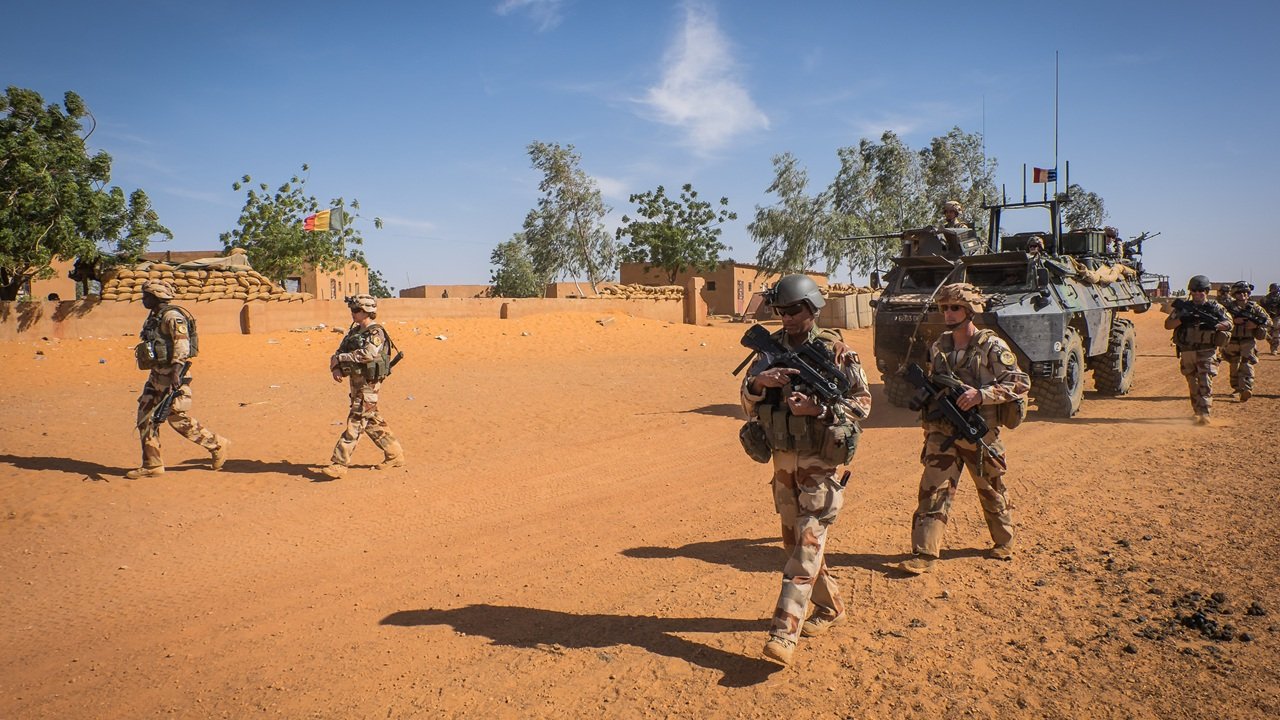
JNIM’s sweeping offensive caught Mali’s Russian-backed junta by surprise, killing the defense minister. Russia’s brutal but unsophisticated counterinsurgency mirrors Soviet Afghanistan, driving populations to militants. A Mali collapse would likely trigger regional cascading failures and a massive northward migrant wave dwarfing the 2015 Libya crisis.
The fall of Mali’s military junta will profoundly destabilize West Africa, and potentially its neighbors as well.
Over the weekend, Islamist rebels in Mali launched a sweeping attack against the country’s ruling military junta. The attack targeted dozens of cities and towns across the country, and by all accounts caught the junta and its allied foreign mercenaries by surprise; the militants captured at least two cities, including the key northern hub of Kidal, and inflicted heavy losses in government troops in other areas. In one particularly brazen move, the rebels attacked the junta’s military headquarters in Kati, a fortified town outside the capital of Bamako—breaking in and killing the Malian defense minister in a firefight.
The attack was stunning in its boldness and its scope. It gives lie to the junta’s dogged insistence, against mounting evidence to the contrary, that Mali’s security situation was stabilized and improving. And it suggests that Jama’at Nusrat al-Islam wal-Muslimin (JNIM), al-Qaeda’s regional affiliate in the Sahel and the primary instigator of the attacks, is on the cusp of launching the next phase of its war on the central government—suggesting ominous consequences for the Sahel, and potentially the beginning of a new refugee crisis.
This weekend’s attack was probably only a matter of time. Outside Bamako, the militants effectively control the roads connecting the capital to Mali’s other provinces. Rather than using force to cut the capital off altogether—a move that would force an immediate outcome to the crisis, and one that might prompt greater intervention from Russia, the junta’s principal foreign backer—the group has imposed a loose blockade, demanding payment from truck drivers and seizing or turning back strategically useful cargo such as gasoline. This state of affairs has kept outright war away from the capital until now, but it has enriched the militants while starving the junta of key resources. Bamako’s inability to address the crisis has made clear the trend line: JNIM is growing in power, while the junta is withering on the vine.
Until this weekend, the militants had been perfectly content to allow this situation to persist. Indeed, after the recent attacks, the situation has somewhat returned to normal, at least in the capital and its environs. Yet the audacity of the JNIM offensive, and the junta’s limp response, will likely embolden the group to conduct more ambitious operations in the future. If present conditions persist, the collapse of the military government is not a question of if, but when—and policymakers in the West should carefully consider the consequences.
A Brief History of the Sahel Crisis
In early 2011, as the Arab Spring spread across the Middle East and North Africa, protests erupted in Libya against longtime ruler Muammar Gaddafi. After a violent crackdown led to civil war, the Libyan dictator recruited mercenaries from across northern Africa to crush the protesters-turned-rebels and prop up his teetering regime—recruiting particularly heavily from the Tuaregs, a nomadic Berber ethnic group numbering roughly four million and concentrated in northern Mali and Niger.
The Tuaregs form local majorities across vast swaths of the sparsely populated northern Sahara Desert. Like the Kurds of the Middle East, they are divided by the colonial-era borders of the 20th century and have longed for a nation of their own. Unlike the nations of the Middle East, however, the Sahara is essentially borderless, allowing the Tuaregs to easily cross many hundreds of miles from northern Mali into Libya and back. Sure enough, as the civil war turned against Gaddafi, the Tuaregs abandoned his defense and returned to the Sahel—bringing with them vast quantities of arms and military equipment seized from Libyan arsenals. The following year, Tuareg veterans of the Libya conflict revolted in Mali, allying with local jihadist groups and carving out northern Mali as an independent Tuareg state.
By 2013 the rebellion, now led by Islamists instead of Tuaregs, had asserted control over most areas in the north and was spreading southward. The Islamist advance led the central government in Bamako to call for outside assistance. France, West Africa’s historical colonial suzerain and an ongoing close trade partner, responded with Operation Serval, a military campaign that drove back the rebels and restored Malian control over the north. In 2014, the French military transitioned to Operation Barkhane, a long-term security assistance mission that came to include other Sahel nations as well.
This situation—with French-assisted civilian governments retaining solid control over urban areas while insurgents lurked in the countryside—remained more or less stable in the Sahel for almost a decade. However, in the early 2020s, three developments upended it.
First, a string of military coups across the Sahel overthrew the quasi-democratic governments of Mali, Niger, and Burkina Faso. The new military dictatorships refused to accept French demands for a timeline for return to civilian rule, and expelled the French troops from their territories in short order. They also cut ties with the pro-democracy Economic Community of West African States (ECOWAS), and established the rival “Alliance of Sahel States” (AES) in its place.
Second, in 2022, the new AES juntas – still dependent on outside military assistance for security – brought in Russia’s Wagner Group. But the Wagner Group—redubbed the “Africa Corps” after Wagner leader Yevgeny Prigozhin’s failed mutiny in the summer of 2023—proved both far more violent and far less effective than French troops at containing the insurgents.
Third, the insurgents themselves grew stronger. JNIM emerged in 2017 as a merger between multiple smaller Islamist organizations; it soon grew to become the most powerful militant group in all of West Africa. The AES juntas are also contending with an Islamic State (ISIS) regional affiliate—an enemy of JNIM—but JNIM, now once again allied with the Tuaregs, is by far the stronger of the two.
Russia Can’t Save Mali
Today, the Russian position in Mali has increasingly come to resemble the Soviet Union’s position in Afghanistan four decades ago. Russian troops are stationed in a handful of Malian urban areas, nominally protecting them and periodically clearing the main highways while making little effort to contest the militants’ control over the countryside. That strategy did not work in Afghanistan, and it is not working in Mali.
The shortcomings of the Russian approach are clear. In addition to a more proactive deployment pattern, French military advisors had access to a sophisticated intelligence apparatus—used to identify and track militants in civilian areas, learning about their operations and using gathered intelligence to target their financial flows and undermine their regional alliances.
Russian forces in Mali have been far less sophisticated. The Africa Corps’ approach is simpler and more brutal: enter areas suspected of militant activity and use violence and atrocity in an attempt to cow the population into submission. This strategy has led to the deaths of thousands of Sahel civilians and drawn international outcry. It has also been a vast strategic blunder—leading to hatred of the junta in the hinterlands and driving the population into the arms of JNIM, by some estimates the fastest-growing militant group in the world.
In the near term, the security situation remains precarious, although Bamako is unlikely to fall right away. The Kremlin has reiterated its commitment to the region, and as long as Russian troops remain present there—protected by Russian fire support from the air—there is little to suggest that JNIM will seek a full-on confrontation with them. Indeed, perhaps in recognition of the fact that massacring Russian troops is likely to offend Moscow, JNIM showed remarkable restraint towards them over the weekend; after it seized Kidal, footage circulated on social media showing its fighters allowing Russian troops to leave the city under escort. Yet time favors the militants: as JNIM grows more assertive, it will likely grow less discerning, and the costs for Russia are likely to rise. Grappling with an unwinnable insurgency, an utterly unreliable local ally, and pressing needs closer to home, Russian leaders are today facing the same impossible choice the Soviets (and later the Americans) faced in Afghanistan: either remain indefinitely in the Sahel and accept the costs in blood and treasure, or cut their losses and depart the country, leaving Bamako to its fate.
Mali’s Collapse Will Lead to Regional Chaos
Political changes often happen in waves. The revolutions of 1848 and 1989 in Europe, the Arab Spring of 2011, and the string of Sahel coups in the early 2020s were essentially contagious; after a development took place in one nation, its neighbors witnessed it, drew lessons from it, and repeated it.
In the case of the Sahel states, this has ominous consequences. At their core, the AES juntas are fragile and artificial governments, supported only by Russian firepower. Once such governments fall, they tend to fall quickly—as evidenced by the collapse of Afghanistan in August 2021 and Syria in December 2024. And given that all the AES regimes are essentially variations on the same theme, there is no reason to expect that a collapse in Mali would remain there.
JNIM is preparing for this outcome. In its conquered territories, it already governs as a quasi-state—collecting taxes from economic activity, providing basic social services, operating a court system, and attempting to build up legitimacy. Yet the chances that a brutal Russian-backed military dictatorship will transition to a stable Islamist government, as happened in Syria, are extremely low. Unreformed jihadists make for poor rulers: their imposition of harsh laws and violent order ensures short-term stability, but causes widespread anger and makes their governments brittle and prone to collapse from minor external disturbances. Indeed, the 2013 government recapture of Northern Mali was not primarily due to French military prowess, but rather to the insurgents’ extraordinarily aggressive governance of captured territories—instituting strict laws on gender separation and women’s dress, banning smoking and music, and instituting Sharia-guided punishments, all measures that were utterly foreign to West African Islamic practices and alienated the people under their control. JNIM is repeating these impositions in its captured territories today.
This is necessarily of concern beyond the Sahel itself. Either anarchy or Islamist tyranny in the Sahel is likely to be a calamitous development to regional security, with far-reaching consequences. The main losers in this scenario, other than Malian civilians, will be the other ECOWAS states—swamped with refugees and vulnerable to further aggression from JNIM, as Togo and Benin have already experienced.
However, a Mali collapse would ultimately also be felt much farther away. Mali lies at the heart of existing migrant networks going north as well—and Europe would almost certainly feel the aftershocks of the chaos. Europe is shielded somewhat by the vastness of the Sahara; unlike the previous African migrant crisis stemming from Libya, located along the Mediterranean shore, would-be migrants into Europe would need to first pass through hundreds of miles of desert, as well as the existing nations there—none of which are known for their friendliness to migrants. Yet the scale of the problem is likely to dwarf the previous round of migration. There are a combined 75 million people in Mali, Niger, and Burkina Faso, a population 10 times larger than Libya’s. Unfortunately, European leaders have few tools available to confront this issue—but would be wise at least to consider it before it arrives on their doorstep.