
A profound breakdown of Cairo’s unconstitutional, clandestine deployment of air defenses and military personnel to the Gulf, evaluating the economic leverage of debt relief against severe escalatory risks with Iran.
The deployment of regional military assets under the pretext of defensive deterrence highlights a profound shift in traditional security alignments across the Middle East. Strategic recalculations regarding Egyptian forces in the UAE reveal a deliberate pivot away from historic isolationism toward high-stakes Gulf security integration, balancing urgent economic survival against severe geopolitical risks. Ultimately, the clandestine presence of Egyptian forces in the UAE positions Cairo at a critical crossroads where tactical regional cooperation could inadvertently trigger direct entanglement in a broader, multi-front confrontation.
Egyptian forces in the UAE face domestic scrutiny
The presence of Egyptian forces in the UAE, against the backdrop of the US and Israeli-led war on Iran, raises serious questions among the Egyptian public about the missions and objectives, the gains and losses, and the potential dangers of involvement in a war that Egyptians say has nothing to do with them.
The suspicion and controversy may be exacerbated by the revelation that Egypt sent advanced air-defence systems and their operators to the UAE, Saudi Arabia, and Kuwait during the war, according to The Wall Street Journal.
This decision, made secretly and without parliamentary approval, represents a strategic shift in the Egyptian military doctrine and Cairo’s stance of refusing involvement in any war outside its borders. It may have future repercussions for Egyptian national security.
Article 152 of the Egyptian Constitution stipulates that the President of the Republic, in his capacity as Supreme Commander of the Armed Forces, “shall not declare war, nor send the Armed Forces on a combat mission outside the borders of the State, except after consulting the National Defence Council and obtaining the approval of the House of Representatives by a two-thirds majority.”
How Egyptian forces in the UAE alter policy
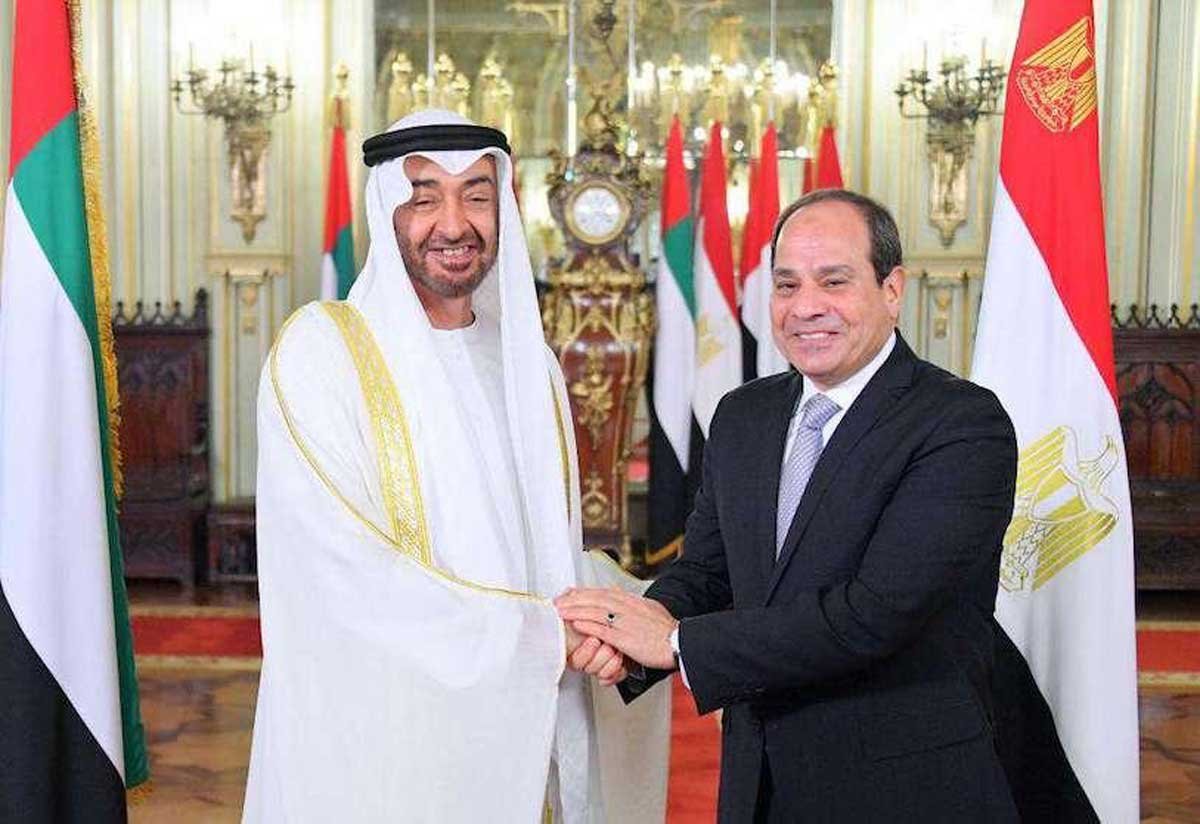
For over a decade, the “distance of the railway” policy repeatedly invoked by Egyptian President Abdel Fattah al-Sisi to express his support for the Gulf states, without any concrete action, has been a source of ridicule and political embarrassment for the Egyptian regime, which has received generous Gulf support since the 3rd July 2013 coup. Pragmatism Sisi’s motto, a general known for his cunning and shrewdness.
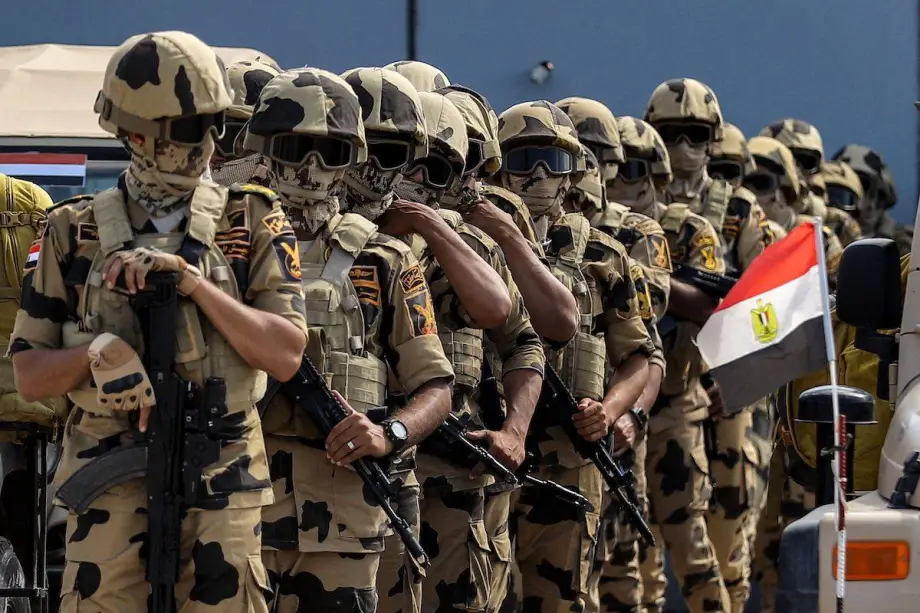
He has consistently sought support and funding from Gulf capitals, and even explicitly requested it years ago in an audio leak broadcast by the opposition channel Mekameleen (which broadcasts from abroad). In the leaked recording, he stated, “We need 10 billion to be deposited into the army’s account. We want the same amount from the UAE and Kuwait,” adding, “Money is like rice to them (the Gulf states),” as he put it. The Egyptian force undertakes limited, defensive missions, including securing specific areas, providing logistical and intelligence support, enhancing operational capabilities, and training Gulf personnel. It also serves as a deterrent to Tehran and, simultaneously, a message of reassurance to the Gulf that Egypt will fulfil its promises.
The size of the Egyptian force deployed in the UAE, its armament, and its deployment locations remain unknown. The official Emirati statement described it as a “detachment” (comprising crews of approximately eight Rafale fighter jets), indicating its limited size. Cairo has also not disclosed the identities of the four Gulf states where Egyptian forces and equipment are present, as revealed by Al Jazeera.
Cairo views the presence of Egyptian forces in the UAE and other Gulf states as a prelude to greater joint Arab coordination and a gesture of goodwill towards establishing a joint Arab force, thus preventing the region’s security from being held hostage to any Iranian or Israeli provocations.
Leverage of Egyptian forces in the UAE
Former Egyptian Assistant Foreign Minister, Ambassador Fawzi al-Ashmawy, was outspoken when he called for the cancellation of Egypt’s debts, or at least a portion of them, in an attempt to capitalize on the presence of Egyptian forces in four Gulf states since the beginning of the war. In a post on his personal Facebook page, he stated that “logic and fairness dictate serious consideration of cancelling a significant portion of Egypt’s debts,” noting that “this call carries no hint of mercenary activity or blackmail; rather, it stems from the nature and foundations of international relations, which are based on the exchange of interests and the sharing of burdens” (link to the post: https://h1.nu/1v9n1).
Al-Ashmawy returned to the issue, again urging Abu Dhabi to reciprocate Egypt’s support, stating in a second post: “Logic and fairness dictate that the UAE consider Egypt’s vital interests regarding the Nile waters and the unity and stability of Sudan and Libya.” Opponents suggested that Sisi’s decision was a pre-emptive move and a strategic tactic to pre-empt his demand to remain in power in Egypt for a fourth presidential term, extending until 2036. This would require a constitutional amendment, political and economic support from the Gulf, and arrangements with Washington, which would undoubtedly welcome the move by Trump’s close ally and might even secure his ambition before the US president leaves the White House in early 2029.
Egyptian forces in the UAE project regional deterrence
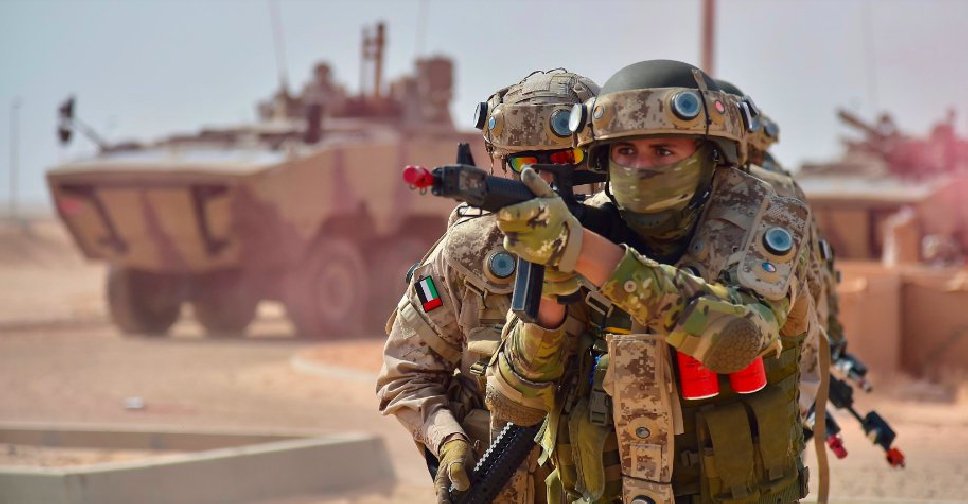
However, political analyst Mohamed Gomaa took a different approach in his interview with Middle East Monitor, stating that the purpose of the Egyptian force’s presence in the UAE is to send a deterrent message to anyone contemplating secession or separation from its seven emirates, especially after rumours circulated about Sharjah’s potential separation from the UAE. Israel’s presence in the Gulf region is particularly significant, especially after the revelation that it has supplied the Gulf with an air defence system similar to the Iron Dome, along with Israeli crews to operate it, according to Axios.
Risks for Egyptian forces in the UAE environment
While the anticipated gains from Sisi’s decision are expected, observers warn against dragging Egypt, as a regional power, into a renewed war. They question the Egyptian reaction should Iranian missiles target Egyptian forces stationed in four Gulf countries.
These risks are compounded by the fact that the UAE’s involvement in the war, whether covert or overt, and its receipt of Israeli military support, could have complex repercussions. This is especially true if Washington or Abu Dhabi were to request Cairo’s participation in operations. It’s worth noting that Iran does not consider Egypt a party to offensive operations against it, and high-level contacts exist between the two countries to prevent escalation. However, involvement in what Tehran might deem hostile acts could expose Egypt to significant risks.