
This audit dissects Trump’s 2026 foreign policy failures, revealing a systematic gap between coercive diplomacy and strategic execution. From Iran to trade, the administration’s disjointed tactics undermine long-term US credibility and leave global challenges unresolved.
The gap between Donald Trump’s performative diplomacy and verifiable strategic outcomes defines 2026’s foreign policy landscape, where Trump’s missions repeatedly stall against complex geopolitical realities. While the administration claims progress on Iran, a deeper audit reveals that Trump’s missions remain systematically unaccomplished across China, Russia, India, trade, and the Western Hemisphere.
Trump’s missions begin with Iran crisis management
Three months after the Iran war began, the United States and Iran are engaged in talks aimed at ending the crisis, even as both sides conducted limited military strikes against each other this week and a separate-but-linked conflict between Israel and Hizballah in Lebanon continued to escalate.
The central focus of the US-Iran talks from America’s perspective remains reopening the Strait of Hormuz and establishing a more sustainable diplomatic framework for addressing a longer list of unresolved issues at the core of the conflict.
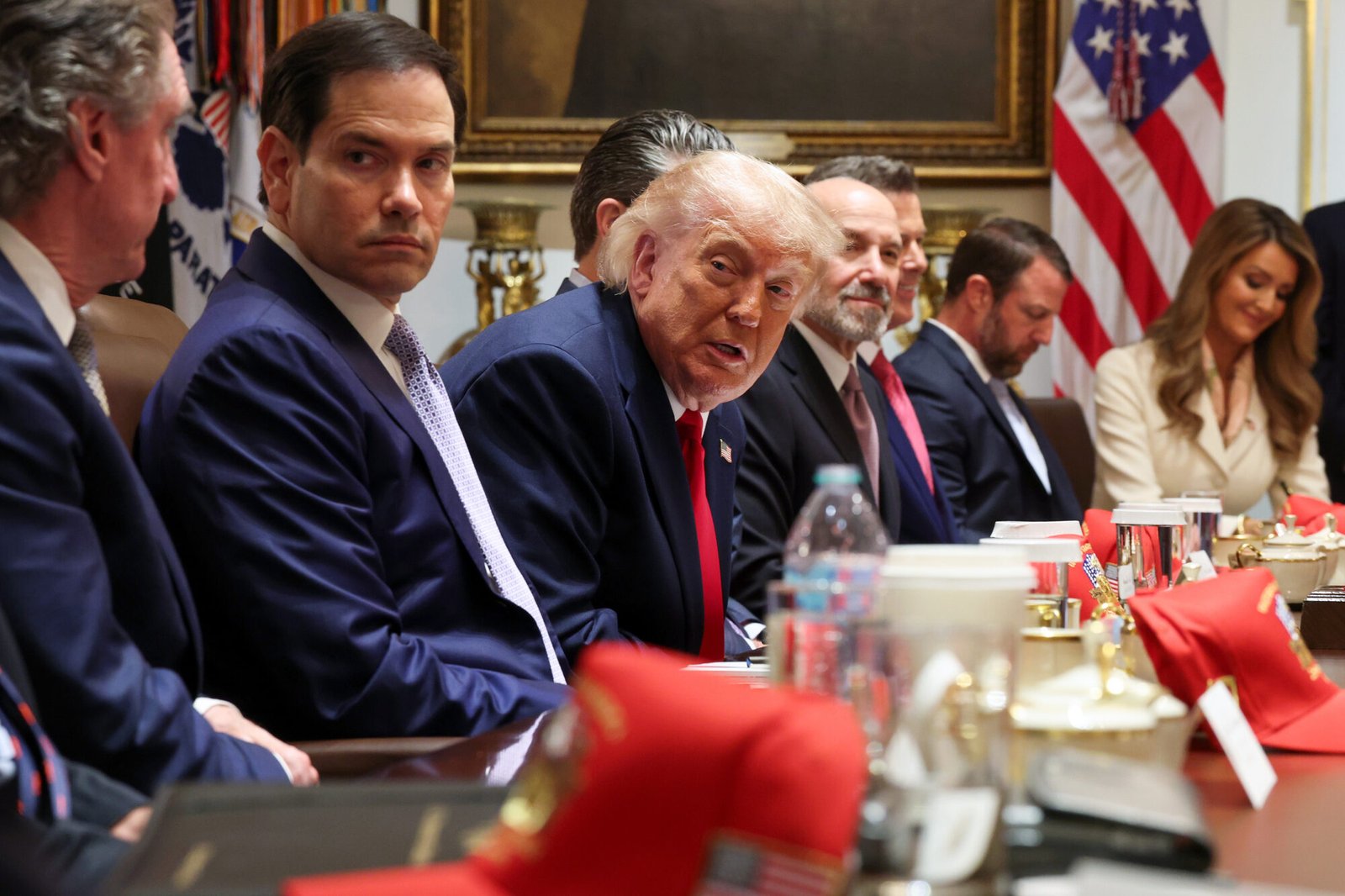
US President Donald Trump, chairing his administration’s 12th cabinet meeting on May 27, continued to send mixed messages about the pathway forward on Iran, saying, “Iran is very much intent, they want very much to make a deal. So far, they haven’t gotten there; we’re not satisfied with it, but we will be. We will be. Either that or we’ll just have to finish the job.”
Secretary of State and National Security Advisor Marco Rubio, speaking after Trump in the same meeting, sought to clarify that “now, the president’s preference … is always to negotiate these things and to figure out if you can have agreements. Diplomacy is always the first option, and we continue to work on that through your envoys, Mr. [Steve] Witkoff and [Jared] Kushner and others, the vice president [J.D. Vance], who have been very involved.”
What “finish the job” means in practical terms remains unclear. The most likely scenario for now is a perpetuation of the very fragile status quo, with the Trump administration toggling between limited military strikes and coercive diplomacy while the Iranian regime concentrates on regime survival and avoids any capitulations that would make it appear as weak as it actually is. Whether the 2026 Iran war ends up being a net gain or net loss for US national security remains indeterminate at this stage.
Where Trump’s missions run empty
Trump’s Foreign Policy Running on Empty in 2026
In the broader balance sheet of US foreign policy, Washington has seen few gains in the first five months of this year on the leading issues that dominate the global agenda.
China: Inconsequential outcomes from the May summit. Trump’s visit to Beijing provided photo opportunities, but it offered little clarity about the trajectory of the most consequential bilateral relationship in the world today.
Russia: An ongoing war against Ukraine. Russia maintained its aggressive military strikes against Ukraine, targeting the country’s capital Kyiv with drones and missiles this week, despite considerable efforts by the Trump team in its first 16 months in office to bring an end to that war. The ongoing diplomatic failure on this front casts a long shadow over perceptions of America as a power capable of achieving its desired outcomes at the negotiating table.
India: A rattled relationship with a key US partner. The policy moves by Trump 2.0 on India over the past 16 months have created new uncertainties, and Rubio’s visit there this week did not lead to any new breakthroughs.
Trade: Setbacks for Trump and no clear pathway forward. More than a year after Trump announced sweeping “Liberation Day” tariffs on nearly every other country in the world, the Supreme Court ruled against the Executive Branch, and courts have ordered the administration to refund tariffs that were unlawfully imposed.
Immigration: A continuing aggressive crackdown. The year started with the murders of two American citizens protesting harsh immigration measures by federal agents, which led to a dispute in Congress that forced a partial shutdown of the government this spring. The Trump team continues to press forward with unprecedented measures to reshape America’s immigration system. Immigration policy remains a top priority for the White House. All of these moves have a direct impact on US foreign policy because of the implications they have for America’s relations with other countries — both the countries where immigrants come from, and the countries where America has sent some immigrants to, which are not always the same places under Trump 2.0.
The Western Hemisphere: A region that stays high on the agenda. The year 2026 began with a bold raid capturing Venezuela’s leader and developing plans to exploit that country’s energy resources. Trump’s team continues to use compellence tactics in America’s immediate neighborhood, with renewed statements on seizing Greenland and recent moves further upping the pressure on Cuba.
Unaccomplished Trump’s missions in Middle East
Iran Crisis Reshapes America’s Relationship With the Middle East in Unforeseen Ways
This brief review of the global landscape offers the wider context for what America is facing in Iran and the Middle East writ large. The irregularity in Trump’s overall approach, reflected in divergent statements and actions since a fragile cease-fire was announced in April, has unsettled some of America’s closest partners in the region. Though they still look to America as the strategic partner of choice, many now increasingly question its strategic reliability and worry about the crisis of efficacy in US foreign policy.
In the middle of delicate talks with Iran, Trump issued several calls this past week for additional governments to join the 2020 Abraham Accords, saying at one point he was “mandatorily requesting” countries like Saudi Arabia, Qatar, and Pakistan to normalize relations with Israel.
He also included Turkey, Egypt, and Jordan in his appeal, even though all three already recognize Israel; at the aforementioned cabinet meeting this week, he also mused that the United Arab Emirates, an original signatory of those accords, should join. Additionally, Trump threatened to bomb Oman, a long-time US partner and regional mediator, if it took part in an unspecified effort to control the Strait of Hormuz with Iran. This is all most likely part of Trump’s usual propensity for performative diplomacy and use of psychological warfare to try to reshape outcomes through provocative statements. It remains to be seen whether it will work.
All of these erratic moves could end up being easily forgotten if the United States achieves some clear outcomes on two key files that hang over the Middle East: Iran and the Israeli-Palestinian question. Both are crucial concerns for most of America’s close partners. Hence, a clear pathway forward on both fronts in US policy will be important for America’s long-term role in the region. In Gaza, much still needs to be done — the Board of Peace held a ceremonial meeting on the eve of the Iran war, but several months on it has not consistently met to develop a structural framework or garner the necessary support and investment to deliver tangible results on the ground.
Trump’s Middle East policy in May 2026 is nowhere near the aspirations it had a year ago, at the end of his three-country tour of the region, where the strategic thrust was deepening America’s economic engagement with the leading Arab Gulf economies on issues like artificial intelligence and major investment deals. This ambitious vision of a new relationship with the region grounded in future opportunities for business and commerce will remain illusory if the United States cannot put forth a realistic approach to deal with the many difficult security challenges that loom large in Iran and on the Israeli-Palestinian front.
Trump’s missions face uncertain future
For the time being, Iran will continue to dominate the agenda, and important questions about the overall goals and implications of the moves Trump made remain largely unanswered in practical terms. As this assessment of Trump’s first year in office argued, the US president’s fondness for producing the image of success hinders real lasting progress, while his administration’s lack of organized follow-through on policy implementation impedes the ability to lock in strategic gains.
What does this mean for US policy on Iran, and what can observers expect in the coming weeks? Even if there is some sort of deal announced, the situation remains fragile and far from any stable equilibrium. Trump has signaled that he does not care about the possible domestic costs to his approach, even with midterm elections less than six months away.
His preferred course of action will, thus, most likely entail a continued mix of coercive diplomacy and economic pressure to make the Iranian regime more amenable to America’s demands, combined with occasional strikes to reinforce those non-kinetic tactics as well as to handle threats to US forces in the region. It may also mean an agreement that kicks all of the difficult issues down the line to resolve later, much like the one reached on Gaza.
How Trump’s missions remain unaccomplished
The Trump administration is seeking a deal to pull the situation with Iran back to the status quo ante, where things stood on February 27, while trying to create a framework to address the same issues that existed before the war began. That will likely mean a long and uncertain process lies ahead given the region’s changing dynamics.
Even if the Trump administration announces a Memorandum of Understanding with Iran, it is unclear whether it is possible to convince the current leaders in Tehran to give up something they have already gained from the war — more leverage over the global economy in the Strait of Hormuz — and make progress on tough issues like their nuclear program and ballistic missiles.
That is a very tall order, and Trump 2.0’s performance on the type of sustained diplomacy needed to generate strategic results in other arenas like Gaza and Russia does not bode well for the future of US policy on Iran.