
This analysis examines Pakistan’s prominent intermediary role in managing the Middle East crisis. By driving high-stakes communication channels, Islamabad navigates severe domestic economic pressures, energy shocks, and critical regional alignments to balance global powers.
Navigating a highly volatile geopolitical landscape demands sophisticated statecraft, and Islamabad’s recent diplomatic maneuverings highlight how a regional intermediary can influence global stability. By anchoring its strategy in proactive mediation, the state has actively leveraged its unique position to facilitate dialogue between adversarial powers. This calculations-driven approach directly addresses the urgent need for a U.S.-Iran breakthrough, serving as a critical buffer against regional escalation. As cross-border friction threatens energy corridors and domestic security, the pursuit of this U.S.-Iran breakthrough remains the cornerstone of Islamabad’s contemporary foreign policy agenda.
U.S.-Iran Breakthrough Mediates Surprising Regional Diplomacy
Islamabad’s high profile in helping mediate between the U.S. and Iran took most observers by surprise. Pakistan might appear an unlikely candidate for a peacemaking role, given its history of conflict with India on its eastern border and current confrontation with Afghanistan on its western flank. But the country also shares a long, porous border with Iran, and its active involvement in efforts to end the war reflects both its worries about the potential for spillover and its standing as a go-between for all the main parties to the conflict. The war’s expansion to much of the Middle East threatens important Pakistani diplomatic and economic interests, and has inflamed domestic tensions.
But Islamabad has also found itself in a position of privilege, as one of the few capitals in the world that has close ties to the Trump administration, the ability to reach out to top Iranian leaders, and the backing of China, Pakistan’s longstanding strategic partner, which is equally concerned about the adverse implications of prolonged strife in the Middle East. China’ special relationship with Iran makes Islamabad’s close ties to Beijing all the more valuable.
The Middle East war has created several interlinked challenges for Pakistan. Security risks inside the country are rising, including unrest among the Shia population and a surge of Baloch militancy along the Iranian border. Furthermore, the fuel price shock and supply chain disruptions caused by the closure of the Strait of Hormuz imperil the country’s tenuous economic recovery.
The conflict has also complicated Islamabad’s efforts to preserve its most important and diplomatic connections, whether its working relationship with Tehran, which has not always been cordial, or its newly mended ties with Washington, a crucial strategic and diplomatic partner. Retaining longstanding bonds with Gulf Arab allies, particularly Saudi Arabia – a major source of economic assistance, remittances and fuel supplies, as well as the only country with which Islamabad has a formal defence pact – also remains a Pakistani priority.
Navigating Complex Horizons for a U.S.-Iran Breakthrough
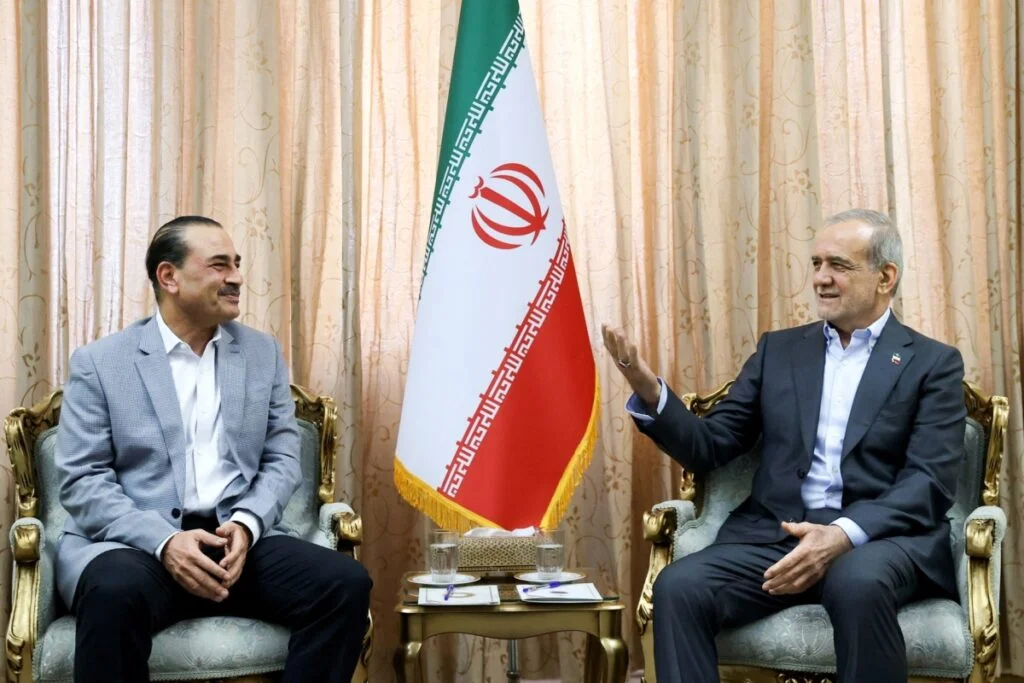
Avowing neutrality, Islamabad swung into action as the war engulfed the Middle East in early March. Leveraging its links with both Tehran and Washington, and collaborating with regional partners including Egypt, Saudi Arabia and Türkiye, Islamabad sought to dampen tensions between the warring parties. Its principal tool for doing so was quiet diplomacy aimed at supporting communication between the U.S. and Iran.
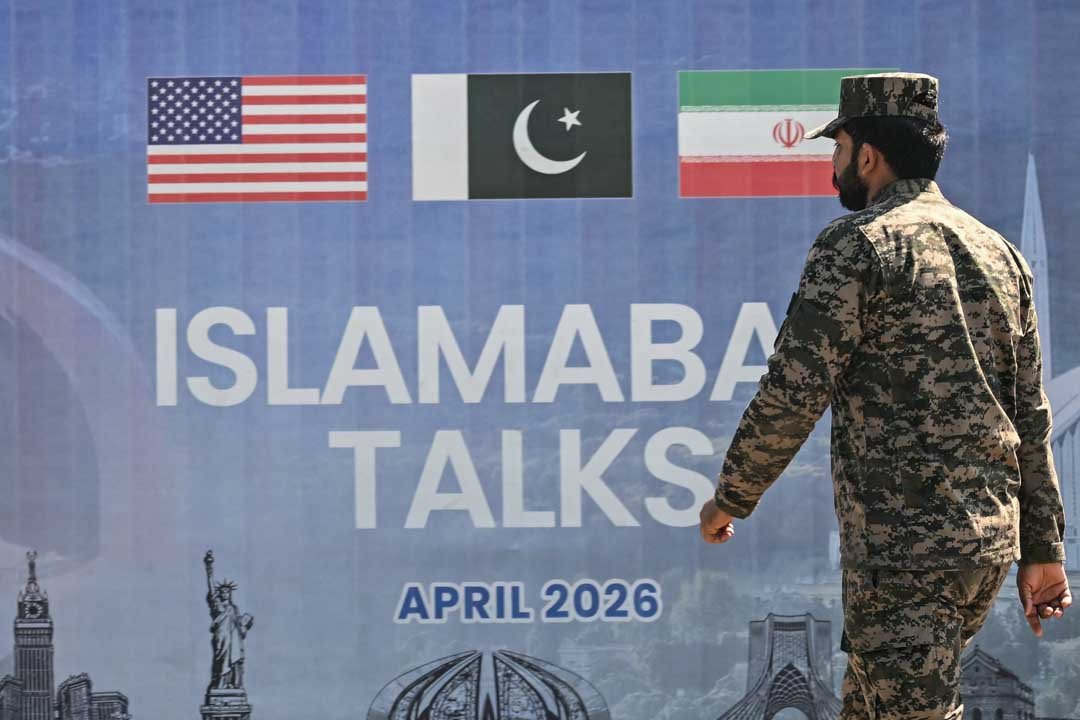
Pakistan directly mediated the 8 April ceasefire between Washington and Tehran, which was followed by the 11-12 April negotiations in Islamabad – the highest level talks between the two sides since the 1979 Iranian revolution. With negotiations proceeding in fits and starts since then, Islamabad remains focused on keeping the two adversaries at the table, particularly at times of heightened tensions.
Taking up the mediator’s mantle is not without hazards for Islamabad, chiefly that it alienates Gulf partners with its declared neutrality or that, through its pact with Riyadh, gets drawn into the war itself. But for Pakistan, the worst-case scenario would be renewed hostilities. It has therefore chosen to stay the course with its mediation efforts, aiming at keeping the ceasefire intact and the diplomatic channels open.
Managing Internal Geopolitical Fractures and Friction Without U.S.-Iran Breakthrough
Internal Fault Lines Since the onset of the war, Islamabad has been careful to maintain a posture of neutrality, in order to lend credibility to its mediation efforts. This stance also acts as a safeguard, at least for now, against being embroiled in a conflict that could undermine internal security. Pakistan is home to the world’s second largest Shia community, constituting approximately 20 per cent of its population of 240 million.
Since Pakistani Shias look to Iranian clergy for ideological guidance and political support, developments across the border shape communal sentiment. Pakistani Shias were enraged by the U.S.-Israeli 28 February strikes on Iran – and particularly by the assassination of Ali Khamenei, the Islamic Republic’s second supreme leader, whom they venerated for his religious credentials. Violent anti-U.S. protests erupted across the country the next day, particularly in cities with large Shia populations, such as Karachi, and Shia-majority regions, such as Gilgit-Baltistan in Pakistan-administered Kashmir.
In Karachi, Shia protesters attempted to storm the U.S. consulate, clashing with and firing at Pakistani law enforcement personnel and U.S. marines guarding the building. Shias in Islamabad – which has scores of Shia mosques (imambargahs) – attempted to breach the capital’s high-security “red zone”, where the U.S. embassy is located. Rioters in Gilgit’s district capital, Skardu, attacked police and torched government buildings, prompting authorities to send in the army.
Several demonstrators were killed in the clashes: eleven in Karachi, three in Islamabad and at least thirteen in Gilgit, while more than a hundred were injured. A police clampdown soon put an end to the disturbances, but tempers still ran high as the killings of top Iranian leaders continued and the death toll of Iranian civilians mounted. Tehran’s participation in and praise for Pakistani mediation efforts has since helped assuage Shia anger.
Pakistan’s concerns over the war’s domestic repercussions are not limited to the Shia backlash. The country’s troubled western border with Iran, where Pakistani and Iranian Baloch insurgents are violently contesting state control in both countries, remains far from peaceful. Bilateral relations have often been strained by Tehran’s accusations that Iranian Baloch militants have found sanctuary in Pakistan.
In January 2024, for instance, Tehran downgraded diplomatic ties with Islamabad and launched cross-border missile and airstrikes following high-profile Iranian Baloch attacks on security personnel in Iran’s Sistan-Balochistan province, bordering Pakistan. While bilateral relations have since improved, including as a result of border management agreements, they could be tested again if the war provides Baloch militants with new opportunities to join hands across the border. Threats to Pakistani security within Balochistan could also intensify should emboldened Baloch militants, exploiting tensions between Islamabad and Kabul, seek safe havens across the province’s borders with Afghanistan.
This would in turn heighten the risk of armed hostilities between Pakistan and Afghanistan. On the economic front, Pakistan has taken a major hit following Iran’s blockage of the Strait of Hormuz and attacks on the Gulf states’ oil and gas facilities.
The rise in global fuel prices is depleting the meagre reserves of a country heavily dependent on imported oil and gas, more than 85 per cent of which comes from the Middle East. In the war’s early days, the government moved quickly to impose fuel conservation measures, including introducing a four-day work week. But as Pakistan’s oil bill reaches unsustainable levels, the government has had little choice but to hike fuel prices, leading to protests in several cities in early April.
The government is hesitant to subsidise fuel prices, since this could cost it crucial support from the International Monetary Fund (IMF), which extended a bailout to Islamabad after it narrowly escaped a sovereign default in 2023. It also wants to stay away from the fuel price distortions that subsidies might bring.
To retain the IMF’s approval, which requires maintaining foreign currency reserve levels at around $18 billion, authorities have passed on the higher prices to citizens and even increased taxes on imported fuels to contain the fiscal deficit. Iranian attacks on Qatar, the world’s largest exporter of liquefied petroleum gas (LPG), have also deprived Pakistan of an essential source of energy used for more than 25 per cent of total power generation and as cooking fuel by most of the country’s households.
As economic growth slows down and inflation increases, mainly because of rising fuel and related transportation costs, domestic discontent may lead to further nationwide protests. The shortage in LPG, in particular, means that Pakistanis are suffering prolonged power outages during the hottest months of the year, as well as growing difficulties in securing cooking fuel.
For now, Pakistan’s macroeconomic stability is not under threat, as the IMF acknowledged when it released a further tranche of $1.3 billion in early May. But the IMF also warned of “a more challenging and highly uncertain external environment since the onset of the war in the Middle East”. An economic crisis may not be imminent, but Pakistani officials have good reason to be apprehensive about the crisis dragging on.
U.S.-Iran Breakthrough Reshapes Global Alliances
Walking a Diplomatic Tightrope Concerns like these pushed Pakistan to react vocally when the war began on 28 February, publicly urging de-escalation and a return to dialogue, while conducting quiet diplomacy in parallel. Backed by China and working alongside Egypt, Saudi Arabia and Türkiye, Pakistan found itself in a unique position to broker contacts between Tehran and Washington.
Bilateral ties with Tehran had got considerably better after 2024, with the two sides entering agreements to counter common threats posed by Baloch militants along the border. The improvement was evident when Iran publicly sided with Pakistan during its May 2025 hostilities with India.
Islamabad’s relations with Washington have also warmed under the current U.S. administration, with President Donald Trump acknowledging Pakistan’s role in enhanced counter-terrorism cooperation in his first second-term address to Congress. In turn, Pakistan nodded to the key role the U.S. had played in defusing tensions with India in 2025, including by nominating Trump for the Nobel Peace Prize and enthusiastically supporting his Board of Peace initiative for Gaza.
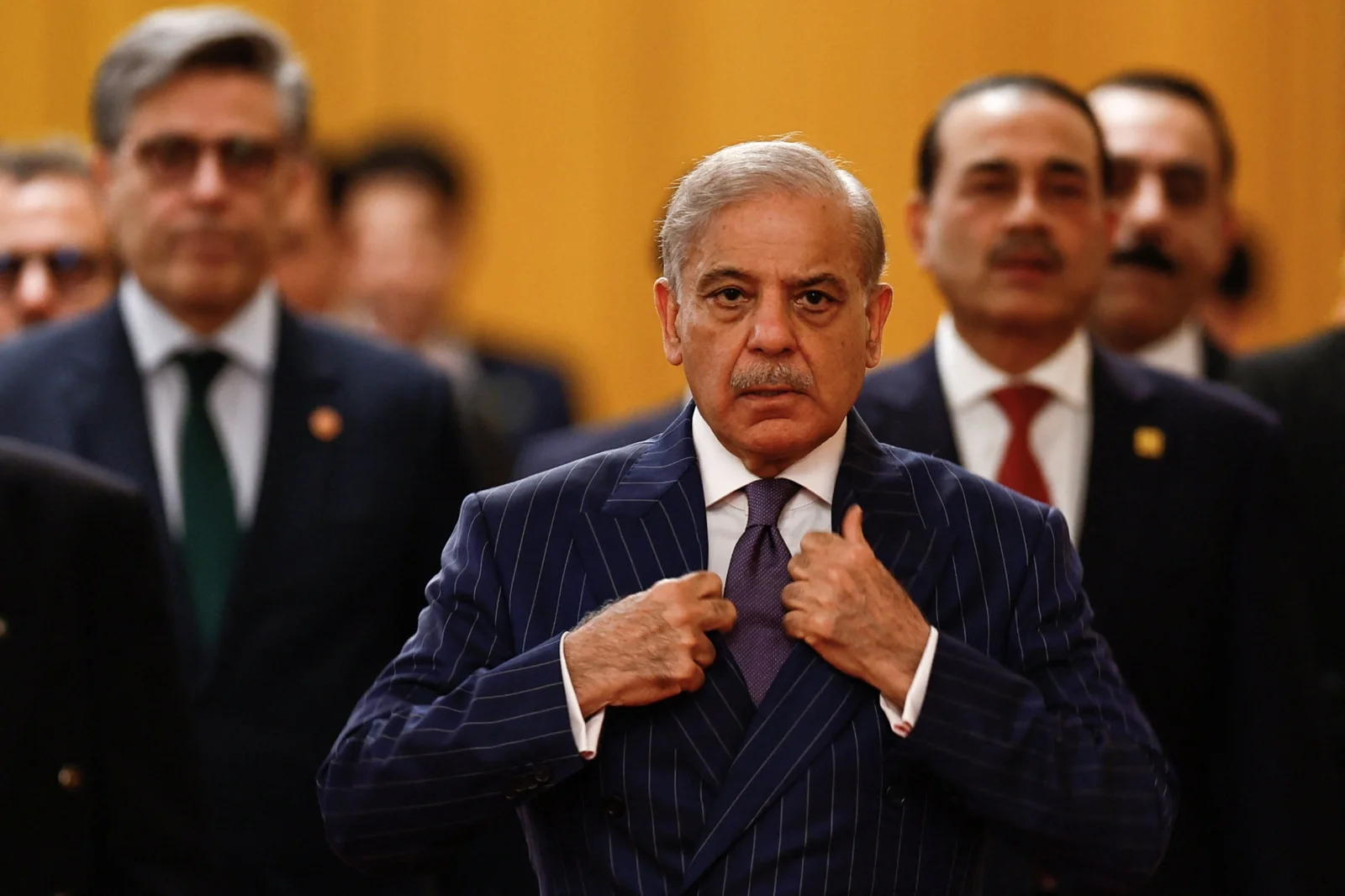
These steps have helped Islamabad strengthen its ties with Washington, as have high-level visits by Prime Minister Shehbaz Sharif and army chief Asim Munir to Washington. Munir, in particular, has built a rapport with Trump and some of his close aides. Since the U.S.-Iran war erupted, Munir, whom Trump calls his “favourite field marshal”, has used this relationship to reach out directly to Washington. Islamabad was also anxious to retain crucial diplomatic and economic ties with key Middle East allies, particularly Saudi Arabia, with which it signed a mutual defence agreement in 2025 – the first in its history.
It had to engage in a delicate balancing act: even as it denounced the strikes on Iran, particularly Khamenei’s assassination, Islamabad also rebuked Tehran for firing missiles and drones at Saudi Arabia and other Gulf states. On 11 March, for instance, Pakistan supported the Bahrain-led, Gulf Cooperation Council-sponsored resolution at the UN Security Council that condemned the Iranian strikes on Gulf countries. But it was also one of only three countries to vote in favour of another, Russian-drafted resolution critical of the U.S.-Israeli assault on Iran, which called for halting military action and initiating negotiations.
As the conflict raged, Pakistani intermediaries bore messages between Washington and Tehran, closely coordinating with Cairo and Ankara and consulting with key Gulf partners, particularly Riyadh. On 24 March, a day after President Trump announced a temporary halt to U.S. strikes on Iranian targets, citing constructive negotiations with Iran, Prime Minister Sharif offered to host direct talks between U.S and Iranian delegations in Islamabad.
This was the signal for Islamabad to assume a pivotal mediating role, contacting leaders in both capitals and conveying both sides’ proposals and counterproposals for ending the war. Its diplomacy went into overdrive when President Trump warned of attacks on Iran’s energy infrastructure if Tehran did not lift its blockade of the Strait of Hormuz by 6 April.
Islamabad was concerned that Tehran would retaliate by escalating strikes on Gulf targets that might prompt those countries, particularly Saudi Arabia, to abandon the restraint they had exercised thus far. On the night of 6 April, Islamabad shared its two-phase framework for ending the war, which foresaw an immediate ceasefire and the reopening of the Strait of Hormuz, which would then be followed by talks between the sides about a broader settlement of the nuclear standoff and sanctions relief. Munir reportedly presented this proposal directly to U.S. Vice President JD Vance, U.S. special envoy Steve Witkoff and Iranian Foreign Minister Abbas Araghchi.
Strategic Intermediaries Advance a U.S.-Iran Breakthrough
Mediating Negotiations On 8 April, Prime Minister Sharif, announcing that Iran and the U.S. alongside its allies had agreed to an immediate two-week ceasefire, including in Lebanon, invited the U.S. and Iranian delegations for talks in Islamabad. The enormity of the challenges that lay ahead for the next phase were already clear. Pakistani and Iranian officials insisted that the ceasefire covered Lebanon; Washington disagreed, and Israeli attacks on Lebanese territory came close to upending the proposed talks. Eventually, the U.S.-Iran dialogue took place in Islamabad on 11-12 April, with Vance heading the U.S. delegation and parliamentary speaker Mohammad Baqer Qalibaf leading the Iranian team.
Predictably enough, the marathon talks, which lasted more than 21 hours, made little progress toward reducing the gaps on key issues, particularly Iran’s nuclear program and the Strait of Hormuz blockade. But while the negotiations ended without agreement, they at least ensured that dialogue did not break down. After the talks concluded, Pakistan’s foreign minister, Ishaq Dar, told reporters that he and Munir had helped “mediate several rounds of extensive and constructive negotiations between the two sides”, expressing his government’s readiness to continue to “facilitate engagement and dialogue” and urging both sides to uphold the ceasefire.
As Islamabad continued its efforts to bring Washington and Tehran back to the negotiating table, Prime Minister Sharif visited Saudi Arabia, Qatar and Türkiye, while army chief Munir spoke to President Trump and flew to Iran. Meanwhile, Foreign Minister Dar reached out to fellow facilitators in Egypt, Saudi Arabia and Türkiye while also consulting China. But Islamabad’s plan to host a second round of talks, tentatively slated for 25 April, fizzled out amid widening differences between Tehran and Washington over Iran’s nuclear program and the Strait of Hormuz.
To Islamabad’s relief, Trump still extended the ceasefire indefinitely on 22 April, a day before it would have lapsed. That decision, Trump said, was made “upon the request of Field Marshal Asim Munir and Prime Minister Shehbaz Sharif”, to give Tehran time to submit a “unified proposal”.
Anxious to prevent the ceasefire from breaking down, Pakistan remained actively engaged in back-door diplomacy, relaying proposals between the sides for ending the war. But as the deadlock continued and fears of renewed conflict heightened, Pakistan’s interior minister rushed to Tehran on 17-18 May, returning for a second time in less than a week in the hopes of rekindling negotiations.
As Pakistani intermediaries conveyed U.S. and Iran counterproposals, Army Chief Munir visited Tehran on 22-23 May, pushing for a breakthrough. Pakistan’s Prime Minister was once again hopeful that a new round of peace talks between the U.S. and Iran would take place in Islamabad “very soon”. Islamabad’s dedication to negotiations and concerns about the resumption of armed conflict seem unlikely to diminish until a comprehensive agreement leads to a sustainable peace.
Treading a Treacherous Path Pakistan’s mediation role has raised its global standing and attracted international acclaim, but there are also risks for Islamabad in raising its profile in the Middle East. Should the war resume, the diplomatic minuet that enabled it to shuttle between the U.S. and Iran could soon screech to a halt.
Even short of that worst-case scenario, interlinked diplomatic, security and economic challenges are mounting. For Islamabad, preventing Iranian strikes on Saudi Arabia has taken precedence over tending to relationships with other Gulf states. High-level visits to Riyadh, including by Sharif and Munir, have been aimed at assuring the Saudis of Pakistan’s support. But Pakistan’s stance appears to have alienated the United Arab Emirates, Saudi Arabia’s most prominent regional rival and the main target of Iranian attacks.
Controversies, including the flak from a U.S. media report that Pakistan had allowed Iranian military aircraft to park on its airfields to shield them from U.S. strikes, could muddy the waters further. The U.S. appears to have accepted at face value, at least publicly, Pakistan’s explanation that both Iranian and U.S. aircraft entered its territory after the 8 April ceasefire to facilitate the movement of delegates participating in the first round of talks, and remained in the country “in anticipation of subsequent rounds of engagement”. But the issue could further strain relations between Pakistan and the UAE, which is distrustful of Pakistan’s mediation efforts.
Tensions between Abu Dhabi and Islamabad were already high, dating back to Pakistan’s siding with Saudi Arabia in other regional conflicts and the two formalising their security relationship in 2025. That rift has seen the UAE demand that Pakistan immediately return a $3.5 billion loan, which was extended in 2019. Home to more than 1.5 million Pakistani workers who send remittances home, the UAE is also a crucial source of foreign currency reserves for Islamabad.
Close ties with Saudi Arabia, however, seem in some ways to have paid off. Riyadh came to Islamabad’s rescue as it faced the challenge of paying back the Emirati loan by the end of April. On 10 April, a day before the U.S.-Iran talks, the Saudi finance minister visited Islamabad, after which his government pledged an additional $3 billion for Pakistan and extended an existing $5 billion facility for another three years. The same day, Pakistan, which already has troops in Saudi Arabia, sent jet fighters and support aircraft to help protect the kingdom.
The fresh influx of Saudi funds has eased the pressure on Pakistan’s weak foreign exchange reserves at a time when geopolitical tensions, particularly the blockade of the Strait of Hormuz, threaten the country’s economy. But Islamabad might still have to pay a high price for its relationship with Riyadh if it finds itself embroiled in an uptick of conflict. All-out war, which would entail an escalation in U.S. and/or Israel attacks on Iran, would lead to Iranian retaliation, including against Saudi Arabia.
Islamabad could then be dragged into the conflict under its mutual defence agreement with Riyadh, which might make it a legitimate target for Tehran. Such a scenario would also have domestic repercussions, as taking the Saudi side against Iran would fuel anger among Pakistan’s Shia population and further destabilise the insurgency-hit border with Iran. At the same time, if Islamabad were to opt for neutrality amid active hostilities, it would both damage its ties with Riyadh and test its friendship with Washington. Pakistan is also dependent on crucial U.S. support in international financial institutions such as the IMF.
Islamabad knows these risks, and it knows its limitations as well. Despite its crucial role in initiating the first round of talks and its efforts since then at getting the two sides back to the negotiation table, Pakistan lacks the diplomatic leverage to convince the U.S. and Iran to agree to end the war. But it has concluded that the stakes are high enough that persevering in this endeavour is worth it. By keeping the diplomatic window open and the ceasefire intact, Islamabad remains well positioned to at the very least prevent the resurgence of all-out war that would bear grave implications for domestic, regional and global security.