

Ukraine’s 2025 drone attack on Russian strategic bombers exposed nuclear deterrence’s collapse. Conventional actors now strike nuclear assets with impunity, forcing a rethinking of security guarantees. Deterrence by denial and resilient defenses may replace traditional nuclear threats.
The erosion of nuclear deterrence is no longer theoretical; Ukraine’s 2025 drone attack on Russian strategic bombers proved that conventional actors can strike nuclear assets with impunity. Nuclear deterrence has failed to prevent or punish such direct challenges. This collapse forces a rethinking of whether nuclear deterrence remains a viable security guarantee for any state.
Nuclear Deterrence Fails First Strike
In June 2025, Ukraine’s security services staged an audacious strike inside Russia. They infiltrated the country and hid short-range attack drones in cargo trucks near a slew of Russian air bases as far away as the Amur region on the border with China. Most of these bases were home to Russian strategic heavy bombers—aircraft capable of carrying nuclear weapons. Using Russia’s mobile phone network, Ukrainian operatives remotely launched the drones, successfully destroying at least ten of the bombers and damaging a total of 41 planes, including some used for nuclear command and control, according to Ukrainian assessments.
Known as Operation Spider’s Web, this assault was a remarkable gambit. The most significant aspect of the attack, however, was not its astonishing cost ratio—as one analyst put it, “a single drone costing just $500 destroyed a strategic bomber worth tens of millions of dollars”—or its ingenuity in hijacking Russian telecommunications, but the fact that it could happen at all. As part of its long-standing doctrine, Moscow had insisted that a conventional attack on its strategic assets could provoke a nuclear response. But that did not stop Kyiv. Ukraine was willing to go after Russia’s nuclear capabilities, and Russia was unable to prevent their destruction.
The Ukrainian operation was a spectacular example of a wider trend: nuclear deterrence is not working. Countries have long assumed that the possession of nuclear weapons was the surest guarantee of their security. Indeed, many observers saw the full-scale Russian invasion of Ukraine in 2022 as proof that Kyiv had erred in 1994 by agreeing to give up the nuclear weapons it inherited from the Soviet Union.
If Ukraine had the bomb, they suggested, Russia would not have dared to attempt such an attack. Similarly, if Iran had already developed its own arsenal of nuclear weapons, Israel and the United States would not have been able to strike the country as they have since February, killing Iranian leaders and leveling Iranian military infrastructure. From that argument inevitably flows the conclusion that more countries will reasonably want nuclear weapons as insurance against aggression. States ultimately need these weapons of mass destruction to deter their greatest adversaries.
But recent conflicts more clearly advertise the reverse. Ukraine is not just hitting targets deep within Russia but also targets directly related to Russia’s nuclear capabilities. Iran and its proxies have repeatedly attacked Israel, which is widely believed to possess nuclear weapons. Tehran has aimed missiles and drones at Israeli cities and even nuclear facilities. And India and Pakistan, which both possess nuclear weapons, engaged in the most serious conflict between the two countries in this century, attacking far across each other’s borders in May 2025. In all these cases, the possibility of nuclear escalation and retribution did not prevent conventional and hybrid warfare. Indeed, state and nonstate actors are in effect calling the bluff of nuclear-armed powers.
Nuclear weapons can appear impotent in the face of sustained conventional and hybrid attacks; in today’s warfare, an arsenal of nuclear-tipped intercontinental ballistic missiles, a flotilla of nuclear submarines, and squadrons of strategic bombers can do little to deter salvos of cheap drones—as long as those nuclear states remain unwilling to use their weapons. That should give pause to both existing nuclear powers and those that may want to acquire the weapons.
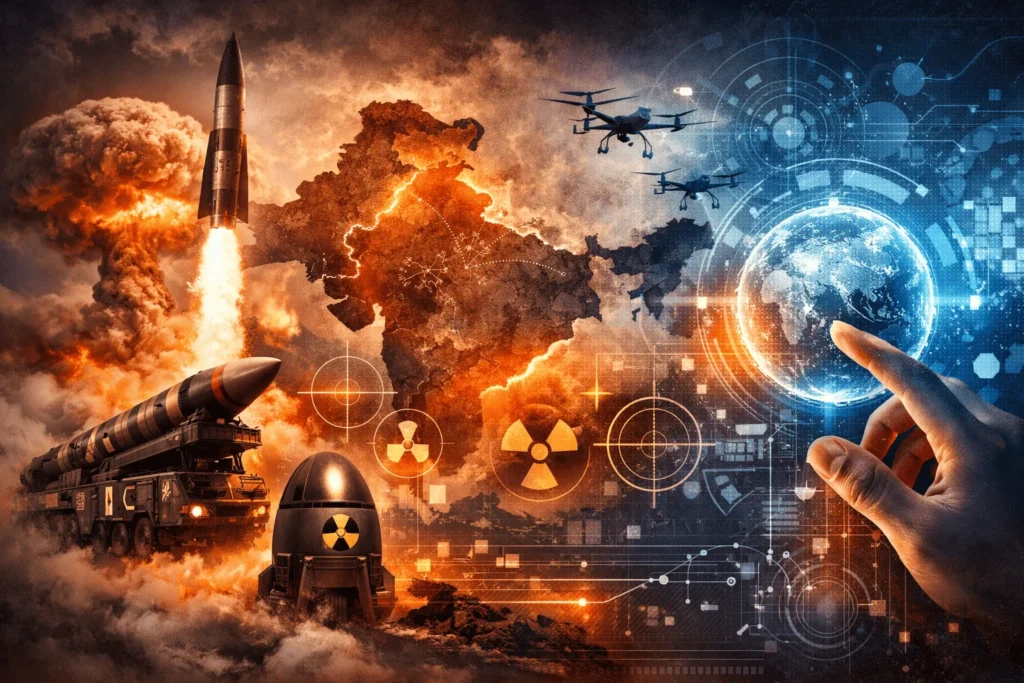
Testing the Nuclear Deterrence Taboo
The strength of the nuclear taboo was tested in the early months of Russia’s invasion of Ukraine, when Russian President Vladimir Putin evidently came close to using tactical nuclear weapons to stop a rout of his troops in southeastern Ukraine.
He was prevented, it seems, by a combination of advice from his own military leaders and public pressure from his Chinese and Indian counterparts—and doubtless private pressure from Washington. Although the taboo is not an absolute bar against the use of nuclear weapons, leaders who flirt with the idea of deploying them experience heavy pushback. They also must reckon with the fact that they would be remembered as only the second human being to drop the bomb in combat, earning them a dauntingly infamous place in history.
For nuclear states, the lessons of this moment must be jolting. State and nonstate adversaries are increasingly willing and able to hit nuclear powers with conventional weapons. That scrambles the traditional logic of nuclear deterrence. Deterrence by threat of nuclear retaliation, the traditional tool that has ensured nuclear stability for decades, is weakening. Deterrence by denial—that is, discouraging an attacker by making an attack seem futile—may become more valuable.
That approach will demand different priorities for governments. Instead of investing vast sums in modernizing existing platforms, nuclear states could be better served by strengthening defenses around their nuclear facilities, focusing on resilience rather than nuclear capacity. And they should find ways to uphold and strengthen norms governing conventional targeting—by pledging, for instance, never to strike nuclear power plants and military nuclear facilities. These measures will help slow escalation during crises when warring parties feel emboldened to strike enemy nuclear facilities. For nonnuclear states, the waning of traditional nuclear deterrence should offer a more general warning. Rather than bringing the certainty of security, the bomb may simply invite new and disconcerting forms of peril.
The Waning of Nuclear Deterrence
Beginning in the Cold War, the United States and the Soviet Union, now Russia, have deployed a triad of nuclear systems to both threaten and deter their rivals: ground-based intercontinental ballistic missiles, ballistic missiles launched from submarines, and heavy bombers. These systems can deliver warheads at a range beyond 3,400 miles, which is the basis for describing them as “strategic offensive forces.” The United States can directly target the Russian homeland, and the Russians can target the continental United States.
China’s rapid nuclear buildup in recent decades has sought to bring Beijing on par with Moscow and Washington. By maintaining this arrangement of systems, a country can ensure that it will not suffer a “splendid first strike”—a nuclear attack that prevents any retaliation—retaining the capacity to hit back. The possibility of nuclear retribution serves as the key deterrent to nuclear states using their weapons against one another in the first place. And it is the combination of capacities that has traditionally undergirded strategic stability, the notion in international relations that nuclear-armed states should never have the incentive to use their apocalyptic weapons.
When a country faces an adversary that does not possess nuclear weapons, it can resort to nuclear posturing to intimidate its foe. Take, for instance, Russia’s strategic bombers. The aircraft can be used to deliver conventional bombs, but Moscow has emphasized their continuing nuclear purpose, stating in 2024 that any attack on Russian strategic assets could provoke a nuclear response. That ambiguity was supposed to provide Russian leaders with flexibility. They were not obliged to resort to nuclear weapons in responding to Ukrainian attacks, but they also hoped that the possibility of nuclear use would make Ukraine think twice and refrain from striking their strategic assets.
In Operation Spider’s Web, Ukraine tested Russian ambiguity and found it to be a cover for caution. After the shock of the destruction of its strategic bombers, the Russians did not reach for the nuclear button. They did not even respond with another round of overt nuclear saber rattling. Instead, they launched a conventional attack on Kyiv using 400 drones and 40 missiles.
Indeed, that Russian retaliation epitomized the dynamic at work, the collision of an old logic of nuclear deterrence with the realities of warfare today. As Ukraine has demonstrated since 2022, simply possessing nuclear weapons does not protect an aggressor from conventional retaliation. Having the most powerful weapons on earth will not shield a large state from a smaller state determined to defend itself.
Israel is learning a related lesson. Israeli leaders are tight-lipped about their country’s nuclear capabilities, but they have long harbored a quiet confidence that nuclear weapons would safeguard Israel by preventing attacks from states or nonstate actors.
Hamas’s rampage in Israel on October 7, 2023, ran roughshod over that notion. So, too, have subsequent events. Israel has faced an onslaught of missile attacks from Iran, Hezbollah in Lebanon, and the Houthis in Yemen in recent years and since the joint U.S.-Israeli campaign against Iran began in February. Neither states nor nonstate actors see Israel’s nuclear capability as a reason to refrain from attacking its territory. Indeed, in March, Iran targeted the Israeli plutonium production reactor at Dimona, highlighting that the Israeli nuclear deterrent is not only failing to serve its putative purpose but has also become a magnet for attack.
Israel’s response to these missile attacks had been to significantly and steadily bolster missile defenses at multiple levels, from the Iron Dome system designed to counter short-range attacks, and the David’s Sling system, which intercepts medium- and long-range missiles, to the Arrow missile defense system that defends against long-range ballistic missiles. These multilayered missile defenses are designed to handle a variety of strikes, from single missiles to significant barrages, and can quickly distinguish projectiles that are homing in on their targets from those that are falling harmlessly.
The irony of this situation is twofold. First, the proliferation of cheap and accurate missiles, drones, and uncrewed aerial vehicles among Israel’s neighbors and even among its nonstate enemies has resulted in an unfavorable cost-benefit relationship with more advanced defense systems, such as Iron Dome. Israel, like other countries in the Middle East, has looked to the experience of Ukraine in developing effective and low-cost shields to defend against low-cost drones, even as the Israeli government has studiously avoided providing advanced missile defenses to Ukraine throughout its war with Russia.
The second irony is that Israel, by developing sophisticated layered missile defenses, has been pursuing a strategy of “deterrence by denial.” In theory, its adversaries would be deterred from attacking it because they would recognize the futility of any attack: Israel’s missile defense prowess would render ineffective any attempt to hit targets in the country. But that theory is being sorely tested in the current war with Iran, as Israel’s foes have rained down missiles and drones on Israeli cities and troops, some invariably getting through to cause damage. The relative cheapness and accessibility of modern conventional weapons now force Israel to look for cheaper defensive systems.
Meanwhile, Israel’s other deterrent—the threat of nuclear retaliation—has receded far from view. Even in official comments on the Dimona attack, the Israeli government did not breathe a word that could be construed as nuclear saber rattling. Israel seems to be sticking to its strategy of nuclear ambiguity, perhaps to prevent a regional nuclear arms race or avoid facing any new international sanctions. Israel’s opponents, whether state or nonstate actors, therefore have no reason to take notice of its nuclear capability or be deterred by the specter of an Israeli bomb.
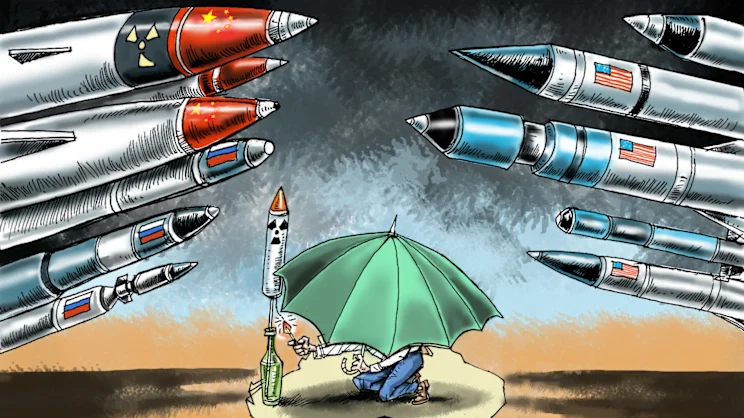
Nuclear Deterrence New Conventions
To be sure, nuclear weapons still encourage restraint in certain circumstances. Since 2022, the United States and its NATO allies have steadily increased their military assistance to Ukraine in a measured way that does not spur an escalatory response from Russia. Russia, in turn, has avoided touching NATO territory throughout the war, although NATO shipments of weapons have become fair game for attack once they cross into Ukraine. Both Russia and NATO have been wary of entering any direct confrontation that could escalate.
In this context, the traditional theory of nuclear deterrence still holds. It is possible that the sheer number of nuclear weapons in the U.S. and Russian arsenals—each side has approximately 4,000—forces Moscow as well as Washington and its allies to exercise tremendous caution. Any exchange of nuclear missiles between the two sides risks rapid escalation to global annihilation.
A related answer may be found in the peculiar nature of the nuclear relationship that the United States and the Soviet Union developed during the Cold War. The United States and Russia keep their nuclear forces on high alert, ready to launch quickly. But neither is capable of pulling off a completely destructive or “splendid” first strike against the other that would eliminate its capacity to retaliate. This tenuous “first strike stability” has locked Washington and Moscow in a high-risk nuclear embrace that neither side is willing to break.
During the Cold War, each superpower rival feared the other would foist on it a “strategic surprise,” a new weapon or defense system that would upset first-strike stability. That did not happen, but the fear that it might persists to this day.
It manifests now in U.S. concerns about China’s nuclear buildup, which could eventually put the United States in the position of facing off against two nuclear peers that have immense nuclear arsenals. Were that to happen, the United States might not be able to respond to any aggression from either China or Russia as it would like. The U.S. nuclear umbrella could weaken, leaving allies vulnerable to conventional Chinese and Russian attacks. Until now, the extended U.S. nuclear deterrent has staved off conventional conflict in Europe and East Asia, but it may fail in the future as China ramps up its nuclear capabilities.
In South Asia, nuclear weapons have not prevented conventional warfare. India and Pakistan both possess nuclear weapons, but in 2025 descended into their most serious conventional conflict since 1999. The direct clashes of these two nuclear powers always raise alarms in their region and beyond. The United States has stepped in swiftly on a number of occasions to help broker a cease-fire, most recently in 2025. China, too, claims to have helped end the fighting last year. The threat of nuclear escalation spurs outside powers to intervene. In this case, nuclear weapons do not deter conventional conflict, but the fear of their use has helped bring fighting to a rapid end.
In short, recent events have surfaced contradictory trends regarding nuclear deterrence. Nuclear stability between the two Cold War–era superpowers seems to keep conventional conflict at bay in Europe and East Asia. The new contender, China, may upset that stability, but for the moment, it holds. In South Asia, by contrast, conventional warfare occurs despite both sides having nuclear weapons.
These realities suggest that existing nuclear powers must continue to maintain their nuclear weapons, even as conventional threats from an increasing number of actors become more numerous. Some elements of deterrence depend on a stable nuclear balance and will continue to do so for as long as nuclear weapons exist. At the same time, all nuclear states, whether they are signatories of the Nonproliferation Treaty or not, should pledge to limit and reduce their nuclear stockpiles in the right circumstances. It remains an essential goal of humanity to get rid of nuclear weapons.
The current climate may encourage this process, since the ongoing wars raise doubts about the utility of nuclear weapons in keeping the peace. Iran, Ukraine, the Houthis in Yemen, and other groups are certainly behaving as if the risks of nuclear retaliation are negligible. After all, the nuclear taboo has proved strong, with no leader so far willing to break it. As more state and nonstate actors acquire capable missile and drone systems, they will be better able to launch ever more daring attacks, even against states that possess the most powerful weapons.
This nuclear impotence should inform those U.S. allies in Europe and Asia that doubt the reliability of Washington’s extended nuclear deterrence commitments and have started to muse publicly about acquiring nuclear weapons. The president of Poland has suggested that his country should get the bomb, and several German politicians have said that their country should, as well.
In East Asia, polls show that the public in South Korea is increasingly in favor of Seoul developing its own nuclear arsenal, and even the public in Japan—the only country to have suffered a nuclear attack—seems more willing to countenance debate about acquiring nuclear weapons. In the Middle East, countries are worried about possible attacks from Israel, the United States, or their neighbors. Saudi Arabia might pursue some form of nuclear capability, pressing for the right to enrich nuclear materials and concluding a security agreement with Pakistan that may involve the provision of fissile material or even warhead technology to Riyadh.
But more nuclear weapons in the hands of more countries will not prevent conventional conflict. Nuclear weapons are not stopping the destruction of Russia’s strategic bombers. They are not protecting Israeli cities from intense and repeated missile attacks. They are not discouraging India and Pakistan from raining devastation on each other’s territory.
Nuclear proliferation carries severe risks. Even though the nuclear taboo has held strong since 1945, it is not a guarantee against nuclear escalation, particularly as technologies such as artificial intelligence transform decision-making in warfare and may increase the risks of accidental escalation.
A growing number of nuclear players will produce more opportunities for the unauthorized or accidental use of nuclear weapons. New nuclear states will not be as experienced as existing nuclear powers in ensuring the safety and security of their nuclear weapons. And a profusion of nuclear weapons also gives nonstate actors more opportunities to acquire one, summoning the specter of the terrorist nuclear threat that so haunted policymakers in the early 1990s after the collapse of the Soviet Union.
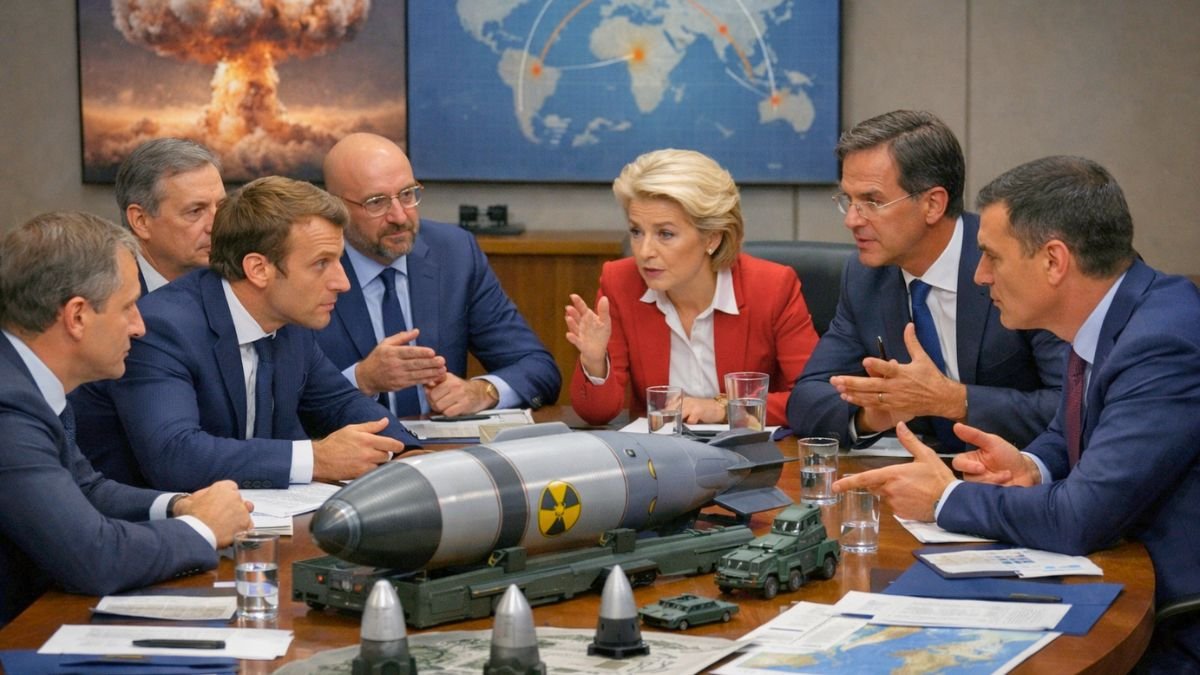
Less Is More for Nuclear Deterrence
Nuclear weapons are costly, too. States that already have vast nuclear arsenals are investing huge amounts in building up their nuclear forces. The United States, Russia, and China, the three largest nuclear powers, are modernizing their intercontinental ballistic missiles, nuclear submarines, and strategic bombers—at significant cost. Such investment may not be worthwhile.
Of more use will be investment in resilience, survivability (through the strengthening of deployment sites and more mobile nuclear systems), and defenses, especially integrated air and missile defenses that will deny attacks on critical nuclear infrastructure. As nuclear deterrence is becoming more uncertain and as conventional attacks grow more accurate and devastating, such investments may prove to be more valuable and long-lasting than pouring more resources into nuclear modernization.
As Russia has found during its war against Ukraine, the homeland is no sanctuary these days, and bases that host strategic nuclear weapons systems may come under attack. If adversaries, whether states or nonstate actors, are able to launch accurate drones or short-range missiles, such bases could be threatened by conventional attacks.
This threat implies that nuclear bases need air and missile defenses able to operate on short warning and at short ranges. Ideally, such defenses would resemble the highly cost-effective drone defense systems that the Ukrainians are building and deploying—today, even supplying the Gulf states in the Middle East. The defense systems will have to be cheap and plentiful to deal with modern missile barrages and drone swarms.
States deploying nuclear weapons must be prepared to protect and defend them from conventional attacks. Strong and multilayered resilience measures seem a better bet than traditional deterrence theory, which has only offered empty threats of nuclear retaliation.
For this reason, nuclear powers must reconsider their declaratory policy—that is, a government’s public messaging on how and when it might use its nuclear weapons. Russia has found that the Ukrainians simply ignored Russian nuclear doctrine related to conventional attacks on nuclear targets. Although Russia has threatened a nuclear response for such attacks, it has not followed through, even after heavy damage to its nuclear bomber force. Such empty messages either neuter the deterrent power of nuclear forces or create unbearable pressure to escalate to nuclear use.
Instead, nuclear states and others should promulgate normative principles that would erect further barriers to nuclear escalation. For instance, in the wars in both Ukraine and the Middle East, nuclear power plants have become targets.
The International Atomic Energy Agency has been urging states to pledge not to attack nuclear plants during war. India and Pakistan have already agreed not to attack nuclear-related facilities belonging to the other side; every year on New Year’s Day, they exchange lists of nuclear facilities that they agree not to target with conventional weapons. As some analysts have suggested, countries should generally pledge to avoid targeting areas in the vicinity of facilities housing nuclear warheads. Such pledges could be extended to all military nuclear facilities and could be embraced by states deploying nuclear weapons. Later, the pledge could be adopted globally, with all states given the chance to sign on.
The goal would be to extend the nuclear taboo to include conventional attacks on nuclear targets, whether civil ones (nuclear power plants) or military ones (nuclear weapons facilities). Both nuclear-armed states and states without nuclear weapons should find such pledges in their interest. Even for nonnuclear states, such a move would strengthen the norm against nuclear use by addressing the danger of unintended escalation. It would also prevent a radiological disaster, which could ensue from a conventional attack on a nuclear facility.
Nonnuclear states that are now contemplating acquiring nuclear weapons should think again. Israel’s ambiguous nuclear deterrent has proved to be no barrier to conventional attacks, nor has Russia’s overt and gigantic nuclear deterrent. Would-be nuclear states might instead build up conventional defenses and resilience against conventional and hybrid attacks. U.S. allies should do their best to ensure that the extended deterrence capabilities based on their territories are well maintained and kept well prepared through regular exercises. Allies cannot be sure of the behavior of any U.S. president, but they can be sure that the nuclear extended deterrent capabilities deployed on their territory are fit for purpose and ready for action.
In this confused nuclear moment, countries may grapple with its uncertainties and come to the wrong conclusions. The worst-case scenario is that nuclear states will ignore the lessons of the current season of warfare and continue blindly building up nuclear force posture without taking into account that new conventional threats will come at them from all quarters—and not only from their traditional nuclear foes.
Even nonstate actors, before too long, are likely to have significant numbers of cheap but accurate fast drones and missiles. The next terrorist attack on a U.S. target may not be on high-rise towers in a major coastal city, but against nuclear deployment sites, perhaps—as terrorists acquire longer-range missiles—even in the American heartland.
The solution to such threats is not to acquire more nuclear weapons, since their power to deter has become manifestly doubtful. Instead, countries need to recognize the changing landscape of conventional war and how drones and ballistic missiles threaten the central strategic role of nuclear weapons. Governments must develop better defenses, building a resilient bulwark against conventional attacks on their nuclear forces. And they should work to promulgate norms that discourage nuclear use and stave off radiological disasters. In that way, nuclear weapons can continue to do their job: deterring other nuclear powers from attack and preventing the kind of escalation that could lead to catastrophe.