
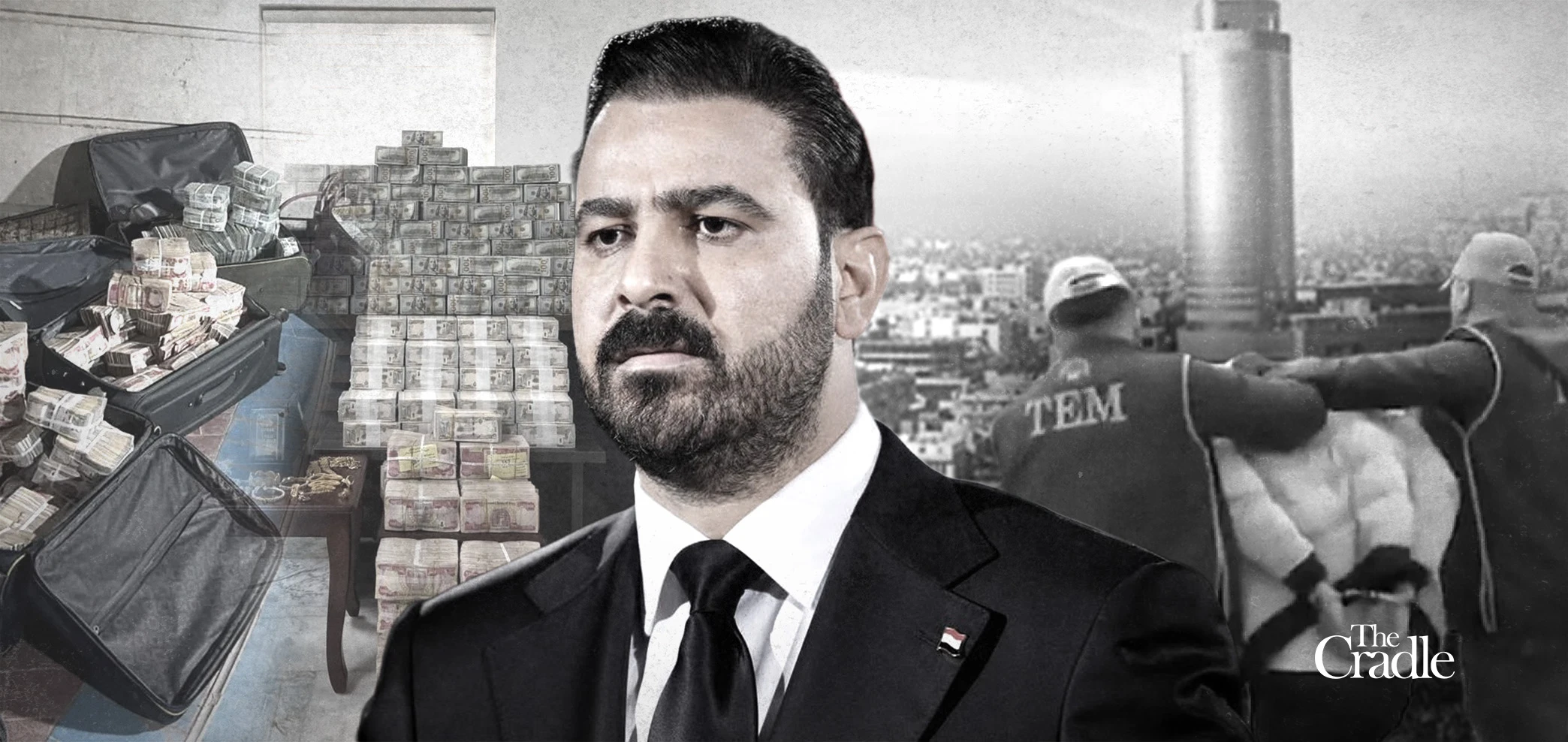
Iraq’s aggressive crackdown marks a reorganization of state power. By bypassing parliamentary immunity and consolidating influence via judicial channels under US guidance, the campaign targets both financial networks and the structural influence of armed political factions.
Baghdad’s ruling class faces an unprecedented challenge as security forces conduct targeted sweeps across the high-security Green Zone. This unexpected escalation in Iraq’s corruption drive is targeting powerful members of parliament and deep-pocketed oil executives who have long benefited from political protection and limited accountability. By bypassing traditional legislative pathways and relying on direct judicial mechanisms, the government is signaling that the era of addressing Iraq’s corruption drive through superficial bureaucratic statements is officially over.
Iraq’s corruption drive targets elite networks
For years, corruption arrests in Iraq were largely confined to lower-ranking employees, detained on charges of administrative and financial misconduct, with their cases publicized through Integrity Commission statements monitoring conduct across the public sector and its links to private companies.
Senior figures tied to border crossings, oil contracts, or major investment files remained largely beyond reach. The Iraqi public became accustomed to cycles of announcements that stopped short of touching the networks widely believed to manage larger flows of money and influence.
The exception came at the end of former prime minister Mustafa al-Kadhimi’s tenure, when the tax deposit case – widely described in Iraq as the “heist of the century” – surfaced. At its center was businessman Nour Zuhair, owner of Al-Mubdioun Company.
The judiciary documented how, with the help of advisors and officials, around $3 billion was siphoned from state tax deposit accounts through a network of companies. Even then, the case stood out precisely because it broke from the usual limits.
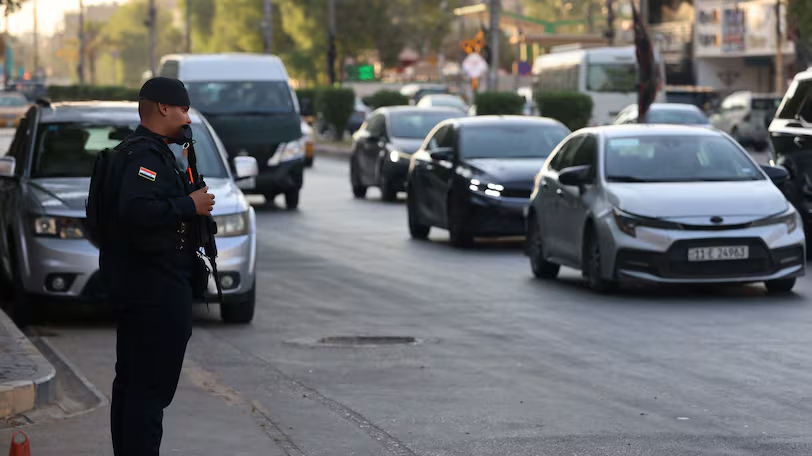
Just after midnight on 28 June, units from the Iraqi Counter-Terrorism Service (CTS) moved alongside representatives of the judiciary and the Integrity Commission to encircle the Green Zone, Baghdad’s heavily fortified international district, with judicial warrants in hand. The operation targeted around 70 individuals, with nearly 47 detained, including more than 16 members of parliament.
It followed the arrest of Deputy Oil Minister Adnan al-Jumaili, whose reported confessions pointed to a network facilitating the movement of funds through official and fictitious contracts, as well as inflated deals across the oil sector.
Fighting Iraq’s corruption drive directly
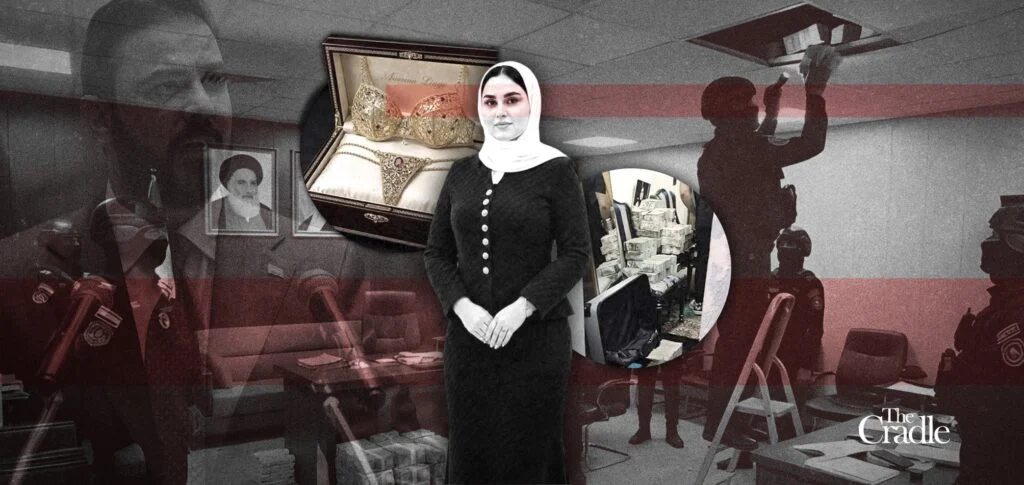
Images and videos from Operation Dawn circulated quickly, showing stacks of local and foreign currency, quantities of gold and jewelry, and a number of luxury cars inside the homes and farms of those arrested. The scenes carried a staged quality, reinforced by the way they were presented.
Authorities also pointed to the methods used to conceal funds – some hidden within walls, others buried in containers, and some even placed inside drainage systems. The coverage followed official statements by Prime Minister Ali al-Zaidi, who had framed corruption as a central pillar of his government’s agenda – language Iraqis had heard before.
Subsequent raids widened that picture. Security forces detained former MP Talal al-Zubaie and two of his sons on corruption charges, while operations targeting former minister Ahmed al-Asadi reportedly uncovered millions of dollars in cash and gold bars at his residence. In some cases, officials were said to have fled before arrest, with assets seized on site.
An outsider’s position
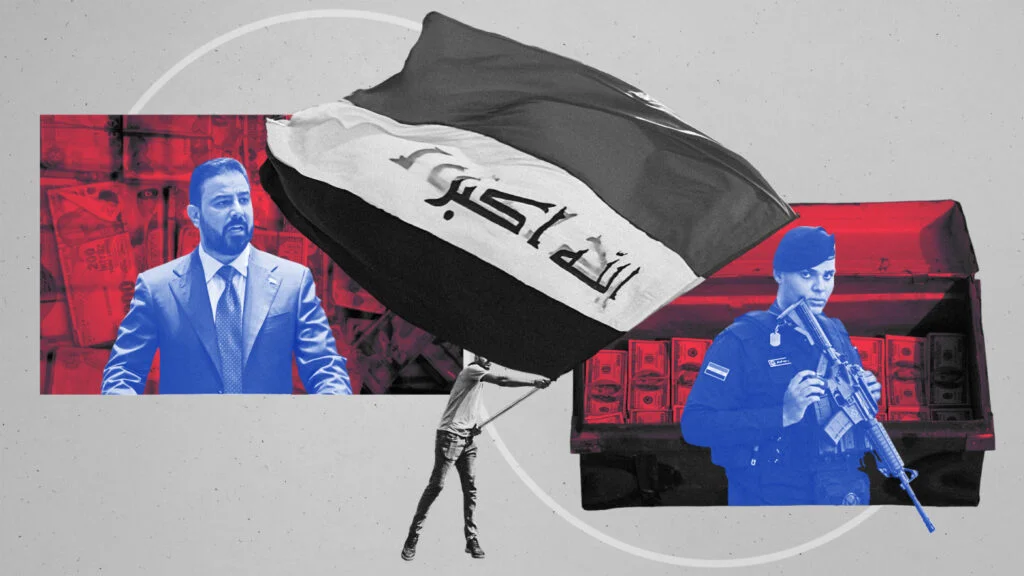
Zaidi did not emerge from Iraq’s established political blocs or party structures. His background lies in business, within a family that expanded rapidly after 2003 through large-scale contracts tied to state supply chains.
The most prominent is the monthly food ration agreement with the Ministry of Trade. Through Al-Awais Company, the family provides around 45 million food baskets each month. The scale of the arrangement has generated substantial returns, with estimates placing Iraq’s debt to the company at roughly $2 billion. Alongside this sits a wider network of hypermarkets and supply contracts linked to the armed forces.
From that position, the transition into a campaign of arrests at this scale raises questions that extend beyond corruption itself.
The process moved outside the usual channels. Parliamentary immunity was lifted through judicial requests filed during recess, avoiding the vote normally required inside the chamber. It went through, but the way it was done remains unusual in the Iraqi context.
Washington targets Iraq’s corruption drive
At the same time, the framework shaping Baghdad’s external ties has shifted.
Before Tom Barrack’s formal appointment as US envoy to Iraq, Washington had already narrowed its engagement to a single institutional point: the head of the judiciary, Judge Faiq Zaidan. The approach marked a departure from earlier practice, where US officials moved across multiple political actors and factions.
The shift followed the nomination of Nouri al-Maliki for prime minister earlier this year, a move that met clear US opposition. Messages conveyed through diplomatic channels did not land as intended. Barrack then assumed direct responsibility for delivering those positions.
According to sources familiar with his meetings, Barrack’s approach was marked by clarity and firmness, reminiscent of the role played by US civil administrator Paul Bremer following the 2003 occupation of Baghdad.
These attributes enabled Barrack to resolve complex files, including bringing in the Barzani family in Iraqi Kurdistan as a pressure mediator on Mazloum Abdi, leader of the Syrian Democratic Forces (SDF), to accept US conditions in Syria.
He also facilitated the acquisition of stakes in Russian oil companies that exited Iraq, including the West Qurna 2 field in Basra and Dhi Qar Oil Company, through Chevron in February 2026. This positioned him to deliver US messages in the language preferred by the White House.
As a result, the previously established method – where the US ambassador would tour influential leaders across Shia, Sunni, and Kurdish factions – was replaced by a single communication channel through Judge Zaidan, head of Iraq’s Supreme Judicial Council.
Public readouts from the Council offered only broad descriptions of these meetings, referring to judicial cooperation or constitutional matters while disclosing little of their political substance.
Iraq’s corruption drive lists trigger action
Sources inform The Cradle that Barrack arrived with names tied to corruption allegations – lawmakers, officials, banks, and companies. The approach echoes earlier US practice under Ambassador Alina Romanowski, who relayed similar lists to former prime minister Mohammed Shia al-Sudani, identifying institutions accused of facilitating financial activity linked to Tehran.
What has changed is the way these lists are handled. Instead of passing through multiple hands, they are pushed through a single channel, where decisions come faster, and the room to stall shrinks. Once a name appears, there is little space left to negotiate.
For Iraqi observers, timing matters. The most recent elections returned a parliament in which roughly one-third of seats are held by factions aligned, directly or indirectly, with Tehran or the Popular Mobilization Units (PMU). That balance shapes how such moves are read inside Iraq.
Conditions taking shape
From this perspective, the campaign carries terms beyond corruption files.
Participation in government, particularly in senior executive roles, is tied to conditions. These include severing organizational links with the PMU and relinquishing weapons to the state through a formal disarmament process.
The implications are already visible in the formation of government. Cabinet completion has slowed as negotiations continue over appointments and sequencing.
Political weight, measured through parliamentary representation, is no longer sufficient on its own. Compliance with security requirements has entered the equation, altering how positions are distributed and delayed.
Behind Iraq’s corruption drive campaign
Operation Dawn was presented as a beginning rather than a conclusion.
Among its early steps were raids on properties linked to Hussein Mounes, head of the Huqooq movement, which is politically associated with Kataib Hezbollah. The raids took place despite the absence of publicly known financial networks tied to his activities, raising further questions about scope.
Accounts from sources close to factional groups point to intelligence support from outside Iraq, although official statements deny this. The gap between those accounts and the official line remains part of the broader uncertainty surrounding the campaign.
Attention has also turned to former CIA director David Petraeus, who spent several days in Baghdad in May meeting senior Iraqi officials, including the head of the judiciary. Publicly, he described the need for the Iraqi state to secure a monopoly over the use of force. In practice, his visit coincided with discussions over restructuring the PMU and reordering their relationship to the state.
Framed this way, the campaign begins to extend beyond corruption files. Economic networks, weapons, and organizational links sit within the same file, even if they are addressed in stages.
Petraeus’s remarks, and the context in which they were made, point to a broader political shift already taking shape.
The arrests have disrupted a pattern that held for years. What follows is taking shape under pressure – legal, political, and external – whose limits are not yet clear.