
Washington sponsors Lebanon-Israel talks, sanctions Hezbollah’s allies, and reportedly seeks direct contact. Hezbollah rejects Iraqi mediation, hedges on talks, and weighs Iran’s strategic guarantees before any direct engagement with the United States.
Washington’s policy toward Lebanon has long treated Hezbollah as a target for removal or disarmament, but the current administration has turned that stance into a broader coercive campaign. The State Department now sponsors the first direct Lebanese-Israeli negotiations since Madrid, with Hezbollah’s disarmament placed at the center of the agenda.
Sanctions have extended beyond the party itself to Lebanese state security figures accused of obstructing the campaign, while Washington and Israel have coordinated an intensified financial crackdown. Within this confrontational setting, the possibility of Trump-Hezbollah Talks has emerged as an unexpected parallel current. President Donald Trump has publicly stated that he would speak directly with Hezbollah, and recent reports indicate that intermediaries have carried proposals to open such a channel. The offer, however, has met a cold reception in Beirut, where the Lebanese presidency reportedly turned down an American request and the movement itself has declined Iraqi mediation.
This reticence signals a calculated ambiguity rather than a definitive refusal. Hezbollah appears to weigh the potential benefits of Trump-Hezbollah Talks against the strategic liabilities of negotiating outside the protective logic of an Iranian-led position. Consequently, the discussion is less about whether Washington can initiate contact than about whether such contact can produce guarantees that alter the movement’s military posture.
Washington Escalates Pressure on Beirut
For decades, U.S. policy in Lebanon has focused on the elimination of Hezbollah, or at least its military wing. But the Trump administration has taken this effort to new heights.
The State Department is sponsoring the first ever direct talks between Lebanon and Israel since the Madrid peace talks, with the disarmament of Hezbollah being a central objective of those talks.
Washington has also taken the unprecedented step of sanctioning individuals from outside the party whom it accuses of undermining the campaign against Hezbollah, including members of Lebanon’s state security apparatus. Meanwhile, the U.S. and Israel are engaged in an unprecedented financial crackdown on Hezbollah, as the New York Times reported this week.
Are Trump-Hezbollah Talks Actually Possible?
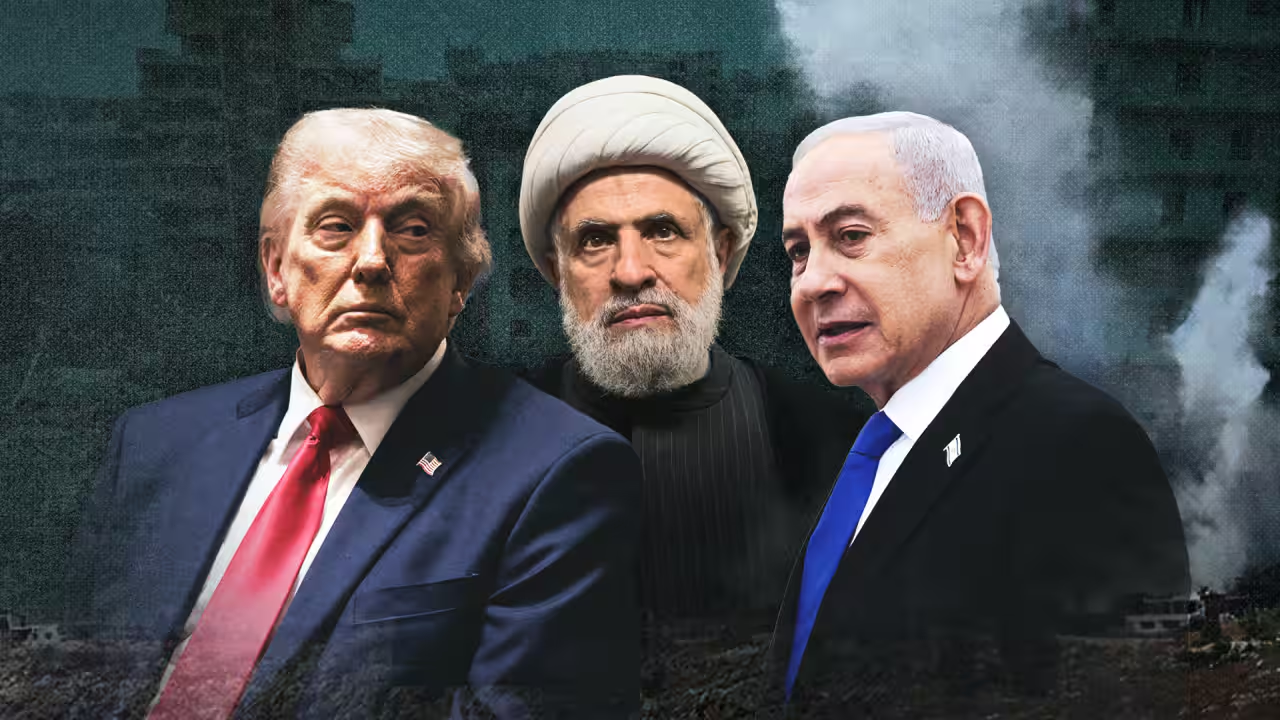
Ironically, however, Donald Trump is also the first sitting American president to express a willingness to hold direct talks with the Lebanese Shiite movement.
“I would speak to Hezbollah. I speak to everybody. I’ll speak to people that a lot of people think I shouldn’t be speaking to, and things work out,” Trump told reporters during an oval office meeting with his Lebanese counterpart Joseph Aoun last month.
While it would be easy to dismiss these remarks as typical Trumpian grandstanding, there appears to be more to the story.
Intermediaries Carry Offers to Beirut
Multiple reports have recently emerged indicating that serious attempts have been made to open direct channels between Washington and Hezbollah.
According to Middle East Eye, Trump told Beirut’s ambassador to Washington last May that he wanted to talk to the group in a bid to salvage a shaky ceasefire with Israel. The Lebanese presidency reportedly turned down the request over concerns that holding such talks would undermine Aoun by bypassing the Lebanese government.
That same report quotes senior Lebanese officials saying that both the Trump administration and some of its predecessors have attempted to open direct channels with Hezbollah, but the group rejected these advances.
Another recent report by the Lebanese daily Aljoumhouria revealed that senior Iraqi officials told a visiting Hezbollah delegation that Iraq was ready to sponsor and host direct talks between Washington and the Lebanese Shiite movement. The offer, the report noted, was made shortly before Iraqi Prime Minister Ali al-Zaidi’s recent visit to Washington, only to be turned down by Hezbollah.
Sources from within the Lebanese Shiite movement confirm that there has been a recent push to establish direct channels between the two sides. “The Americans have made several attempts through a number of intermediaries to engage directly with Hezbollah,” a Hezbollah source explained to RS. “It’s true that al-Zaidi pursued such efforts, but certainly not at our request.”
Why Hezbollah Keeps Its Response Quiet
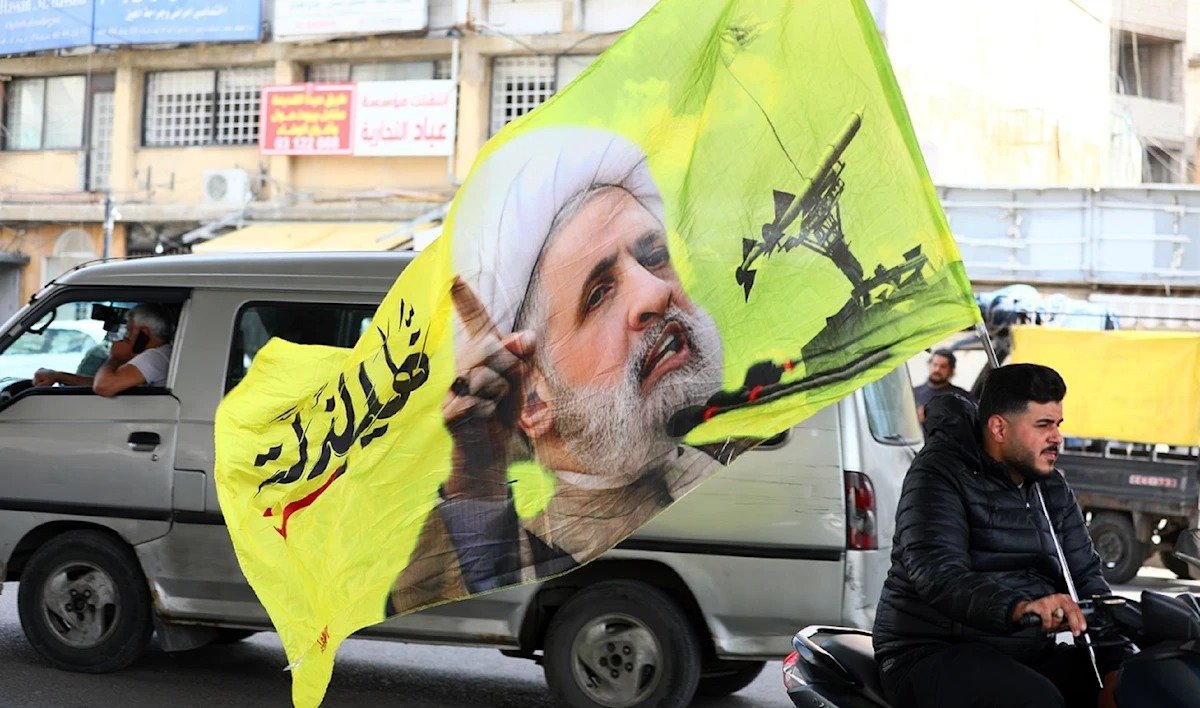
Interestingly, however, senior Hezbollah officials refused to clarify the group’s stance on the issue despite media reports that it had flatly rejected such offers. “Hezbollah wants to keep its stance concerning this issue out of the media, without giving any indication as to how it will respond to such initiatives,” a political official in the Lebanese Shiite movement told RS. “Our policy is to not reveal how we intend to approach this issue”.
This suggests that Hezbollah is not necessarily rejecting dialogue with Washington out of hand. Talks “will happen if there is an opportunity that presents itself,” said Muhanad Hage Ali, deputy director for research at the Carnegie Middle East Center in Beirut.
“But there will be an ambiguity because the organization basically tries to avoid acknowledging that they’re discussing anything with the ‘Great Satan,’” Hage Ali said, referencing a term Iran and its allies use to label the United States.
What Hezbollah Stands to Gain
According to Hage Ali, who has authored numerous publications about Hezbollah, the group stands to benefit from such dialogue in more ways than one. “Direct contact between the U.S. and Hezbollah would eventually undermine the Lebanese government track,” he explained, in reference to the direct talks Lebanon’s government is holding with Israel. “This is useful for Hezbollah.”
Hezbollah could also use talks with Washington to make a deal under which any measures related to its weapons and military activities would be conditioned on amending Lebanon’s constitutional system to “grant Lebanese Shiites a bigger share of power,” Hage Ali said.
Still, it is difficult to see Hezbollah negotiating away its weapons absent an Israeli withdrawal from Lebanese territory and a genuine guarantee that Israel will permanently end military operations in Lebanon. This stems from the fact that the group was founded as a resistance movement against Israel back in the early 1980s, long before it became a political party in 1992.
Trump-Hezbollah Talks Face Iran’s Shadow
Meanwhile there is little to suggest that Israel is willing to take any steps that would encourage Hezbollah to take a more flexible stance.
Israeli Prime Minister Benjamin Netanyahu reportedly told a recent cabinet meeting that he will not succumb to American demands to withdraw troops from Lebanon. Israel’s Foreign Ministry even published a map where parts of southern Lebanon appeared incorporated into Israel. The map, which Israel posted on X, stirred an uproar in Lebanon before it was taken down. (Israeli officials described the controversial map as the result of “an artificial intelligence error.”)
There is also the issue of Iran which has only doubled down on its support for its Lebanese ally. Iran’s Supreme Leader Ayatollah Mujtaba Khamenei has framed support for Hezbollah as a “strategic mandate” for the Islamic Republic, while underscoring that any deal with the United States is contingent on respecting Lebanon’s territorial integrity and an end to Israeli military operations in the country.
That Khamenei cast his country’s support for Hezbollah in strategic terms — and not merely as an ideological obligation — supports the notion that the Iranian leadership believes supporting the group has become a greater necessity in the wake of the recent conflicts, not least given how Israel has directly attacked Iran in these wars. In other words, rather than weakening the bonds between Tehran and Hezbollah, Israeli attacks on Iran have apparently strengthened these bonds, giving them a stronger strategic rationale.
A Separate Track Weakens Hezbollah
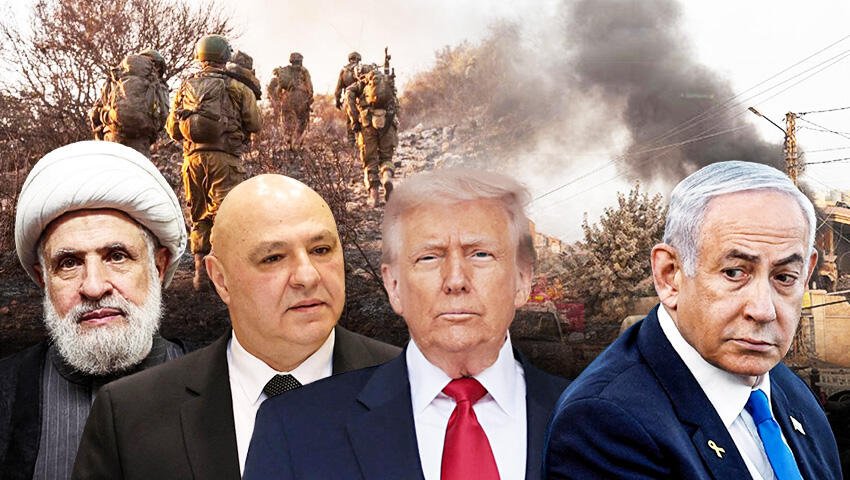
Against this backdrop, it is far more plausible that, at least for now, Hezbollah is pinning its hopes on what comes out of a potential agreement between Washington and Tehran, as opposed to riskier paths like direct talks with the Trump administration.
“The objective behind the American attempts to establish direct channels with us is to remove Lebanon and Hezbollah specifically from the Islamabad talks,” explained the first Hezbollah source, referencing U.S.-Iran negotiations in Pakistan.
Holding talks with the United States as a separate track from Islamabad would place Hezbollah in a weaker position, he argued, while being part of a framework with Iran which “hold strong cards” means that any agreement reached “will have guarantees.”